September 4, 2026 — In a landmark development for international cybersecurity and telecommunications, Hellas Sat and Sparkle have officially announced the successful implementation of a quantum-safe satellite connection linking Greece and Cyprus. This breakthrough represents a critical milestone in the transition toward "quantum-resistant" infrastructure, addressing the existential threat posed by future quantum computing capabilities to traditional encryption standards.
The collaboration, which extends existing terrestrial quantum-safe protections to the orbital domain, marks the first time such security protocols have been applied to a live satellite link between these two nations. As the digital landscape faces the looming "Q-Day"—the moment when powerful quantum computers may be able to break conventional cryptographic algorithms—this deployment provides a roadmap for securing sensitive government, financial, and industrial data across vast geographic distances.
The Technical Achievement: Bridging Earth and Orbit
The project represents a sophisticated integration of Quantum-Safe IPsec (QSI) protocols across both terrestrial and space-based segments. Following the successful validation of QSI between two data centers within Greece, the companies extended this architecture to bridge Sparkle’s data center in Metamorfosis, Athens, with Hellas Sat’s critical infrastructure in Cyprus.
The 72,000-Kilometer Security Chain
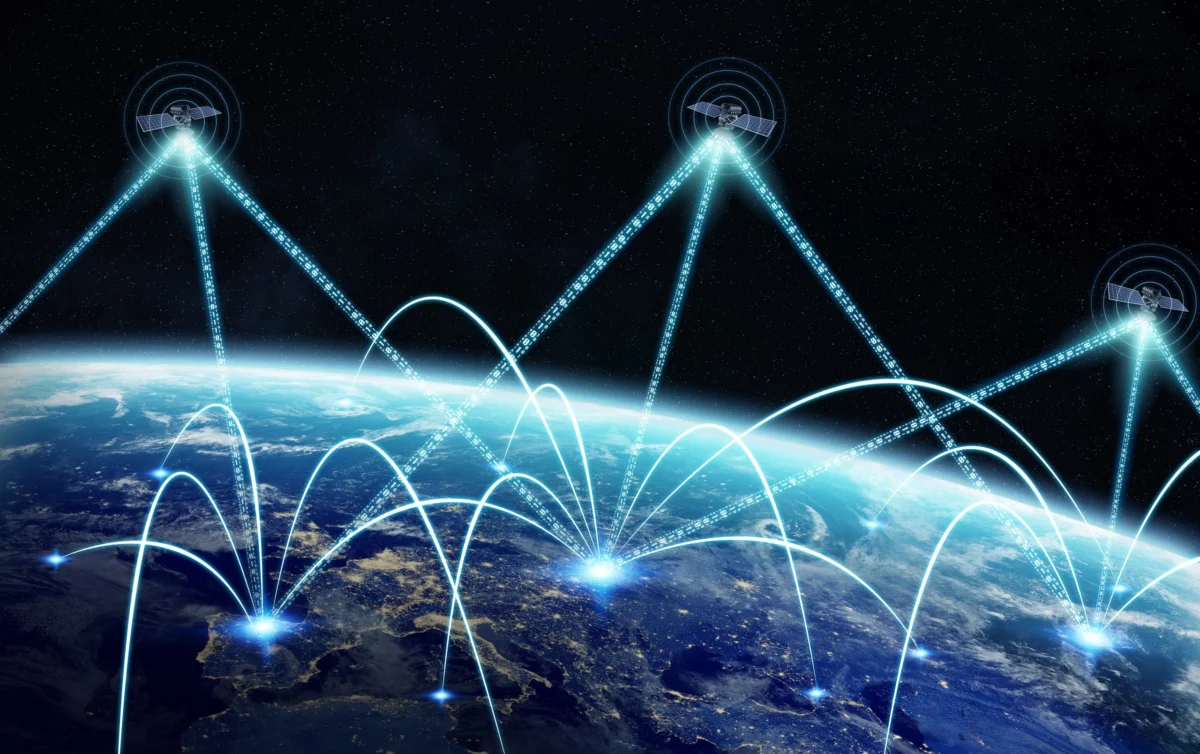
The connection involves a complex end-to-end path spanning approximately 72,000 kilometers. This journey begins with an uplink from the Cyprus teleport to a Hellas Sat Geostationary Orbit (GEO) satellite, followed by a downlink to the Athens-based facility.
By applying quantum-safe encryption to this specific path, the partners have demonstrated that high-latency satellite links are not a barrier to quantum-resistant security. The system ensures that data remains opaque even to advanced interception techniques that leverage the principles of quantum superposition and entanglement, which are expected to render current RSA and ECC (Elliptic Curve Cryptography) methods obsolete within the coming decade.
Chronology of the Initiative
The path to this week’s announcement has been one of methodical validation and rigorous testing.
- Phase 1: Terrestrial Proof of Concept (2025): The partnership began with the deployment of QSI on a terrestrial fiber link connecting two primary data centers in Greece. This phase was essential to prove that the cryptographic keys could be managed and rotated securely without disrupting data throughput.
- Phase 2: Integration of Space Assets (Early 2026): Hellas Sat, leveraging its fleet of three high-capacity GEO satellites, worked with Sparkle to map the integration of quantum-safe protocols onto satellite transponders. This required fine-tuning the IPsec tunnels to accommodate the inherent latency of geostationary orbits.
- Phase 3: Cross-Border Live Testing (Mid-2026): Engineers conducted a series of "live-traffic" simulations, moving encrypted packets between Cyprus and Athens. The testing focused on network resilience, packet loss, and the overhead associated with the more complex quantum-resistant mathematical algorithms.
- Phase 4: Official Validation (September 2026): Following the successful completion of the live trials, the companies declared the infrastructure fully operational, marking the first cross-border deployment of its kind in the Mediterranean.
Supporting Data and Technical Context
Why Quantum-Safe?
Current encryption relies on the computational difficulty of factoring large prime numbers—a task that classical computers find nearly impossible. However, Shor’s Algorithm, a theoretical quantum algorithm, demonstrates that a sufficiently powerful quantum computer could solve these problems in seconds.
The industry refers to this as the "Harvest Now, Decrypt Later" threat. Malicious actors are currently intercepting and storing encrypted data with the intention of decrypting it once quantum technology matures. By implementing QSI today, Hellas Sat and Sparkle are proactively mitigating this risk for their clients.
The Role of Infrastructure
- Hellas Sat: Operating from geostationary orbit, the company provides the essential "bent-pipe" infrastructure. Its teleport facilities in Greece and Cyprus act as the gateways, transforming terrestrial fiber signals into satellite-bound beams.
- Sparkle: As an international service provider, Sparkle brings the necessary expertise in network security, cloud architecture, and identity solutions. Their integration of QSI into their existing service portfolio allows for the seamless "wrapping" of data traffic before it leaves the data center.
Official Perspectives
The strategic partnership has been hailed by leadership on both sides as a testament to the importance of proactive security infrastructure.
Antonella Sanguineti, head of Networking, Cloud, Security & Identity Solutions at Sparkle, emphasized the scalability of this achievement. "The extension of QSI to satellite connectivity with Hellas Sat represents a concrete step in the evolution of our quantum-safe portfolio," Sanguineti stated. "It demonstrates that QSI can be deployed consistently across different network layers, connectivity domains, and operational environments, opening new opportunities to protect communications for customers requiring secure, resilient connectivity across geographically distributed environments."
Industry analysts view this statement as a signal that Sparkle intends to make quantum-safe connectivity a core offering for its enterprise and governmental clients, effectively future-proofing their communications against the quantum threat.
Strategic Implications and Future Outlook
The deployment of this technology between Greece and Cyprus has significant implications for both regional geopolitics and the global telecommunications sector.
1. Sovereignty and Security
For nations like Greece and Cyprus, maintaining the confidentiality of government and military communications is paramount. The ability to route sensitive information via quantum-safe satellite links ensures that even in the event of terrestrial fiber disruption, the communications remain secure from advanced interception.
2. The Future of Satellite Resilience
The success of this project proves that satellite communications are not "the weak link" in the security chain. By integrating QSI, operators like Hellas Sat can reposition their assets as premium, high-security conduits, differentiating themselves in a market that is increasingly concerned with data sovereignty.
3. Setting a Global Standard
This project serves as a pilot program for the wider telecommunications industry. As more providers adopt quantum-resistant standards, the interoperability between terrestrial and satellite networks will become the new "gold standard" for critical infrastructure. The Mediterranean corridor now serves as a live laboratory for what will likely become a global requirement for banking, defense, and high-tech manufacturing sectors.
4. Regulatory and Policy Shifts
The collaboration may spur regional regulators to mandate quantum-safe standards for critical cross-border infrastructure. As the European Union continues to focus on the "European Quantum Communication Infrastructure" (EuroQCI) initiative, the work performed by Hellas Sat and Sparkle provides a blueprint for how member states can contribute to a secure, quantum-resistant European digital backbone.
Conclusion
The successful implementation of quantum-safe satellite connectivity by Hellas Sat and Sparkle is more than just a technical feat; it is a defensive maneuver in a new era of digital warfare. By proving that the vast distances of space are no obstacle to robust encryption, these two companies have provided a vital service to their stakeholders and the broader international community.
As we look toward the remainder of the decade, the focus will undoubtedly shift from "proof of concept" to "mass adoption." The partnership between Hellas Sat and Sparkle ensures that when the quantum age arrives in full force, the bridge between Greece and Cyprus—and the data that flows across it—will remain firmly secure. This project stands as a benchmark for excellence in telecommunications, signaling that the future of global connectivity is, and must be, quantum-safe.