MELBOURNE — In a move designed to reshape the nation’s defense industrial landscape, the Australian government has officially launched the Defence Industry Development Strategy (DIDS). This comprehensive framework marks a pivotal shift in how the Australian Defence Force (ADF) develops, procures, and sustains its military platforms. As geopolitical tensions in the Indo-Pacific remain at a historic high, the DIDS serves as the third major pillar in a trio of strategic documents released this year, following the April unveiling of the National Defence Strategy (NDS) and the Integrated Investment Plan (IIP).
The DIDS is not merely a policy document; it is a blueprint for survival in an era of "great power competition." By focusing on sovereign capability—the ability to manufacture, maintain, and scale military technology domestically—Canberra is signaling a departure from over-reliance on international supply chains that have historically proven vulnerable to global instability.
The Strategic Context: A Triple-Threat Policy Framework
To understand the weight of the new DIDS, one must view it in the context of the two documents that preceded it in 2026. The NDS, released earlier this year, identified the core security challenges facing the continent, specifically noting the erosion of regional strategic stability. The IIP, released in tandem, outlined the fiscal reality of these challenges, pledging to increase defense spending to 3% of GDP.
While the NDS and IIP focused on the what and the how much—identifying potential threats and the budgetary means to meet them—the DIDS focuses on the who and the where. It addresses the structural capacity of the Australian industrial base to translate those billions of dollars into tangible, combat-ready hardware.
A Chronology of Recent Strategic Shifts
- April 2026: Release of the National Defence Strategy (NDS), prioritizing regional deterrence.
- April 2026: Release of the Integrated Investment Plan (IIP), formalizing the commitment to 3% GDP defense spending.
- September 2026: Launch of the Defence Industry Development Strategy (DIDS) to reform the acquisition and manufacturing ecosystem.
- July 2026: Initial formation of the Defence Delivery Group to oversee project accountability.
Empowering the Industrial Base: Financial and Structural Reforms
A central tenet of the DIDS is the realization that a modern military is only as strong as the small- and medium-sized enterprises (SMEs) that supply its components. Minister for Defence Industry Pat Conroy has been explicit: the goal is to move from a "just-in-time" procurement model to a "just-in-case" manufacturing model.
Investing in the Backbone of Industry
The government has committed an additional $80 million AUD ($55.4 million USD) to the Defence Industry Development Grants Program. This infusion brings the total investment in the program to $250 million AUD ($173.5 million USD) through 2030. These funds are specifically earmarked for SMEs, allowing them to innovate, expand production capacity, and integrate into the supply chains of global prime contractors.
Revitalizing the Export Fund
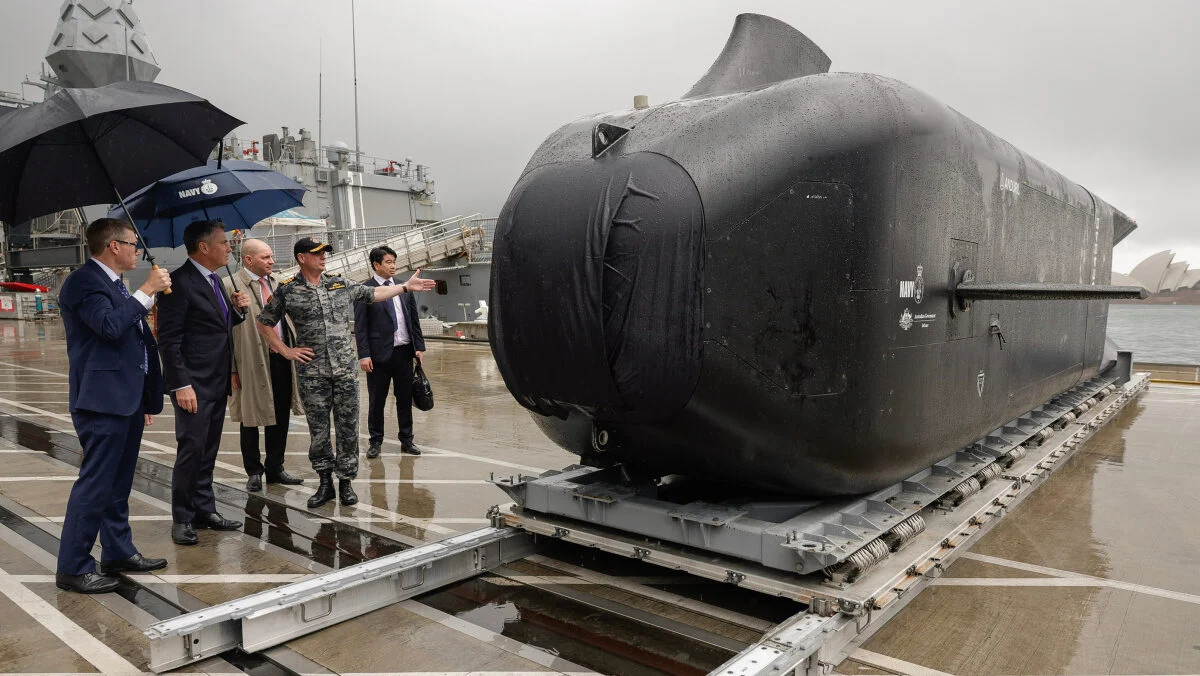
Perhaps one of the most critical structural reforms is the overhaul of Australia’s $3 billion ($2.06 billion USD) export support fund. Established in 2018 but historically underutilized, the fund is being redesigned to provide agile, timely support for Australian firms seeking to secure international defense contracts. By making Australian-built technology—such as the Anduril Ghost Shark autonomous underwater vehicle (AUV)—a "priority export capability," the government hopes to create a virtuous cycle where increased international sales lead to lower unit costs for the ADF and a more robust domestic production line.
The Ghost Shark: A Case Study in Sovereign Innovation
The Ghost Shark represents the "gold standard" of what the DIDS aims to achieve. Developed in collaboration with Anduril Australia, this extra-large AUV is a force multiplier that allows the Royal Australian Navy to conduct long-range intelligence, surveillance, and strike missions without risking human lives.
By designating the Ghost Shark as a priority export, the government is effectively "branding" Australian innovation on the global stage. This move aims to demonstrate to the international community that Australia is no longer just a buyer of foreign-made weapons; it is a developer and exporter of cutting-edge, autonomous military technology.
Overhauling the Delivery Pipeline
One of the most persistent criticisms of the Australian defense sector has been the history of projects delivered late, over budget, and below expectations. The DIDS seeks to solve these "systemic challenges" through the creation of the Defence Delivery Group.
From Advice to Execution
The Defence Delivery Group is currently tasked with providing evidence-based, independent advice to the government on the progress of major defense acquisitions. However, this is merely a transitional phase. Within a year, this group will evolve into the Defence Delivery Agency. This new entity will consolidate three previously siloed organizations:

- Capability Acquisition and Sustainment Group (CASG)
- Guided Weapons and Explosive Ordnance Group (GWEO)
- Naval Shipbuilding and Sustainment Group
By merging these entities, the government aims to eliminate the "stovepiping" of information that has historically led to poor communication and budget overruns. The goal is a singular, accountable agency that owns the entire lifecycle of a defense project—from the initial design phase to the final sustainment and eventual decommissioning of the platform.
Official Perspectives: Accountability and Urgency
The rhetoric coming from the top of the Australian government suggests a move away from the traditional, often sluggish, pace of defense bureaucracy.
"The case for a strong Australian sovereign defence industrial base has never been clearer," said Minister Pat Conroy. "We must ensure Australia can manufacture, sustain and scale the capabilities the Australian Defence Force needs, when and where they are required."
This sense of urgency was echoed by Minister for Defence Richard Marles. For Marles, the DIDS is about creating a "disciplined, accountable, and focused" organization. He emphasized that the era of accepting mediocrity in project delivery is over.
"We are rebuilding a defence capability system that is disciplined, accountable and focused on outcomes," Marles stated. "This is what Australia’s security environment demands, and what the Australian people expect."
Implications for the Future: A Long-Term Commitment
The DIDS is not just about today’s procurement; it is a long-term commitment to human capital. By mandating that prime contractors prioritize local apprenticeships and workforce development, the government is attempting to solve the "skills gap" that has plagued the industry for decades.
The Workforce Mandate
Future contracts with major prime contractors will now include clauses requiring them to contribute to the growth of the Australian defense workforce. This is a direct attempt to ensure that the next generation of engineers, technicians, and software developers is trained locally, keeping the expertise within Australian borders rather than relying on fly-in, fly-out talent.
The Geopolitical Balancing Act
Ultimately, the success of the DIDS will be measured by the ADF’s ability to project power and maintain deterrence in the Indo-Pacific. As regional rivals invest heavily in their own domestic military-industrial complexes, Australia’s pivot toward sovereign capability is a necessary response.
However, the strategy faces significant challenges. Scaling a manufacturing base in a nation with a relatively small population requires highly efficient automation and a laser-focused approach to niche technologies. If Australia can successfully integrate its SMEs into global supply chains while simultaneously reforming its internal procurement bureaucracy, it will emerge as a more self-reliant, resilient, and effective military power.
The path ahead is clear, yet the execution will be difficult. By establishing the Defence Delivery Agency and investing heavily in domestic innovation, Australia has laid the foundation for a defense sector that is not only capable of supporting its national security interests but also contributing to the global technological advancement of its allies. The coming decade will reveal whether these structural reforms are sufficient to meet the shifting demands of 21st-century warfare.