For the casual stargazer, the hierarchy of the night sky is often dictated by spectacle. We begin our journey with the lunar surface, then move to the majestic rings of Saturn and the cloud-belted majesty of Jupiter. Mars, with its distinct rusty hue and polar caps, is a perennial favorite. Yet, there remains a "final boss" for the amateur astronomer: Uranus.
Often dismissed as a target reserved only for those with massive apertures and pristine, high-altitude skies, the seventh planet represents a threshold of dedication. This July, however, a celestial alignment offers a rare, accessible bridge for the average observer to finally cross that threshold.
Main Facts: The Elusive Ice Giant
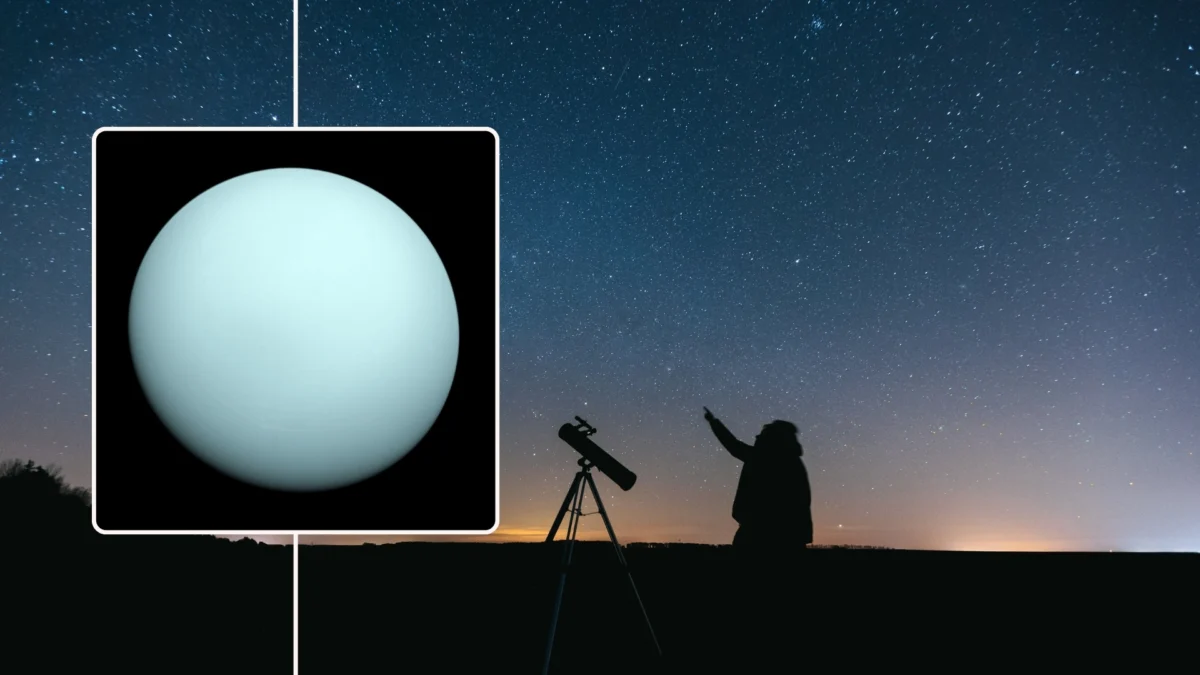
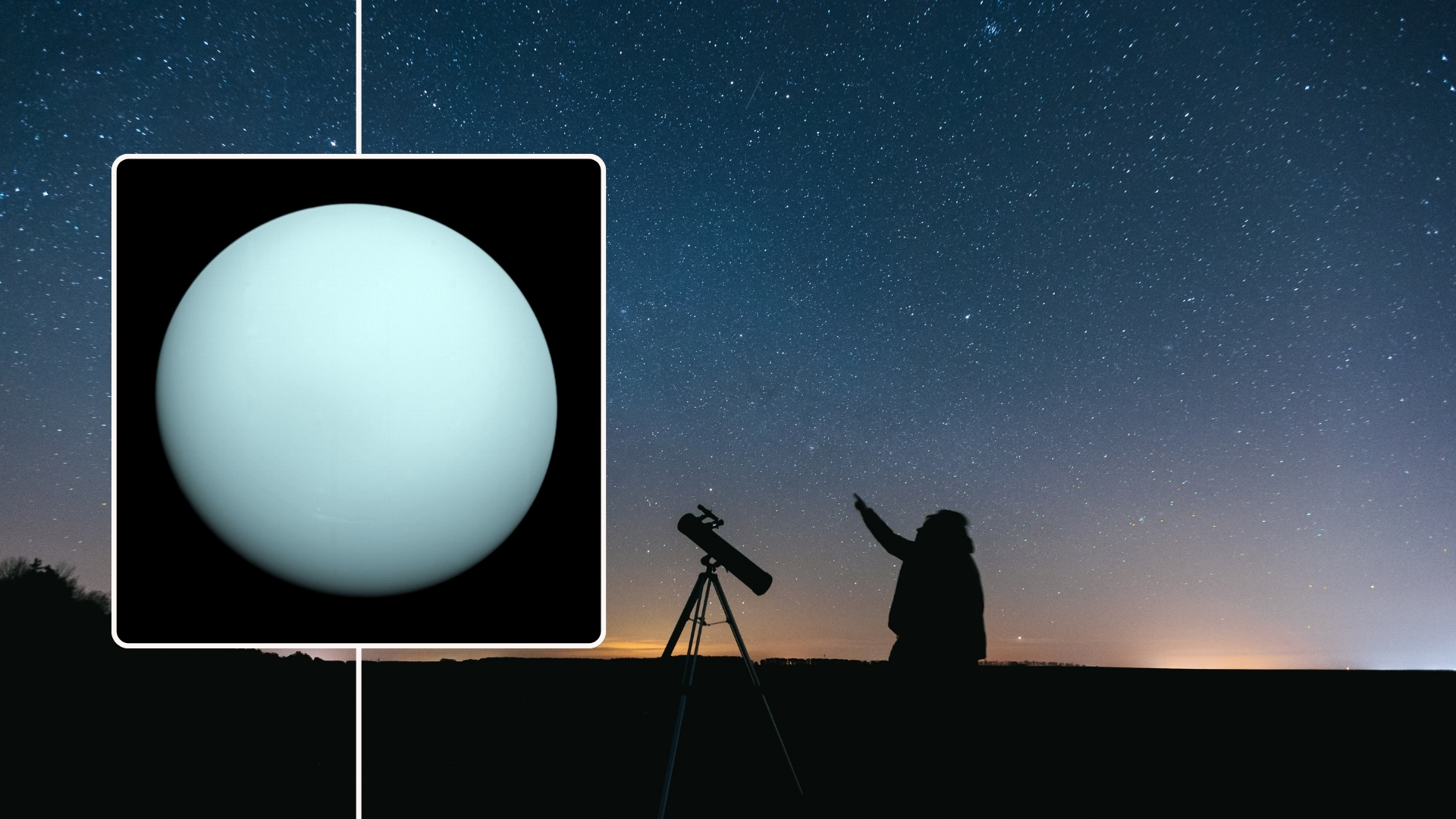
Uranus is an enigma. Positioned nearly 1.8 billion miles from the sun, it is an ice giant that defies the immediate visual gratification provided by its neighbors. While Jupiter and Saturn dominate the eyepiece with distinct features, Uranus is a subtle, pale blue-green dot.
It is a world of extreme tilt and cold, sitting twice as far from the sun as Saturn. Its distance makes it a challenge; at a magnitude of 5.7, it sits at the absolute limit of human naked-eye visibility. Under typical urban light-polluted skies, it is invisible. However, in the dark, moonless expanses of a protected reserve or a rural backyard, it can be teased out by the patient observer.
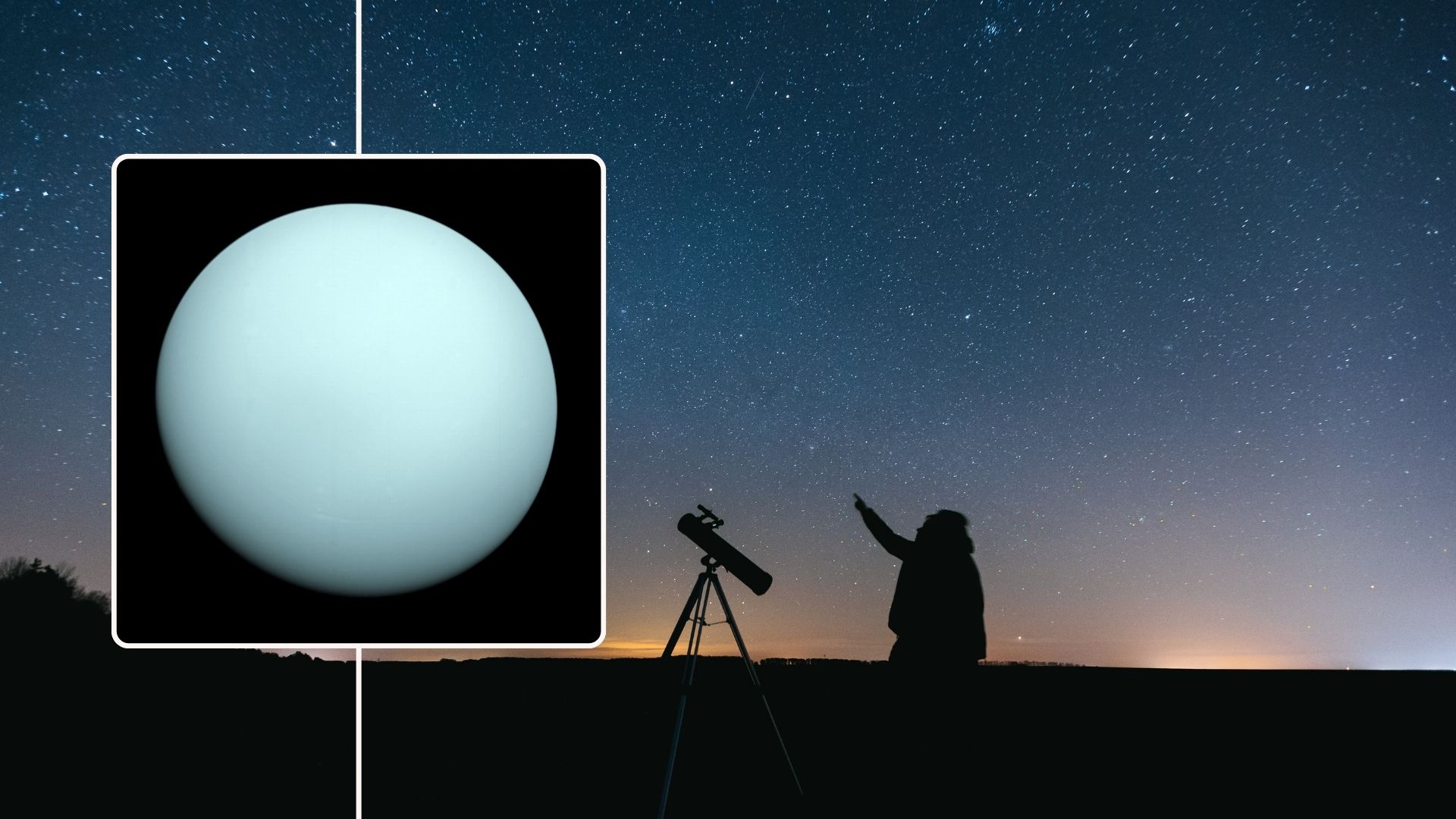
The challenge of Uranus is not just optical—it is psychological. To see it requires "averted vision," a technique where the observer looks slightly to the side of the target, allowing the eye’s peripheral, light-sensitive rod cells to capture the dim photons that the central fovea might miss. It is a transition from passive viewing to active, intentional discovery.
The July 4 Conjunction: A Celestial Shortcut
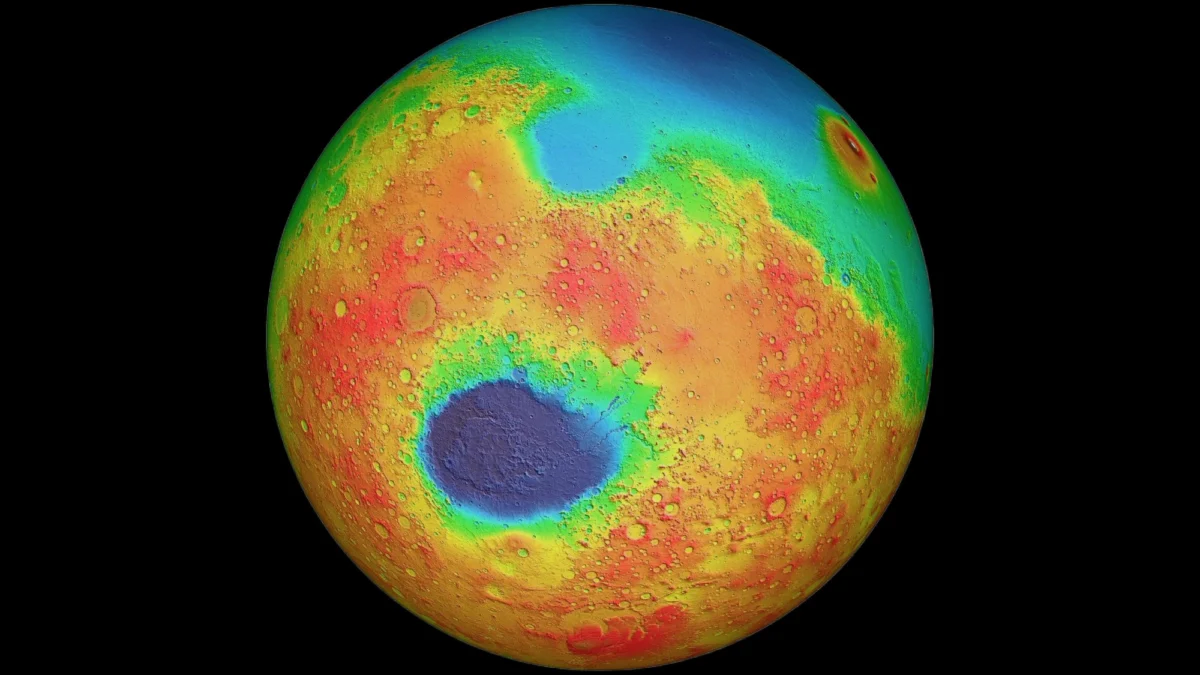
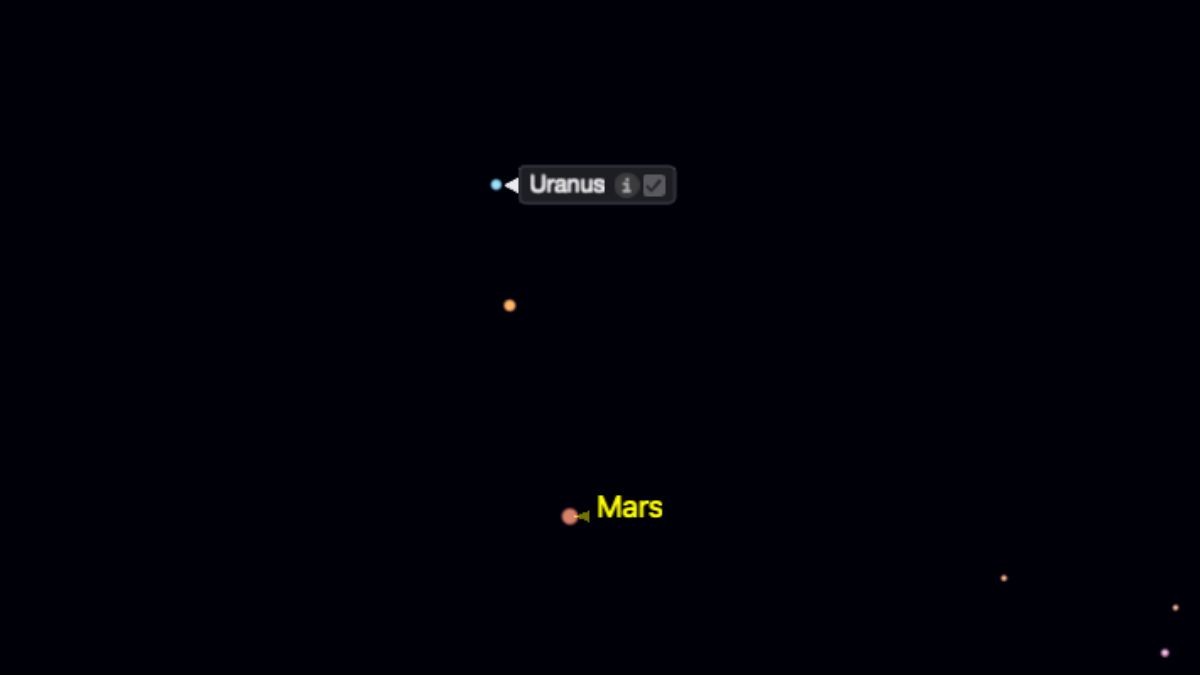
Nature occasionally provides a guide to help us navigate the vastness of the heavens. On July 4, 2026, Mars—the "Red Planet"—will serve as a celestial signpost, gliding past Uranus in a close conjunction.
The Chronology of the Event
- The Approach: As the sun rises on the morning of July 4, the two planets will appear in the eastern sky.
- The Prime Window: Astronomers and enthusiasts should aim their gaze toward the eastern horizon at approximately 3:45 a.m. local time.
- The Duration: The window of opportunity is narrow—roughly 45 minutes before the encroachment of astronomical dawn begins to wash out the faint light of the ice giant.
- The Proximity: At their closest point, the two planets will be separated by just 11 arc minutes, a distance so small they will appear to share the same field of view in even modest binoculars.
This event is particularly poetic, occurring on the 250th anniversary of the United States. Uranus takes 84 years to complete a single orbit around the sun; thus, since the signing of the Declaration of Independence in 1776, the planet has circled our star almost exactly three times. It serves as a stark reminder of the scale of our solar system compared to the brevity of human history.
Supporting Data: Why This Alignment Matters
Locating Uranus is usually an exercise in "star-hopping"—a tedious process of navigating through anonymous, dim star fields and questioning every faint point of light. The conjunction with Mars eliminates the guesswork.
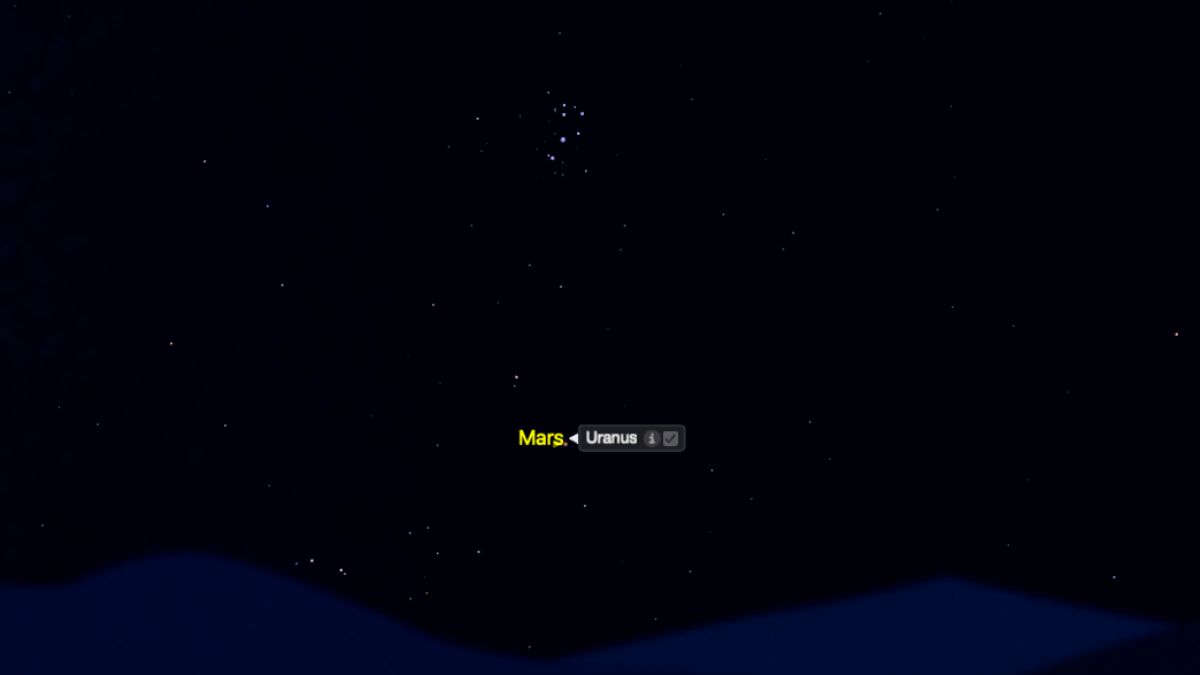
Mars, shining at a relatively bright 1.3 magnitude, will be easily identifiable below the shimmering Pleiades star cluster. Once the observer has locked onto Mars, Uranus will be positioned just slightly above it. For those equipped with 10×50 binoculars or a small telescope, the view will be one of profound contrast: the warm, glowing rust of Mars juxtaposed against the cool, distant, blue-green light of the seventh planet.
Equipment Recommendations
- Naked Eye: Possible only in exceptionally dark, pristine conditions.
- Binoculars (10×50): Ideal for capturing both planets in a single frame.
- Telescopes: A small-to-medium Dobsonian telescope will reveal the planet as a distinct disk rather than a mere point of light, provided the atmospheric "seeing" is steady.
Official Context: The Search for the Ninth Planet
The history of Uranus is a testament to the evolution of observational astronomy. When William Herschel discovered the planet in 1781, it doubled the known size of our solar system. For decades, it was the frontier. Today, we are in a similar position, hunting for evidence of a "Planet Nine" in the outer reaches of the Kuiper Belt.
The scientific community continues to use the same techniques developed by early astronomers: careful, systematic surveying. While our technology has advanced—from Herschel’s homemade reflectors to the James Webb Space Telescope—the thrill of the "discovery" remains the same. Whether you are using a professional observatory or a pair of binoculars in a field, the act of identifying a world 1.8 billion miles away remains a cornerstone of the human experience.
Implications for Future Stargazing
The July 4 event is not an isolated incident. July 2026 will be a busy month for observers. Following the Mars-Uranus conjunction, the early hours of July 7 and 8 will feature a beautiful alignment of a last-quarter moon and Saturn.
Furthermore, the Earth reaches aphelion on July 6—its farthest point from the sun in its annual orbit. While this does not impact the seasons (which are governed by axial tilt), it does mean the sun’s disk will appear slightly smaller in our sky, a condition that contributes to the unique characteristics of the total solar eclipse scheduled for August 12, 2026.
The Summer Triangle as a Framework
For those finding their way during these early July mornings, the "Summer Triangle" remains the ultimate navigational tool. Formed by the brilliant stars Vega, Deneb, and Altair, this massive asterism dominates the sky. It is not a constellation, but a cosmic map. Once an observer masters the scale of the Summer Triangle, they have a permanent reference point to navigate the Milky Way and orient themselves toward the ecliptic, where the planets reside.
Conclusion: The Value of the Hunt
Why bother searching for a dim, blue-green dot that looks like a star? The answer lies in the effort. As the author of this guide notes, many people cherish their first view of Saturn because the rings are an immediate, visual "wow" factor. But the memory of seeing Uranus is often more profound because it is earned.
Observational astronomy is not merely about passive consumption of pretty images; it is about the active engagement with the mechanics of the universe. By finding Uranus this week, you are not just looking at a planet; you are participating in a 250-year-old tradition of exploration. You are taking the leap from someone who looks up at the sky to someone who understands what they are seeing.
As you prepare for the early morning of July 4, remember that you are tracking a world that has only completed three laps around the sun since the dawn of the modern era. Find Mars, look slightly above it, and discover the seventh planet for yourself. It is a milestone in any astronomer’s journey—a moment where the vast, cold, and distant become tangible.