KINGS LANGLEY, U.K. — In the high-stakes world of semiconductor intellectual property (IP), the only constant is change. For Imagination Technologies, the British chip architecture stalwart, the past decade has been a whirlwind of leadership turnover and strategic pivots. As Markus Mosen steps in as the company’s seventh CEO in ten years, the firm is signaling a definitive departure from its recent multi-disciplinary ambitions. The message from the Kings Langley headquarters is clear: Imagination is shedding its peripheral ventures to double down on its crown jewel—the GPU.
In an exclusive interview with EE Times, Chief Revenue Officer Jake Kochnowicz dismissed the notion that this transition represents yet another corporate "reboot." Instead, he framed the current shift as a refined, long-term commitment to core competencies. "We’re trying to improve [leadership structure] so that we can go faster and leverage the fact that we are a relatively small company still, so we should be agile," Kochnowicz explained. "I don’t think it’s anything radical; what we’re building, the direction we’re going, is largely the same as what we set out previously."
A Chronology of Strategic Realignment
The current landscape at Imagination is defined by a series of deliberate contractions. Two years ago, the company was heavily invested in a heterogeneous compute strategy that included a bold foray into RISC-V CPU development and standalone AI accelerators. Today, those paths have been abandoned.
- 2021: Imagination launches its RISC-V CPU program, aiming to challenge established architectures.
- 2024: The company makes the difficult decision to shelve its dedicated Neural Processing Unit (NPU) effort, concluding that the architecture, developed in a pre-transformer era, lacked the necessary runway for the generative AI explosion.
- Early 2025: The RISC-V project is officially discontinued. Management concludes that the investment required to reach a break-even point in a consolidating market was unsustainable.
- February 2026: Markus Mosen assumes the role of CEO, succeeding the retiring Simon Beresford-Wylie. Under Mosen’s guidance, the company begins flattening its leadership hierarchy to improve decision-making speed.
This retrenchment is not a sign of retreat, according to leadership, but rather a surgical focus on the GPU business—a sector that, unlike the CPU venture, has consistently generated revenue and market traction.

The Case for Consolidation: Why GPUs Remain King
The decision to abandon the CPU market was born from the harsh realities of the semiconductor industry. "The time frame we’d have had to continue to invest before we’d get a return was very long," Kochnowicz noted. "The market was, and is still, ripe for consolidation, and some RISC-V CPU companies are starting to struggle. Rather than split our investment between GPU and CPU, where the GPU was generating revenue, it was odd to starve that of resources."
This "starvation" of the core business is exactly what the new strategy seeks to rectify. By unifying graphics and AI workloads under a single GPU architecture, Imagination aims to reduce software fragmentation. In the modern data center and consumer electronics landscape, the lines between rendering and inference are blurring. Customers are increasingly demanding hardware that can pivot between cloud gaming during peak hours and AI compute tasks during periods of low gaming demand.
"We are a graphics company and will remain that way," Kochnowicz emphasized. "What we are doing is making AI a first-class citizen alongside graphics; it’s a core pillar of what we’re doing, and we treat them both equally."
Technical Debt and the "F-Series" Horizon
With the distraction of auxiliary product lines removed, Imagination has funneled its resources—including a significant $100 million capital injection secured two years ago—into its next-generation GPU architecture: the F-series.

The F-series represents a fundamental overhaul of the company’s design philosophy. Beyond mere performance gains, the project has focused on resolving "technical debt" that had accumulated over years of fragmented R&D. The engineering team has overhauled verification and design methodologies to allow for greater scalability.
While the current E-series has been a success, capping out at roughly 300 mm² on TSMC’s N5 node, the F-series is designed to bridge the gap into higher-performance segments, including automotive and large-scale data center infrastructure. While Kochnowicz admitted that the F-series will not hit the 1 PFLOPS milestone, he suggested that the subsequent generation of architecture is being designed with that "holy grail" of compute performance in mind.
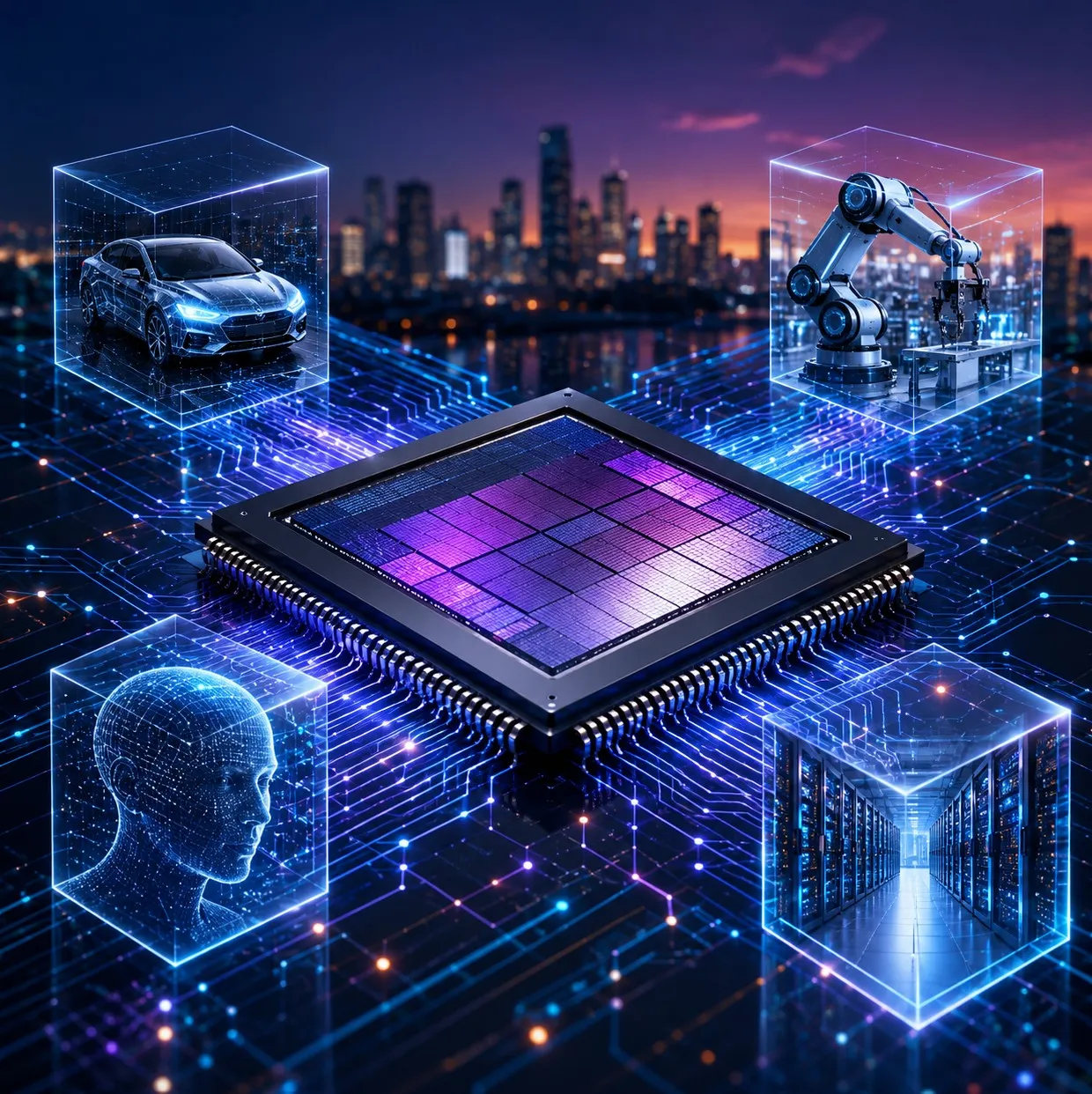
This scaling is critical because Imagination’s customer base is shifting. They are no longer just selling to chipmakers; they are increasingly engaging with vertically integrated companies. These entities, ranging from cloud service providers to automotive giants, are moving toward custom silicon to differentiate their offerings. By licensing Imagination’s IP, these firms can integrate video codecs, scaling engines, and compression modules alongside the GPU on a single piece of silicon—a bespoke level of control that standard off-the-shelf chips cannot provide.
Navigating the Geopolitical Tightrope
Perhaps the most complex aspect of Imagination’s operations is its relationship with the Chinese market. Since its 2017 acquisition by the Chinese-backed private equity firm Canyon Bridge Capital Partners, the company has faced intense scrutiny regarding technology transfer.

Kochnowicz is quick to clarify the operational reality: the China team is an integrated part of the global organization, primarily focused on sales and customer support, and reports directly to the U.K. leadership. "We don’t develop IP in the U.S. or China, because if you develop in one place, you can’t sell to the other," he explained.
The regulatory environment has stabilized, but it remains a high-stakes environment. Imagination is strictly compliant with U.S. Bureau of Industry and Security (BIS) regulations, ensuring that no technology is licensed to entities on the Entity List. Furthermore, they have proactively prohibited the use of their IP for certain military applications, such as drones.
Chinese customers are, by necessity, focusing on domestic applications like desktop-class graphics and edge AI, as the lack of access to extreme-ultraviolet (EUV) lithography equipment limits their ability to compete in the absolute top tier of supercomputing. Imagination’s IP is perfectly positioned for this mid-to-high-tier space, providing the necessary compute for ADAS (Advanced Driver Assistance Systems) in EVs and cloud gaming, where the requirement is for high-efficiency, specialized performance rather than raw, unbridled supercomputing power.
Implications: A Sustainable Future?
The narrative of "the seventh CEO in a decade" could easily be read as a sign of instability. However, the internal reality at Kings Langley paints a different picture. While the executive suite has seen a revolving door, the bedrock of the company—its senior engineers, VPs, and architects—remains largely intact.

The "flattening" of the management structure, combined with a singular focus on GPU innovation, suggests a company that is finally comfortable in its own skin. The abandonment of RISC-V and NPU projects was not an admission of failure, but a strategic surrender of "nice-to-have" capabilities in exchange for "must-have" dominance.
For the industry, the implications are significant. As Nvidia and other giants push toward monolithic, all-encompassing AI ecosystems, there remains a vital, massive segment of the market that requires flexible, licensable IP to build their own custom silicon. By refining its focus and resolving its technical debt, Imagination Technologies is attempting to secure its position as the go-to provider for those who want to build their own future, rather than just buying someone else’s.
As the industry looks toward the late-2026 launch of the F-series, the question will not be whether Imagination can compete with the behemoths of the industry, but whether it can continue to provide the essential, specialized building blocks that the next generation of custom silicon relies upon. For now, the strategy is set, the path is cleared, and for the first time in years, the company seems to be looking at the horizon rather than its own feet.