
By Satellite Today Staff
September 1, 2026
Main Facts: A Strategic Win for Kymeta
In a significant expansion of its role within the U.S. defense sector, Kymeta Corporation announced on Tuesday that it has secured a $20 million contract with a branch of the U.S. Department of Defense (DoD). The agreement entails the procurement of 100 Osprey u8 multi-orbit satellite communication (satcom) terminals, alongside a comprehensive suite of connectivity services delivered via the company’s proprietary Kymeta Broadband (KBB) network.
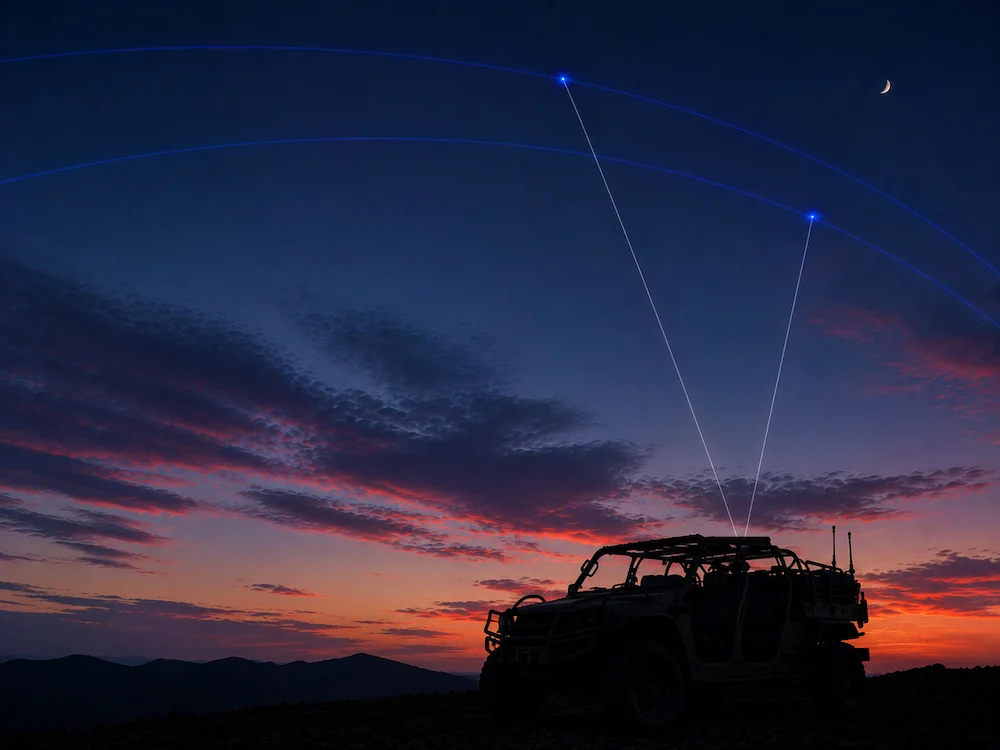
The Osprey u8 is a sophisticated, flat-panel antenna system designed specifically for the rigors of mobile, mission-critical environments. By leveraging both Geostationary Orbit (GEO) and Low-Earth Orbit (LEO) constellations, the KBB network ensures that military units can maintain seamless, high-bandwidth communications even in contested or remote operational theaters. While Kymeta has opted to withhold the specific branch of the DoD involved in the transaction, citing stringent operational security requirements, the deal underscores a growing trend of military reliance on hybrid, multi-orbit satellite architectures to maintain command-and-control capabilities.
Chronology of Expansion: A Year of Military Integration
This $20 million order is not an isolated event; it represents the culmination of a highly productive fiscal year for Kymeta within the national security apparatus. Throughout 2026, the company has steadily solidified its footprint, moving from pilot programs to full-scale deployment.
- Q1 2026: Kymeta initiates a series of field trials with the DoD, focusing on the agility of the Osprey u8 in mobile, on-the-move (OTM) environments.
- Q2 2026: Initial delivery of hardware begins, with early performance metrics highlighting the terminal’s ability to transition between satellite constellations without dropping packets—a critical requirement for tactical data links.
- August 2026: Total contract value for the year for this specific DoD branch reaches $10 million, as smaller, iterative orders are fulfilled.
- September 1, 2026: The current $20 million contract is finalized, bringing Kymeta’s total revenue from this specific DoD client to over $30 million for the year.
The progression from testing to large-scale procurement suggests that Kymeta’s technology has successfully cleared the rigorous hurdles of the DoD’s Acquisition and Sustainment processes.
Supporting Data: The Osprey u8 and Multi-Orbit Resilience
To understand why the DoD has opted for the Osprey u8, one must look at the technical requirements of modern warfare. The battlefield of 2026 is data-hungry, requiring real-time situational awareness, streaming drone feeds, and encrypted voice-over-IP services.
The Osprey u8 is built to support these needs through:
- Multi-Orbit Agility: The ability to switch between GEO and LEO provides a "best-of-both-worlds" scenario. GEO satellites provide wide-area coverage and high capacity, while LEO constellations offer the low latency required for real-time tactical coordination.
- TRANSEC Capabilities: The terminals are designed to operate across both Transmission Security (TRANSEC) and non-TRANSEC networks. TRANSEC is vital in military contexts to prevent adversaries from detecting, intercepting, or jamming communications. By allowing units to switch between these modes, Kymeta provides the flexibility to escalate or de-escalate security measures based on the threat environment.
- Low Profile, High Performance: Unlike traditional parabolic dishes, the u8’s flat-panel, electronically steered array (ESA) design allows it to be mounted on vehicles without creating a large visual signature or causing drag, which is essential for covert or high-speed operations.
With more than 100 units already delivered and field-tested, the system has proven its reliability in diverse climatic conditions and operational tempos, meeting the "ready-for-deployment" standards required by U.S. forces.
Official Responses: Leadership Perspective
Manny Mora, CEO of Kymeta, emphasized that this contract serves as a validation of the company’s long-term pivot toward the government and defense sectors.
"This order is an affirmation from the military community that Kymeta can deliver on its promise to provide dependable connectivity for mission-critical operations," Mora stated in a press release. "With our partners across national security, we are continuing to build steady and solid momentum as a trusted and valued partner."
Industry analysts note that Mora’s remarks reflect a broader shift in the satellite industry. Companies that previously focused on the maritime or enterprise markets are increasingly pivoting their hardware toward the "Defense-as-a-Service" model, where the terminal is merely one part of a larger, managed connectivity ecosystem. By bundling the hardware with the KBB network service, Kymeta is positioning itself as a comprehensive solutions provider rather than a mere manufacturer.
Implications: The Shift Toward Hybrid Satcom
The implications of this $30 million annual spend go beyond Kymeta’s balance sheet. It signals a paradigm shift in how the U.S. military approaches satellite connectivity.
1. Redundancy as the New Baseline
The military is moving away from a reliance on single-orbit architectures. In the past, a unit might rely solely on a dedicated military satellite constellation. Today, the focus is on "resilience through heterogeneity." By utilizing multiple orbits, the DoD mitigates the risk of a single point of failure. If an adversary attempts to degrade one constellation, the Osprey u8’s ability to pivot to another ensures that connectivity is maintained.
2. The Commercialization of Tactical Comms
The integration of Kymeta’s commercial-off-the-shelf (COTS) technology into the military supply chain is a significant endorsement of the "New Space" economy. By utilizing LEO constellations—many of which are commercial—the DoD is able to access high-speed data at a fraction of the cost and time it would take to build, launch, and maintain custom military-grade satellites.
3. Strategic Autonomy for Units in the Field
Perhaps most importantly, the technology allows for greater autonomy. In previous decades, a field unit’s communication capability was often limited by the reach of their command center’s infrastructure. With mobile multi-orbit terminals, individual units can establish high-bandwidth, secure links instantly, enabling decentralized command-and-control. This "edge" connectivity is a cornerstone of modern doctrine, which relies on speed and distributed lethality.
Conclusion: Future Outlook
As we move into the final quarter of 2026, the success of this contract will likely be used as a case study for other branches of the DoD, such as the U.S. Navy or the U.S. Air Force, who are also seeking to modernize their mobile communications.
For Kymeta, the challenge ahead lies in scaling production while maintaining the rigorous quality standards required for defense hardware. If they can continue to demonstrate the reliability of the Osprey u8 in the face of evolving electronic warfare threats, they are well-positioned to remain a cornerstone of the U.S. military’s communications infrastructure for the foreseeable future. The company’s ability to secure $30 million in funding within a single year from one branch is a testament to the fact that, in the modern digital battlespace, connectivity is no longer just a luxury—it is the ultimate strategic asset.