By Space News Editorial Team
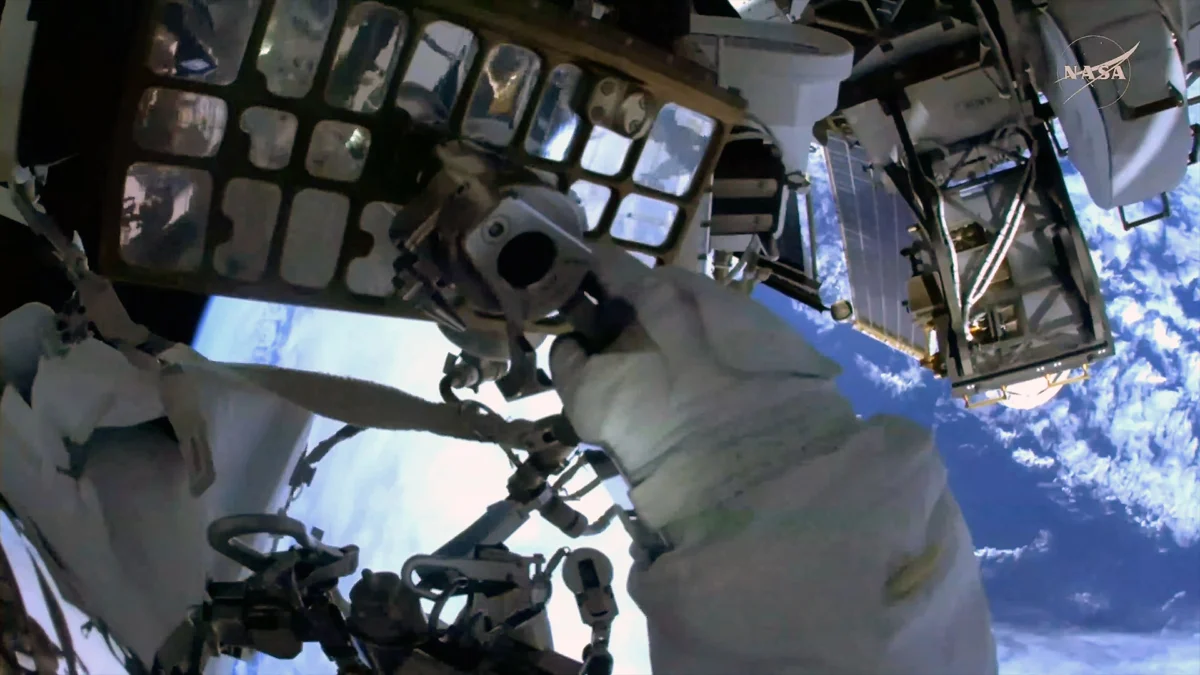
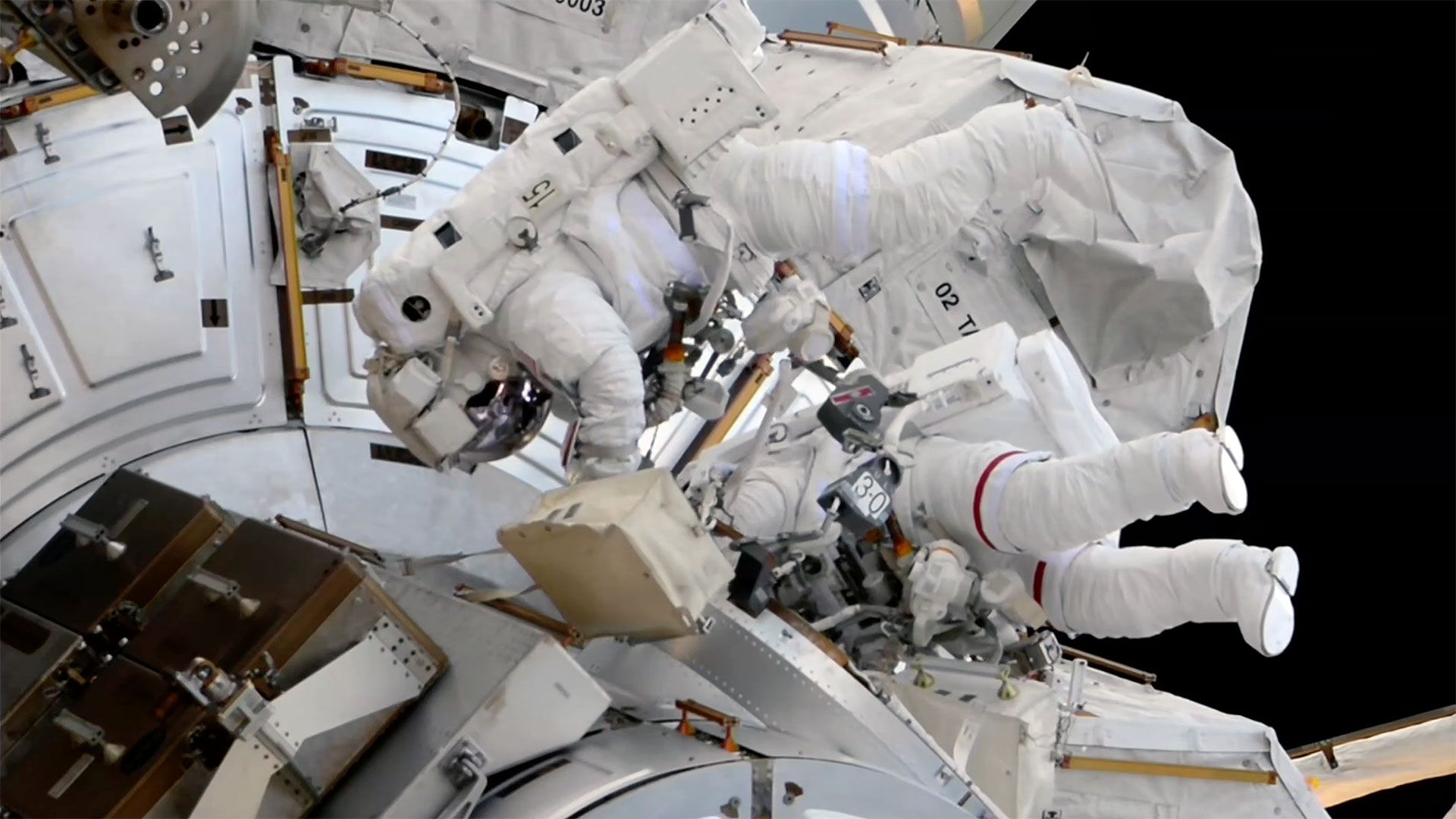
In a testament to the rigorous demands of orbital maintenance, NASA astronaut Jessica Meir and European Space Agency (ESA) astronaut Sophie Adenot successfully completed a critical spacewalk outside the International Space Station (ISS) on Tuesday, September 1, 2026. The mission, which lasted six hours and 49 minutes, saw the duo execute complex mechanical repairs, facilitate scientific research, and demonstrate the resilience required to manage unexpected technical hurdles in the vacuum of space.
The outing, which stands as the 284th spacewalk dedicated to the assembly, maintenance, and upgrading of the ISS, served as a vital reminder of the station’s ongoing evolution. As the orbiting laboratory continues to host international research, the infrastructure that supports its docking capabilities and external sensing must remain in peak condition.
The Primary Objectives: Ensuring Orbital Reliability
The spacewalk, designated as an Extravehicular Activity (EVA), commenced at 8:40 a.m. EDT (1240 GMT) as Meir and Adenot exited the U.S. Quest airlock. The primary objective was the replacement of the planar deflector on the forward port of the station’s Harmony Node 2.
The retroreflector is a mission-critical component for visiting spacecraft. As vehicles approach the station for rendezvous and docking, they rely on these navigational aids to ensure precise alignment. Over time, the previous reflector had become degraded, coated in a persistent layer of thruster residue from years of spacecraft arrivals and departures. Replacing this component was essential to maintain the safety and efficiency of future cargo and crew missions, particularly as the ISS prepares for a surge in commercial traffic.
Following the successful replacement of the reflector, the astronauts turned their attention to the station’s external monitoring systems. They successfully removed and replaced the high-definition Camera Port 3 (CP3) assembly located on the station’s truss.
"And it’s off!" Meir exclaimed after the successful extraction of the outdated hardware, a moment of triumph echoed by the applause of flight controllers at NASA’s Johnson Space Center in Houston. The replacement of this camera ensures that ground teams maintain high-fidelity visual monitoring of the station’s exterior, which is critical for identifying potential micrometeoroid impacts or mechanical wear.
A Chronology of the EVA
The timeline of the EVA was carefully choreographed to maximize efficiency while ensuring crew safety. Below is a breakdown of the mission’s key events:
- 08:40 EDT: Hatch opening. The astronauts exit the Quest airlock to begin their work.
- 09:30 – 11:00 EDT: The primary task of replacing the planar deflector on Harmony Node 2. This required precision handling to ensure the new hardware was perfectly aligned.
- 11:15 – 12:45 EDT: Removal of the aging CP3 HD camera and the installation of its successor.
- 13:00 – 14:30 EDT: Bifurcation of tasks. While Adenot conducted exterior swabbing for the "Microbial Air Sampler" study, Meir was maneuvered via the Canadarm2 robotic arm to the Alpha Magnetic Spectrometer (AMS).
- 14:30 – 15:30 EDT: Meir performed the physically demanding task of torquing 46 individual bolts on the AMS, preparing the particle physics detector for upcoming maintenance cycles.
- 15:45 EDT: First signs of mobility issues reported by Adenot.
- 16:29 EDT: Completion of the EVA and successful re-pressurization of the Quest airlock.
Overcoming Technical Challenges: The "Mobility Issue"
While the mission was largely successful, the latter portion of the EVA presented an unexpected challenge. Toward the end of the scheduled tasks, ESA astronaut Sophie Adenot reported a loss of mobility in her left shoulder joint. Her extravehicular mobility unit (EMU)—the sophisticated suit that serves as a personal spacecraft—appeared to be binding, making it difficult for her to perform fine motor tasks.
In space exploration, the margin for error is razor-thin. Mission Control immediately prioritized crew safety, ordering Adenot to pause her activities and wait for her crewmate. Jessica Meir navigated to Adenot’s position to conduct an on-the-spot inspection.
The incident provided a rare look at the complexity of spacesuit maintenance. By unzipping a portion of the upper arm assembly, Meir identified the culprit: a piece of cabling had become snagged between the shoulder’s multi-layer insulation (MLI) and the rotation joint.
"I think it was where the cable got caught in between the shoulder MLI and the rotation joint," Meir explained over the comms. "I don’t think it was held up by anything but some friction."
With the obstruction cleared, Adenot regained full range of motion. The event underscores the critical role of "buddy-checks" during EVAs, where astronauts serve as each other’s primary safety inspectors.
Scientific Contributions and Supporting Data
Beyond hardware maintenance, the spacewalk contributed to long-term scientific objectives. Adenot utilized the latter portion of the mission to conduct external surface swabbing. This ongoing research aims to understand how microorganisms interact with the harsh environment of low Earth orbit. By analyzing the exterior of the airlock and the gloves of the spacesuit, researchers hope to determine if microbes can survive or even colonize the station’s outer skin.
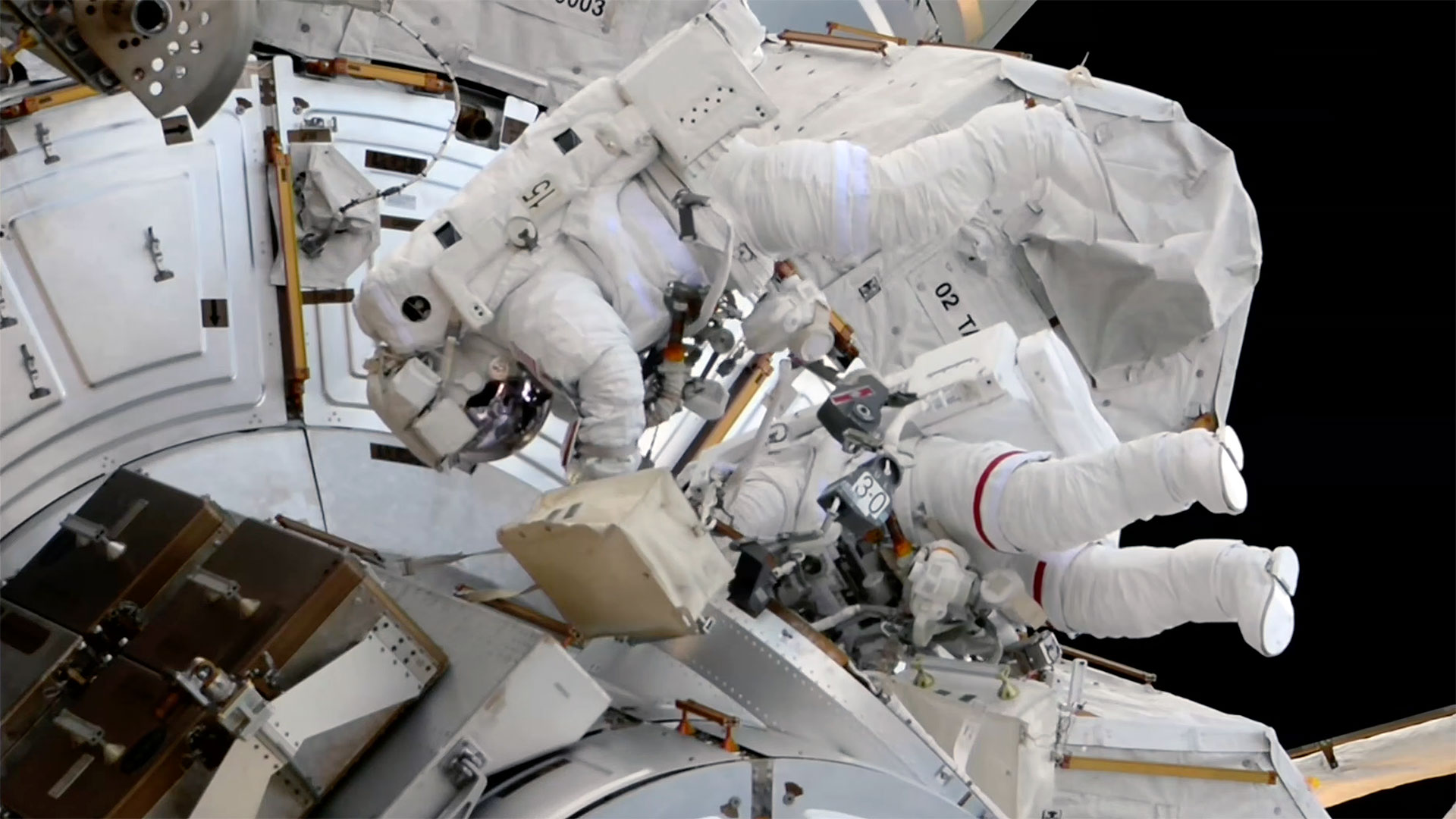
Furthermore, the work performed on the Alpha Magnetic Spectrometer (AMS) is of paramount importance to the physics community. The AMS is a sophisticated particle physics detector searching for dark matter and antimatter. By torquing 46 bolts, Meir ensured the structural integrity of the mounting assembly, facilitating the next generation of planned upgrades to this multi-billion dollar instrument.
Statistical Context of the Mission
This spacewalk was historic in several respects:
- Total EVAs: 284th in support of ISS operations.
- Annual Count: The 7th EVA of the calendar year.
- Expedition 75: The 5th EVA of the current expedition cycle.
- Gender Milestone: This marked the 6th all-female spacewalk in history.
Jessica Meir’s experience was clearly on display; this was her seventh career spacewalk. She now boasts a cumulative 49 hours and 22 minutes of EVA time, placing her third among all NASA women astronauts for total spacewalks, behind legends Peggy Whitson (10) and Suni Williams (9). Sophie Adenot, meanwhile, solidified her experience with her third career outing, bringing her total time in the vacuum of space to 19 hours and 42 minutes.
Implications for Future Exploration
The success of this mission highlights the enduring relevance of the International Space Station as a testbed for deep-space technologies. As NASA and its international partners pivot toward Artemis missions—which will involve long-duration stays on the lunar surface—the ability to perform complex repairs in pressurized suits is a skill set that must be perfected.
The "mobility issue" experienced by Adenot, while minor in the grand scheme, serves as a vital data point for engineers designing the next generation of Exploration Extravehicular Mobility Units (xEMUs). Learning how thermal insulation and joint mobility interact under extreme temperature fluctuations is essential for future missions to the Moon and beyond.
Furthermore, the successful execution of these tasks by a two-woman team highlights the diversification of the astronaut corps and the standard of excellence maintained by international partners. The collaborative spirit between NASA and the ESA, displayed through the seamless coordination of Meir and Adenot, remains the bedrock upon which modern human spaceflight is built.
As the ISS continues to host cutting-edge research, the physical labor required to keep it operational remains the most "human" part of the space program. Every bolt torqued, every camera replaced, and every obstacle overcome in the silent expanse of orbit ensures that the station remains a beacon of international cooperation and scientific discovery for years to come.