In a strategic move to bolster the United States’ defense industrial base, All.Space has secured a pivotal Other Transaction Authority (OTA) contract from the Defense Innovation Unit (DIU). The agreement, focused on the company’s flagship Hydra satellite communications (satcom) terminal, aims to fundamentally transform how defense-grade hardware is manufactured, moving from artisanal, low-volume production to the high-velocity, "on-demand" manufacturing required by the modern, contested space environment.
The contract falls under the DIU’s "Adaptive Space Manufacturing and Integration at Scale" (10³) project. By integrating All.Space as a "disruptive innovator," the Department of Defense (DoD) is signaling a clear intent: the future of military connectivity depends not just on the capability of the satellite, but on the ability to deploy hundreds of sophisticated, multi-orbit terminals per month with the agility of commercial consumer electronics.
Main Facts: The Hydra and the 10³ Mandate
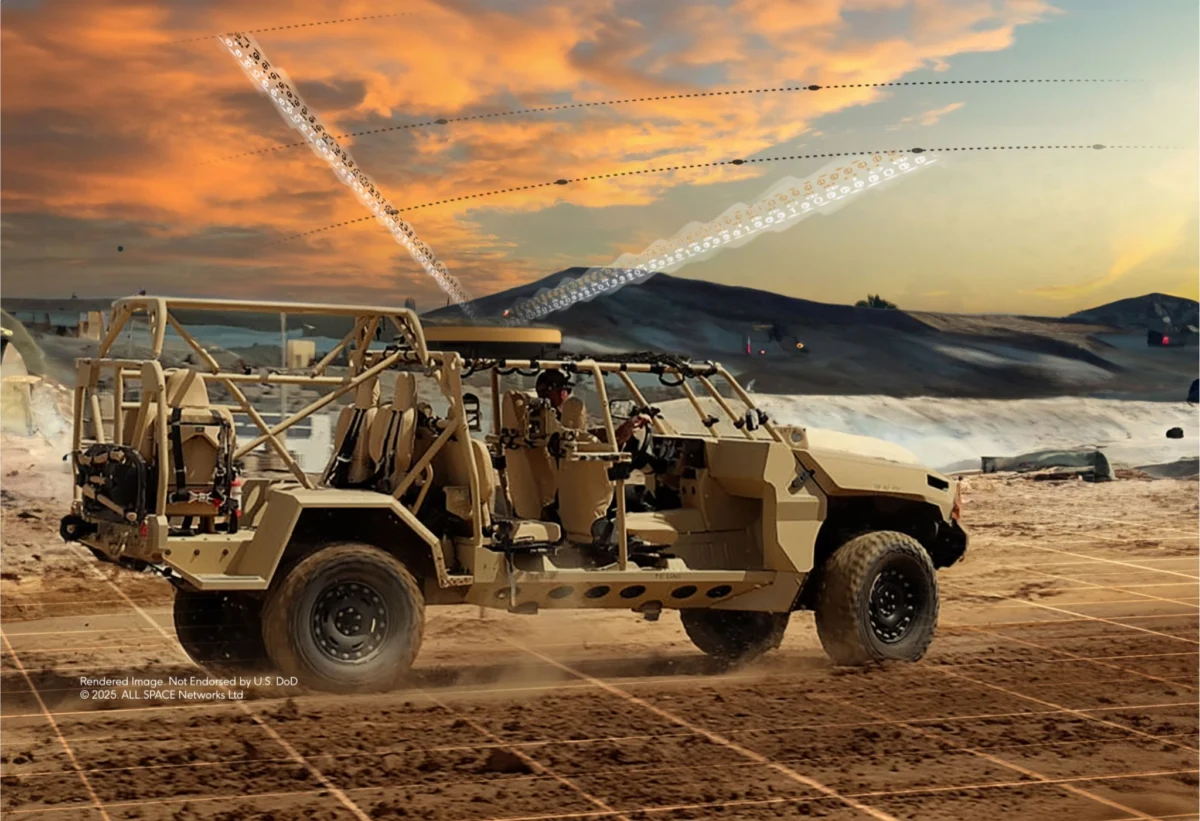
The Hydra terminal is not merely a satellite dish; it is a software-defined, multi-beam platform capable of simultaneous, full-duplex communication across multiple orbits—including Low Earth Orbit (LEO), Medium Earth Orbit (MEO), and Geostationary Orbit (GEO). In the current geopolitical landscape, where signal jamming and orbital interference are becoming commonplace, the ability to seamlessly switch between satellite constellations is a tactical necessity.
The DIU’s 10³ project is designed to bridge the "valley of death" that often plagues defense innovation. Traditionally, defense hardware takes years to iterate and is produced in small, bespoke batches. The 10³ initiative aims to force a paradigm shift:
- Scale: The goal is to move from limited pilot programs to industrial-scale output, targeting production rates of hundreds of units per month and thousands per year.
- Integration: The program utilizes an iterative design-build-test-validate cycle, allowing All.Space to mature its manufacturing readiness levels (MRLs) in real-time.
- Agility: By utilizing commercial-off-the-shelf (COTS) methodologies and advanced manufacturing techniques, the DoD hopes to reduce the time-to-field for mission-critical hardware.
Chronology: A Strategic Pivot to the U.S.
The award of this contract follows a period of intense organizational transformation for All.Space, marking a clear pivot toward deep integration with the U.S. defense apparatus.
- Pre-2024: All.Space, formerly known as Isotropic Systems, established itself in the U.K. as a developer of revolutionary lens-based antenna technology.
- Mid-2026: A defining moment in the company’s history occurred when York Space Systems acquired All.Space. This acquisition was not merely financial; it was a vertical integration move aimed at creating a "space-to-ground" ecosystem where terminal hardware and satellite bus manufacturing could operate in synergy.
- July 2026: Following the acquisition, leadership from both York Space and All.Space articulated a vision for a "resilient communications architecture." This period marked the beginning of the company’s transition of its headquarters and manufacturing base from the U.K. to the United States.
- Late 2026: All.Space inaugurated its new technical and manufacturing hub in Florence-Muscle Shoals, Alabama. This site was specifically chosen to tap into the regional aerospace talent pool and to establish a robust domestic supply chain.
- November 2025/2026: The announcement of the DIU OTA contract serves as the validation of this relocation strategy, cementing the company’s status as a core supplier for the U.S. Department of Defense.
Supporting Data: The Manufacturing Challenge
The primary challenge for military satcom has always been the "tail-end" of the architecture. While the Pentagon spends billions on massive LEO constellations, the "user segment"—the terminals that connect soldiers to those satellites—has historically been the bottleneck.
Current industry standards for complex, multi-beam, electronically steered antennas (ESAs) are characterized by long lead times, often exceeding 12 to 18 months for specialized hardware. All.Space’s Hydra platform, by contrast, uses advanced beam-forming technology that requires complex micro-electronics assembly.
To meet the DIU’s 10³ requirements, All.Space is implementing:
- Automated Assembly: Moving away from manual labor for sensitive antenna components to high-speed robotic assembly lines.
- Digital Twin Validation: Every terminal produced will be stress-tested against a digital twin, ensuring that mass-produced units meet the same rigorous defense standards as hand-built prototypes.
- Supply Chain Resiliency: By anchoring its hub in Alabama, All.Space is reducing reliance on fragile, trans-oceanic logistics chains, ensuring that the components for Hydra terminals are sourced, assembled, and tested within the continental U.S.
Official Responses and Strategic Outlook
Rod McCurdy, COO of All.Space, emphasized that this contract is not just about producing more units—it is about keeping pace with the changing nature of warfare.
"Hydra was designed to deliver resilient connectivity across multiple networks and orbits," McCurdy stated following the announcement. "This effort provides an opportunity to demonstrate how those capabilities can be delivered at the pace required by next-generation space and defense architectures."
The rhetoric from both All.Space and the DIU suggests a shift in the procurement philosophy. Rather than waiting for a "perfect" terminal to be designed over a decade, the DoD is now opting for a "good enough, fast, and scalable" model. By funding the manufacturing process itself (via the 10³ program), the DIU is effectively subsidizing the industrial capacity that All.Space needs to fulfill the massive demand anticipated by the U.S. Space Force and the Army’s tactical networks.
Implications: A New Era of Tactical Connectivity
The successful execution of this contract could have far-reaching implications for the defense-tech sector and the future of satellite communications.
1. The Death of Bespoke Hardware
If All.Space succeeds in scaling Hydra production to thousands of units per year, it will effectively render the "bespoke" satellite terminal model obsolete. The ability to mass-produce multi-orbit terminals means that the DoD can equip not just high-value assets like aircraft carriers or command centers, but also smaller tactical units, remote sensors, and even individual infantry squads with high-bandwidth, resilient, and jam-resistant connectivity.
2. Strengthening the Alabama Aerospace Hub
The decision to center operations in Florence-Muscle Shoals highlights the growing trend of "distributed defense manufacturing." By moving away from traditional hubs like D.C. or California, All.Space is tapping into a lower-cost, highly skilled labor force. This model could serve as a blueprint for other defense contractors looking to scale production without the prohibitive costs of coastal metropolitan areas.
3. The "Multi-Orbit" Necessity
The Hydra’s ability to communicate across LEO, MEO, and GEO is not a luxury; it is the cornerstone of modern survivability. In a high-end conflict, an adversary will likely target specific orbits. If a terminal is locked to a single provider or a single orbit, the soldier on the ground is blind the moment that orbit is compromised. By normalizing the manufacturing of terminals that can "hop" between constellations, All.Space is helping the DoD build a "self-healing" network.
4. Integration with York Space Systems
The synergy between York Space (the satellite provider) and All.Space (the terminal provider) represents a new era of "end-to-end" defense acquisition. By owning both the space segment and the user segment, the combined entity can optimize performance in ways that independent contractors cannot. This vertical integration is likely to become the gold standard for future military space procurements.
Conclusion
The DIU contract awarded to All.Space is a significant milestone in the evolution of American defense technology. It marks a transition from a world where military communications were limited by the manufacturing speed of the industrial age, to one where the speed of software development and digital manufacturing drives the frontline capability.
As the program progresses through its iterative design-build-test-validate cycle, the eyes of the defense industry will be fixed on the Florence-Muscle Shoals facility. If All.Space can meet the ambitious production targets of the 10³ project, it will have not only secured a lucrative contract but will have fundamentally redefined the threshold of what is possible for tactical satellite communications in the 21st century. The era of the "unplugged" battlefield may soon be coming to an end, replaced by a constant, resilient, and globally accessible stream of data, enabled by the scaling of the Hydra terminal.