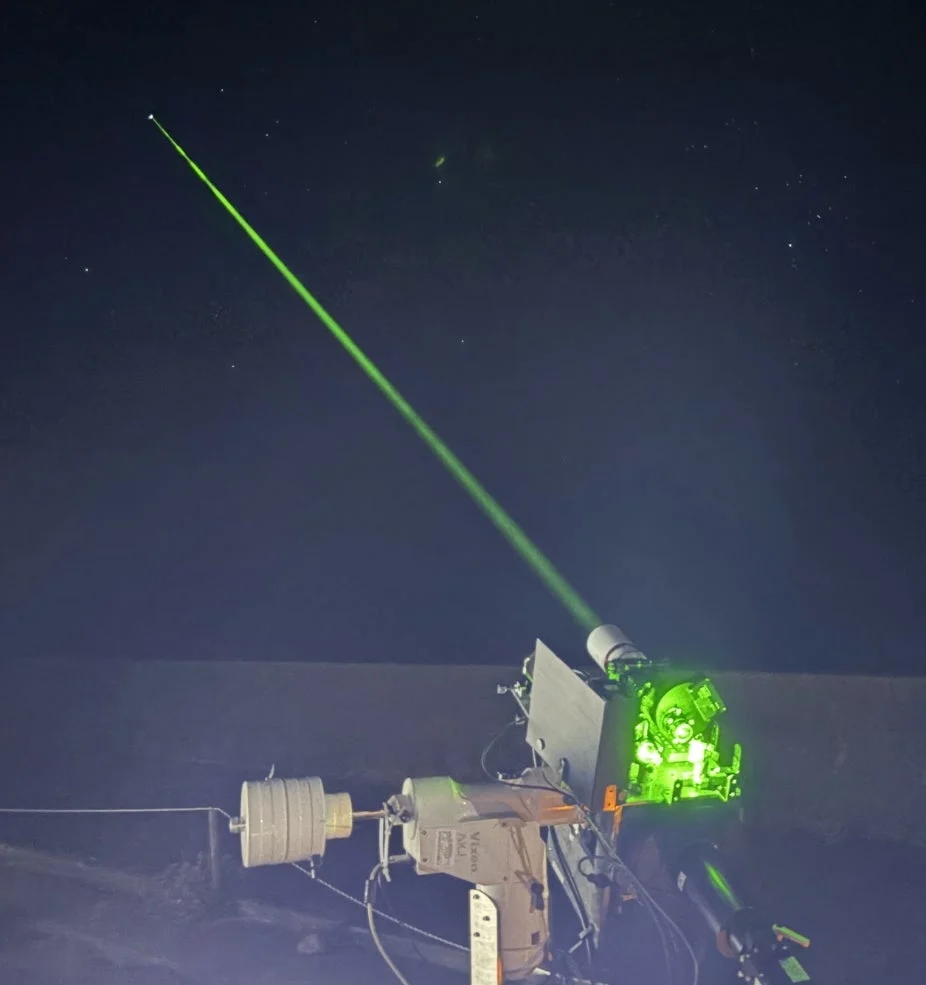
In a pivotal development for the future of lunar exploration, networking technology firm AiRanaculus has been awarded a $5 million contract by NASA. The funding, granted through the Civilian Commercialization Readiness Pilot Program (CCRPP), marks a significant step forward in the agency’s effort to build a robust, resilient, and high-speed communication infrastructure for the Moon and beyond.
As humanity sets its sights on establishing a permanent presence on the lunar surface, the challenges of maintaining seamless connectivity between Earth, lunar orbiters, and surface assets have moved to the forefront of mission planning. AiRanaculus, known for its expertise in intelligent networking, is set to play a critical role in solving these connectivity puzzles.
The Core Objective: Enhancing CLAIRE and INSPiRE
Under the 24-month CCRPP contract announced on June 25, AiRanaculus will focus on the enhancement and maturation of two of its flagship technological platforms: CLAIRE and INSPiRE. These systems are being engineered to support the rigorous demands of lunar and deep-space networking environments.
The project is not a solitary endeavor. AiRanaculus is spearheading a collaborative effort alongside the NASA Ames Research Center and an impressive lineup of industry titans, including NVIDIA, Nokia Federal Solutions, Dell Technologies, Curtiss-Wright, Supermicro, and Radisys. This consortium represents a cross-section of the aerospace, telecommunications, and high-performance computing sectors, all working in tandem to bridge the gap between terrestrial and extraterrestrial networking.
The primary goal is to advance the Technology Readiness Level (TRL) of CLAIRE and INSPiRE. Through a series of integrated tests and high-stakes space flight demonstrations, the partnership aims to prove that these technologies can withstand the harsh realities of space—characterized by extreme radiation, thermal fluctuations, and the logistical nightmare of high-latency, long-distance signal transmission.
A Chronology of Lunar Connectivity
The push to modernize space communications did not happen in a vacuum. It is the culmination of years of iterative progress in telecommunications.
- The Early Days of Deep Space Networking: Since the Apollo era, communication with the Moon relied on the Deep Space Network (DSN), a global array of massive radio antennas. While effective, the DSN is increasingly burdened by the influx of data from modern lunar missions.
- 2021: The Nokia Breakthrough: A major inflection point occurred in early 2021 when Nokia announced a contract with NASA to deploy the first cellular network on the Moon. This proved that commercial off-the-shelf (COTS) technology—specifically LTE and 5G—could be adapted for lunar environments.
- The Rise of Cislunar Infrastructure: Following the Nokia contract, the industry shifted its focus from simple voice and telemetry links to building a "lunar internet." This requires the ability to route data autonomously, handle interference, and manage handovers between moving assets in lunar orbit and static surface stations.
- June 25, 2024: NASA officially announces the $5 million CCRPP award to AiRanaculus, signaling a commitment to integrating advanced intelligent networking software into the burgeoning lunar communication architecture.
Technical Implications: Why CLAIRE and INSPiRE Matter
To understand the significance of this award, one must examine the specific hurdles of space networking. Unlike terrestrial networks, which rely on a dense grid of fiber optics and localized cell towers, lunar networks are sparse and dynamic.
CLAIRE and INSPiRE are designed to bring "intelligence" to this infrastructure. According to the company, these platforms provide:
- Interference Awareness: In an increasingly crowded lunar orbit, managing frequency spectrums is critical. These systems are designed to identify and mitigate signal interference autonomously.
- Resilient Defense-Grade Connectivity: Drawing on expertise from terrestrial defense communications, the systems prioritize data integrity even when the network topology changes rapidly due to orbital mechanics.
- Autonomous Networking: Given the time-delay between Earth and the Moon (roughly 1.3 seconds), human-in-the-loop management is not always feasible. AiRanaculus’s software allows for self-healing and automated routing, ensuring that data packets reach their destination even if a node goes offline.
Industry Synergy: A Collaborative Ecosystem
The list of collaborators involved in this contract highlights the complexity of the task.
- NVIDIA provides the computational power required to run AI-driven networking algorithms at the edge.
- Dell Technologies and Supermicro offer the ruggedized, high-performance computing hardware necessary to house these software stacks in space-rated enclosures.
- Radisys and Curtiss-Wright provide the specialized communications modules that translate digital data into radio transmissions, while Nokia brings the practical experience of 5G deployment in extreme environments.
This synergy allows NASA to leverage commercial innovation rather than developing proprietary, bespoke hardware for every mission, drastically reducing the cost-per-bit for lunar communications.
Official Perspectives: The Vision for Intelligent Communications
Dr. Apurva Mody, founder and CEO of AiRanaculus, views this contract as the next evolutionary step for global communications. "From resilient defense communications and interference-aware 5G systems to autonomous space networking, CLAIRE and INSPiRE represent the next evolution of intelligent communications infrastructure where reliability is mission critical, whether on Earth or beyond," Dr. Mody stated following the announcement.
The sentiment from NASA Ames is equally optimistic. By fostering these commercial partnerships, the agency is effectively outsourcing the "plumbing" of the lunar economy to private enterprise. This allows NASA to focus on scientific exploration while ensuring the underlying data highways are as reliable as those found in a modern metropolitan area on Earth.
Implications for the Future of Exploration
The success of this 24-month project has profound implications for the Artemis program and the future of human habitation on the Moon.
Scaling the Lunar Economy
For a lunar base to function—whether it is a research station, a mining facility, or a refueling depot—it requires reliable connectivity. Scientists need to stream high-definition video of experiments; autonomous rovers need low-latency links to navigate craters; and life-support systems require real-time monitoring. The software being developed by AiRanaculus provides the backbone for this entire ecosystem.
Security and Spectrum Management
As more nations and private entities land on the Moon, the potential for spectrum congestion increases. The "interference-aware" capabilities of the CLAIRE platform will be essential in preventing "space traffic jams," ensuring that critical mission data is not lost due to signal overlap.
The "Dual-Use" Advantage
One of the most compelling aspects of the CCRPP is the emphasis on dual-use technology. The same algorithms that allow a rover to maintain a 5G connection on the Moon can be deployed in disaster-stricken areas on Earth, where terrestrial infrastructure has been destroyed. By investing in space, NASA is simultaneously upgrading the resiliency of Earth’s own communication grids.
Conclusion: A New Era of Connectivity
The $5 million award to AiRanaculus is more than just a contract; it is a signal that the infrastructure of the space age is moving from the "experimental" phase into the "operational" phase. As CLAIRE and INSPiRE undergo their upcoming flight demonstrations, they will be stress-tested against the harshest conditions in the solar system.
If successful, these platforms will serve as the invisible nervous system of the Moon. They will facilitate the data flow that allows humanity to expand its reach, transforming the lunar surface from a distant, mysterious destination into a connected extension of our world. As the 24-month development cycle progresses, the global space community will be watching closely, recognizing that in the vacuum of space, the most important technology isn’t just the rocket that gets you there—it’s the network that keeps you connected.