By Satellite Today Staff
In a strategic move to secure technological supremacy in the final frontier, a consortium of industry titans, cutting-edge research institutions, and defense-focused innovators have formally launched "America’s Quantum Space Initiative." This collaborative effort, announced this week, marks a pivotal shift in how the United States approaches the integration of quantum mechanics into aerospace infrastructure.
By unifying the expertise of companies such as Infleqtion, Voyager Technologies, Monarch Quantum, and Armada, alongside the academic rigor of the University of Colorado Boulder, the initiative seeks to bridge the chasm between experimental quantum research and operational space-based deployment.
The Strategic Imperative: Main Facts and Objectives
The core mission of America’s Quantum Space Initiative is clear: to transition quantum technologies from the protected environments of laboratory benches to the harsh, unforgiving vacuum of orbit. While quantum computing has long been discussed in terrestrial contexts—promising to solve complex optimization, cryptographic, and modeling problems—the space domain offers unique advantages, including global reach and signal transmission capabilities that are theoretically immune to traditional interception.
The initiative functions as an umbrella framework designed to catalyze three specific pillars of development:
- Technological Innovation: Accelerating the development of radiation-hardened quantum sensors and atomic clocks.
- Infrastructure Deployment: Establishing the "Quantum Space Hub," a centralized network for testing and scaling quantum-ready space hardware.
- Cross-Sector Synergy: Facilitating a "triple-helix" model of cooperation, where government policy, private capital, and academic research move in lockstep to avoid the silos that often stifle innovation.
The formation of the Quantum Space Hub is perhaps the most significant logistical development. This network acts as a collaborative clearinghouse, allowing startups and defense contractors to share data, mitigate supply chain risks, and synchronize their R&D roadmaps to ensure that American quantum hardware is compatible with next-generation satellite constellations.
Chronology: From Theoretical Physics to Orbital Reality
The emergence of this initiative did not happen in a vacuum; it is the culmination of years of quiet, rapid advancement in the quantum sector.
- 2020–2022: The Prototyping Era. Companies like Infleqtion (formerly ColdQuanta) began demonstrating the feasibility of neutral atom quantum computers and portable atomic clocks. During this period, the focus was on proving that delicate quantum states could be maintained outside of cryogenic-heavy environments.
- 2023: The Shift Toward Space. Interest spiked as national security agencies began identifying "Quantum Positioning, Navigation, and Timing" (PNT) as a critical requirement for maintaining GPS-denied navigation capabilities.
- 2024: The Foundation of Partnerships. Exploratory talks began between academic researchers at the University of Colorado Boulder and private sector partners regarding the necessity of a standardized testing framework for quantum payloads.
- 2025: Operational Integration. Armada and Monarch Quantum begin integrating quantum-ready architectures into their satellite planning, leading to the formalized launch of the initiative in mid-2026.
This timeline reflects a maturing market that has moved past the "hype cycle" and into the "engineering cycle," where the focus is now on durability, size, weight, and power (SWaP) constraints inherent in satellite engineering.
Supporting Data: The Quantum Advantage in Space
To understand the necessity of this initiative, one must look at the limitations of current space infrastructure. Modern satellites rely on traditional semiconductor-based computing and atomic clocks that, while precise, are subject to drift and potential spoofing.
Quantum technologies offer a paradigm shift in three key areas:
1. Quantum PNT (Positioning, Navigation, and Timing)
Traditional GPS relies on microwave atomic clocks. Quantum-enabled sensors can achieve order-of-magnitude improvements in timing stability. By integrating quantum sensors into space-based architectures, the U.S. can develop navigation systems that function autonomously for weeks without needing a terrestrial signal refresh.
2. Quantum Key Distribution (QKD)
As the threat of "quantum-capable" adversaries increases—specifically those capable of using large-scale quantum computers to crack current encryption—space-based QKD becomes a national security imperative. By creating a quantum-secured communication network, the initiative aims to protect sensitive government and financial data from future decryption attempts.
3. Sensing and Earth Observation
Quantum sensors can detect subtle changes in gravity, magnetic fields, and atmospheric density. In orbit, these sensors can provide unprecedented insights into climate change monitoring, resource management, and underground infrastructure surveillance, providing a depth of data that classical sensors cannot replicate.
Official Responses: Aligning the Vision
The leadership involved in the initiative has emphasized that the goal is not merely to build hardware, but to build an ecosystem.
Dylan Taylor, chairman and CEO of Voyager Technologies, underscored the long-term vision in his inaugural statement: "American leadership in space depends on turning breakthrough technologies into enduring capabilities. Quantum technologies represent an exciting frontier, and we look forward to helping advance the infrastructure, partnerships, and innovations that will support the next generation of space missions."
From the academic perspective, the University of Colorado Boulder—a hub for quantum research—views the initiative as a vital pipeline for talent. By connecting graduate researchers directly with industry deployment projects, the initiative ensures that the U.S. maintains a competitive edge in quantum engineering human capital.
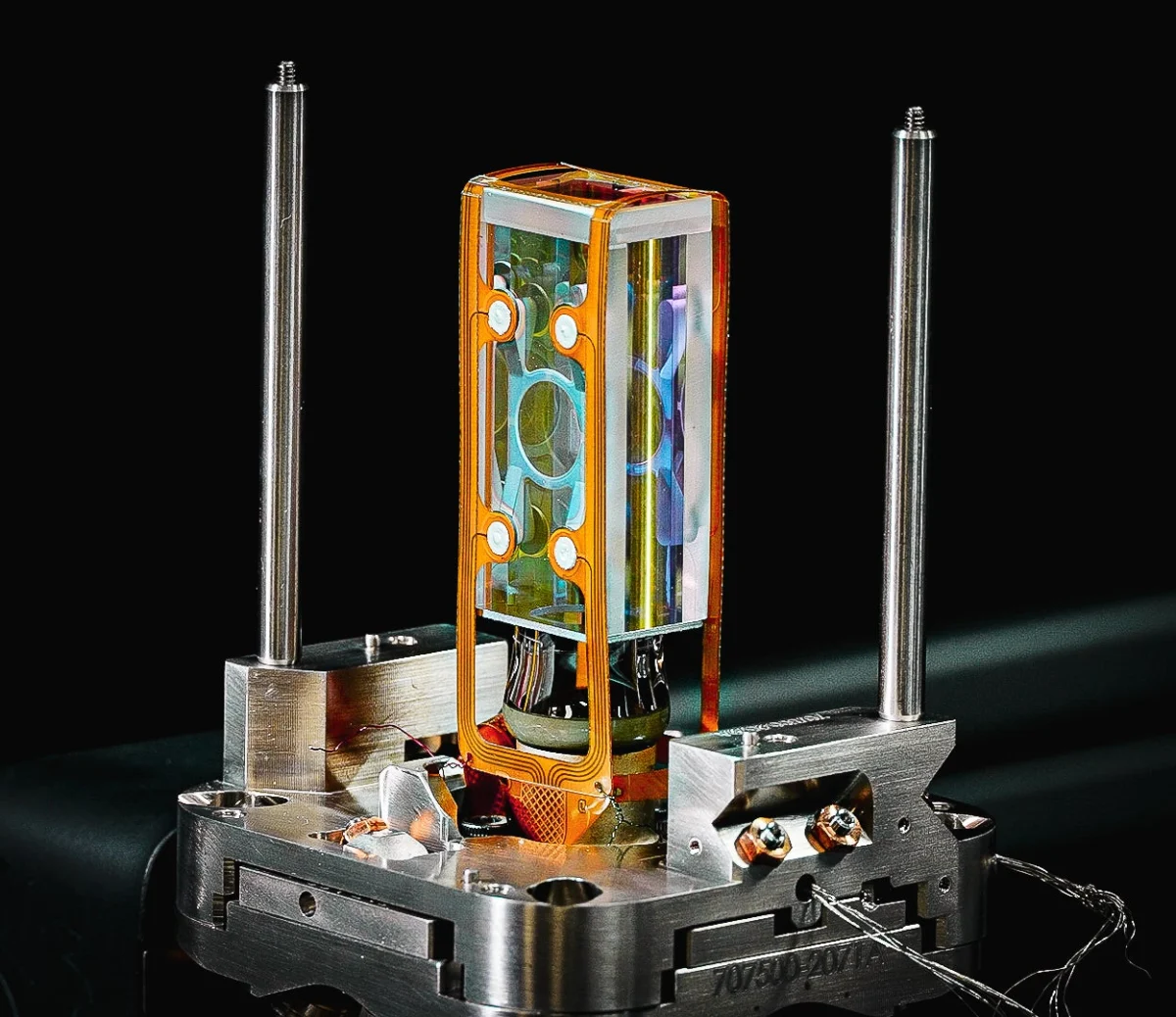
Infleqtion, which specializes in neutral atom platforms, noted that their "glass cell" technology is designed specifically for the rigors of spaceflight. By providing the fundamental building blocks—the quantum processing units—they are enabling the rest of the consortium to focus on application-specific tasks like communications or sensing.
Implications: The Geopolitical Landscape
The launch of America’s Quantum Space Initiative has significant implications for global geopolitics and the future of the space economy.
A New Space Race
While the U.S. has maintained a strong lead in traditional aerospace, the quantum domain is highly contested. Nations like China and members of the European Union are heavily investing in quantum satellite networks. This initiative acts as a defensive and offensive measure, ensuring that the U.S. standard for quantum communications and sensing becomes the global benchmark.
Economic Impact
The creation of the Quantum Space Hub is expected to drive significant investment into the domestic manufacturing base. By providing a clear roadmap for technology demonstration and deployment, the initiative reduces the risk for venture capital firms looking to invest in space-based quantum startups. This could lead to a surge in high-tech jobs across the U.S. "Quantum Corridor," spanning from Colorado to the aerospace hubs of the East and West Coasts.
The Future of Defense
In the context of the U.S. Space Force and the broader defense apparatus, the ability to process data at quantum speeds in orbit will redefine situational awareness. If a satellite can perform on-board quantum computation, it can analyze vast streams of imagery or signals intelligence in real-time, drastically reducing the latency currently involved in beaming raw data to ground stations for processing.
Conclusion: Challenges and the Path Forward
Despite the optimism surrounding the initiative, the path forward is not without hurdles. The primary challenge remains the harsh environment of space. Ionizing radiation can cause decoherence in quantum states, and the thermal management of sensitive quantum hardware in a satellite remains an engineering puzzle that has yet to be fully solved for long-duration missions.
However, the strength of the America’s Quantum Space Initiative lies in its collaborative nature. By pooling resources from the University of Colorado Boulder’s theoretical research, Armada’s operational capabilities, and Infleqtion’s hardware expertise, the group is better positioned to overcome these technical barriers than any single entity acting alone.
As we look toward the remainder of the decade, the success of this initiative will be measured not by the number of press releases issued, but by the number of quantum payloads successfully integrated into operational satellite buses. If the partners can demonstrate a stable, functional quantum communication link or a superior quantum-enabled navigation sensor in orbit, they will have effectively secured the next era of American space dominance.
The quantum era in space has arrived. Through this initiative, the U.S. is signaling that it intends to lead it.