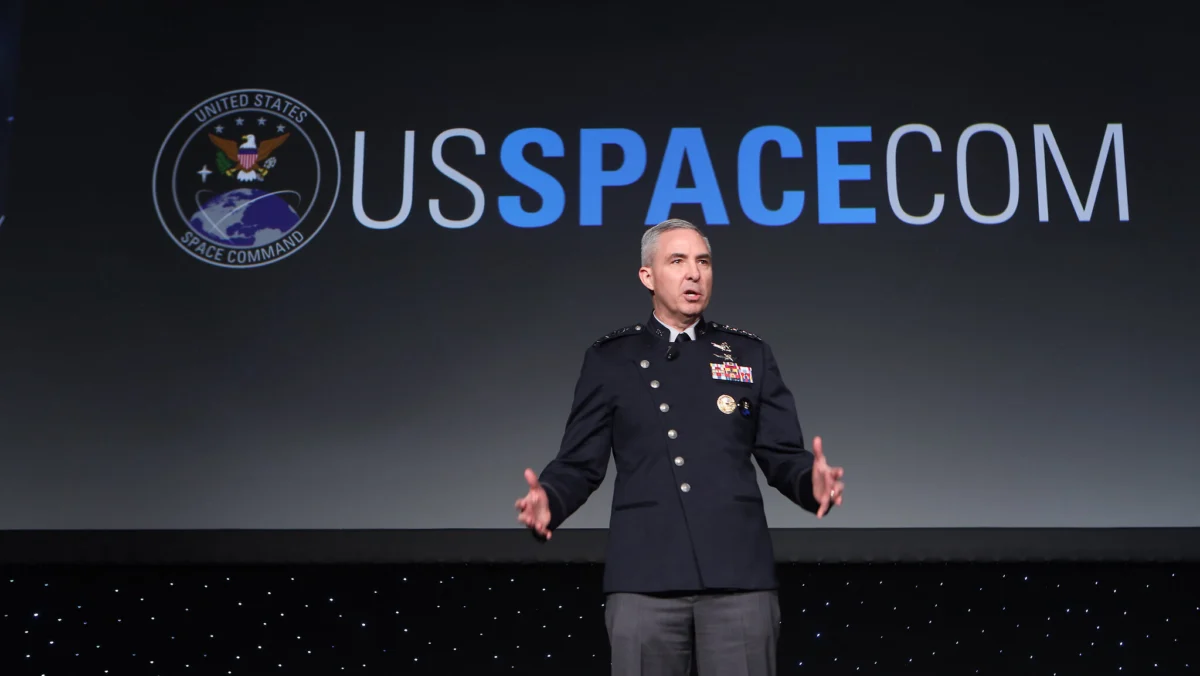
MAUI, Hawaii — The United States military is facing a stark reality in the final frontier: its ability to neutralize adversary threats in space remains critically underdeveloped. Gen. Stephen Whiting, Commander of U.S. Space Command (SPACECOM), delivered a sobering assessment at the annual Advanced Maui Optical and Space Surveillance Technologies (AMOS) conference, highlighting that the nation currently lacks the robust targeting infrastructure required to project power effectively in orbit.
While the U.S. military has mastered the art of "find, fix, track, and target" across terrestrial domains—land, sea, and air—Gen. Whiting warned that these processes are still in their infancy within the space domain. As geopolitical tensions rise and adversaries expand their counterspace capabilities, the absence of mature "target folders" for orbital threats leaves the U.S. potentially vulnerable to surprise attacks.
The Core Challenge: A Lack of Orbital "Target Folders"
For decades, the Joint Force has relied on sophisticated intelligence, surveillance, and reconnaissance (ISR) to maintain dominance. In the maritime or land domains, a commander can pull up a comprehensive digital dossier on a threat—a "target folder"—that details the asset’s location, vulnerabilities, and the optimal means of engagement.
Gen. Whiting’s remarks suggest that SPACECOM has yet to achieve this level of maturity for space-based threats. "To be able to negate threats in space, we must be able to find, fix, track, and target those threats," Whiting told attendees. "Targeting in the space domain is maturing, but it still has a long way to go."
The General’s admission underscores a fundamental paradigm shift. Space was once considered a "sanctuary" domain, largely used for benign purposes like GPS and communications. Today, it is a warfighting domain. The transition from monitoring to active engagement requires a level of precision and real-time data integration that the current architecture is struggling to support.
Chronology of the Shift: From Sanctuary to Battlefield
To understand why these gaps exist, one must look at the evolution of space operations over the last two decades:
- Pre-2010s: The Era of Sanctuary. Space was primarily treated as an infrastructure enabler. Conflicts were terrestrial, and satellites were largely ignored by kinetic anti-satellite (ASAT) weapons.
- 2010–2018: The Emergence of Counterspace. Major global powers began testing kinetic interceptors and co-orbital systems, signaling that space was no longer a safe haven.
- 2019: The Establishment of USSPACECOM. Recognizing the threat, the U.S. re-established a dedicated combatant command for space.
- 2020–2023: The Proliferation of Threats. The rapid expansion of "reversible" effects, such as laser blinding and sophisticated jamming, necessitated a move toward "space control" strategies.
- 2024: The Targeting Crisis. Gen. Whiting’s recent disclosure highlights that while the command structure exists, the operational toolkit for offensive counterspace maneuvers is lagging behind the threat environment.
Supporting Data: Why "Space Control" Requires SDA
At the heart of the targeting issue is the concept of Space Domain Awareness (SDA). Gen. Whiting described SDA as the "bedrock" of space control, likening it to the foundational wisdom of Sun Tzu. Without precise knowledge of the "terrain" (orbital mechanics) and the "enemy" (adversary satellites), the U.S. is effectively operating blind.
The Components of Space Control:
- Proactive Warfighting: Moving beyond passive defense.
- Kinetic vs. Non-Kinetic Fires: Utilizing both physical destruction and electromagnetic interference.
- Reversible vs. Non-Reversible Effects: Determining whether to temporarily disrupt a signal or permanently disable an adversary asset.
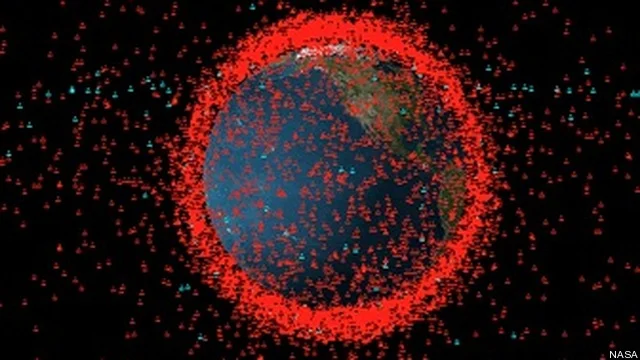
The complexity of these operations is compounded by the sheer volume of space. Currently, the U.S. tracks thousands of objects in Low Earth Orbit (LEO) and Geosynchronous Orbit (GEO). However, the expansion of commercial and military activity into cislunar space—the vast region between Earth and the Moon—presents a new, nearly unmonitored frontier.

"As we expand our operations into cislunar space and beyond, we must ensure the SDA architecture is scalable—otherwise, we risk leaving deep space unmonitored and vulnerable to exploitation by our opponents," Whiting cautioned.
Official Responses and Strategic Implications
The implications of Gen. Whiting’s assessment are significant for the Pentagon’s budgetary and procurement priorities. If SPACECOM cannot target effectively, the mission success of the entire Joint Force is at risk. Modern warfare is entirely dependent on space-based assets for Positioning, Navigation, and Timing (PNT) and Satellite Communications (SATCOM).
Addressing the Capability Gaps
The Command is now prioritizing several key initiatives to close the "targeting gap":
- Standardizing Positional States: Currently, there is no universal language for discussing the location and movement of objects in cislunar space. SPACECOM is working to establish a standard format to ensure data interoperability.
- Scalable SDA Architectures: Moving away from Earth-centric monitoring to sensor networks that can track assets across the entire cislunar volume.
- Real-time Battle Management: Developing the software and command-and-control (C2) systems that allow a commander to manage the "battlespace" once an engagement has commenced.
In a recent hearing, members of the House Armed Services Committee expressed concern over the "target folder" deficit. The response from the Department of Defense (DoD) has been to accelerate investment in commercial SDA partnerships. By leveraging commercial optical and radar arrays, the military hopes to supplement its own fragmented sensor network with higher-fidelity data.
The Strategic Outlook: A Call for Urgency
The challenges cited by Gen. Whiting are not merely technical; they are strategic. The "target folder" issue is a symptom of a larger problem: the speed of technology development in space is outpacing the speed of defense procurement.
Implications for Future Conflict:
- Increased Deterrence Risk: If adversaries perceive that the U.S. lacks the ability to effectively target their space assets, the deterrence value of U.S. counterspace capabilities is diminished.
- Pressure on the Industrial Base: Defense contractors are now under immense pressure to develop systems that can operate in deep space and provide real-time battlefield intelligence.
- Diplomatic Complexity: As the U.S. develops "offensive actions" for space, it faces a complex diplomatic environment where it must balance its own security needs with the international norms of space behavior.
"This represents a concern, and USSPACECOM is focused on addressing it," Whiting said, signaling that the command is moving from a posture of awareness to one of aggressive development.
As the U.S. military pivots toward a "Great Power Competition" model, the ability to control the high ground is paramount. For Gen. Whiting and his team, the next few years will be defined by a race to turn raw orbital data into the actionable intelligence necessary to win a conflict that, if it occurs, will be decided in the silent, vacuum-filled reaches above the atmosphere.
The warning from Maui is clear: the era of assuming space superiority is over. The era of actively fighting to maintain it—and ensuring the capability exists to do so—has only just begun.