
The private space sector has reached a historic inflection point. For over a decade, SpaceX stood as the undisputed titan of the "unicorn" class—private startups valued at $1 billion or more—monopolizing investor attention and venture capital allocations. However, following SpaceX’s landmark initial public offering (IPO), the landscape of space finance has fundamentally shifted.
Rather than leaving a vacuum, the departure of the world’s most valuable private space company has revealed a highly diversified, rapidly maturing ecosystem. Today, the ranks of space unicorns are swelling to unprecedented numbers. No longer confined to the capital-intensive domains of rocket launch and satellite broadband, the billion-dollar club now spans Earth observation, commercial space stations, orbital data centers, and in-space manufacturing.
A new comprehensive analysis by SpaceNews Intelligence, drawing on public disclosures, proprietary reporting, and historical data from BryceTech’s Startup Space database, maps this expanding cohort. The findings reveal an industry transition from a speculative "NewSpace" frontier into a robust commercial market supported by a sophisticated mix of deep-pocketed institutional investors, sovereign wealth funds, and strategic defense partners.
Chronology: The Evolution of the Space Investment Landscape
To understand the current expansion of the billion-dollar space club, it is necessary to trace how capital has flowed into the sector over the past fifteen years. The journey from niche venture investments to mainstream institutional asset class occurred in three distinct waves.
+-----------------------------------------------------------------------------+
|                                                                             |
|  PHASE 1: THE LAUNCH & BROADBAND DAWN (2010–2018)                          |
|  • Dominance of SpaceX and early launch disruptors.                         |
|  • Proof-of-concept era for reusable rocketry and small satellite tech.    |
|                                                                             |
+-----------------------------------------------------------------------------+
                                      |
                                      v
+-----------------------------------------------------------------------------+
|                                                                             |
|  PHASE 2: THE SPAC MANIA AND MARKET CORRECTION (2019–2022)                  |
|  • Influx of speculative capital via Special Purpose Acquisition Companies. |
|  • High valuations detached from revenue; subsequent market correction.     |
|                                                                             |
+-----------------------------------------------------------------------------+
                                      |
                                      v
+-----------------------------------------------------------------------------+
|                                                                             |
|  PHASE 3: THE DUAL-USE & INFRASTRUCTURE ERA (2023–Present)                  |
|  • SpaceX graduates to public markets via IPO.                              |
|  • Investment shifts to resilient, revenue-backed space infrastructure.     |
|                                                                             |
+-----------------------------------------------------------------------------+
The Launch and Broadband Dawn (2010–2018)
During this foundational era, venture capital in space was highly concentrated. Investors focused almost exclusively on solving the "launch bottleneck." SpaceX and a handful of early competitors proved that reusable rockets and small satellite constellations could drastically lower the cost of putting mass into Low Earth Orbit (LEO). During this period, a space unicorn was a rarity, and those that did exist were almost exclusively focused on launch vehicles or foundational communication networks.
The SPAC Mania and Market Correction (2019–2022)
The market experienced a dramatic acceleration as Special Purpose Acquisition Companies (SPACs) became the preferred vehicle for taking pre-revenue space companies public. This period saw a massive influx of retail and institutional capital, pushing valuations to historic highs.
However, the subsequent market correction in late 2022 and 2023 served as a critical filter. Companies with weak balance sheets and unproven business models struggled, leading to a period of consolidation. This phase, while painful for some market participants, forced the industry to mature. Investors began demanding path-to-profitability metrics rather than long-term revenue projections.
The Era of Infrastructure and Sovereign Demand (2023–Present)
Following the post-SPAC correction, the market entered its current phase of disciplined growth. The successful IPO of SpaceX acted as a catalyst, freeing up billions of dollars in venture allocation that had been locked up in the company’s private secondary markets.
Simultaneously, rising geopolitical tensions globally highlighted the critical importance of space-based assets for national security. This has driven a surge in dual-use technologies—systems that serve both commercial and defense needs—underpinning the valuations of the newest crop of space unicorns.
Sector-by-Sector Analysis: Where the Capital is Flowing
The SpaceNews Intelligence report highlights a significant diversification of the unicorn club. While launch remains a vital sector, the highest growth rates in valuation and capital attraction are occurring in secondary and tertiary space infrastructure.
         REVENUE DISTRIBUTION OF MODERN SPACE UNICORNS

         [====================] Launch & Heavy Transport (25%)
         [=========================] Earth Obs & Geospatial (30%)
         [===============] Space Stations & Habitation (20%)
         [==========] Orbital Data & Edge Computing (15%)
         [==========] In-Space Logistics & Defense (10%)
1. Earth Observation and Geospatial Intelligence
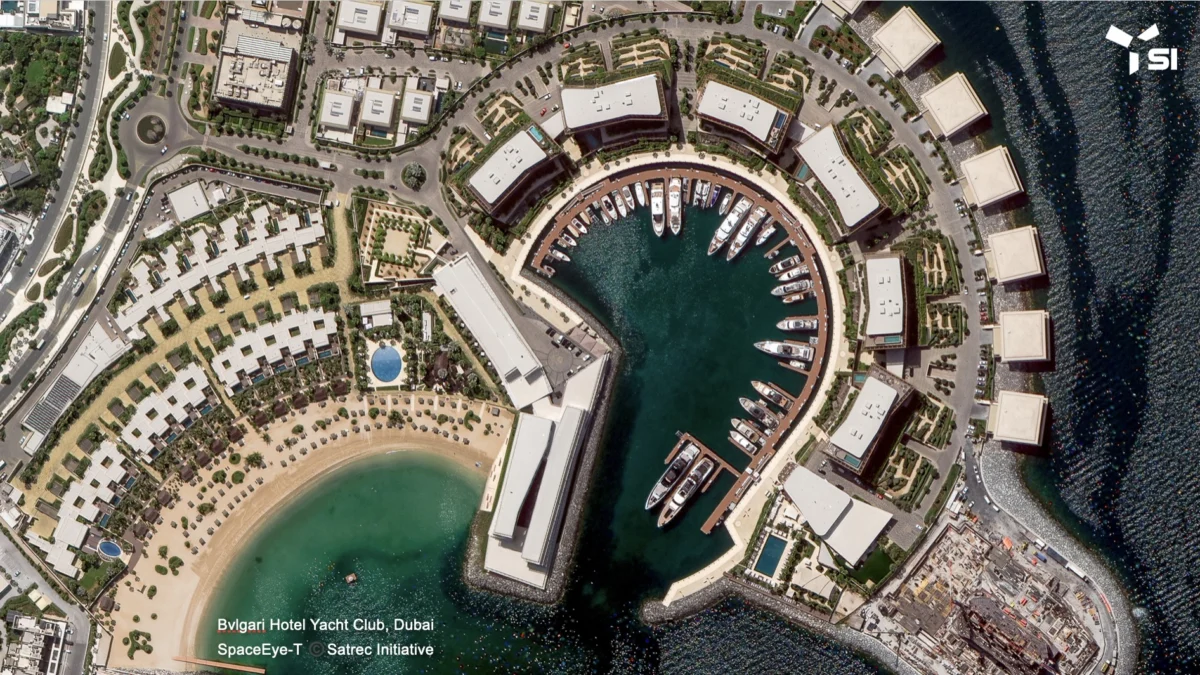
Earth observation (EO) has transitioned from simple optical imaging to high-revisit, multi-modal data collection. Modern EO unicorns utilize Synthetic Aperture Radar (SAR), hyperspectral imaging, and radio frequency (RF) mapping to bypass cloud cover and night conditions.
The valuation of these companies is heavily supported by government contracts. Agencies like the National Reconnaissance Office (NRO) and the National Geospatial-Intelligence Agency (NGA) have signed multi-billion-dollar service agreements, providing these startups with predictable, long-term cash flows that justify their $1 billion+ valuations.
2. Commercial Space Stations and LEO Infrastructure
With the planned retirement of the International Space Station (ISS) scheduled for the early 2030s, NASA and international space agencies are actively funding commercial successors. Companies developing private space stations have quickly entered the unicorn club. These firms are building modular habitats designed to support scientific research, manufacturing in microgravity, and space tourism, securing hundreds of millions in government seed funding alongside private equity.
3. Orbital Data Centers and Space Edge Computing
One of the fastest-growing subsectors in the SpaceNews report is space-based cloud computing. As satellites collect increasingly massive datasets, transmitting raw data back to Earth creates a bandwidth bottleneck.

To solve this, orbital data center startups are building radiation-hardened server constellations in LEO. By processing data directly in space using artificial intelligence, these networks can deliver real-time intelligence directly to tactical users on Earth, bridging the gap between aerospace technology and enterprise software.
4. Next-Generation Launch and In-Space Mobility
While the "first-generation" launch market has matured, new unicorns are emerging to address the demand for highly targeted orbital insertion and in-space logistics. These include companies developing:
- Space tugs and orbital transfer vehicles (OTVs).
- Active debris removal systems.
- Satellite life-extension and refueling spacecraft.
Supporting Data: Funding Metrics and Market Realities
Data compiled from BryceTech’s Startup Space database reveals the financial mechanics driving these high valuations. The threshold for reaching a $1 billion valuation in the space sector now requires a different mix of capital than it did five years ago.
| Metric / Indicator | 2018 Average | Present Day Average |
|---|---|---|
| Average Time to Unicorn Status | 8.5 Years | 5.2 Years |
| Median Capital Raised Prior to $1B Valuation | $320 Million | $185 Million |
| Primary Funding Source | Venture Capital (90%) | VC, Sovereign Wealth, Defense Contracts |
| Geographic Distribution | North America (82%) | North America (60%), Europe (25%), APAC (15%) |
This table illustrates a key trend: capital efficiency is rising. Due to standardized satellite buses, cheaper launch costs, and off-the-shelf components, space startups can build and deploy revenue-generating assets with significantly less capital than their predecessors required.
Furthermore, the geographic concentration of space wealth is shifting. While the United States remains the largest single market, Europe and the Asia-Pacific region are rapidly minting their own space unicorns. This regional diversification is driven by sovereign space mandates, as countries seek to establish domestic launch and satellite manufacturing capabilities to ensure strategic autonomy.
Industry Perspectives: Investor and Executive Sentiments
The shift in investor sentiment from speculative growth to validated utility is a recurring theme among industry leaders.
"The graduation of SpaceX to the public markets has broken the monopoly on late-stage aerospace capital," notes a managing partner at a leading Silicon Valley defense-tech fund. "For years, growth equity allocators would put their entire space allocation into SpaceX because it was the safest bet. Now, that capital is looking for the next breakout successes in LEO infrastructure and orbital defense."
However, analysts caution that reaching unicorn status is not a guarantee of long-term survival. Carissa Christensen, CEO of BryceTech, emphasizes the importance of market validation:
"A billion-dollar valuation is a milestone, not an exit. The companies that sustain and grow these valuations are those that successfully transition from venture-backed technology developers to reliable suppliers for government and commercial enterprise customers."
Executives within the newly minted unicorn cohort also point to the changing nature of government partnership. The U.S. Department of Defense, through organizations like the Defense Innovation Unit (DIU) and the Space Development Agency (SDA), is increasingly acting as a commercial buyer rather than a traditional research sponsor. This shift allows startups to scale commercial production lines with the security of a major anchor customer.
Implications: The Future of the Off-Earth Economy
The growth and diversification of the billion-dollar space club have profound implications for the global economy, national security, and the future of commercial spaceflight.
The Sovereign De-risking of Venture Capital
The modern space unicorn is rarely funded by venture capital alone. The integration of national security contracts, civil space agency grants, and state-backed investment vehicles has created a "triple-helix" funding model. This sovereign backing de-risks the long development cycles associated with hardware-heavy space technologies, making the sector far more resilient to macroeconomic downturns than traditional consumer tech.
The Liquidity Challenge
While the rise of space unicorns indicates strong private-market health, it also highlights an impending need for liquidity. Investors eventually require exits, and the public market’s appetite for space companies will be tested in the coming years. The success of post-SpaceX IPOs will determine whether the current valuation boom represents a sustainable industrial expansion or an asset bubble. If public markets remain receptive to mature, revenue-generating space firms, it will pave the way for a continuous cycle of investment and innovation.
A Multipolar Space Economy
Ultimately, the expansion of the billion-dollar space club signifies that the space economy is no longer a monolith. The infrastructure is being laid for a complex, interconnected orbital economy. In this future, rocket companies, data centers, space stations, and robotic maintenance vehicles will operate in a self-sustaining ecosystem, transforming space from a destination of exploration into a standard domain of global commerce.