By Technology Desk
September 3, 2026
In a monumental development that underscores the insatiable global demand for artificial intelligence infrastructure, Crusoe, the data center developer and cloud services provider, has successfully secured $3 billion in a new funding round. The investment, which vaults the company’s valuation to a staggering $30 billion, cements Crusoe’s position as a cornerstone of the modern AI ecosystem.
The financing round was co-led by Atreides Management and Valor Equity Partners, with significant participation from Mubadala Capital—the asset management arm of Abu Dhabi’s sovereign wealth fund. This infusion of capital follows a meteoric rise for the company, which just ten months ago was valued at $10 billion following a $1.38 billion Series E round.
Main Facts: A Giant in the Making
Crusoe’s latest valuation places it in the stratosphere of private tech companies. By securing $3 billion in a single tranche, the company is signaling its intent to aggressively expand its physical footprint of hyperscale data centers.
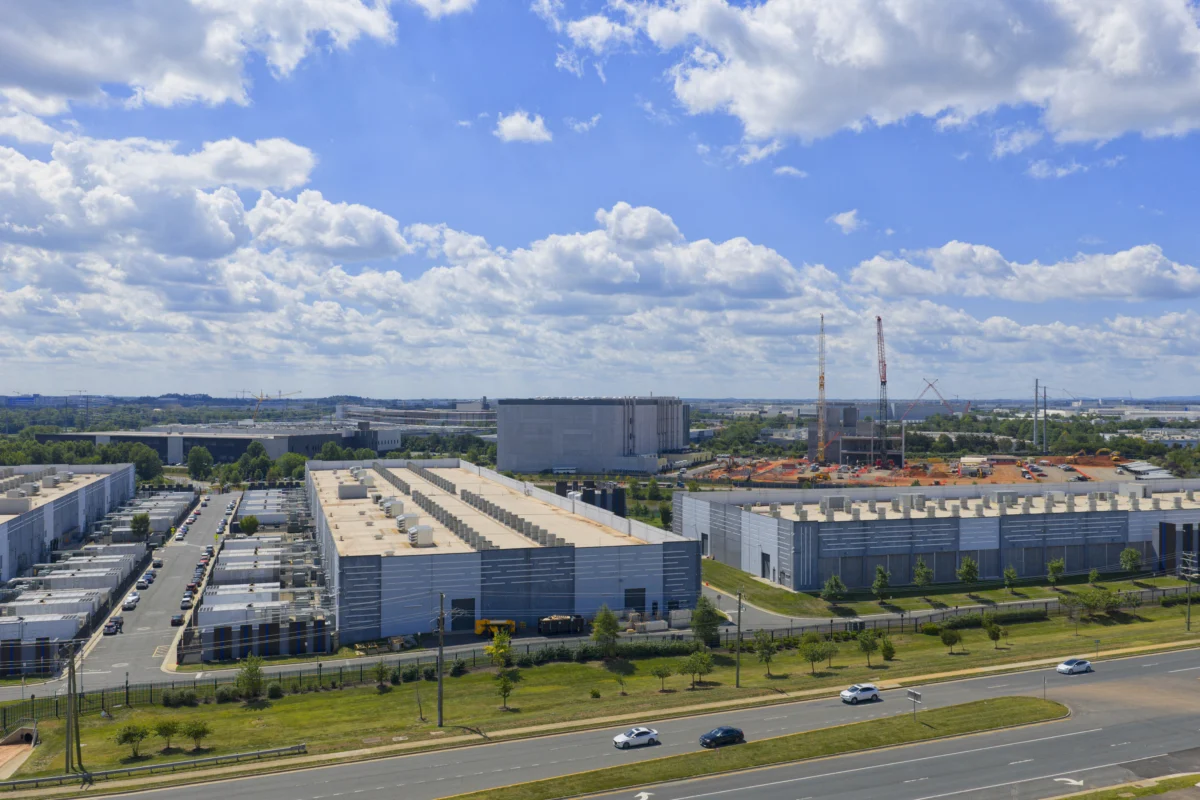
The company’s client list reads like a "who’s who" of the technology and quantitative finance worlds. With existing partnerships involving Meta, Microsoft, and OpenAI, Crusoe has effectively positioned itself as the "plumbing" for the AI revolution. By providing the compute power and infrastructure necessary to train and run massive language models, Crusoe has transformed from a niche energy-technology startup into a critical pillar of the global digital economy.
The financial momentum is further bolstered by a massive $13 billion, five-year cloud contract recently signed with Jane Street. This agreement, which focuses on supplying the quantitative trading giant with high-end GPUs and sophisticated AI infrastructure, serves as a testament to the reliability and scale of Crusoe’s operations.
Chronology: From Flared Gas to Hyperscale Computing
To understand the trajectory of Crusoe, one must look at its origins. Founded in 2018, the company began as an innovative solution to a pervasive environmental problem: the flaring of natural gas at oil drilling sites.
- 2018–2020: Crusoe launches as an energy-tech firm, utilizing "stranded" or flared natural gas to power modular, on-site data centers. These data centers were initially used for cryptocurrency mining, effectively turning a waste product into a source of low-cost energy.
- 2021–2023: Recognizing the shifting market, Crusoe begins a strategic pivot. It leverages its expertise in modular, energy-efficient data center deployment to enter the cloud infrastructure market. It begins attracting attention from big-tech players who are desperate for energy-efficient data center capacity.
- October 2025: Crusoe closes a $1.38 billion round, reaching a $10 billion valuation. This capital is earmarked for massive expansion into high-performance computing (HPC) environments.
- August 2026: Reports emerge that the company has engaged with top-tier investment banks, including Goldman Sachs, Morgan Stanley, JPMorgan, and Bank of America, to explore a potential Initial Public Offering (IPO).
- September 2026: The company secures $3 billion in fresh funding, officially pushing its valuation to $30 billion, tripling its market cap in less than a year.
Supporting Data: The Economics of the AI Gold Rush
The $30 billion valuation is not merely a product of hype; it is a reflection of the massive capital expenditure (CapEx) currently flowing into the AI sector. According to market analysts, the demand for GPU clusters—specifically those utilizing NVIDIA’s latest Blackwell and beyond hardware—far outstrips current supply.
Crusoe’s business model addresses two of the biggest hurdles in AI: power and physical space.
- Energy Efficiency: By continuing to utilize its proprietary energy solutions, Crusoe can provide data centers that are more cost-effective and environmentally sustainable than traditional, utility-grid-dependent facilities.
- Scalability: The Jane Street deal—a $13 billion commitment over five years—highlights the shift of private industry toward "AI-as-a-Service." When firms like Jane Street or OpenAI outsource their infrastructure to Crusoe, they are essentially buying guaranteed uptime and compute density, which are the scarcest commodities in the current market.
The velocity of Crusoe’s funding—tripling in value in just 10 months—reflects the "winner-takes-all" dynamic currently playing out in the data center industry. With traditional power grids struggling to keep up with the demands of AI, developers like Crusoe, who bring their own power generation capabilities, are at a distinct competitive advantage.

Official Responses and Strategic Outlook
While Crusoe has maintained a relatively low profile regarding its specific operational strategies, the involvement of high-profile backers like Mubadala Capital indicates a long-term play.
"The demand for AI infrastructure is currently the single most significant driver of industrial investment," noted one industry analyst familiar with the deal. "Crusoe isn’t just selling server space; they are selling the ability for their clients to compete in the next era of computing. The fact that they can secure a $13 billion contract from a firm as data-sensitive as Jane Street validates their technical stack."
Regarding the IPO rumors, while the company has not provided a formal comment, sources close to the situation suggest that the recent funding round is a "pre-IPO" move designed to ensure the company has the liquidity to scale operations globally before hitting the public markets. By strengthening their balance sheet now, Crusoe avoids the pressure of immediate revenue growth to satisfy public market investors, instead focusing on the long-term deployment of massive infrastructure projects.
Implications: The Future of Data Centers
The implications of Crusoe’s rise are profound for several sectors:
1. The Decentralization of Energy
By continuing to innovate in the realm of flared gas and alternative energy sources, Crusoe is proving that data centers do not need to be tethered to major municipal power grids. This could lead to a future where data centers are built closer to energy sources, reducing transmission losses and lowering the cost of AI training.
2. The Dominance of Specialized Cloud Providers
For years, the cloud market was dominated by the "Big Three": AWS, Google Cloud, and Microsoft Azure. However, companies like Crusoe, CoreWeave, and others are carving out a niche by providing specialized, GPU-heavy infrastructure. This "AI-native" cloud model is increasingly attractive to companies that do not want to navigate the bureaucratic complexities of general-purpose cloud providers.
3. IPO Market Sentiment
Should Crusoe proceed with an IPO in late 2026 or 2027, it would likely be one of the most anticipated public listings of the decade. A successful entry into the public markets would provide a clear benchmark for the valuation of AI infrastructure companies, likely triggering a wave of M&A activity among smaller players in the space.
4. Environmental and Regulatory Scrutiny
As Crusoe scales, it will undoubtedly face increased scrutiny regarding its energy consumption and its impact on the climate. The company’s origins in gas-flaring mitigation are a major part of its "green" narrative, but as it grows, the sheer scale of its power consumption will require transparency and a continued commitment to sustainable infrastructure practices.
Conclusion
Crusoe’s journey from a niche energy startup to a $30 billion titan is a microcosm of the AI boom. By solving the dual problems of energy supply and computing capacity, the company has positioned itself as an essential partner to the world’s most powerful AI labs and financial institutions.
As the company moves toward a potential IPO, all eyes will be on its ability to execute on its massive project pipeline. If the $13 billion Jane Street deal is any indication, Crusoe is not just building data centers; it is building the foundation of the intelligence economy. For investors, the message is clear: the AI arms race is no longer just about the models—it is about the iron, the silicon, and the power required to make them think.