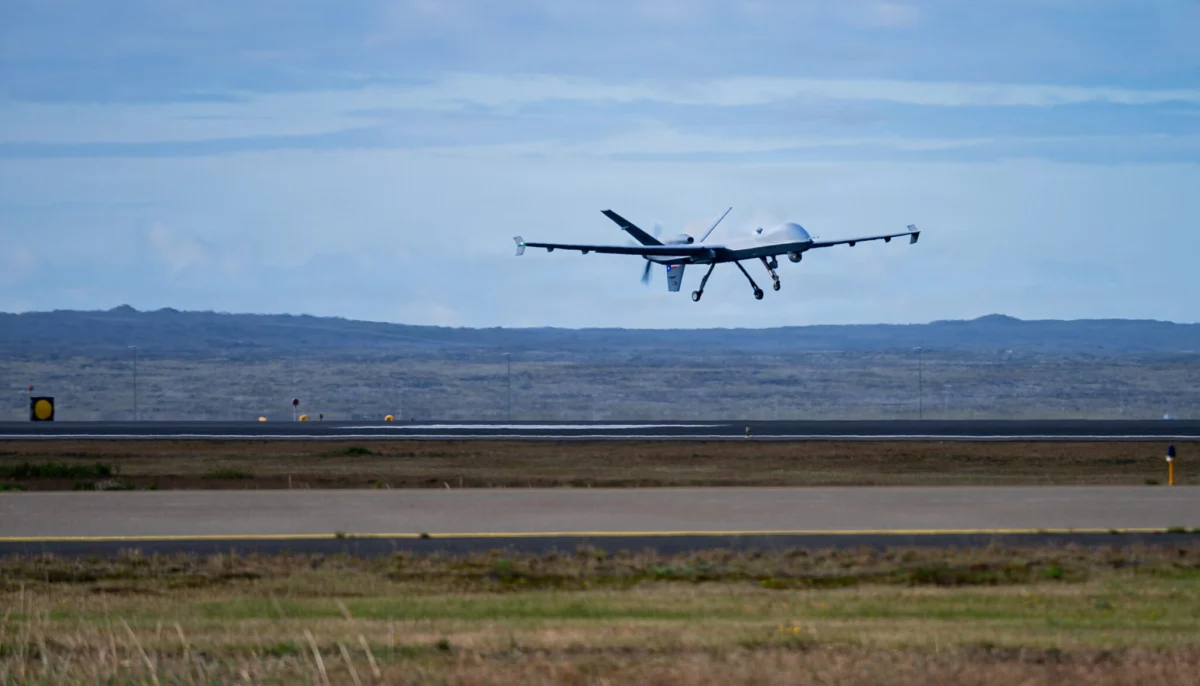
WASHINGTON — The United States Air Force is embarking on a fundamental restructuring of its unmanned aerial vehicle (UAV) strategy. Driven by alarming attrition rates in recent combat operations against Iran, the Pentagon is moving to accelerate the development of the "Mass Modular Aircraft" (MMA)—a low-cost, expendable, yet high-endurance drone designed to replace the venerable MQ-9A Reaper.
The shift marks a realization that the era of relying on expensive, exquisite platforms for long-endurance reconnaissance and strike missions may be coming to a close. With at least 45 Reapers lost since the onset of Operation Epic Fury in February—representing roughly 25% of the total inventory—Air Force leadership is signaling that the fiscal and operational model of the past is no longer sustainable in a high-intensity, contested environment.
The Strategic Imperative: Why the Reaper Must Be Replaced
For nearly two decades, the General Atomics MQ-9A Reaper has been the workhorse of the US military’s intelligence, surveillance, and reconnaissance (ISR) and strike operations. However, the Reaper was designed for permissive environments, where the threat of sophisticated anti-access/area-denial (A2/AD) systems was minimal.
Combat operations against Iran have starkly illustrated the vulnerability of these assets. As Lt. Gen. Christopher Niemi, the Air Force’s chief modernization officer, noted during a Pentagon briefing, the high rate of depletion has shifted the conversation from long-term lifecycle planning to urgent, immediate replacement.
"As we get to the end of the MQ-9 life, there was some early talk of where do we want to go afterwards, and candidly, as a result of some of the losses that we’ve experienced in combat operations, that discussion sort of got accelerated," Niemi explained. "Although we have plenty of MQ-9As today, we are going through them at a rate that is concerning to us."
The concern is not merely tactical; it is a profound budgetary challenge. With a fully missionized Reaper costing up to $50 million depending on its sensor suite and payload, the current rate of attrition is fiscally untenable.
Chronology of the MMA Program
The path to the MMA program has been characterized by rapid shifts in priority:
- February 2026: Operation Epic Fury commences. Intense combat operations lead to a surge in Reaper losses, triggering an internal review of UAV inventory health.
- July 2026: The Defense Innovation Unit (DIU) officially issues a solicitation for the Mass Modular Aircraft, seeking a low-cost, high-modularity, and highly producible drone.
- August 2026: The Washington Post reports that 25% of the Reaper fleet has been lost, placing the issue squarely in the public eye and heightening pressure on the Pentagon to provide a backfill strategy.
- Present Day: Air Force officials confirm an acceleration of the MMA program, moving beyond the original 2031 fielding goal toward an aggressive prototype-to-fielding timeline.
The Vision for the MMA: Economics Over Exquisite Design
The Air Force is aiming for a radical departure from the "exquisite" aircraft model. The goal for the MMA is a unit cost of approximately $10 million—roughly one-fifth the cost of a fully equipped Reaper. To achieve this, the Air Force is explicitly eschewing "cutting-edge" proprietary tech in favor of proven, off-the-shelf technologies.
Defining the "Truck"
Lt. Gen. Niemi was blunt in his assessment of the Reaper’s legacy. He argued that the MQ-9’s effectiveness stems from its operational role as a "truck" rather than any revolutionary flight technology.
"What makes the MQ-9 special has nothing to do with the aircraft itself," Niemi said. "There is no cutting-edge technology for how fast it flies, how high it flies, how far it flies. All that is proven, decades-old technology. If you’re focusing on the truck, and you do it in a way where you’re able to make some smart design compromises, we do think you can drive the cost down."
The technical requirements for the MMA are clear:
- Range: A one-way range of approximately 8,000 nautical miles.
- Capacity: Heavy payload capability, specifically designed for long-duration missions.
- Propulsion: Likely a turboprop engine, prioritizing efficiency and range over speed.
- Modularity: A government-owned reference architecture for hardware and software to facilitate rapid capability upgrades.
Scalability and Automation
A key pillar of the MMA program is the human-machine interface. Unlike the labor-intensive control systems of the Reaper, the Air Force envisions a future where one operator can manage multiple MMA units simultaneously.
"What I would like to have is multiple aircraft designs that go into production that can be operated with a common interface that’s more like mouse clicks and keyboard as opposed to stick and throttle," Niemi said. This shift toward "point-and-click" mission management is designed to reduce the cognitive load on operators and allow for smaller, more efficient ground crews.
Industry Response and the "Wildfire" Contender
The shift toward the MMA has triggered a robust response from the defense industrial base. While General Atomics—the manufacturer of the Reaper—faces a challenge to its dominance, the company is positioning itself to lead the new era rather than be replaced by it.
General Atomics has unveiled "Wildfire," a new drone platform specifically designed to meet the MMA requirements. C. Mark Brinkley, a spokesperson for General Atomics, emphasized that the company’s decades of experience are an asset, not a liability.
"The Reaper’s unique combination of endurance, payload, range, sensors, weapons, connectivity, adaptability, and reliability is precisely what enables mission effects that others struggle to replicate," Brinkley stated. Regarding the Wildfire platform, he added, "We can deliver years earlier and maintain the same high quality. You can have everything that makes Reaper special, plus more, at a price that doesn’t break the bank."
The competition is expected to mirror the recent Collaborative Combat Aircraft (CCA) program, where the Air Force opted for multiple vendors—including Anduril and General Atomics—to ensure supply chain resilience and competitive pricing.
Implications for Future Warfare
The move toward the MMA represents a broader philosophical shift within the Department of Defense regarding the utility of "attritable" assets.
The Cost of Attrition
The Air Force’s desire to keep the cost of an MMA drone at $10 million is fundamentally about risk management. If a platform is too expensive, commanders are hesitant to deploy it in high-threat environments, creating a "safety gap" where the military possesses assets it cannot afford to lose. By lowering the cost, the Air Force aims to normalize the loss of drones in combat, much like the loss of munitions, rather than treating each downed aircraft as a major strategic setback.
Institutional Trade-offs
However, as Gen. Niemi acknowledged, "You’re going to have to certainly give up something." By prioritizing cost and modularity, the Air Force is consciously trading off some of the "exquisite" performance metrics of the Reaper. The MMA will likely be slower and possess less sophisticated integrated defensive suites than a top-tier manned fighter, but its utility will be defined by its availability and its ability to be replaced quickly.
Rapid Fielding
The urgency behind the program is palpable. Maj. Gen. Joseph Kunkel, military deputy for the DIU, noted that the objective is to move from prototype to field-ready status within three years. This represents an extremely aggressive schedule for a major defense acquisition program, reflecting the mounting pressure from the current combat theater.
Conclusion: A New Paradigm for the Air Force
The Air Force is no longer looking for a "forever" drone. Instead, it is building a system designed for a world where combat is persistent, losses are expected, and budget constraints are the primary driver of innovation.
The transition from the MQ-9 Reaper to the Mass Modular Aircraft is not merely a change in hardware; it is a shift in the strategic calculus of the US military. By embracing modularity, automation, and a "truck-first" design philosophy, the Air Force hopes to maintain its global reach and persistent presence, even as the cost of doing so becomes increasingly fraught. Whether industry can deliver on these ambitious cost and schedule targets remains the critical question, but the mandate from the Pentagon is clear: the age of the exquisite, irreplaceable drone is over.