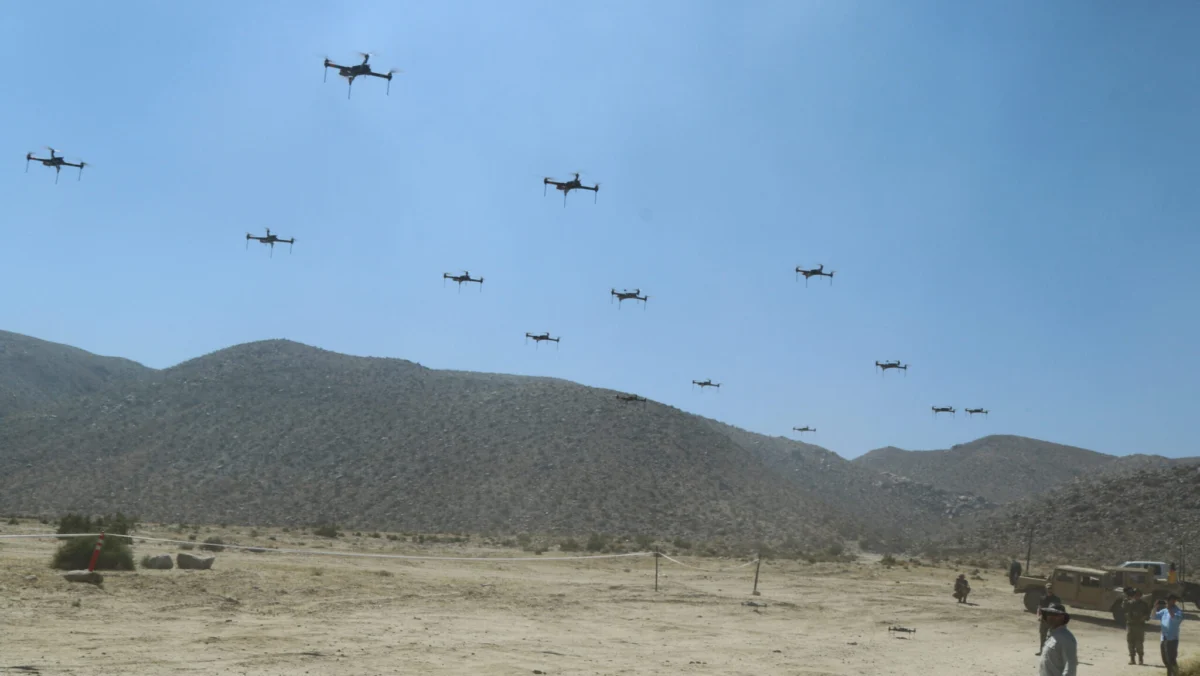
WASHINGTON — In the desolate scrublands of the Rio Grande and the bustling airspace above the American Southwest, the U.S. Department of Defense (DoD) is quietly conducting one of the most ambitious technological experiments in recent history. The U.S.-Mexico border has evolved from a traditional security perimeter into a high-tech laboratory, serving as a real-world testbed for the next generation of autonomous systems, high-energy lasers, and sophisticated sensor integration architectures.
As the Pentagon looks to pivot its focus toward modernization, officials are increasingly viewing the border not just as a site of immigration and narcotics enforcement, but as a critical domain for "force multiplication." However, the path forward is paved with budgetary uncertainty, complex regulatory hurdles, and the delicate task of balancing national security with the safety of domestic airspace.
The Strategic Shift: Border as a Proving Ground
The Pentagon’s interest in the border is driven by a dual-purpose strategy: bolster the effectiveness of service members currently augmenting Border Patrol operations, and accelerate the maturation of emerging military technologies in a domestic environment.
Mark Ditlevson, Assistant Secretary of Defense for Homeland Defense and Americas Security Affairs, recently underscored the DoD’s ambition to expand this experimental footprint. "We want to do as much as we can," Ditlevson told Breaking Defense. "I would love to continue to bring on new projects, new programs to the border and try it out, but we want to do it in a responsible way that’s safe."
The current deployment includes a variety of experimental hardware, most notably the use of 10 Lightfish unmanned surface vessels (USVs) along the Rio Grande. These vessels serve as a pilot program for a broader effort to integrate autonomous maritime surveillance with sophisticated network architectures. The success of these initial deployments has sparked interest in expanding operations into the Gulf of Mexico, potentially creating a persistent, autonomous picket line stretching from the mouth of the Rio Grande to the Florida Keys.
Chronology of Innovation and Regulatory Adaptation
The current push for border modernization did not emerge in a vacuum. It is the culmination of several years of legislative and technological evolution:
- Pre-2026: The military struggled to integrate high-energy lasers and microwaves due to size, weight, and power (SWaP) constraints. These systems were effective in laboratory settings but failed to transition to field operations.
- February 2026: An incident in El Paso, Texas, where the FAA abruptly closed airspace around the city’s airport, served as a wake-up call. The disruption was later attributed to a miscommunication between the Army and Customs and Border Protection regarding the testing of a counter-drone laser system.
- Mid-2026: In response to the growing drone threat, Congress passed the "Safer Skies Act" as part of the 2026 National Defense Authorization Act (NDAA). This landmark legislation expanded the authorities granted under Section 130i, effectively cutting the red tape that previously hindered the installation of defensive tech on U.S. soil.
- Late 2026: The DoD shifted its focus from purely hardware-centric testing to software integration, aiming to fold the Joint Interagency Task Force-401’s counter-UAS sensor architecture into existing frameworks like the Maven Smart System.
Supporting Data: The Case for Autonomous Force Multipliers
The economic and tactical logic behind the Pentagon’s border strategy rests on the "cost-per-kill" ratio. Traditional air defense munitions, such as missiles, can cost hundreds of thousands of dollars per shot. In contrast, directed energy systems—lasers and high-powered microwaves—offer a significantly cheaper alternative for neutralizing small, low-cost commercial drones.
Furthermore, the integration of unmanned ground vehicles (UGVs) is being viewed as a potential game-changer for the thousands of service members currently deployed to the border. By offloading monotonous, dangerous, or high-endurance surveillance tasks to robotic platforms, the DoD hopes to maximize the human capital of its personnel.
"If we’re going to have thousands of service members augmenting the border patrol in this mission, they need to be as effective as possible," Ditlevson noted. "One way of doing that with really targeted investments that have a great return is through a bunch of these different efforts, and unmanned ground vehicles could potentially be an area that we look at."
The push for automation extends to the skies as well. The DoD is actively researching ways to automate aerial drone operations to reduce the number of human operators required on the ground. However, this progress is contingent on solving the "obstacle avoidance" puzzle, as automated systems must adhere to strict Federal Aviation Administration (FAA) safety regulations to operate safely within civilian U.S. airspace.
Official Responses and the Budgetary Impasse
Despite the tactical enthusiasm within the DoD, the fiscal outlook remains clouded. With the fiscal year 2027 budget currently in a state of flux, the Pentagon is treading carefully. Congress has passed a continuing resolution to fund the government through early December, but the fate of the $1.15 trillion base budget—and a secondary $350 billion reconciliation package—remains highly uncertain.
"Obviously there’s major negotiations happening right now on the Hill, so I can’t speak to any sort of future budget," Ditlevson admitted. Consequently, the Pentagon’s current strategy is one of consolidation: assessing existing deployments and ensuring the "software backbone" is capable of supporting the next wave of hardware.
The focus on the software backbone is a deliberate pivot. Ditlevson emphasized that while hardware grabs the headlines, the true power lies in integration. Whether it is the DoD’s "Lattice" or Customs and Border Protection’s "Minotaur," the goal is to create a unified operating picture. "Hardware is awesome, but that software backbone also needs to be invested in," Ditlevson said.
Implications: The Future of Homeland Defense
The implications of this transition are profound. By using the U.S.-Mexico border as a surrogate for complex, contested environments, the military is effectively hardening the homeland against the same drone and autonomous threats it expects to face in future conflicts abroad.
Regulatory and Safety Challenges
The El Paso incident earlier this year highlighted the friction inherent in domestic military innovation. The "red tape" mentioned by Ditlevson was not merely bureaucratic; it represented a collision between military necessity and civilian aviation safety. However, the implementation of Section 130i has provided a clearer legal pathway for the DoD to conduct counter-UAS operations. Ditlevson expressed confidence that the lessons learned from the El Paso incident have been integrated into a more robust interagency coordination process with the FAA.
Ethical and Operational Considerations
Beyond the technical hurdles, the deployment of lethal and surveillance-heavy technology on U.S. soil brings significant ethical questions to the forefront. As the Pentagon pushes for more autonomous decision-making in its border sensors and weapons, civil liberties advocates and lawmakers will likely increase their scrutiny. The challenge for the DoD will be to prove that these systems are not only effective in curbing illicit activity but are also subject to the necessary "human-in-the-loop" safeguards.
The Path Forward
As the Department of Defense heads into the next fiscal year, the "border lab" will remain a top priority, provided the funding can be secured. The vision is a fully networked, automated, and responsive defensive layer. If successful, the technologies tested in the desert of the Rio Grande today could become the standard for domestic security tomorrow, fundamentally altering how the United States protects its sovereign boundaries in an era of rapid technological disruption.
For now, the Pentagon remains in a holding pattern, waiting for the legislative smoke to clear. As Ditlevson put it, the department is "working through it right now," balancing the need for rapid technological advancement with the necessity of maintaining a safe, transparent, and legally sound operation on American soil. Whether the requested funds arrive or not, the precedent has been set: the U.S.-Mexico border has become the new frontier for military modernization.