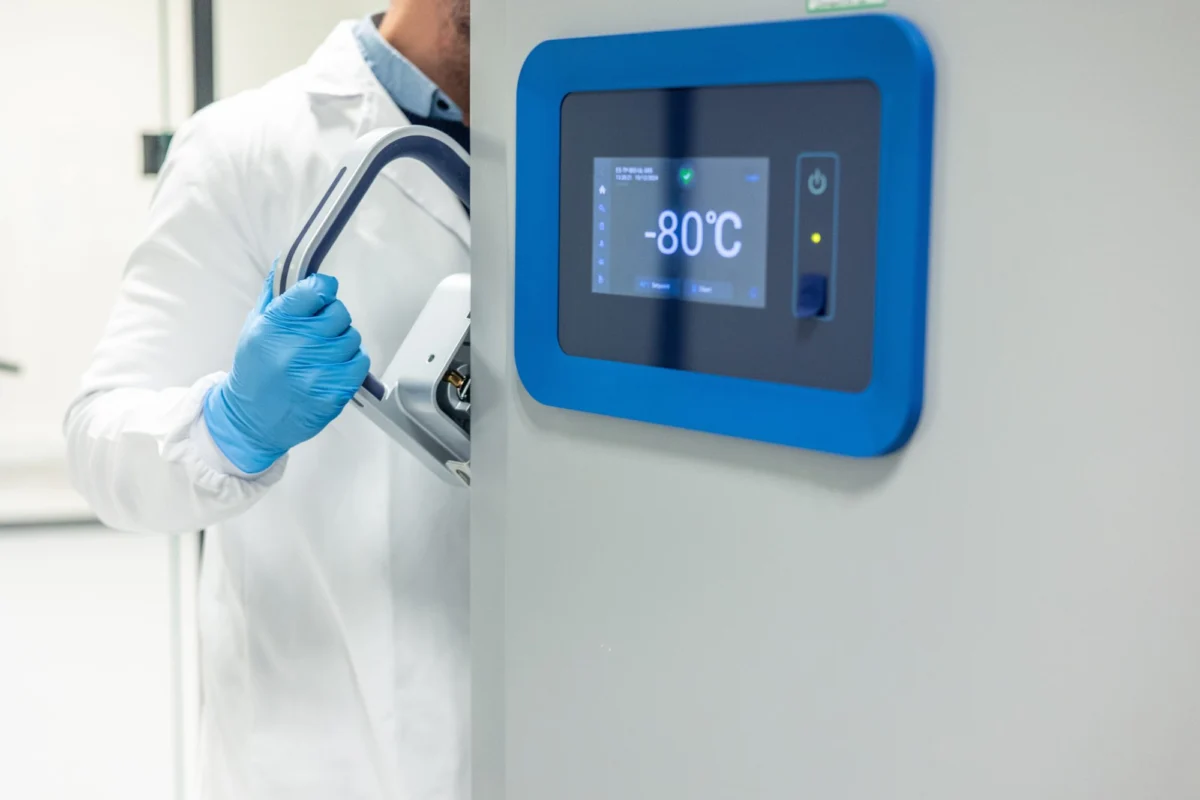
In the high-stakes world of pharmaceutical research and biological innovation, the pursuit of scientific breakthroughs often comes with an overlooked, carbon-heavy footprint. Hidden in the quiet corridors of over 4,000 laboratories worldwide, an army of ultra-low temperature (ULT) freezers has been humming along, consuming vast quantities of electricity to preserve samples at a rigid -80 degrees Celsius. However, a growing movement—fueled by the unlikely combination of gamification and operational common sense—is proving that the path to a greener future doesn’t always require a technological moonshot. It simply requires turning the dial.
The 2026 Freezer Challenge, organized by the non-profit My Green Lab, has emerged as a beacon of this shift. By transforming the mundane task of freezer maintenance into a competitive global arena, the initiative has successfully incentivized organizations to slash energy consumption, proving that sustainability can be as much about culture as it is about carbon.
The Magnitude of the "Energy Hog"
To understand the significance of this movement, one must first recognize the sheer scale of the energy demand in modern science. According to James Connelly, CEO of My Green Lab, laboratory freezers are the "energy hogs" of the research world. A single ultra-low temperature freezer can consume as much electricity as two average American households annually. When multiplied by the thousands of units required for global pharmaceutical operations, the environmental impact is staggering.
The industry standard of -80°C has long been viewed as an unassailable requirement for the preservation of biological samples. Yet, extensive testing has demonstrated that for the vast majority of materials, a temperature of -70°C is perfectly sufficient. This 10-degree adjustment, combined with rigorous maintenance—such as clearing ice buildup and ensuring door seals are airtight—results in massive energy savings without compromising the integrity of the research. Through the 2026 Freezer Challenge, participating organizations collectively saved nearly 30 gigawatt hours (GWh) of energy, a figure that highlights the low-hanging fruit available to companies willing to rethink operational orthodoxy.
A Chronology of the Cold Chain Shift
The journey toward this efficiency milestone did not happen overnight. The Freezer Challenge, which traces its roots back to 2017, began as a grassroots effort to educate lab managers on the environmental impact of their equipment.
- 2017: My Green Lab launches the inaugural Freezer Challenge, focusing on small-scale awareness and basic maintenance protocols.
- 2019–2021: As corporate ESG (Environmental, Social, and Governance) mandates tighten, the challenge sees a surge in participation from global pharma giants, moving from a niche academic pursuit to a corporate priority.
- 2023: The integration of digital tracking tools allows participants to quantify energy savings in real-time, providing the data necessary to justify freezer temperature adjustments to cautious internal stakeholders.
- 2026: The competition reaches a fever pitch, with over 270 organizations and 4,000 labs participating. The event marks a turning point where temperature optimization becomes a recognized "best practice" across the pharmaceutical and academic sectors.
The Winners: Titans of Efficiency
The 2026 results underscore the competitive nature of the challenge. Amgen claimed the Top Organization Award by achieving an impressive daily energy saving of 5,314 kWh during the first half of the year. Not far behind, the U.K.-based AstraZeneca secured the Winning Streak Award, a testament to their sustained commitment to efficiency.
Beyond the corporate giants, the competition has permeated other sectors. Siemens Healthineers, operating across multiple continents, was recognized as the Top Organization in the hospital category, while the U.K.’s Institute of Cancer Research took top honors in the academic section. These awards, while not carrying direct cash prizes, serve as powerful signals to investors, partners, and the public, reinforcing the companies’ commitments to their sustainability goals.
The Psychology of the "Gamification Hack"
Why would massive corporations engage in a competition over freezer settings? According to Connelly, the answer lies in the psychology of engagement.
"Gamifying the energy savings is one of the hacks we use to drive impact," Connelly explains. "So much of sustainability these days is doom and gloom and compliance. Adding the awards and recognition pushes teams to do something that is already in their interest—saving energy and, thus, money—but which they might not otherwise act on."
In an environment where sustainability professionals often struggle to capture the attention of the C-suite, competition acts as a catalyst. Rankings and leaderboards provide a tangible metric of performance that can be presented to boards of directors. When companies see their competitors gaining recognition for efficiency, the internal inertia that often stalls sustainability projects is quickly replaced by a drive for industry leadership.
Supporting Data: The Ripple Effect
The impact of the 2026 Freezer Challenge extends beyond the 30 GWh saved. It represents a fundamental shift in how labs are managed. The challenge has prompted a re-evaluation of inventory management, with many labs clearing out old, unnecessary samples to optimize freezer space—further reducing the need for additional power-hungry units.
This phenomenon is not isolated to the lab sector. Similar strategies are being applied to food storage, where shifting from traditional refrigeration temperatures to slightly higher, safer ranges is generating significant savings for global retail and logistics firms. The data suggests that for every degree of temperature optimization, there is a corresponding decrease in operational expenditure and carbon output.
Official Responses and Industry Implications
The success of the Freezer Challenge has prompted a broader conversation regarding the role of transparency and benchmarking in the private sector. Industry analysts point to a "ranking culture" as a primary driver of modern ESG performance. Other influential initiatives, such as the CDP’s Corporate A List, which rewards environmental transparency, and the Global 100 list by Corporate Knights, play a similar role in keeping sustainability at the forefront of executive decision-making.
The EPA’s Green Power Partnership National Top 100 has also been a cornerstone of this movement, though its future and influence remain a topic of debate in changing political climates. Despite these uncertainties, the consensus among sustainability leaders is clear: when metrics are public, performance improves.
Looking Forward: Beyond the Freezer
The implications of the Freezer Challenge are profound. It demonstrates that the "sustainability transition" is not merely about installing solar panels or switching to electric fleets; it is about the granular, daily optimization of existing infrastructure.
For the pharmaceutical industry, which is often criticized for its massive energy intensity, the Freezer Challenge provides a roadmap. By standardizing practices—such as moving to -70°C, investing in high-efficiency vacuum-insulated panels, and fostering a culture of conservation—labs can significantly reduce their overheads.
As My Green Lab looks toward the future, the goal is to scale this gamification model to other aspects of lab operations, including water usage, chemical waste management, and the lifecycle of complex scientific equipment. The success of the 2026 initiative proves that even the coldest, most rigid environments can be warmed up to the idea of a sustainable future. Through the simple act of turning a dial, companies are proving that science does not have to come at the expense of the planet.
About the Author: Jim Giles is Vice President and Editor-at-Large at Trellis Group. With a career spanning the New York Times, The Economist, and Nature, Giles has spent decades analyzing the intersection of industry, science, and the environment. He is a recognized authority on organizational change and high-impact sustainability strategies.