In the high-stakes theater of artificial intelligence, the narrative has shifted. For years, the conversation was dominated by Large Language Models (LLMs) consuming the entirety of the internet to learn the nuances of human speech. Today, the frontier has moved from the digital ether to the physical world. At the center of this transition is XDOF, a stealth-born startup that has become the indispensable “data refinery” for the robotics industry.
Less than three months after emerging from the shadows with a $70 million Series A, XDOF is already in late-stage negotiations to secure a Series B funding round that would catapult its valuation to approximately $1.2 billion. Led by venture capital powerhouse 8VC, the deal signals an aggressive push by investors to back the infrastructure layer of the embodied AI revolution.
The Chronology: From Berkeley Labs to Unicorn Status
The ascent of XDOF is a testament to the velocity of the modern AI ecosystem. Founded in 2024 by UC Berkeley researchers Philipp Wu (CEO) and Fred Shentu (CTO), the company was born out of a frustration common to academic robotics: the inability to access high-quality, large-scale data for training general-purpose robots.
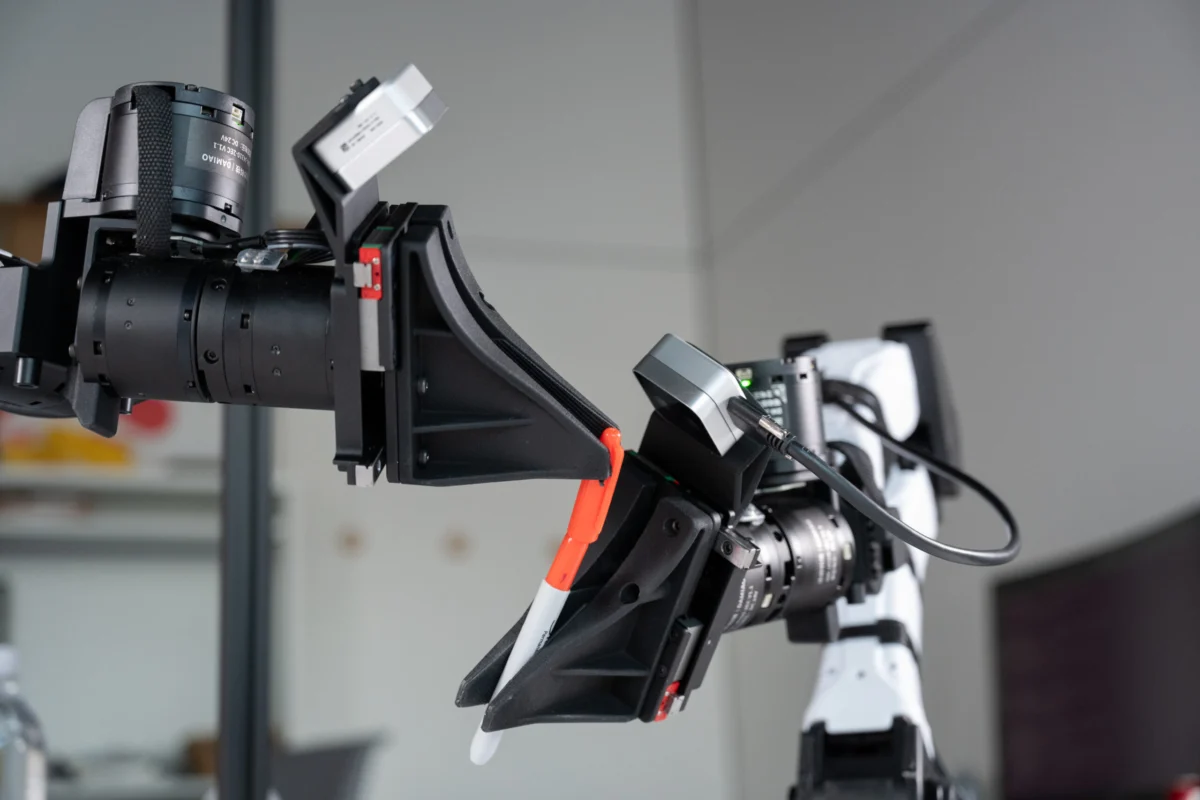
While working on their PhDs, Wu and Shentu spearheaded the development of GELLO, a low-cost teleoperation system designed to bridge the gap between human intent and robotic execution. By allowing human operators to remotely control robotic arms, the pair generated the precise, labeled motion data required to teach machines how to navigate the physical world. This work resulted in a widely cited research paper that laid the conceptual bedrock for XDOF.
By June 2026, the company officially emerged from stealth, announcing a $70 million Series A round featuring an enviable cap table, including Thrive Capital, Andreessen Horowitz, Lux, and Spark Capital. While the company initially had no plans for further fundraising, its meteoric growth—now boasting an annualized revenue approaching $50 million—attracted significant unsolicited interest from venture firms, leading to the current talks for a Series B.
The Data Bottleneck: Why Robotics Needs a "Scale AI"
To understand why investors are flocking to XDOF, one must understand the unique challenge of embodied AI. Unlike LLMs, which could scrape Wikipedia, Reddit, and digitized libraries to achieve fluency, physical robots lack a centralized, high-fidelity repository of real-world interaction data.
Robots need to learn not just what an object is, but how it behaves under physical constraints—how a fabric folds, how a box flattens, or how a door latch resists pressure. This is, as the industry puts it, "dirty, unglamorous work."
XDOF functions as the solution to this logistical nightmare. By providing the data pipelines, collection tools, and annotation systems that frontier AI labs cannot build in-house, the company acts as a vital outsourced supply chain. Industry analysts have begun referring to XDOF as the "Scale AI of the physical world," a nod to the data-labeling titans that provided the essential fuel for the generative AI boom.
The ABC Project
Perhaps the most significant signal of XDOF’s market dominance is its collaboration with UC Berkeley’s AI Research lab. Together, they are curating "ABC," a massive, high-quality collection of robot training data. By combining remote teleoperation with human collectors who wear sophisticated body sensors to capture granular movement, XDOF is building what is expected to be the most comprehensive dataset in the history of robotics.
Supporting Data: The Economics of Embodied AI
The demand for XDOF’s services is driven by a simple economic reality: the cost of training a robot is significantly higher than the cost of training an LLM, yet the potential total addressable market for physical automation is orders of magnitude larger.
- Financial Velocity: With an annualized revenue of nearly $50 million just months after its Series A, XDOF has demonstrated a product-market fit that is rare for a hardware-adjacent startup.
- Customer Base: The company is reportedly already servicing 20 distinct customers, a list that includes some of the most well-funded frontier AI laboratories in the world.
- Market Competitive Landscape: While XDOF currently leads the pack, it faces a shifting competitive environment. Players like Mecka AI are attempting to tackle similar challenges, while established data giants like Scale AI and emerging firms like Micro1 are expanding their platforms beyond text and images to capture the burgeoning physical data market.
Official Responses and Deal Status
As of press time, XDOF and 8VC have maintained a strict silence regarding the rumors of the $1.2 billion valuation. TechCrunch, which first reported the details of the negotiations, noted that the total amount of capital being raised remains unconfirmed, as does the question of whether the $1.2 billion figure reflects a pre-money or post-money valuation.
The deal remains fluid. In the volatile landscape of AI venture capital, terms can shift rapidly based on market conditions and the internal metrics of the startup. However, the intent is clear: 8VC and its cohorts are betting that whoever owns the data pipeline for robotics will effectively become the "toll booth" for the next generation of automation.
Implications: The Future of General-Purpose Robotics
The implications of XDOF’s rapid rise extend far beyond its valuation. If the company succeeds in creating a standardized data pipeline for robotics, it could accelerate the timeline for general-purpose robot deployment by years.
1. The Democratization of Robotic Intelligence
By providing the data layer, XDOF lowers the barrier to entry for smaller robotics companies. Instead of spending years collecting their own proprietary datasets, emerging startups may soon be able to "rent" the intelligence provided by XDOF’s pipelines, effectively leveling the playing field against incumbent tech giants.
2. The Labor Shift
XDOF’s business model also signals a shift in the labor market. The company plans to hire and train global teams of teleoperators and "egocentric" data collectors. This creates a new category of "AI gig work"—where humans are paid to perform everyday tasks while wearing sensor rigs, effectively acting as the "teachers" for the robots of tomorrow.
3. Solving the "Moravec’s Paradox"
For decades, researchers have wrestled with Moravec’s Paradox: the observation that high-level reasoning (like playing chess) is easy for computers, while low-level sensory-motor skills (like walking or folding laundry) are incredibly difficult. By professionalizing the collection of high-quality motion data, XDOF is taking a direct swing at this paradox. If machines can finally "see" and "feel" the world through the massive datasets XDOF provides, we may be on the cusp of an era where robots transition from factory floors to the complexities of the domestic environment.
Conclusion
The potential $1.2 billion valuation of XDOF is not just a reflection of its current revenue; it is a valuation of the future of physical work. As AI labs scramble to solve the data bottleneck, companies that can bridge the gap between human movement and machine learning will hold the keys to the kingdom.
Whether XDOF can maintain its current momentum as competition heats up remains to be seen. However, for now, the startup has successfully positioned itself as the central nervous system for a new generation of machines. The data gold rush is officially underway, and the pick-and-shovel providers are the ones reaping the highest rewards.