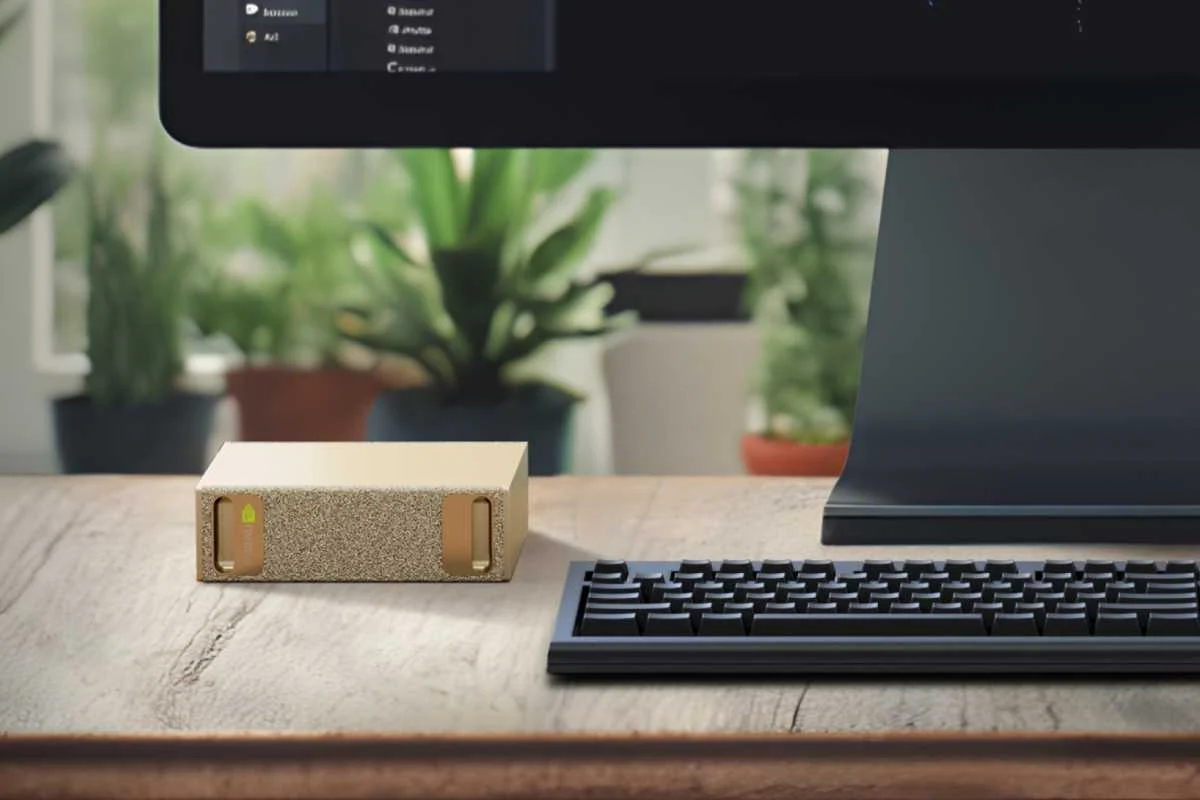
In a strategic move to democratize high-performance computing, Nvidia has unveiled its latest innovation: the Nvidia Personal AI Router (PAIR). Currently released as a public beta, the tool acts as a connective tissue for disparate computing devices, allowing users to aggregate the processing power of multiple PCs on a single local area network (LAN) into a unified AI inferencing cluster. While the marketing narrative frames PAIR as a solution for power-user enthusiasts and home labs, industry analysts suggest the implications for enterprise resource management could be far more profound, potentially unlocking massive amounts of dormant hardware for generative AI tasks.
The Core Concept: Aggregating Distributed Compute
At its most fundamental level, Nvidia PAIR addresses the "silo" problem inherent in modern computing environments. In most office or home setups, high-end workstations—often equipped with potent GPUs—remain idle for the vast majority of the day. When these machines are not being used for active tasks like 3D rendering or data analysis, their throughput capacity remains untapped.
PAIR effectively transforms these scattered, independent units into a cohesive "private cloud." By installing the PAIR client across Windows, macOS, and Linux machines on the same network, users can treat their collective fleet of hardware as a single pool of AI inferencing resources. This is managed through a centralized interface, which intelligently routes AI inference requests to whichever device has the necessary thermal headroom and GPU availability at that moment.
By leveraging local networking rather than relying on cloud-based APIs, PAIR ensures that data remains within the user’s private perimeter. This addresses the primary concern of many organizations: data sovereignty. Sensitive corporate data or proprietary models never need to leave the physical premises to be processed by a third-party server.
Chronology of Development
The emergence of PAIR follows a clear trajectory in Nvidia’s recent product roadmap, which has shifted significantly toward software-defined infrastructure.
- Q1 2024: Internal development of "Project Mesh-Compute" begins within Nvidia’s software engineering division, aimed at solving the latency issues associated with distributed model serving.
- Q3 2024: Preliminary alpha testing is conducted among select Nvidia partners, focusing on cross-platform compatibility between Linux-based workstations and Windows-based creative suites.
- November 2024: The public beta of Nvidia PAIR is officially announced at the Nvidia AI Developers Summit, positioning the tool as a "privacy-first" alternative to centralized cloud inference.
- Current Status: The software is currently available for download, with the Nvidia engineering team soliciting community feedback on load-balancing efficiency and network jitter across varying hardware configurations.
Supporting Data and Technical Architecture
To understand the utility of PAIR, one must look at the current state of GPU utilization. Research indicates that average enterprise workstation utilization during business hours hovers around 15% to 20%. During off-hours, this figure drops to near zero, yet the power consumption of these systems remains significant.
PAIR utilizes a dynamic load-balancing algorithm. When a user initiates a request—such as running a Large Language Model (LLM) or a Stable Diffusion image generator—the PAIR router evaluates the following metrics across the network:
- VRAM Availability: Identifying which GPUs have enough frame buffer to host the model weights.
- Current Load: Measuring the GPU utilization percentage to prevent bottlenecking of other active applications.
- Network Latency: Prioritizing nodes that are physically closest to the request source to minimize data transfer times.
Preliminary benchmarks suggest that a cluster of three mid-range workstations (e.g., equipped with RTX 4070 series GPUs) can perform complex inferencing tasks at speeds roughly equivalent to a high-end, singular server-grade GPU, provided the network backbone is at least 1GbE.
Official Responses and Strategic Positioning
Nvidia’s communications team has been careful to frame the tool as an accessibility play. In a statement accompanying the beta release, an Nvidia spokesperson noted:
"Our goal with PAIR is to remove the barriers to entry for AI experimentation. Many users have powerful hardware sitting right in front of them, but they lack the infrastructure to bridge that power together. PAIR makes your home or office network a private, scalable AI supercomputer without the need for specialized data center equipment."
However, industry experts see the "home use" framing as a tactical choice. By releasing this as a "Personal" router, Nvidia avoids competing directly with its own high-end enterprise virtualization products, such as NVIDIA AI Enterprise or vGPU suites. Yet, the software’s ability to run on enterprise-grade Linux distributions indicates that Nvidia is keeping the door open for business adoption.
Independent researchers have praised the move, noting that it creates a "bottom-up" approach to AI scaling. "Instead of asking companies to buy a $200,000 H100 cluster immediately," one analyst stated, "Nvidia is allowing them to prove the value of AI on the hardware they already own."
Implications for the Enterprise
The potential for PAIR in a corporate setting is substantial, particularly for companies operating in data-sensitive sectors like legal, finance, and healthcare.
1. Maximizing Return on Investment (ROI)
For IT departments, hardware depreciation is a significant line item. By utilizing PAIR, companies can effectively extend the life of older workstations. A machine that is no longer fast enough for high-end CAD work might still be perfectly capable of serving as a node in an AI inferencing cluster. This creates a secondary lifecycle for aging assets, reducing capital expenditure (CapEx) on new hardware.
2. Privacy and Compliance
Cloud-based AI services, such as ChatGPT or Claude, require data to be transmitted to remote servers. For industries under strict GDPR, HIPAA, or CCPA regulations, this can be a legal minefield. A PAIR-enabled cluster allows for the deployment of local, fine-tuned models that never leave the office network, satisfying the most stringent security requirements while still providing the benefits of generative AI.
3. Democratization of AI Development
By allowing developers to pool their workstations, internal R&D teams can experiment with larger, more sophisticated models without having to request budget for centralized cloud credits. This fosters a culture of innovation where ideas can be prototyped quickly and privately.
Challenges and Future Considerations
Despite the promise, the adoption of PAIR is not without hurdles.
- Network Bottlenecks: While GPU compute is powerful, moving data between machines is restricted by the speed of the office network. For large models requiring high bandwidth, a standard Wi-Fi connection will be insufficient. Enterprises will likely need to ensure 10GbE backbones if they intend to scale PAIR across a large number of machines.
- Security Complexity: Introducing a cluster management layer adds a new surface for potential security vulnerabilities. Managing credentials and ensuring that the PAIR router itself cannot be compromised will be a primary focus for IT security teams.
- Power Consumption: Running a fleet of idle workstations at full capacity for AI inference will lead to increased electricity consumption. Organizations will need to balance the benefits of AI performance against rising energy costs and sustainability targets.
Conclusion: A Shift Toward Distributed Intelligence
The Nvidia Personal AI Router represents a fundamental shift in how we perceive computing power. By moving away from the "all-in-one" server mentality and toward a distributed, network-first architecture, Nvidia is effectively turning the modern office into a modular data center.
Whether this tool remains a niche utility for hobbyists or evolves into a standard component of the enterprise IT stack will depend on the stability of the beta and the ease with which it integrates into existing network management workflows. However, the message from Nvidia is clear: the future of AI is not just about bigger chips; it is about smarter orchestration of the hardware we already have.
As the beta progresses, the industry will be watching closely to see if PAIR can bridge the gap between "spare capacity" and "production-grade compute." For now, it stands as a testament to Nvidia’s dominance—not just in silicon, but in defining the software layers that make that silicon work for everyone, everywhere.