The rapid expansion of the global digital infrastructure—fueled by the artificial intelligence boom and the insatiable demand for cloud computing—is often discussed in terms of carbon emissions and electricity demand. However, there is a quieter, more critical resource being consumed at a staggering rate: water. While public discourse has largely focused on the water used for on-site cooling equipment, a new, stark reality has emerged. The vast majority of a data center’s water footprint is "hidden," embedded in the electricity required to keep servers humming.
According to a landmark report published on August 25 by the nonprofit Ceres, titled Water Behind the Watts: The Hidden Risk of Powering Data Centers, the true impact of the digital age on local water resources is drastically higher than previously acknowledged. As Big Tech giants like Amazon, Meta, Microsoft, and OpenAI scramble to secure new power capacity—often relying on natural gas—the environmental toll on regional water systems is reaching a tipping point.
The Magnitude of the "Hidden" Footprint
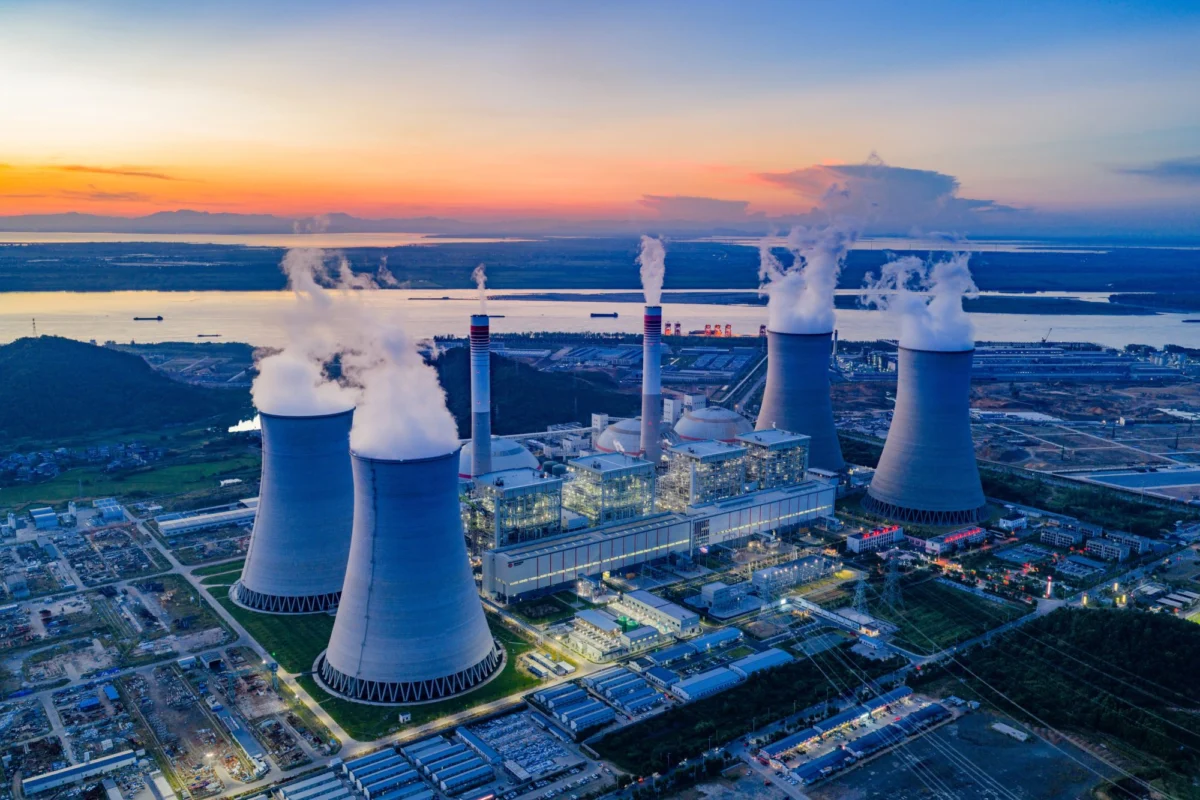
When we speak of data center water usage, the common perception is of evaporative cooling towers located at the facility. While significant, this is only the tip of the iceberg. The electricity powering these facilities is primarily generated by thermal power plants—coal, nuclear, and natural gas—all of which require massive volumes of water for cooling and steam generation.
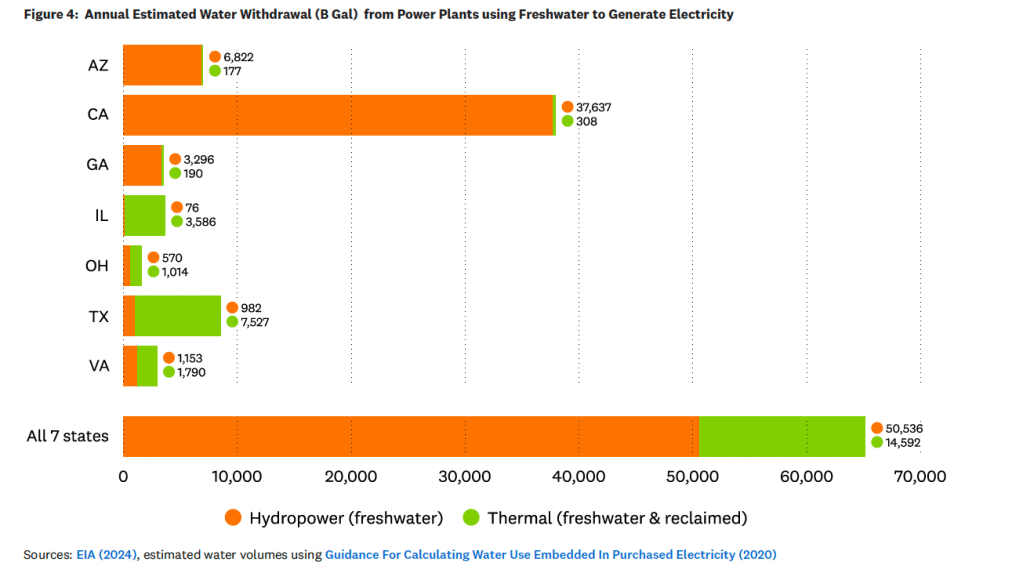
In the seven U.S. states that host more than half of the country’s data center capacity, power generation for these facilities accounts for between 3 and 4 trillion gallons of water withdrawals annually. To put this in perspective, the 2024 electricity-related water withdrawals in Virginia—a massive hub for data centers—are estimated to be 21 times the annual water usage of the entire city of Washington, D.C.
This disconnect between the digital economy and physical resources is creating an invisible crisis. As Shama Perveen, director of water research at Ceres and co-author of the report, points out, the link between freshwater withdrawals and power generation is a metric that most data center operators have failed to disclose—or even track—with any degree of transparency.
A Chronology of the Water-Energy Nexus
To understand how we reached this inflection point, one must look at the evolution of the modern data center.
- 2010–2018 (The Cloud Migration): As enterprises migrated from on-premise servers to the cloud, energy efficiency became a competitive differentiator. Focus was placed heavily on PUE (Power Usage Effectiveness). Water usage was largely ignored or relegated to a secondary concern, as electricity was relatively cheap and abundant.
- 2019–2022 (The Rise of AI): The emergence of generative AI and large language models (LLMs) changed the architectural requirements of data centers. AI training requires intensive, constant high-performance computing, which generates significant heat. This led to a surge in water-cooled infrastructure, but also a massive increase in base-load electricity demand.
- 2023–2024 (The Infrastructure Rush): Faced with grid constraints, major tech companies began aggressive investments in new power capacity, often pivoting back to natural gas as a reliable, "always-on" source of energy. This has locked in long-term, high-water-intensity electricity sourcing.
- August 2025 (The Transparency Shift): The release of the Ceres report marks a turning point in public accountability. It forces the industry to reconcile its operational footprint with the regional water stress levels of the areas where they choose to build.
Regional Variance: Geography is Destiny
The water impact of a data center is not uniform; it depends entirely on the energy mix of the local grid. Ceres analyzed the water intensity of seven key states, and the results highlight a complex relationship between geography and resource management.
California’s Hydroelectric Reliance
California topped the list, with nearly 1.4 trillion gallons of water linked to its power generation. While this sounds counter-intuitive given the state’s frequent droughts, the reliance is due to the state’s significant dependence on hydroelectric power. In this case, the water "withdrawal" is tied to the movement of water through turbines, highlighting the complexity of defining "consumption" versus "withdrawal."
The Thermal Heavyweights: Ohio, Georgia, and Virginia
In states like Ohio, Georgia, and Virginia, more than 90% of the indirect water use is linked to thermal generation. Because these grids rely heavily on natural gas, coal, and nuclear energy, every megawatt consumed by a data center carries a massive "water price tag." The reliance on natural gas—which is being expanded by companies like Microsoft and Amazon to meet AI demand—is particularly concerning because it creates a permanent, growing demand for cooling water in regions that may not have the surplus to support it.
The Texas Model vs. Water-Stressed Regions
Texas presents an interesting case study. Despite being a massive host for data centers, it used less water on average than other states analyzed. This is largely attributed to the state’s high mix of grid-tied solar and wind energy, which require negligible water for generation. Conversely, Arizona and Illinois emerged as high-risk areas. Both states are currently grappling with significant water stress and drought, yet they remain popular destinations for data center construction. The report suggests that these environmental risks must move from the periphery to the center of site-selection strategy.
Official Responses and Industry Accountability
The response from the tech industry to these findings has been mixed. While companies are increasingly vocal about their "water positive" goals—often focusing on rainwater harvesting or community water replenishment—these initiatives rarely address the fundamental problem of electricity-linked withdrawals.
Shama Perveen emphasizes that transparency is the necessary first step. "This is the foundation for better understanding water risk linked to procuring electricity," Perveen said. "We need to work with power producers and peers in a precompetitive space on best practices to minimize impacts to local water resources, especially in water-stressed areas."
Jonathan Koomey, a leading expert on data center energy and water use, argues that the industry is currently operating in a vacuum of standards. "It’s a real problem the industry needs to figure out," Koomey stated. "They are being confronted with numbers that are all over the place. People don’t have a clear way to measure this, and there aren’t clear standards."
Projections: The Path to 2030
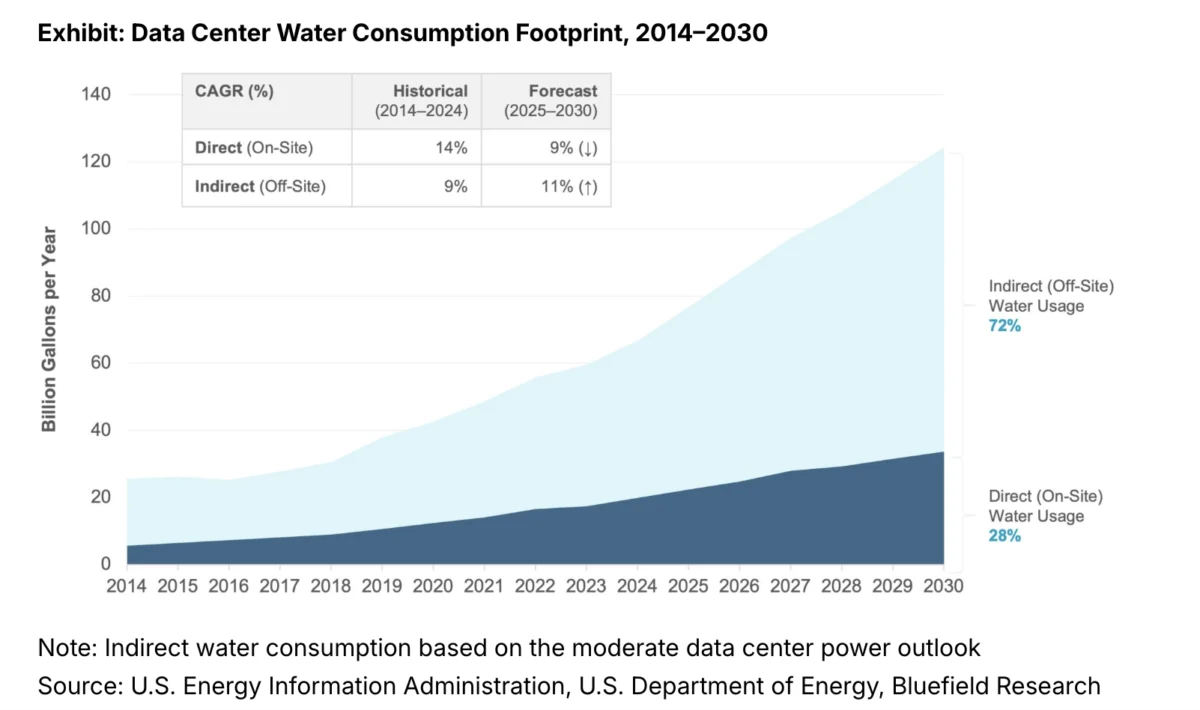
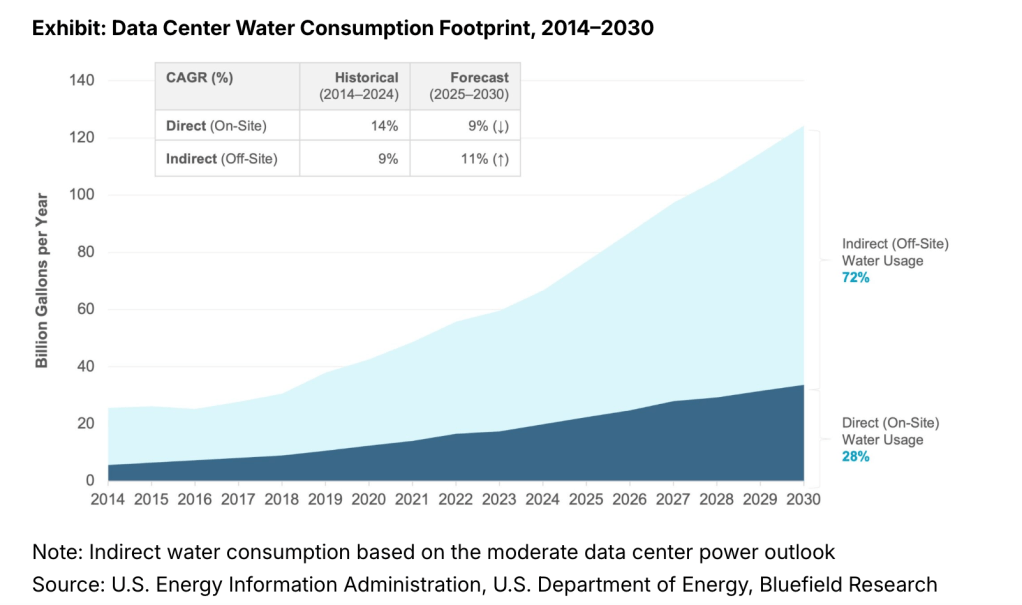
The outlook for the remainder of the decade is sobering. According to a separate analysis by Bluefield Research, the water needed for data center power generation is doubling annually. By 2030, this indirect usage will account for more than 70% of the data center industry’s total water footprint.
As the industry approaches this threshold, the implications are profound:
- Regulatory Scrutiny: Expect local and state governments in water-stressed regions to implement stricter permitting processes for data centers. The era of "unlimited access" to grid power is likely coming to an end.
- Investment in Renewables: The most immediate mitigation strategy is a rapid pivot toward wind and solar. By decoupling data center growth from thermal-heavy grids, companies can drastically reduce their indirect water usage.
- Efficiency and AI: The industry must also optimize AI models to be less resource-intensive. If the energy required to train a model is reduced, the water-to-watt ratio becomes less of a systemic risk.
- Reporting Standards: Shareholders and ESG (Environmental, Social, and Governance) analysts are beginning to demand more granular data. Companies that fail to disclose their indirect water footprint will likely face increased investor pressure and reputational risk.
Conclusion
The "hidden" water crisis of the data center industry is no longer hidden. As the digital economy continues to scale, the interdependence between our servers and our water supplies has become impossible to ignore. The challenge is not just technological, but existential. To sustain the growth of AI and cloud computing, the tech sector must transition from a passive consumer of grid electricity to an active participant in sustainable resource management.
The future of digital infrastructure depends on whether these companies can pivot from a model of extraction to one of stewardship. As Ceres has highlighted, the data is clear: we can no longer calculate the cost of our digital life solely in carbon—we must also account for every gallon that vanishes into the steam of our power plants. The industry’s ability to thrive in the next decade will depend on how quickly it can quench its own thirst without drying out the communities that host it.