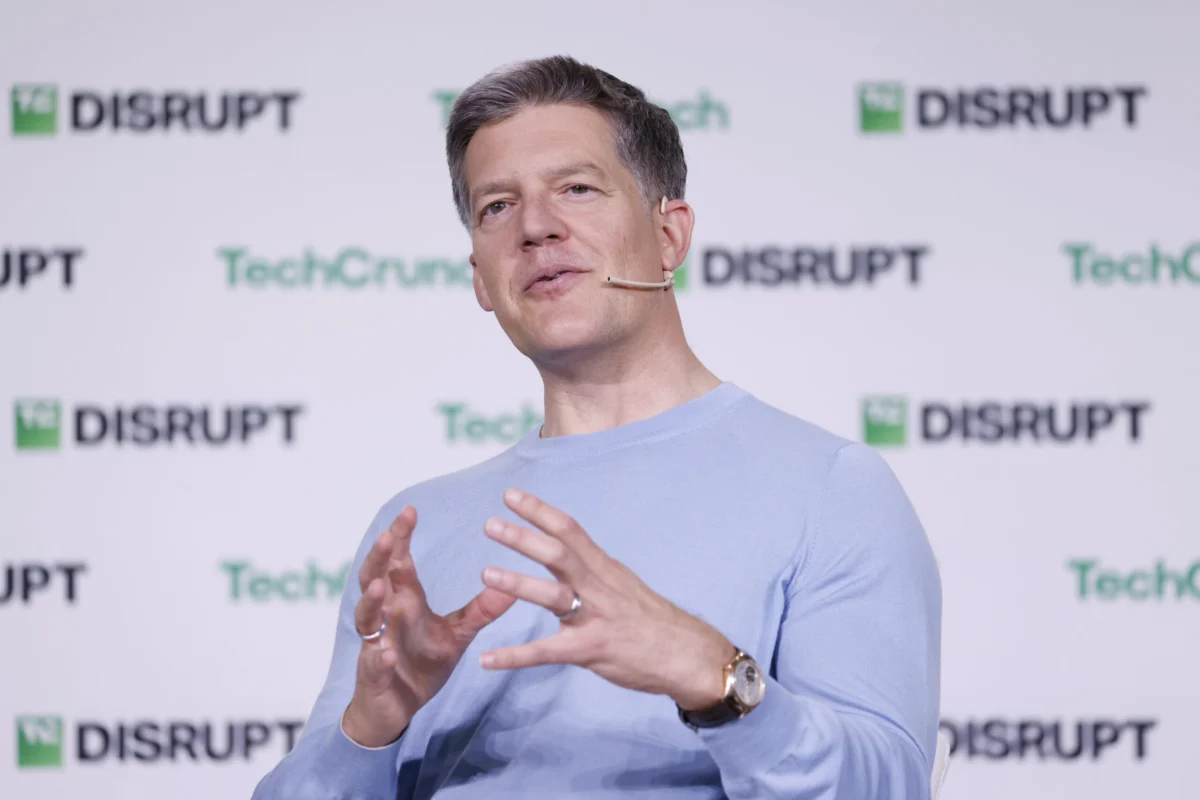
In the late spring of 2026, against the backdrop of a burgeoning tech festival in Athens, Neil Rimer—a titan of the venture capital world and co-founder of Index Ventures—offered a prognosis that stands in stark contrast to the typical exuberance of Silicon Valley. Amidst a conversation regarding the staggering concentration of wealth generated by the current artificial intelligence boom, Rimer articulated a sentiment that has since rippled through the investment community: “I have a strong sense that there will be some sort of a redistribution.”
Rimer, whose firm has been instrumental in scaling some of the most influential technology companies of the last three decades, did not mince words about the inevitability of this shift. “It’ll either be voluntary or it’ll be involuntary, but it’ll happen,” he remarked, adding a pointed challenge to his peers: “I hope it’s voluntary, and I think tech leaders can play a leading role in seeing that through.”
For a man who has helped deploy billions in capital and steered the trajectory of the modern digital economy, this is a striking pivot. It is not merely a call to charity; it is a warning that the current trajectory of wealth concentration is unsustainable, and that the industry’s failure to self-correct may invite a legislative backlash that could fundamentally alter the landscape of American capitalism.
The Architect of Change: A Profile in Contrast
Neil Rimer’s perspective is informed by a career that defies the typical caricature of a venture capitalist. After stepping back from the day-to-day operations of Index Ventures in 2021, Rimer has increasingly focused his life outside of the insular loops of Sand Hill Road. A resident of Athens, where he maintains deep familial ties, Rimer often eschews the uniform of the modern financier—the Patagonia vests and quarter-zips—for a more understated aesthetic.
Yet, his influence remains immense. Index Ventures has raised roughly $15 billion since its inception, with recent exits, including the IPO of Figma and the acquisition of cybersecurity giant Wiz by Google, netting the firm an estimated $9 billion. Despite this success, Rimer has consistently prioritized philanthropic engagement. From his tenure as chair of Human Rights Watch (2019–2025) to his mentorship initiatives with Endeavor Greece and his $13 million endowment to McGill University, Rimer has modeled the very "voluntary redistribution" he now advocates for.
The Erosion of the Philanthropic Social Contract
Rimer’s call for voluntary action arrives at a moment when traditional philanthropy is in a state of visible decline among the ultra-wealthy. The Giving Pledge, launched in 2010 by Warren Buffett and Bill Gates with the goal of convincing billionaires to commit half their wealth to charitable causes, has become a ghost of its former self. After a strong start—113 families signed in the first five years—the momentum slowed to a crawl, with only four families signing on in all of 2024.
This cooling of philanthropic fervor is reflected in broader data. While total American charitable giving reached a record $592.5 billion in 2024, the number of individual donors has been in a five-year decline, falling 4.5% in 2024 alone. According to data from the Stanford Social Innovation Review, household participation in charitable giving has dropped from two-thirds in 2000 to roughly half today. Even among the affluent, the propensity to give has slipped, with participation among high-net-worth households falling from 90% in 2017 to 81% last year.
The mindset among the "newly wealthy" in AI is often characterized by a pivot toward further accumulation rather than distribution. Financial planners, such as Alex Caswell, have noted that clients newly minted by the AI boom—many of whom are employees of firms like Anthropic—are far more interested in angel investing or launching their own startups than in building robust philanthropic portfolios.
The Legislative Pendulum: California and Beyond
When voluntary mechanisms fail to address extreme inequality, history suggests that governments inevitably step in. California is currently at the vanguard of this shift, with voters set to decide on a 5% one-time wealth tax targeting the state’s billionaires. The reaction among the ultra-wealthy has been defensive; high-profile tech leaders, including Google founders Larry Page and Sergey Brin, have reportedly moved their primary residences to South Florida, a state without such levies.
The threat of this tax has influenced corporate behavior as well. There is widespread speculation that OpenAI’s potential 2027 IPO is being fast-tracked in part to navigate the legal complexities of the proposed tax, which would calculate net worth based on worldwide assets as of the end of the current calendar year.
Furthermore, the industry is experimenting with alternative forms of "contribution." OpenAI has reportedly floated the idea of gifting a 5% equity stake to the federal government. While CEO Sam Altman frames this as a way to share the upside of AI with the public, critics view it as a tactical maneuver to purchase political immunity in Washington. As seasoned investor Roelof Botha famously quipped, “Some of the most dangerous words in the world are: ‘I’m from the government, and I’m here to help.’”
Supporting Data: The Magnitude of Modern Wealth
The urgency of the debate is underscored by the sheer scale of the wealth involved. Following the SpaceX IPO last month, Elon Musk became the world’s first trillionaire. Forbes identified 45 new billionaires in the AI sector in its 2026 rankings alone, holding a combined $2.9 trillion in assets—a figure that will only swell once companies like Anthropic and OpenAI go public.
The structural impact on the economy is profound. Data from the Federal Reserve shows that the top 1% of U.S. households held 31.7% of all wealth as of late 2025—the highest level since tracking began in 1989. While this remains below the 45% concentration seen during the peak of the Gilded Age in 1916, economist Gabriel Zucman notes a more troubling trend: the four largest fortunes of the Gilded Age represented 4% of U.S. GDP. Today, the 19 wealthiest households account for 14% of the nation’s total economic output.
Implications: The Lessons of History
The tension between voluntary giving and mandated redistribution has a clear historical antecedent. In 1889, Andrew Carnegie published The Gospel of Wealth, arguing that the wealthy should act as trustees of their fortunes to serve the public good. It was the intellectual foundation for modern philanthropy. Yet, when that voluntary model proved insufficient to address the social unrest of the early 20th century, the political response was swift.
Senator Huey Long’s "Share Our Wealth" movement pushed the federal government toward radical intervention, leading Franklin D. Roosevelt to enact the "soak-the-rich" tax, which raised top marginal income tax rates to 79%. It was a clear, forced correction to a system that had become too lopsided.
Rimer is acutely aware of these historical cycles. He observes that the "moral center" of the tech industry has shifted dramatically since he was a Stanford student in 1984, when Apple was viewed as a force for good. Today, he notes with concern that his own children speak of major tech companies in the same breath as defense contractors or cigarette manufacturers—as entities that extract value rather than creating it.
Conclusion: The Choice Ahead
Neil Rimer’s argument is not that the wealthy should surrender their success, but that they must recognize their own survival. By failing to integrate philanthropy and equitable growth into the business models of the AI era, tech leaders are inviting an "involuntary" redistribution that may be far more destructive to the industry than a proactive, voluntary approach.
For Rimer, the path is clear: there is an easy way to distribute wealth—through intentional, private-sector leadership—and a hard way, which history will eventually dictate through the ballot box and the tax code. As the AI industry stands on the precipice of unprecedented valuation, the question is not whether the wealth will be redistributed, but whether the current leaders of the digital age will choose to be the architects of that change or its victims.