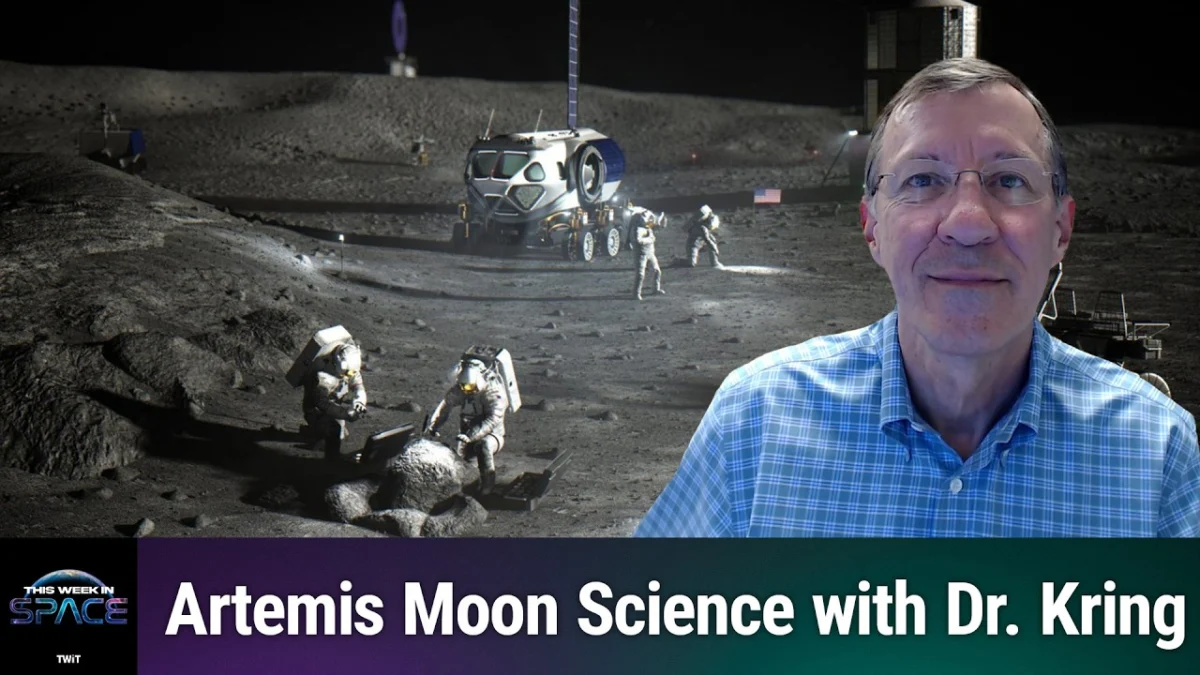
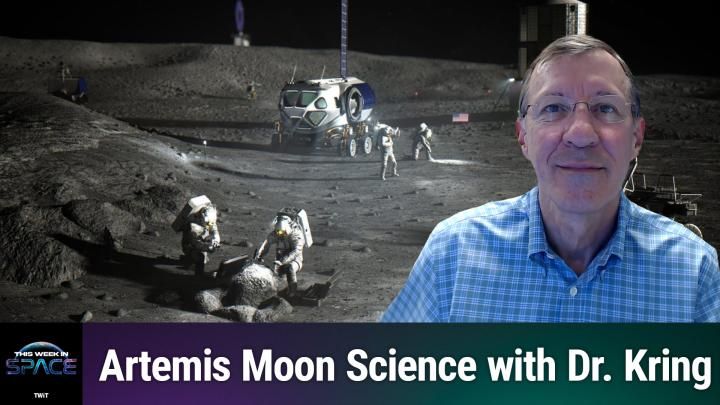
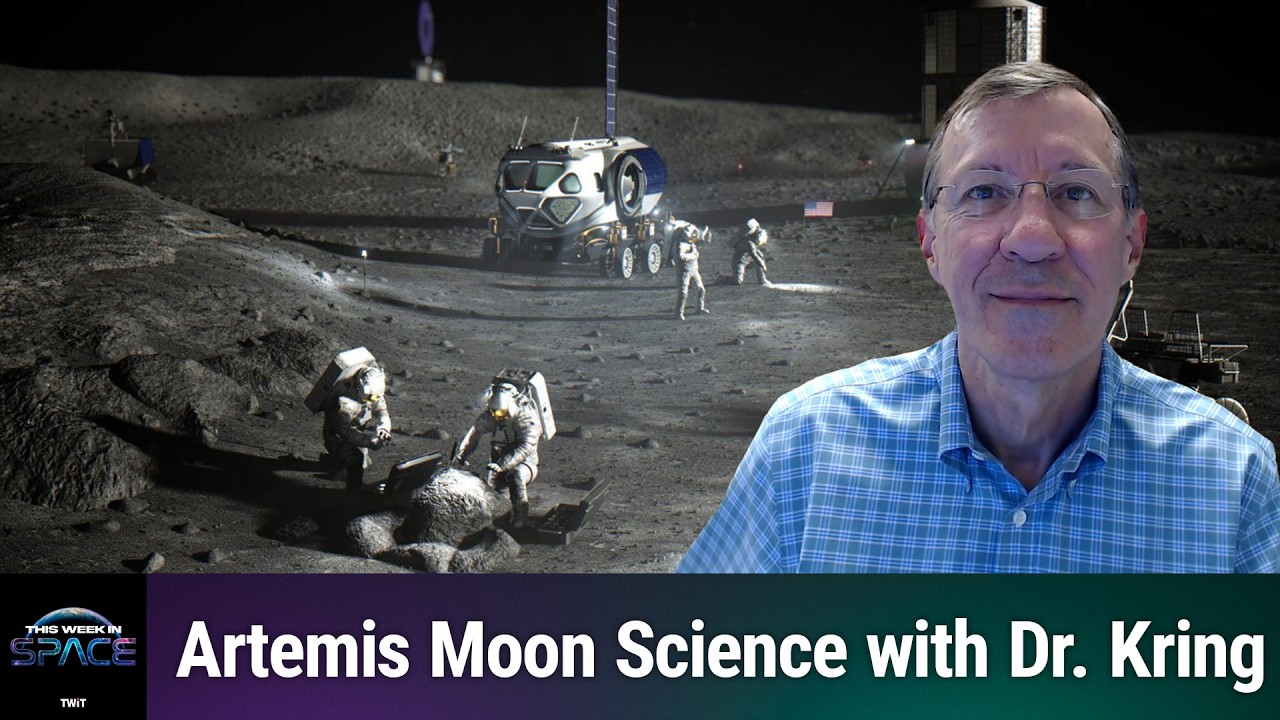
The lunar surface, often described as a "harsh mistress" due to its unforgiving environment, is once again the focus of humanity’s greatest ambitions. As NASA’s Artemis program gathers momentum, the focus has shifted from mere visitation to sustainable exploration. In the most recent episode of This Week In Space (Episode 224), hosts Rod Pyle and guest co-host Rick Jenet sat down with Dr. David Kring of the Universities Space Research Association’s Lunar and Planetary Institute to dissect the complex "where, why, and how" of returning to the Moon.
As we stand on the precipice of a new era in spaceflight, the mission objectives for Artemis represent a monumental leap in our understanding of the solar system, even as they present unprecedented technical and physiological challenges.
Main Facts: The Artemis Objective
The Artemis program is not a repeat of the Apollo missions of the 1960s and 70s. While Apollo was defined by a Cold War "race to the flag," Artemis is characterized by a commitment to long-term presence and resource utilization. The primary objective is to establish a sustainable base at the lunar south pole—a region vastly different from the equatorial landing sites of the Apollo era.
The lunar south pole is a region of extreme contrasts. It features "peaks of eternal light," which provide near-continuous solar power, situated in close proximity to permanently shadowed regions (PSRs). These craters, which have not seen direct sunlight for billions of years, are believed to harbor significant quantities of water ice. This ice is the "holy grail" for space agencies, as it can be converted into life-support oxygen, potable water, and, crucially, liquid hydrogen and oxygen for rocket propellant.
A Chronology of the Return
To understand the gravity of the current mission, we must look at the timeline of the lunar return:
- 2020s (The Foundation): The Artemis I mission successfully tested the Space Launch System (SLS) and the Orion spacecraft on an uncrewed flight around the Moon. This served as the bedrock for validating the heat shield and deep-space communication systems.
- The Artemis II Milestone: Scheduled to be the first crewed flight, this mission will send astronauts on a lunar flyby, testing life support and navigation with humans on board.
- Artemis III and Beyond: This is the landmark mission intended to put the first woman and the first person of color on the lunar surface. Beyond this, the focus transitions to the construction of the Lunar Gateway—a modular space station orbiting the Moon—which will serve as a staging ground for both lunar surface sorties and future missions to Mars.
- The Sustained Era: The ultimate goal is the establishment of a permanent base camp, allowing for months-long habitation, scientific research, and the testing of technologies necessary for the multi-year journey to the Red Planet.
Supporting Data: The Risks of the Lunar South Pole
Dr. David Kring emphasizes that while the scientific potential of the south pole is immense, the operational risks are equally daunting. The lunar environment is characterized by:
- Regolith Toxicity: Lunar dust, or regolith, is sharp, abrasive, and electrostatic. It poses a significant hazard to both mechanical seals and human lung tissue. Unlike Earth, there is no wind or water to smooth the edges of these particles, making them akin to microscopic glass shards.
- Radiation Exposure: Without an atmosphere or a global magnetic field, lunar astronauts are exposed to galactic cosmic rays and solar particle events. Shielding solutions for long-term habitats are a primary focus of current research.
- Extreme Thermal Fluctuations: Temperatures at the south pole can swing from boiling hot in the sunlight to cryogenic cold in the shadows. Managing these thermal loads is critical for the survival of both hardware and biological entities.
- Communication Latency and Navigation: Operating in the mountainous, crater-ridden terrain of the south pole requires high-precision navigation. The lack of a GPS equivalent on the Moon necessitates the development of new, independent lunar navigation grids.
Official Responses and Scientific Consensus
The scientific community remains overwhelmingly optimistic about the Artemis program, though the consensus is that the project requires a departure from traditional "siloed" aerospace engineering. NASA’s partnerships with private entities like SpaceX (providing the Starship Human Landing System) and Blue Origin reflect a shift toward a commercialized space economy.
During the discussion on This Week In Space, Dr. Kring noted that the integration of commercial interests is not merely a financial convenience—it is a necessity. By offloading the development of transport systems to private industry, NASA can focus its resources on the scientific payloads and the complex logistics of deep-space habitation. The "why" is clear: by learning to live off the land (In-Situ Resource Utilization, or ISRU), we effectively turn the Moon into a gas station for the rest of the solar system.
Implications for Humanity: Beyond the Moon
The success of the Artemis program has profound implications that extend far beyond lunar exploration.
1. Technological Innovation
The technologies developed for the Moon—such as advanced closed-loop life support, modular robotics, and high-efficiency solar harvesting—have direct applications for sustainability on Earth. The necessity of doing more with less in a vacuum drives the miniaturization and efficiency of hardware that can revolutionize green technology on our home planet.
2. Geopolitical Dynamics
The "new space race" is a multi-polar affair. With international efforts like the Artemis Accords, the U.S. and its partners are setting the norms for lunar conduct. How we define sovereignty, resource rights, and safety zones on the Moon will set the precedent for how humanity operates in the asteroid belt and eventually on Mars.
3. The Mars Gateway
Perhaps the most significant implication of the Artemis program is its role as a "proving ground." Mars is a massive undertaking, and we cannot afford a failure of the scale of a total mission loss on the way to the Red Planet. The Moon offers a three-day turnaround for emergency evacuations, a luxury we will not have once we embark on the six-to-nine-month journey to Mars. By proving that humans can survive, work, and thrive on the Moon, we create the blueprint for interplanetary expansion.
Conclusion: A New Era of Discovery
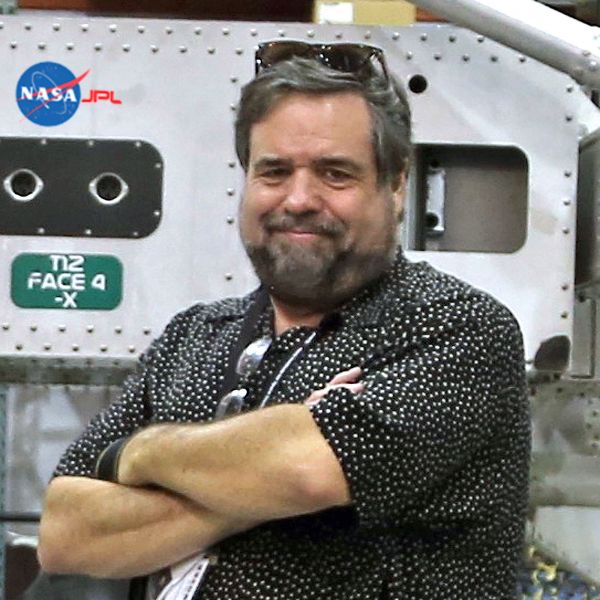
As highlighted by Rod Pyle and Tariq Malik, the return to the Moon is not just about nostalgia; it is about the maturation of our species as a space-faring civilization. The insights provided by experts like Dr. David Kring underscore that while the path forward is fraught with physical and technical challenges, the rewards are foundational to our future.
For those interested in the minutiae of these developments, the intersection of private sector innovation and public policy remains the most compelling narrative. Whether it is the launch of professional-grade model rockets like the Estes Falcon 9 or the actual, multi-billion-dollar efforts to land humans on the south pole, the spirit of inquiry remains the same. Humanity is once again looking up, not just to admire the stars, but to reach out and touch them. The Moon is indeed a harsh mistress, but she is finally offering us the keys to the rest of the universe.
For more deep dives into the new space age, catch the latest episodes of "This Week In Space" with Rod Pyle and Tariq Malik, available on your favorite podcast platforms.