Hollywood’s long-standing fascination with the corridors of power in Silicon Valley has reached a fever pitch. In an era defined by rapid-fire technological shifts, the personal lives and moral complexities of the industry’s architects have become the primary source material for a new wave of prestige cinema. From the high-stakes boardroom drama of OpenAI to the spectacular collapse of FTX, the stories of these "disruptors" are no longer just business news—they are the modern-day Greek tragedies of the digital age.
The Cinematic Lens on Tech’s "Move Fast and Break Things" Era
Hollywood has long sought to capture the lightning-in-a-bottle energy of the tech industry, but recent output suggests a pivot from the "inspirational founder" narrative to a more forensic, and often critical, examination of the consequences of extreme influence.
The success of You Can See Everything, the blockbuster documentary centering on Elizabeth Holmes’ Theranos debacle, proved that audiences are hungry for stories of hubris and deception. This appetite is currently being tested by The Altruists, a Netflix limited series chronicling the meteoric rise and catastrophic downfall of Sam Bankman-Fried and the FTX cryptocurrency empire. Yet, perhaps no project is as timely or as scrutinized as Artificial, a forthcoming biographical comedy-drama set to hit theaters this Christmas. The film explores the ascent of OpenAI and the internal firestorm that saw CEO Sam Altman briefly ousted by his own board of directors in late 2023.
With Andrew Garfield tapped to portray Altman, the film promises to be a quintessential portrait of the contradictions inherent in the race for Artificial General Intelligence (AGI).
Chronology: A Timeline of Turmoil at OpenAI
To understand the stakes of Artificial, one must look back at the dramatic November 2023 "Weekend of Chaos" at OpenAI.
- November 17, 2023: OpenAI’s board of directors abruptly fires Sam Altman, citing a lack of "consistent candor" in his communications. The sudden nature of the departure sends the tech world into a tailspin.
- November 18–19, 2023: A frantic push by employees and investors, led by Microsoft, begins to reinstate Altman. Rumors swirl regarding a potential mass exodus of OpenAI talent to Microsoft.
- November 20, 2023: In a stunning reversal, it is announced that Altman will return as CEO, and the majority of the board members who orchestrated his ousting resign.
- December 2025 – Present: The narrative of the "Great Ousting" has evolved from a corporate scandal into a foundational myth for the AI age, leading directly to the development of the Artificial screenplay, which focuses on the philosophical divide between the "accelerationists" and the "safety-first" faction of the company.
The Garfield-Altman Dynamic: Method vs. Machine
The casting of Andrew Garfield is a calculated move. Garfield, who famously played the dispossessed Eduardo Saverin in David Fincher’s The Social Network, brings a specific type of intellectual intensity to the role. However, the actor has been vocal about his distance from the man he is portraying.
In a recent interview with Esquire, Garfield noted, "I don’t know Sam Altman. I’ve never met him. But I think anyone who takes on that level of responsibility for a company or technology that you know is going to do a hell of a lot of damage to the soul of humanity [must have] a certain ability to dissociate."
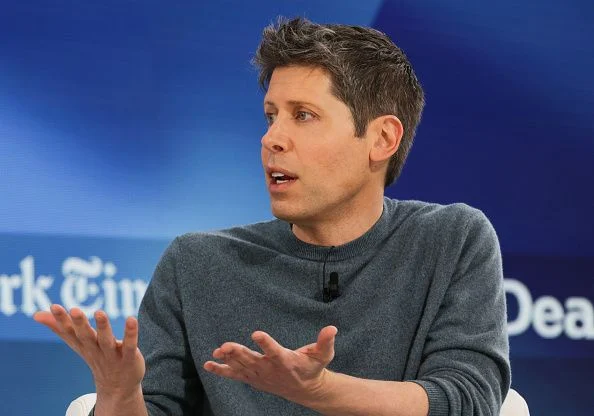
This comment highlights the central tension of the film: the gap between the public persona of the visionary tech leader and the private reality of managing technology that many fear could fundamentally alter human existence. For Altman, this cinematic treatment is merely another layer of an increasingly surreal reality. Speaking at the New York Times DealBook Summit, Altman remarked, "If you had told me 20 years ago that someone was going to make a movie about me, I think that would have struck me as… that would have been a very weird thing. Now it doesn’t feel like it’s in the top 10 weirdest things about my life."
Official Responses and the "Zuckerberg Standard"
The relationship between tech moguls and their biopics is rarely comfortable. Mark Zuckerberg remains the industry’s touchstone for how to handle being the subject of a major motion picture. While The Social Network cast Zuckerberg as a socially awkward, cutthroat opportunist, the Meta founder adopted a strategy of radical indifference—and, occasionally, ironic reclamation.
Zuckerberg later reflected on a podcast that while the film’s "technical details" regarding his wardrobe were accurate, the narrative arc—specifically the suggestion that Facebook was created as a means to find a girlfriend—was "completely wrong." His decision to organize a company-wide outing to see the film, and his subsequent purchase of an original prop shirt from the set, demonstrated a savvy understanding of the "Zuckerberg brand." He realized that fighting the narrative was futile, so he chose to own the caricature instead.
Sam Altman, by contrast, appears to be adopting a posture of detached observation. Whether he will follow in Zuckerberg’s footsteps by engaging with the media discourse surrounding Artificial remains to be seen.
Supporting Data: Why Hollywood Loves the "Tech-scandal"
The trend of adapting tech scandals into film is backed by a shift in audience demographics. According to recent box office analysis, films focusing on "corporate betrayal" or "founder dysfunction" draw significantly higher engagement from younger, tech-literate audiences.
| Film/Series | Subject | Critical Reception | Box Office/Streaming Performance |
|---|---|---|---|
| The Social Network | Mark Zuckerberg | Highly Positive | Commercial Hit |
| You Can See Everything | Elizabeth Holmes | Positive | Smashed Expectations |
| The Social Reckoning | Facebook/Meta | Mixed | Bomb |
| The Altruists | Sam Bankman-Fried | TBD | Pending |
The failure of The Social Reckoning, the recent sequel-style follow-up to The Social Network, serves as a warning to studios: audiences are not interested in rehashing old stories if they lack the "moral urgency" of the current AI moment. Artificial is positioned as a "must-watch" specifically because it deals with the existential threat of AI, rather than just the business mechanics of a social media platform.
Implications: The Moral Responsibility of the Architect
The most profound implication of the Artificial film is not the drama of the board meeting, but the broader question Altman poses about his own role in history. When asked what he considers the "weirdest" part of his life, Altman pointed to the "role of such significance and such responsibility" in ushering in technology that carries "real concerns."
This framing of the "tech savior" as a "burdened visionary" is a hallmark of the new wave of Silicon Valley cinema. These films suggest that the founders of these companies are not merely CEOs, but custodians of human progress—a role that, according to critics like Garfield, inherently requires a level of human detachment.
As we approach the release of Artificial, the film will likely serve as a mirror for the public’s own anxieties regarding AI. If the film paints Altman as a hero, it risks ignoring the very real societal concerns that the board of OpenAI initially flagged. If it paints him as a villain, it may fail to capture the nuance of the geopolitical and economic pressures that govern the AI race.
Ultimately, the rise of the Silicon Valley biopic indicates that the tech industry has replaced the political sphere as the primary engine of modern myth-making. As these companies continue to shape the trajectory of the 21st century, Hollywood will continue to be the primary chronicler of their rise, their stumbles, and their inevitable—and often cinematic—crises. Whether these portraits bring us closer to the truth, or merely obscure it with star power and dramatic license, is a question that will be debated long after the credits roll on Artificial.