In the high-stakes, shadowy world of international cybercrime, the "Qilin" ransomware syndicate has ascended to a position of chilling dominance. According to the latest intelligence from the NCC Group, Qilin is currently the most industrious ransomware-as-a-service (RaaS) operation in existence, having claimed at least 365 victim organizations within the last three months alone. Yet, for all its technical sophistication and aggressive "double extortion" tactics, the group’s leadership has been undone by a series of operational security (opsec) blunders. An extensive investigation has now traced the identity of Qilin’s administrator—known by the handle "Haise"—to a 36-year-old man residing in St. Petersburg, Russia.
The Rise of a Digital Predator
Since its emergence in September 2022, Qilin has fundamentally altered the threat landscape. Operating on a RaaS model, the group incentivizes affiliates by offering them a staggering 80 percent share of extortion payments. Unlike many of its peers, which often limit their recruitment to native Russian speakers, Qilin has cultivated a borderless criminal ecosystem, actively partnering with English-speaking threat actors and collaborating with notorious syndicates such as Scattered Spider and RansomHub.
The group’s methodology is brutal: affiliates infiltrate corporate networks, exfiltrate sensitive data, and subsequently deploy ransomware to encrypt the victim’s infrastructure. The "double extortion" tactic—threatening to leak stolen data unless a ransom is paid—has proven highly effective, forcing companies into desperate financial decisions. However, while the group’s code and tactics remain formidable, the man pulling the strings failed to maintain the one thing that keeps a cybercriminal invisible: a clean digital history.
Chronology of a Decades-Long Digital Footprint
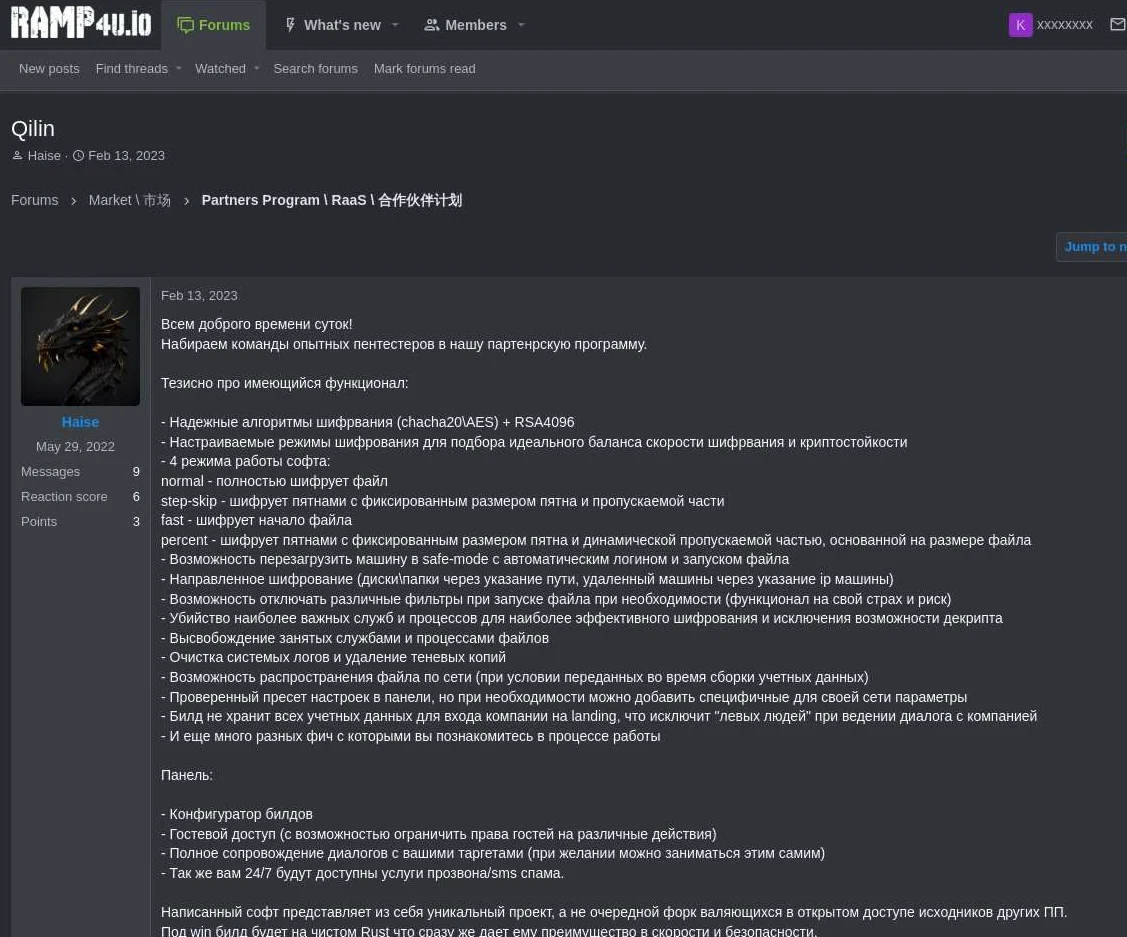
The identity of the Qilin administrator, "Haise," was not a static persona. Cybercriminals frequently rotate handles as a standard opsec procedure to divorce their criminal activities from their real-world identities. However, the path to discovery began in June 2022, when the user "Haise" applied for membership to RAMP—a notoriously exclusive Russian-language forum that served as a hub for the global ransomware elite.
2018–2020: The Formative Years
Long before he was the mastermind behind Qilin, the individual behind the screen was cultivating his skills in the darker corners of the internet. Intelligence gathered by Flashpoint indicates that in 2020, the user "Rjun" was active on Russian forums like Exploit and XSS. During this period, "Rjun" used the Telegram handle "Alexbigboss44." Records show he functioned primarily as a broker, managing networks of traffickers, purchasing compromised credentials, and engaging in high-volume acquisition of Facebook logs and Google Ads accounts to facilitate fraudulent advertising and gambling schemes.
2022: The Transition to Ransomware
When "Haise" applied to RAMP, he was vetted by the forum’s administrators. Internal direct messages—later indexed by the cybersecurity firm Intel 471 after the FBI seized the RAMP forum in January 2026—explicitly linked "Haise" to the Telegram username "Alexbigboss44." This crucial link allowed researchers to bridge the gap between the low-level fraudster of 2020 and the ransomware kingpin of 2026.
2023–2026: Consolidation and Exposure
As Haise’s influence grew, his digital trail became increasingly complex. According to IntelHawk, an AI-driven de-anonymization platform, stylometric analysis and historical username associations revealed a clear trajectory: from a novice arbitrageur and credit card fraudster in 2018 to a sophisticated orchestrator of botnets and payment infrastructure by 2023.

Supporting Data: Connecting the Dots
The de-anonymization of the Qilin administrator was not the result of a single "smoking gun," but rather a convergence of fragmented data points across multiple databases and breach reports.
The Email Link
A pivot point in the investigation was the email address [email protected]. This address was used by "Rjun" to register on several prominent Russian crime forums, including Darkmarket, Verified, and Zloy. Through the breach tracking service Constella Intelligence, researchers found this email address linked to records from gosuslugi.ru, the Russian government’s official digital services portal.
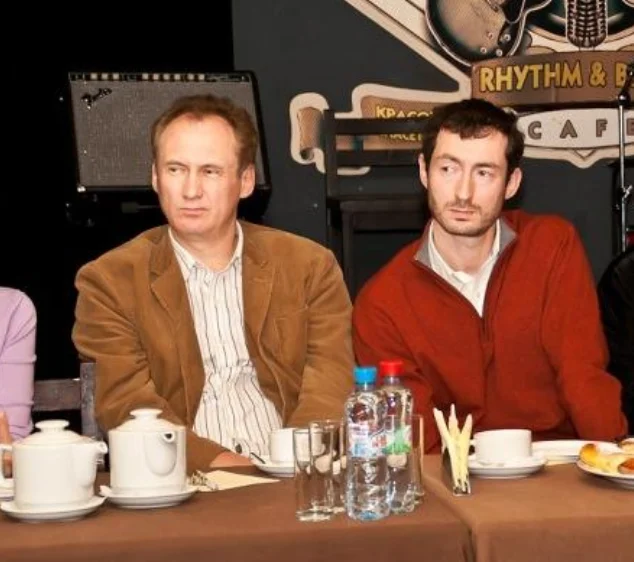
Following a massive 2025 data breach at gosuslugi.ru, which exposed the personal information of over 20 million citizens, the identity behind the email was unmasked: 36-year-old Aleksey Mikhailovich Yakovtsev, a native of St. Petersburg.
The Telegram and Telecom Connection
Further confirmation came through Telegram metadata. Flashpoint researchers identified that the "Haise" persona utilized a specific Telegram ID (118329521), which had logged over 5,000 messages since 2018. This ID was directly linked to the Russian phone number +79602347275. While the number technically belonged to Yakovtsev’s biological sister, investigators discovered that Yakovtsev frequently used his sister’s contact information and email addresses ([email protected] and [email protected]) to register for various services, effectively tying his criminal aliases to his familial network.
Travel Records
Publicly available flight records, leaked through data breaches at Russian travel agencies, provided the final pieces of the puzzle. These records show that Aleksey Yakovtsev, born August 18, 1990, frequently traveled between St. Petersburg and Murmansk during his younger years, and more recently, has been a frequent traveler to Sochi—the "Russian Riviera." These movements align with the geolocation patterns associated with the accounts used by Haise.
Official Responses and Independent Verification
Attempts to reach Mr. Yakovtsev via the phone numbers and email addresses linked to his digital identities have been unsuccessful. The sheer weight of the evidence, however, has been corroborated by multiple independent entities. The anonymous threat intelligence account "GangExposed" recently published a comprehensive analysis that reached the same conclusion, explicitly crediting the IntelHawk platform for its role in synthesizing the disparate data points.
While Russian authorities have historically shown little interest in prosecuting ransomware operators who target Western entities, the exposure of Yakovtsev creates a significant "burned" identity. The administrator of a major ransomware group being outed is a massive blow to the credibility of his affiliate program, which relies on the perception of absolute anonymity and operational security.

Implications for the Ransomware Ecosystem
The identification of the individual behind Qilin carries profound implications for the cybersecurity industry and the future of RaaS operations.
1. The Vulnerability of "Top-Tier" Criminals
This case demonstrates that even the most "professional" cybercriminals are susceptible to the "persistence of data." In an era where massive databases of government and private information are leaked daily, no digital footprint is ever truly deleted. The transition from a small-time fraudster to a global ransomware kingpin often leaves a "digital breadcrumb trail" that, when aggregated by AI-powered tools, becomes impossible to hide.
2. The Erosion of Trust in Affiliate Programs
Ransomware-as-a-service relies entirely on trust. Affiliates must believe that the platform administrator can keep them safe from law enforcement. When an administrator is revealed to have been sloppy enough to leave a trail leading directly to his residential address and government ID, affiliates are likely to migrate to more secure or lower-profile groups. This exposure may lead to a period of instability within the Qilin hierarchy.
3. A Precedent for Future Investigations
The methodology used to identify Yakovtsev—combining stylometry, breach data, and Telegram metadata—is becoming the new standard for private sector threat intelligence. As tools like IntelHawk and Constella Intelligence become more advanced, the "veil of anonymity" that has protected Russian ransomware operators for years is thinning.
As the digital net tightens, the life of a ransomware administrator becomes increasingly precarious. For Aleksey Yakovtsev, the "boss" of one of the world’s most active cybercrime groups, the curtain has been pulled back. While he remains free in St. Petersburg, his digital world—once a place of total control—is now a glass house, visible to the very cybersecurity researchers who have long hunted him. The Qilin operation may continue for now, but the aura of invincibility that defined its rise has been permanently shattered.