In the shadow-filled landscape of global cybercrime, few entities have ascended as meteorically as "The Gentlemen." Emerging in mid-2025, this ransomware-as-a-service (RaaS) syndicate has rapidly carved out a position as the second most prolific extortion group by victim count. According to security researchers at Check Point Software, the group has claimed responsibility for over 332 major network breaches since its inception, with more than 240 of those occurring within the first half of 2026 alone.
While the group’s name suggests a veneer of sophistication, its operational model is ruthlessly pragmatic. By offering affiliates an unprecedented 90 percent share of ransom payments—far exceeding the industry-standard 80/20 split—The Gentlemen have effectively poached elite operators from rival cartels, fueling a rapid expansion that has left security agencies scrambling. However, as new forensic evidence emerges, the "gentlemanly" facade is crumbling, revealing a trail of digital breadcrumbs that lead directly to a corporate marketing executive in Izhevsk, Russia.
The Anatomy of an Operation: The Gentlemen’s Methodology
The Gentlemen operate with a degree of clinical efficiency that differentiates them from the chaotic, disorganized gangs of the past. Their primary attack vector involves the exploitation of internet-facing devices, specifically targeting vulnerabilities in VPNs and firewalls. Once they secure an initial foothold, the group’s automation tools allow them to pivot laterally, mapping out entire enterprise networks and deploying encryption payloads within hours of the initial intrusion.
Security firm PRODAFT, which recently published a comprehensive analysis of the group’s infrastructure, suggests that the syndicate’s success is also tied to its early adoption of artificial intelligence. The group’s administrator has reportedly leveraged generative AI to accelerate the development of ransomware strains, refine post-exploitation scripts, and even draft more convincing extortion emails. By reducing the time-to-exploit, The Gentlemen have turned ransomware from a "craft" into a high-volume, industrialized business.
Chronology: The Evolution of a Digital Outlaw
The rise of The Gentlemen is inseparable from the evolution of its administrator, a figure known in the dark web ecosystem under the aliases Zeta88 and Hastalamuerte.
2019–2020: The Formative Years
The digital footprint of the man now identified as the group’s mastermind began in 2019. Threat intelligence firm Intel 471 tracked his early activity across various Russian and English-language cybercrime forums, including Exploit, Nulled, and the now-defunct Raidforums. During this period, the persona "Hastalamuerte" was not an elite developer but a novice. Records from a Telegram-based penetration testing training camp (@pntst) show the user struggling with basic tools, frequently asking for guidance in what appeared to be a desperate attempt to climb the ladder of the cybercriminal underworld.
2022–2025: Building the Infrastructure
By 2022, the user had adopted the handle "Zeta88," signaling a shift toward more professionalized operations. During this time, he began registering on platforms like Breached, operating from IP addresses traced to Izhevsk, the capital of Russia’s Udmurt Republic. It was here that he began assembling the backend infrastructure that would eventually support The Gentlemen.
2025–2026: The Gentleman’s Era
The launch of The Gentlemen in mid-2025 marked the solidification of Zeta88’s role as the "admin." Following a breach of the group’s internal servers, security researchers were able to link the management of the RaaS panel, the distribution of locker software, and the handling of ransom payouts directly to the Hastalamuerte/Zeta88 persona. This individual was revealed to be the architect of the entire program, siphoning a 10 percent "management fee" from every successful extortion attempt.
The Paper Trail: Identifying Alexander Yapaev
The identification of the administrator was not the result of a single "smoking gun," but rather the culmination of years of meticulous digital forensics by firms like Intel 471, Flashpoint, and Constella Intelligence.
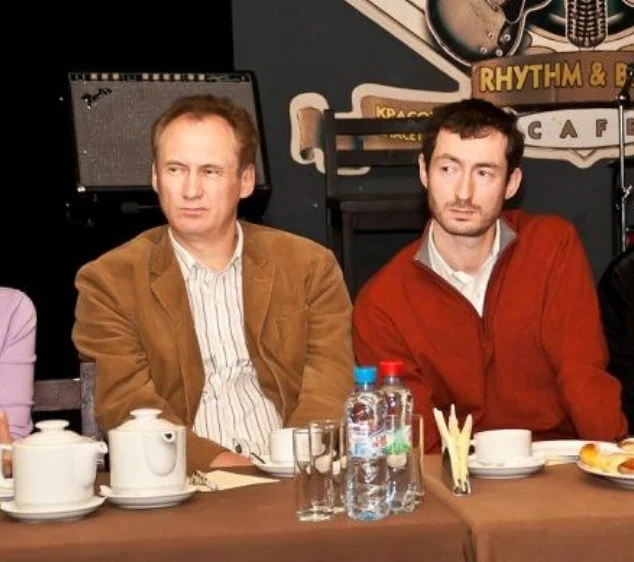
The breakthrough began with an email address found in the archives of Raidforums: [email protected]. Open-source intelligence (OSINT) tools like Epieos linked this address to an Apple account and a specific phone number ending in "04." Constella Intelligence cross-referenced this phone number, 79127650004, with leaked databases from Russian government entities. The number pointed consistently to a 36-year-old resident of Izhevsk named Alexander Andreevich Yapaev.
Further investigations revealed that Yapaev was not living the life of a typical "basement hacker." His digital presence included a LinkedIn profile identifying him as the head of B2B marketing at Uralenergo Udmurtia, a major regional supplier of electrical and lighting equipment.
Additional links were found through the handle "bu4vs," which appeared across multiple platforms—from a Russian social media account on Pikabu to a personal email address, [email protected]. This same email was linked to the LinkedIn profile for Alexander Yapaev. The connection was further cemented by his early forum activity under the name "Alexandr 4apaev," a clear nod to his real surname, Chapaev/Yapaev.
Implications: The "Controlled Impunity" of Russian Cybercrime
The fact that a high-ranking marketing executive can simultaneously manage one of the world’s most active ransomware gangs highlights a critical geopolitical reality. In Russia, cybercrime is often treated as a "gray zone" activity. So long as the criminal operators avoid targeting domestic Russian interests and pay the "right people," they enjoy a degree of insulation from international law enforcement.
This "controlled impunity" allows figures like Yapaev to operate in plain sight. Many cybercriminals, especially those in Russia, do not begin their careers with the intent of becoming international fugitives. They often start as bored, tech-savvy individuals who are gradually drawn into the lucrative world of cyber-extortion. Over time, their skills sharpen, their risk tolerance increases, and they become emboldened by the lack of domestic consequences.
However, the case of The Gentlemen serves as a reminder of the fragility of "OpSec" (Operational Security). Even for those who believe they are untouchable, the sheer volume of data produced in a modern digital life—phone registrations, social media profiles, and professional networking sites—creates a permanent, traceable history. Yapaev’s transition from a struggling student in a 2020 hacking chat to a corporate executive managing an international extortion ring is a case study in how hubris and poor early-career security can eventually lead to a total loss of anonymity.
Official Responses and Next Steps
To date, Alexander Yapaev has not responded to multiple requests for comment regarding his alleged double life. The companies he is associated with, including Uralenergo Udmurtia, have not issued statements regarding the allegations against their employee.
Security researchers emphasize that while the identity of the admin is now a matter of public record, the threat posed by The Gentlemen remains acute. The group’s reliance on brute-forced VPN credentials and AI-driven automation means that organizations must prioritize robust, multi-factor authentication and rigorous network monitoring to defend against their tactics.
As international law enforcement agencies continue to gather intelligence, the "Gentlemen" may find that their business model—and the anonymity they rely upon—is increasingly under siege. For Yapaev, the irony remains: the man who spent years mastering the art of digital shadows has ultimately been outmaneuvered by the very technology he used to build his empire. The breadcrumbs he left behind have turned into a roadmap for his potential undoing, proving that in the digital age, even the most careful "gentleman" can be unmasked.