WASHINGTON — In a significant setback for the commercialization of lunar exploration, NASA and the Cambridge, Massachusetts-based research and development organization Draper have mutually agreed to terminate their high-profile lunar lander contract. The decision brings an abrupt end to a key mission under the Commercial Lunar Payload Services (CLPS) program that was designed to deliver cutting-edge scientific instruments to the far side of the Moon.
The canceled contract, designated as the CP-12 task order, was originally awarded to Draper in July 2022 with a valuation of $73 million. The mission’s termination followed a series of cascading technical challenges, propulsion system redesigns, and corporate restructuring at Draper’s primary subcontractor, ispace-U.S., which ultimately pushed the projected landing date into the next decade.
Main Facts of the CP-12 Cancellation
The termination of the CP-12 task order represents a rare but calculated retreat for NASA’s CLPS program, which operates on a risk-tolerant, fixed-price model. The key facts surrounding the cancellation include:
Financial Scope and Outlays: Of the original $73 million award, NASA had already paid Draper approximately $43 million for successfully completing early developmental milestones. The remaining portion of the contract will not be disbursed.
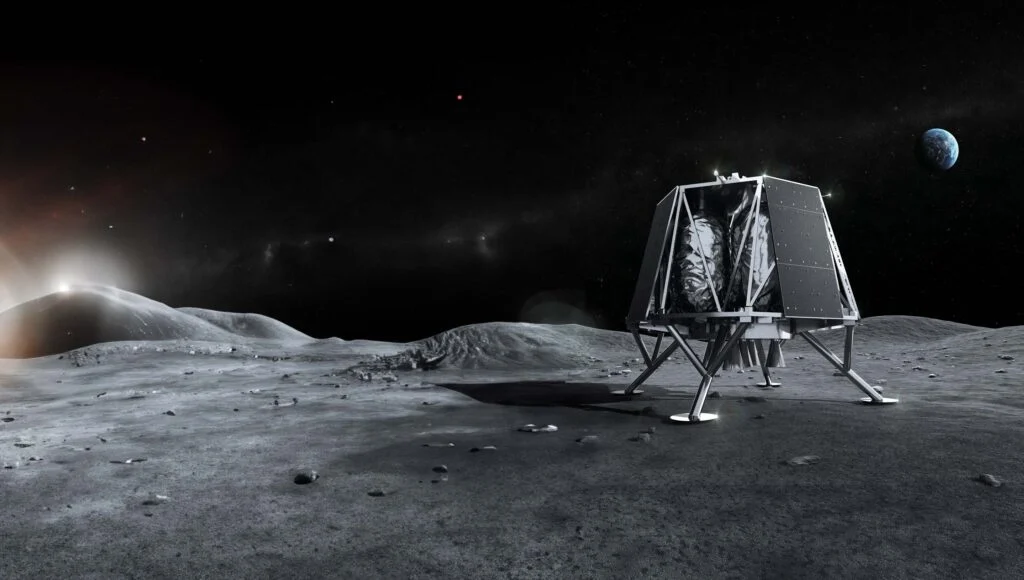
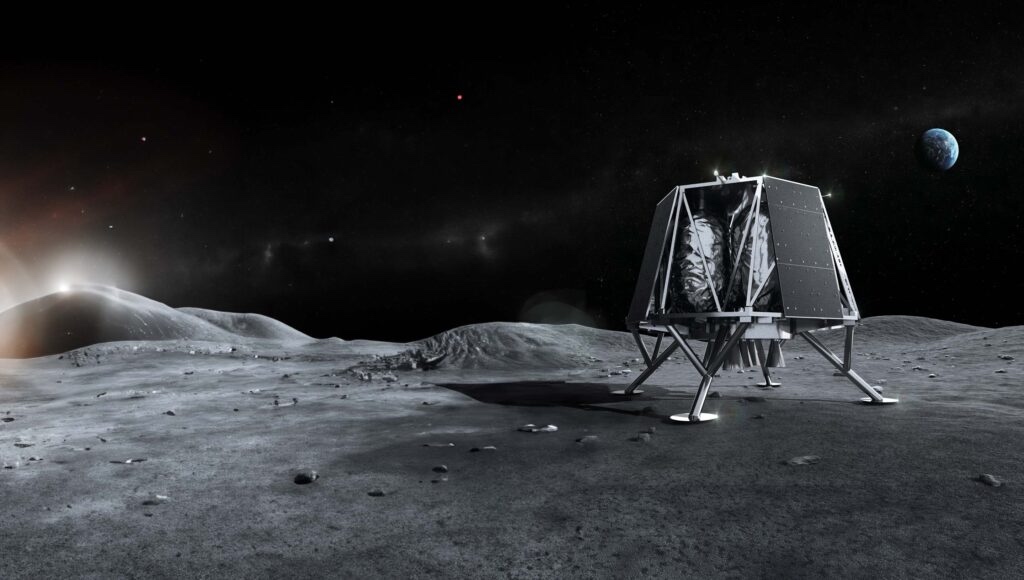
The Prime-Subcontractor Relationship: Draper served as the prime contractor, responsible for overall mission integration, guidance, navigation, and control. Its key subcontractor was ispace-U.S., the American subsidiary of Tokyo-based lunar exploration company ispace. Under the agreement, ispace-U.S. was tasked with providing the actual spacecraft—originally planned as the APEX 1.0 lander.
The Decisive Factor: The ultimate driver for the cancellation was an unsustainable schedule slip. A series of lander redesigns and engine changes delayed the target launch from its original 2025 window to an estimated landing in 2030 or 2031. NASA determined that waiting more than half a decade for these critical science payloads was unacceptable.
The Disclosure: The termination first came to light via a corporate statement from ispace on July 14, confirming that because NASA and Draper had ended the CP-12 task order, Draper had subsequently canceled its subcontract with ispace-U.S. Draper and NASA officials confirmed the decision in the days that followed.
Detailed Chronology of the Mission’s Delays
The path to termination was marked by a sequence of design changes, propulsion system pivots, and organizational realignments that steadily eroded the mission’s schedule.
NASA awarded the CP-12 task order to Draper with an ambitious timeline targeting a launch in 2025. The mission was highly anticipated because it targeted the Schrödinger Basin, a large impact crater near the lunar South Pole on the far side of the Moon.
2023: The Transition to APEX 1.0
In 2023, ispace-U.S. announced it was significantly revising its lander design to better accommodate the specific volume, mass, and power requirements of the NASA-provided payloads. This redesign birthed the APEX 1.0 lander, a larger and more capable vehicle than the company’s initial Hakuto-R design. However, the engineering overhaul pushed the scheduled launch window from 2025 to 2026.
May 2025: Propulsion and Engine Swap
The schedule slipped further following complications with the spacecraft’s propulsion system. ispace-U.S. made the decision to change the main engine used in the lander, a complex modification that required additional structural and systems engineering. This adjustment delayed the projected launch to 2027.
March 2025: The "Ultra" Merger and 2030 Slip
In a major strategic pivot, ispace announced it was restructuring its global engineering operations. The company decided to merge the separate, parallel lander development programs of its American and Japanese business units into a single, standardized spacecraft architecture called "Ultra."
Under this new roadmap, the Japanese parent company would build and fly the first two missions of the Ultra design. Consequently, the development of the U.S. variant of the Ultra lander—which Draper was relying on for CP-12—was deprioritized and delayed to 2030.
July 2025: Termination
Faced with a projected landing date of 2030 or 2031—five to six years later than originally contracted—NASA and Draper mutually agreed that continuing the CP-12 task order was no longer viable.
Supporting Data: The Science Payloads Left in Limbo
The cancellation of CP-12 is particularly disappointing for the planetary science community, as the mission was set to deliver a sophisticated suite of instruments to the lunar far side. Because the far side is permanently shielded from the Earth’s electromagnetic whisper, it offers a pristine environment for radio astronomy and highly sensitive geophysics.
The three primary payloads developed for CP-12 include:
Payload Name
Acronym
Primary Scientific Objectives
Farside Seismic Suite
FSS
Features highly sensitive seismometers designed to return the first-ever seismic data from the far side of the Moon, specifically measuring activity in the Schrödinger Basin to understand lunar interior activity and impact rates.
Lunar Interior Temperature and Materials Suite
LITMS
Designed to measure heat flow and subsurface electrical conductivity, providing critical data on the internal thermal structure and composition of the Moon.
Lunar Surface Electromagnetics Experiment-Lite
LuSEE-Lite
Engineered to measure low-frequency electromagnetic fields on the lunar surface, serving as a pathfinder for future radio cosmology experiments shielded from terrestrial interference.
The Schrödinger Basin is geologically young compared to other impact basins and contains evidence of recent volcanic activity. Scientists hoped that combining the seismic data from FSS with the thermal data from LITMS would help determine if the Moon’s core is still partially molten or if localized thermal anomalies persist beneath the crust.
Official Responses and Corporate Statements
Following the announcement, the involved organizations sought to frame the termination as a pragmatic decision within the high-risk framework of commercial space procurement, rather than a systemic failure.
NASA’s Position
In an official statement, NASA emphasized that the schedule slip was the sole driver of the decision:
"NASA ended the CP-12 task order with Draper due to delays associated with the lander redesign for the mission. Future milestones were projected to take years to complete, leading to a landing date in 2030 or 2031."
Despite the setback, the agency affirmed its commitment to the scientific objectives of the instruments:
"The agency remains committed to the science objectives of the CP-12 science payloads and will work to deliver these already-developed instruments to the moon at the earliest opportunity through future CLPS landings as part of the increased tempo of lunar activity by our Moon Base and Artemis programs."
ispace-U.S. and Draper
Draper confirmed the termination but deferred detailed inquiries regarding the contract to NASA. Meanwhile, ispace expressed its continued commitment to the U.S. commercial market. Elizabeth Kryst, Chief Executive of ispace-U.S., stated:
"ispace-U.S. remains dedicated to providing high-quality, high-frequency and low-cost transportation services to the lunar surface for the American market."
The company noted that it would actively seek future contracts under NASA’s upcoming CLPS 2.0 bidding mechanism, aiming to fly later, more advanced iterations of its unified "Ultra" lander.
Implications for the CLPS Program and Artemis
The cancellation of the Draper CP-12 mission highlights the ongoing growing pains of NASA’s Commercial Lunar Payload Services program. Launched as an alternative to traditional, highly managed, and expensive government procurement, CLPS was designed to treat commercial companies as service providers. Under this model, NASA does not own or operate the spacecraft; instead, it purchases a ride for its payloads.
A Feature, Not a Bug?
Proponents of the CLPS model argue that contract cancellations and mission failures are an expected, and even healthy, aspect of a program designed to accept higher risk in exchange for lower costs and rapid innovation. By shifting the financial and developmental risks to the private sector, NASA avoids sinking hundreds of millions of dollars into failing programs. In this case, NASA capped its losses at $43 million for milestones completed, rather than continuing to fund a project that would not deliver results for another six years.
However, this is not the first time a CLPS contract has collapsed prior to launch:
Orbit Beyond (2019): Terminated its CLPS task order just two months after award due to "internal corporate challenges."
Masten Space Systems (2022): Filed for Chapter 11 bankruptcy after suffering severe cost overruns on its XL-1 lander mission. While Astrobotic acquired Masten’s physical assets, NASA chose to terminate the associated CLPS contract rather than transfer it.
The Search for a New Ride
The immediate challenge for NASA is finding a new flight for the FSS, LITMS, and LuSEE-Lite payloads. While NASA recently awarded nearly $600 million in new lunar lander contracts to companies like Firefly Aerospace, Intuitive Machines, and Voyager Lunar Systems (formerly Astrobotic), these upcoming missions are predominantly targeting the lunar near side or the South Pole.
Because the Farside Seismic Suite (FSS) requires the unique radio silence and geological environment of the lunar far side to achieve its scientific goals, it cannot simply be manifested on a standard near-side mission. NASA will likely have to issue a specialized, competitive task order in the near future specifically targeting a far-side landing site to get these completed instruments on the lunar surface.
Ultimately, the termination of CP-12 serves as a stark reminder that despite commercial progress, reaching the lunar surface—especially the uncharted terrain of the far side—remains an exceptionally difficult engineering and financial endeavor.