In a landmark move aimed at fortifying the United States’ maritime supremacy, the U.S. Navy has finalized a monumental $76.6 billion procurement package. This massive investment, divided into two major multi-ship contracts, tasks industry titans General Dynamics Electric Boat and HII’s Newport News Shipbuilding with the production of the next generation of Virginia-class attack submarines and Columbia-class ballistic missile submarines.
The award comes at a critical juncture for the Pentagon, as it navigates a complex geopolitical landscape defined by rising competition in the Indo-Pacific and the ongoing necessity to modernize the nuclear triad. While the infusion of capital provides the industrial base with much-needed stability, it also highlights the persistent, systemic challenges facing U.S. naval manufacturing as the service struggles to meet its own aggressive production timelines.
The Core Procurement: A Multi-Billion Dollar Investment
The contract awards, announced by the Navy, represent one of the largest combined shipbuilding commitments in recent history. The funding structure is divided as follows:
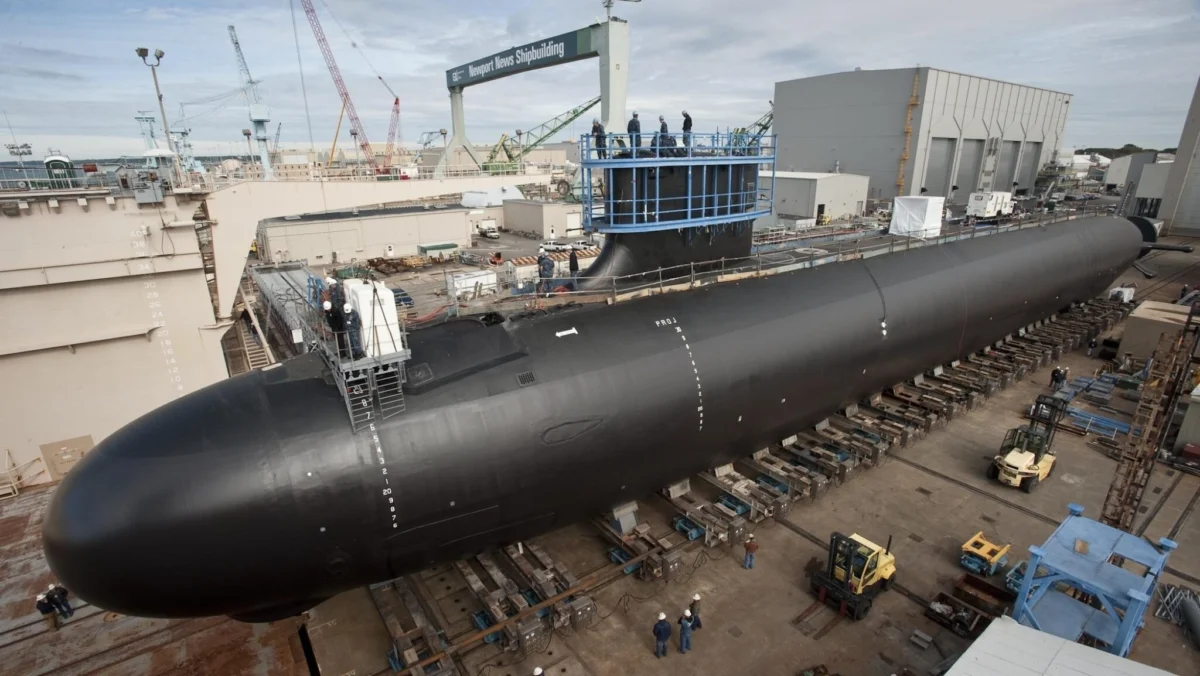
- Block VI Virginia-class Submarines: A $42.1 billion contract has been awarded for the production of nine Block VI Virginia-class fast-attack submarines. The agreement also includes provisions for long-lead material for an additional vessel, ensuring that the supply chain remains primed for future expansion.
- Columbia-class Build II: A $29.5 billion contract covers the construction of five Build II Columbia-class ballistic missile submarines. These vessels are essential to the future of the U.S. nuclear deterrent, serving as the replacement for the aging Ohio-class fleet.
- Shipyard Enhancements: Supplementing these production contracts is an additional $5 billion previously allocated for shipyard infrastructure. This funding is specifically earmarked to modernize the facilities where these complex vessels are designed and assembled, addressing bottlenecks that have hindered production in recent years.
The two shipyards—General Dynamics Electric Boat and Newport News Shipbuilding—operate as a joint venture for these programs, sharing the labor-intensive responsibility of constructing these sophisticated nuclear-powered platforms.
Chronology of a High-Stakes Negotiation
The path to these contracts has been anything but smooth. For months, the Navy faced mounting pressure from Capitol Hill to finalize the Block VI agreement.
- Fiscal Year 2024 Authorization: Congress authorized the procurement of these vessels in the National Defense Authorization Act (NDAA) for FY2024, signaling a clear legislative mandate to move forward.
- The Spring Standoff (March 2026): By early 2026, the lack of a finalized contract had become a point of contention. Rep. Joe Courtney (D-CT), ranking member of the seapower and projection forces committee, escalated the issue in a formal letter to Pentagon acquisition chief Michael Duffey. Courtney argued that the delay was creating a "vacuum of uncertainty," paralyzing the thousands of suppliers who require long-term demand visibility to procure specialized steel, reactor components, and complex electronics.
- Industrial Base Strain: Throughout 2025, reports from the Government Accountability Office (GAO) and naval analysts consistently pointed to "production drift." While the Navy aimed for a cadence of two submarines per year, the reality on the shipyard floors was a rate of roughly one per year, hampered by a thinning skilled labor pool and post-pandemic supply chain fragility.
- Contract Finalization: The formal announcement of the $76.6 billion package marks the conclusion of this period of uncertainty, providing the "demand certainty" that industry executives had been clamoring for to justify capital expenditures in hiring and facilities.
Supporting Data: The Industrial Reality
The data surrounding the current state of the submarine industrial base is sobering. According to a GAO report released this month, the Virginia-class program is significantly behind schedule.
Production Metrics
The Navy’s target of two submarines per year is the gold standard for maintaining the fleet, yet the reality as of June 2025 was a one-per-year output. The first 10 vessels of the Block V series—the precursor to the newly contracted Block VI—are currently facing an average delivery delay of nearly three years compared to their original contract schedules.
The "Recovery Plan" Gap
The Navy implemented a recovery plan to stabilize construction progress, but internal metrics indicate that the program is underperforming against its own benchmarks. Key drivers for these delays include:
- Workforce Attrition: The loss of experienced shipbuilders during and after the pandemic has left a "skills gap" that is difficult to fill in a high-tech manufacturing environment.
- Material Shortages: Delays in receiving critical forgings and castings have forced shipbuilders to reorder work sequences, leading to inefficiencies.
- Complex Integration: The Columbia-class, which is the nation’s top priority, requires immense engineering resources, often cannibalizing the talent and materials needed for the Virginia-class production lines.
Official Responses and Strategic Rationale
The Pentagon and industry leadership have framed these contracts as a vital necessity for national security.

Vice Adm. Robert Gaucher, the Pentagon’s submarine czar, emphasized the strategic importance of the move: "This historic investment underscores the Department’s continued commitment to undersea superiority and the recapitalization of our nuclear triad. By securing the continuous production of both the Columbia and Virginia classes, we ensure we will continue to deliver the world’s most lethal, survivable and resilient combat platform to our global Combatant Commanders."
Kari Wilkinson, President of Newport News Shipbuilding, added, "These contracts provide the American shipbuilding industrial base the opportunity to demonstrate that commitment in a meaningful way."
From the industry perspective, Mark Rayha, President of General Dynamics Electric Boat, highlighted the stability these contracts offer: "These important contract modifications provide Electric Boat and our suppliers with the demand certainty we need to continue investing in capacity and hiring the workforce necessary to ensure we deliver these important national security assets on schedule."
Implications for Global Security and the AUKUS Agreement
The impact of these contracts extends far beyond U.S. domestic shipyards; they are the bedrock of the trilateral AUKUS security agreement.
The AUKUS Factor
A key component of the AUKUS pact involves the sale of three in-service Virginia-class submarines to Australia in the 2030s. Without a robust and accelerated production schedule, the U.S. Navy risks depleting its own undersea fleet to meet these international obligations. The new contract ensures that the "production pipeline" is sufficiently filled to support both the U.S. Navy’s requirements and the strategic transfer of assets to Australia.
Economic Ripples
Rep. Joe Courtney noted that the impact of these contracts will be felt by "thousands of supply chain companies well into the late 2030s." By providing long-term certainty, the Navy is effectively encouraging small business manufacturers to invest in new machine tools and training programs. This is intended to create a "multiplier effect," where industrial capacity grows in tandem with the Navy’s needs.
The Path Forward
Despite the optimism surrounding the contract signing, the path ahead remains difficult. The GAO report’s findings serve as a stark reminder that money alone cannot solve structural deficiencies. The Navy and its industrial partners must now pivot from contract negotiation to execution.
"Congress and the Navy must now double-down on industrial base investments that are moving delivery schedules to the left," Courtney urged. The success of the next decade of American undersea warfare will depend on whether these shipyards can translate these billions of dollars into finished, steel-hulled combatants that can meet the evolving challenges of the 21st century.
For now, the U.S. government has placed its largest bet yet on the submarine industrial base, banking on the promise that the stability of a massive, multi-year contract will be the catalyst needed to restore the pace of American naval production.