
The global landscape of corporate sustainability is undergoing a seismic shift. For years, the voluntary carbon market has focused primarily on offsetting Scope 1 and 2 emissions—those directly produced by a company or its energy consumption. However, the true climate challenge for most multinational corporations lies in Scope 3: the "value chain" emissions that occur deep within the supply chain, often obscured by layers of intermediaries and geographical distance.
In a move poised to reshape how corporations approach these indirect emissions, Verra, the world’s largest issuer of voluntary carbon credits, has officially announced the launch of a registry for "Scope 3 Units." These instruments, technically known as environmental attribute certificates (EACs), are designed to provide a standardized, rigorous framework for companies to claim credit for emissions savings generated by investments in their upstream or downstream supply chains.
The Mechanism of Scope 3 Units
Scope 3 emissions constitute the lion’s share of most corporate carbon footprints. Yet, because these emissions occur outside a company’s direct control, they have historically been the most difficult to mitigate. Traditional carbon offsets—where a company pays for a project in a location unrelated to its business to "neutralize" its own output—have faced increasing scrutiny regarding their additionality and real-world impact.
Scope 3 Units operate differently. They are designed for "insetting," where a company invests in decarbonization projects—such as regenerative agriculture, low-carbon industrial manufacturing, or methane-reduction technologies—within their own supply chain or regional network.
Stefan Jirka, Verra’s director for agriculture and supply chain innovation, notes that the nonprofit is now accepting applications from project developers to issue these units. The ambition is significant: Verra, which already oversees more than 2,500 projects under its existing carbon standards, aims to have "dozens, if not hundreds" of projects generating millions of Scope 3 Units within the next three years.
A Chronology of the Shift Toward Attribute-Based Accounting
The emergence of EACs as a formal tool is not a sudden development but the result of a multi-year maturation of corporate sustainability standards.
- Early 2020s: The "Wild West" era of insetting. Companies began experimenting with supply chain investments, but lacked a standardized registry or verification body, leading to fragmented claims and skepticism from stakeholders.
- 2023: Increasing pressure from the Science Based Targets initiative (SBTi) for companies to address Scope 3 emissions. Corporations realized that traditional offsets were becoming less acceptable as a primary tool for hitting net-zero targets.
- June 2024: A pivotal moment. The SBTi updated its Corporate Net-Zero Standard, formally acknowledging the role that EACs could play in decarbonizing value chains. This "green light" from the gold-standard body provided the institutional legitimacy that the market had been craving.
- August 2024: PepsiCo signaled the market’s readiness by explicitly including EACs in its 2025 emissions statement, marking one of the first major public adoptions of the framework following the SBTi update.
- September 2024: Verra officially opened the application process for its Scope 3 Unit registry, signaling the transition from experimental pilot programs to an industrialized, scalable market infrastructure.
Supporting Data and Market Fragmentation
The need for a centralized registry like Verra’s is driven by the current state of market fragmentation. While the concept of EACs is gaining traction, the "rules of the road" remain under construction. Currently, multiple entities are vying to define the standards for these units.
The Landscape of Competing Standards
The market is characterized by a mix of cross-sector initiatives and for-profit entities. The "Advanced and Indirect Mitigation" (AIM) platform has already released foundational guidelines, while the Greenhouse Gas Protocol is actively developing its own position on the integration of these credits. For-profit players, such as Athian, are already carving out niches by issuing EACs specifically for livestock projects, while S3 Markets is building its own registry infrastructure.
This proliferation of standards has created a "standards paradox." While innovation is high, companies are currently hesitant to invest heavily due to the lack of a single, unified rulebook. An anonymous participant involved in current industry discussions confirmed that "insiders are now pushing for an overarching set of rules that can serve as a global foundation," fearing that without harmonization, the market will suffer from a lack of fungibility and trust.
Verra’s Methodology: From Agriculture to Industry
Verra is not starting from scratch. Instead, it is leveraging its existing, battle-tested methodologies. The initial rollout of Scope 3 Units will focus on two primary sectors:
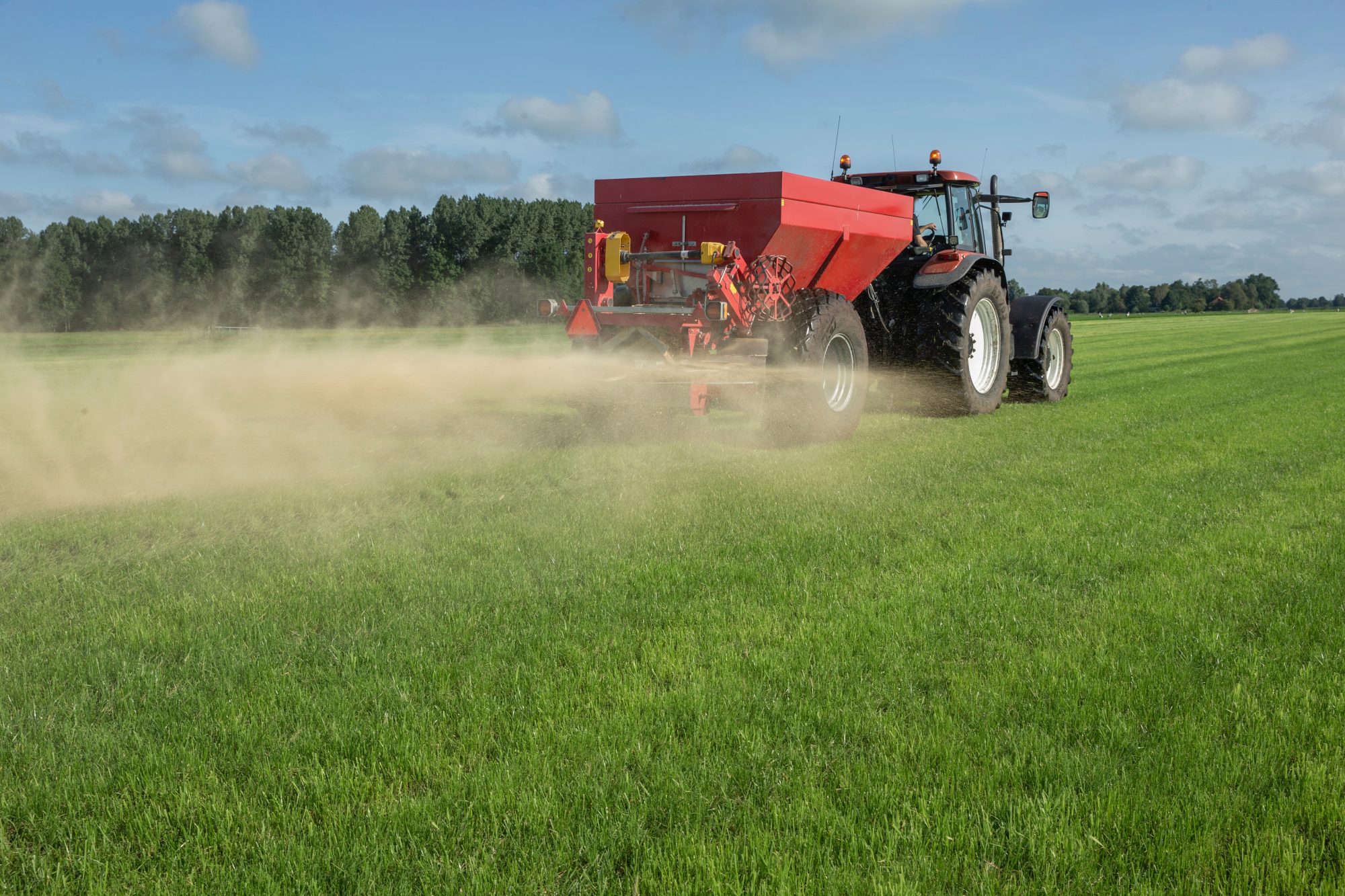
- Agricultural Land Management: Utilizing methodologies developed for soil carbon and sustainable farming practices.
- Low-Carbon Concrete: Adapting standards for industrial production processes.
However, the roadmap is aggressive. Verra plans to expand its methodology library to include:
- Forestry and land use: Extending carbon sequestration models to supply-chain forestry.
- Industrial Fuels: Addressing the transition to low-carbon energy sources in manufacturing.
- Superpollutants and Refrigeration: Tackling potent greenhouse gases that frequently leak from industrial supply chain infrastructure.
Verra is also currently drafting the governance protocols that will determine who is eligible to purchase specific units, a crucial step in preventing "double-counting" and ensuring that the environmental claims made by corporations are legally and scientifically defensible.
Implications for the Global Economy
The introduction of a standardized registry for Scope 3 Units has profound implications for corporate strategy and climate policy.
1. The End of the "Scope 3 Excuse"
For years, companies have pointed to the complexity and lack of visibility in their supply chains as a reason for slow progress on emissions reduction. By providing a market mechanism that incentivizes investment in suppliers, Verra is essentially turning Scope 3 emissions into an actionable asset class. Companies can now treat supply chain decarbonization as a line-item investment with measurable, tradeable returns.
2. The "Association Test" vs. Direct Traceability
One of the most controversial aspects of the new framework is the "association test." In traditional carbon accounting, a company would need a direct link to the project—such as buying corn from the specific farm that implemented regenerative practices. Under the new EAC model, companies may be able to count emissions savings if they can prove a regional association, such as purchasing from suppliers within the same geographic jurisdiction where the project was implemented. This flexibility is essential for scaling, but critics warn it could weaken the integrity of the claims if the association criteria are not sufficiently stringent.
3. A Potential Shift in Corporate Capital Allocation
With the endorsement of the SBTi, the financial incentives are shifting. CFOs are now under pressure to meet net-zero targets. If purchasing an EAC is cheaper and more effective than retrofitting an entire supplier base, we will likely see a massive influx of capital into the registry. This could trigger a "race to the top," where project developers compete to offer the most verifiable, high-quality units to satisfy corporate demand.
Conclusion: The Long Road to Standardization
The launch of Verra’s registry is a milestone, but it is not a panacea. The coming years will be defined by a struggle for harmonization. For this market to truly succeed, it must overcome the "trust deficit" that has plagued the voluntary carbon market for decades.
Whether the market coalesces around Verra’s registry or remains a patchwork of competing standards will depend on the transparency of the registry’s data and the rigor of its verification process. As companies like PepsiCo and others test the waters, the world will be watching to see if these "Scope 3 Units" can deliver on their promise: to finally turn the opaque, distant emissions of global supply chains into measurable, manageable, and ultimately, avoidable impacts.
The transition has begun. The challenge now is to ensure that the infrastructure supporting it is as robust as the climate goals it is meant to achieve.