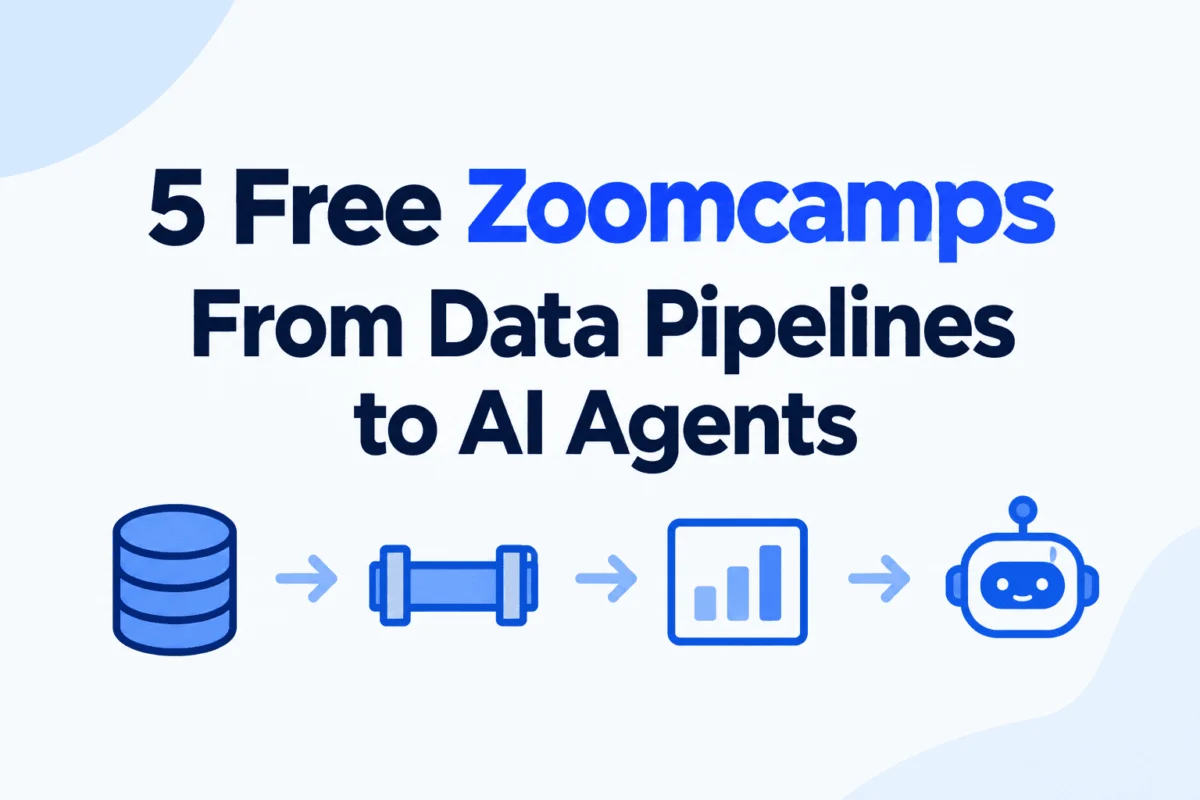
In an era where technical upskilling often comes with a five-figure price tag, the democratization of high-quality engineering education remains a critical pillar for the global developer community. DataTalks.Club, a vibrant, community-driven platform, has emerged as a beacon for those looking to bridge the gap between academic theory and production-grade software engineering. Their signature "Zoomcamps"—free, cohort-based, and highly practical courses—have become the gold standard for professionals aiming to master data pipelines, machine learning operations, and the rapidly evolving landscape of AI development.
For those eager to advance their careers, the value of these programs lies not just in the syllabus, but in the environment. Participants are not merely watching passive tutorials; they are engaging in a structured, deadline-driven ecosystem that mirrors the realities of professional software development.
The Philosophy of Open-Access Learning
Since the onset of the global pandemic, the landscape of online education has shifted dramatically. While many providers have moved toward gated, premium subscription models, DataTalks.Club has maintained a commitment to open access. By leveraging GitHub as their primary delivery mechanism, they ensure that every line of code, every architectural diagram, and every homework assignment remains available to the public indefinitely.
This pedagogical approach fosters a "learn-by-doing" mentality. When a cohort is active, students benefit from peer-to-peer accountability, community Slack channels, and a schedule that forces the discipline often missing from self-paced learning. Even when the cohorts conclude, the repository of knowledge remains, serving as a comprehensive library for developers at every level.
1. Data Engineering: Building the Foundation
Data engineering is the backbone of the modern digital enterprise. The Data Engineering Zoomcamp is a rigorous nine-week program designed to take students from the basics of data ingestion to the complexities of a fully realized, end-to-end data pipeline.
Core Curriculum and Stack
The course is remarkably comprehensive, forcing students to interact with the industry-standard "Modern Data Stack." Throughout the program, participants master:
- Infrastructure as Code: Using Terraform to provision cloud resources.
- Containerization: Implementing Docker to ensure environment consistency.
- Orchestration: Mastering tools like Kestra to manage complex workflows.
- Data Warehousing & Analytics: Utilizing BigQuery, dbt, and DuckDB to transform raw data into actionable insights.
- Stream Processing: Understanding the fundamentals of Kafka for real-time data handling.
The culmination of the course is a capstone project. Unlike academic assignments, this project requires students to synthesize disparate technologies into a cohesive pipeline, providing a tangible portfolio piece that resonates with hiring managers.
2. Machine Learning: From Model to Production
Many online courses stop at the point of training a model. The Machine Learning Zoomcamp recognizes that a model is useless if it cannot be consumed by an end-user.
The Transition to Applied AI
This course is structured to bridge the gap between "data science" and "machine learning engineering." Students delve into:
- Foundational Mathematics: Regression and classification algorithms.
- Advanced Techniques: Deep learning and ensemble methods.
- Deployment Architecture: Converting models into web services using FastAPI.
- Cloud Scalability: Deploying these services using Kubernetes and AWS Lambda.
The 2026 cohort, scheduled to commence on September 14, 2026, offers a structured path for those who already possess a baseline understanding of Python but wish to master the complete ML lifecycle.
3. MLOps: The Operationalization of AI
If the Machine Learning Zoomcamp is about building the model, the MLOps Zoomcamp is about keeping it alive. Machine Learning Operations is perhaps the most critical skill set for modern companies, yet it remains the most difficult to learn in a traditional classroom setting.
Key Pillars of Production Systems
The curriculum focuses on the "Day 2" problems—what happens once the model is in production? Key topics include:
- Experiment Tracking: Using MLflow to version control models and hyperparameters.
- Automation: Implementing CI/CD pipelines via GitHub Actions.
- Observability: Using Prometheus and Grafana for real-time monitoring.
- Reliability: Testing for data drift and model degradation with Evidently.
By focusing on the integration of these tools, the course provides a blueprint for building resilient AI systems that can withstand the rigors of production environments.
4. LLM Application Development: Navigating the Frontier
The LLM Zoomcamp is arguably the most timely offering from DataTalks.Club. It moves beyond the hype of prompt engineering to explore the actual architectural patterns required to build enterprise-grade LLM applications.
Technical Depth in the Age of AI
Over 10 intensive weeks, the course covers:
- Retrieval Augmented Generation (RAG): The industry-standard approach for grounding LLMs in proprietary data.
- Advanced Search: Vector databases, hybrid search, and reranking strategies.
- Agentic Workflows: Function calling, orchestration, and autonomous agent development.
- Evaluation: Developing metrics to assess model performance and output quality.
This course is transformative because it changes how students view LLMs—not as magic boxes, but as components within a larger, testable, and observable software system.
5. AI Dev Tools: The Future of Software Engineering
The AI Dev Tools Zoomcamp is a visionary program that addresses the changing nature of the developer’s role. As AI coding assistants (like Cursor, GitHub Copilot, and Claude Dev) become ubiquitous, the workflow of the software engineer is shifting from manual coding to "AI-assisted engineering."
Redefining the Engineering Workflow
This course explores the cutting edge of AI-driven development:
- AI-Enhanced SDLC: Utilizing agents for planning, testing, and security reviews.
- Advanced Agent Capabilities: MCP (Model Context Protocol), sub-agents, and custom hooks.
- DevOps Integration: Using AI to automate the entire CI/CD pipeline.
With the next cohort launching on August 31, 2026, this program is essential for developers who want to stay ahead of the curve as the role of the software developer evolves from "writer of code" to "architect of AI-driven systems."
Implications for the Tech Industry
The success of these Zoomcamps carries significant implications for the broader tech industry. Firstly, it challenges the business model of traditional bootcamps. By proving that high-quality, community-led education can lead to tangible career outcomes, DataTalks.Club provides a powerful alternative for students who are priced out of the traditional education market.
Secondly, it highlights the importance of "community-driven" learning. In an industry defined by rapid change, the ability to crowdsource answers, share best practices, and learn from the collective experience of thousands of peers is arguably more valuable than any static, pre-recorded video series.
Career Outcomes and Testimonials
The impact is best measured by the success of its alumni. Across various professional forums, former participants have shared testimonials of using these programs as a springboard into high-paying roles at top-tier tech companies. The combination of a structured curriculum and the ability to demonstrate a portfolio of finished projects provides a level of credibility that is often missing from purely academic degrees.
Conclusion: A Call to Action
For the aspiring engineer, the barriers to entry have never been lower, yet the complexity of the landscape has never been higher. The DataTalks.Club Zoomcamps offer a rare synthesis of accessibility and excellence.
Whether you are a junior developer looking to break into data engineering, or a seasoned engineer looking to master the latest in LLM architecture, these courses provide the roadmap. By participating in these cohorts, you are not just taking a class; you are joining a global community of practitioners committed to the advancement of the field. As we look toward 2026, the question is not whether you have the resources to learn, but whether you have the discipline to follow through. The tools are free; the knowledge is open. The rest is up to you.