
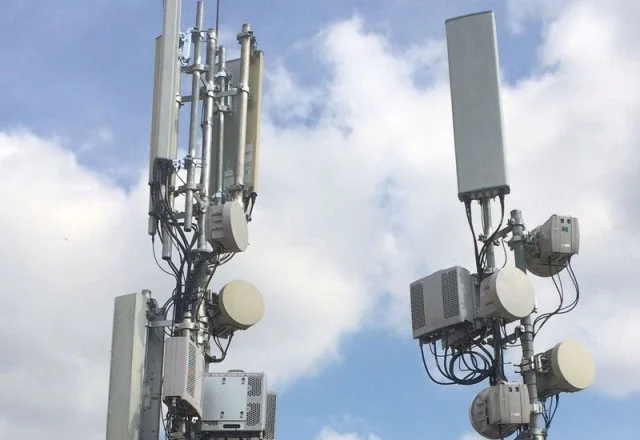
A wave of significant technological advancements is reshaping the telecommunications landscape, with key players announcing breakthroughs in areas crucial for delivering faster, more efficient, and more versatile connectivity. From enabling multi-gigabit home broadband to optimizing data transmission for artificial intelligence and space exploration, these developments signal a robust and dynamic future for the industry.
Today’s telecommunications news is a testament to this relentless innovation. Comtrend has achieved a critical regulatory milestone for its Wi-Fi 7 XGS-PON gateways, paving the way for wider adoption of ultra-high-speed home internet. In parallel, SIMSY is leveraging Atombeam’s cutting-edge Neurpac technology to dramatically compress cellular LiDAR traffic, unlocking new possibilities for real-time enterprise applications. The burgeoning space sector is also seeing advancements, with Lyntris securing a significant order for tri-band ground network equipment from Intuitive Machines, underscoring the growing importance of robust satellite communication infrastructure. Meanwhile, XKL is pushing the boundaries of low-latency optical networking, delivering solutions specifically designed to meet the demanding requirements of AI and high-performance computing. These announcements, among others, highlight a sector actively addressing the evolving needs of consumers, businesses, and emerging technologies.
Comtrend’s Wi-Fi 7 XGS-PON Gateways Achieve FCC Clearance, Ushering in a New Era of Home Broadband
Main Facts: Comtrend has received conditional approval from the U.S. Federal Communications Commission (FCC) for its new Wi-Fi 7 XGS-PON Optical Network Terminal (ONT) GRG-4366u and its Wi-Fi 7 Ethernet gateway PRT-7302/VG-8043u. This critical regulatory clearance exempts these specific models from the restrictions imposed by the FCC’s Covered List, thereby allowing Comtrend to proceed with the necessary certification processes for their commercial deployment within the United States.
Chronology of the Approval Process: While the article does not detail the exact timeline of Comtrend’s FCC submission and review, the announcement signifies the culmination of a significant period of research, development, and compliance efforts. The FCC’s "Covered List" is a dynamic entity, and companies must meticulously ensure their products and components meet evolving national security and supply chain integrity standards. The conditional approval suggests that Comtrend has successfully demonstrated the adherence of its Wi-Fi 7 XGS-PON gateways to these stringent requirements, clearing a substantial hurdle in bringing these advanced technologies to the U.S. market.
Supporting Data and Technological Context: The significance of this approval lies in the convergence of two transformative technologies: XGS-PON and Wi-Fi 7. XGS-PON (10 Gigabit Symmetrical Passive Optical Network) is the latest generation of fiber-to-the-home technology, capable of delivering symmetrical download and upload speeds of up to 10 Gbps. This represents a substantial leap forward from current gigabit fiber deployments, offering the bandwidth necessary for the most demanding digital activities.
However, the true benefit of these ultra-fast fiber connections can only be realized if the data can be efficiently distributed within the home. This is where Wi-Fi 7 (IEEE 802.11be) comes into play. Wi-Fi 7 builds upon its predecessors by offering significant improvements in speed, latency, and capacity. Key advancements include:
- Multi-Link Operation (MLO): This allows devices to simultaneously connect to multiple frequency bands (2.4 GHz, 5 GHz, and 6 GHz), aggregating their capacity for increased throughput and reduced latency.
- Wider Channels: Wi-Fi 7 supports wider channels, including 320 MHz in the 6 GHz band, effectively doubling the data carrying capacity of existing Wi-Fi 6E deployments.
- Advanced Modulation Schemes: The use of 4096-QAM (Quadrature Amplitude Modulation) enables more data to be transmitted within each signal transmission, further boosting speeds.
- Improved Interference Management: Enhanced features for handling interference contribute to a more stable and reliable wireless connection.
The combination of XGS-PON and Wi-Fi 7 in Comtrend’s gateways is particularly relevant as U.S. fiber operators increasingly introduce faster broadband tiers. Without upgraded residential gateways capable of wirelessly distributing these multi-gigabit speeds, consumers would face bottlenecks, limiting their ability to fully utilize their high-speed internet subscriptions. Comtrend’s GRG-4366u ONT and PRT-7302/VG-8043u gateway are engineered to bridge this gap, ensuring that the full potential of fiber optic networks is translated into a seamless and robust Wi-Fi experience within the home.
Official Responses and Strategic Implications: Comtrend views this FCC milestone as a pivotal moment in its strategic expansion within the U.S. broadband equipment market. The company’s stated goal is to broaden its portfolio of offerings and strengthen its presence among service providers. This regulatory clearance not only validates their technological advancements but also positions them as a key supplier for the next wave of high-speed internet deployments. As the demand for bandwidth continues to surge, driven by activities such as high-definition streaming, cloud gaming, virtual and augmented reality, and the proliferation of smart home devices, the availability of Wi-Fi 7 XGS-PON gateways becomes increasingly critical for internet service providers looking to differentiate themselves and meet customer expectations.
SIMSY and Atombeam Revolutionize Cellular Data Transmission with Advanced AI Compression
Main Facts: SIMSY is set to deploy Atombeam’s proprietary Neurpac technology, a significant development aimed at empowering enterprise customers to transmit high-volume LiDAR and device data across cellular networks with unprecedented efficiency. Initial testing has demonstrated that Neurpac can achieve over 75% compaction of LiDAR traffic when transmitted over a cellular connection, effectively addressing critical bandwidth limitations that have historically hindered the deployment of certain real-time applications.
Chronology of Development and Deployment: The announcement signifies a crucial step in the ongoing development and application of AI-driven data optimization. While the exact timeline of Atombeam’s Neurpac development is not specified, its successful integration and demonstration with SIMSY’s platform indicate a mature and effective technology. The deployment phase, now initiated, will see this solution being implemented for enterprise clients, moving from a promising technology to a practical, real-world application.
Supporting Data and Technological Context: The core of this innovation lies in Atombeam’s Neurpac technology, which utilizes advanced AI algorithms to intelligently compress data before it is transmitted over cellular networks. This is particularly impactful for data-intensive applications such as LiDAR (Light Detection and Ranging), which generates vast amounts of three-dimensional spatial data. In industries like autonomous vehicles, robotics, industrial inspection, and advanced surveying, LiDAR is indispensable. However, the sheer volume of data produced can quickly overwhelm cellular network capacity, leading to delays, dropped connections, and the inability to support real-time processing and decision-making.
The achievement of over 75% compaction means that for every 100 units of LiDAR data that would have been sent previously, only 25 units are now transmitted. This dramatic reduction has several profound implications:
- Overcoming Bandwidth Constraints: It allows for the transmission of high-resolution LiDAR data over existing cellular infrastructure that might otherwise be insufficient, thereby avoiding the need for immediate and costly upgrades to network capacity.
- Enabling Real-Time Applications: Applications that previously faced significant latency issues or were entirely unfeasible due to data volume can now operate in near real-time. This is critical for autonomous systems that require immediate environmental awareness and decision-making.
- Increased Efficiency and Cost Savings: Reduced data transmission translates to lower data usage costs for enterprises and more efficient utilization of network resources for mobile network operators.
SIMSY’s role in this partnership is to provide managed cellular connectivity for large fleets of enterprise devices. Their platform is designed to offer a secure and integrated solution, abstracting away the complexities of device and network management while also mitigating the risks associated with direct exposure to the public internet. By integrating Neurpac, SIMSY enhances its value proposition by offering a solution that not only provides reliable connectivity but also significantly optimizes the data flowing through it.
Official Responses and Strategic Implications: This deployment is a powerful demonstration of how software-based data optimization can effectively augment cellular bandwidth without requiring immediate investments in new radio spectrum or physical network infrastructure. For enterprises, this means unlocking the potential of data-intensive technologies like IoT and AI on mobile networks more rapidly and cost-effectively. For mobile operators, it offers a pathway to enhance the perceived capacity of their networks and support new, high-demand services. The ability to transmit more data with less, through intelligent compression, is a game-changer for the efficient and scalable deployment of advanced mobile technologies.
Lyntris Secures Key Contract with Intuitive Machines for Advanced Satellite Ground Network
Main Facts: Lyntris has been selected by Intuitive Machines, a leader in space exploration services, to provide crucial S-, X-, and Ka-band antenna feed systems. These systems will be integrated into large-aperture antennas that are part of Intuitive Machines’ rapidly expanding global satellite ground network. This contract signifies a significant step in bolstering the infrastructure necessary for future space missions.
Chronology of the Agreement: While the exact timeline for the development and deployment of these feed systems is not detailed, the selection of Lyntris by Intuitive Machines marks a critical juncture in the latter’s strategic expansion of its ground segment capabilities. This agreement likely follows a period of evaluation and technical vetting by Intuitive Machines, culminating in the award of this vital contract. The implementation of these systems will be integral to Intuitive Machines’ ongoing and future lunar and other space-based endeavors.
Supporting Data and Technological Context: The provision of multi-band antenna feed systems is fundamental to modern satellite communications. The S-band (2-4 GHz), X-band (8-12 GHz), and Ka-band (26-40 GHz) each offer distinct advantages for different aspects of space communication:
- S-band: Historically used for telemetry, tracking, and command (TT&C) operations, it offers robust performance and is less susceptible to atmospheric effects, making it reliable for critical command and control of spacecraft.
- X-band: Offers a good balance of bandwidth and atmospheric penetration, making it suitable for high-data-rate scientific data downlink and also for TT&C.
- Ka-band: Provides extremely high bandwidth, enabling the transmission of massive amounts of data at very high speeds. This is crucial for applications like Earth observation, high-definition video streaming from space, and supporting complex scientific payloads.
By supporting these three frequency bands from a common ground infrastructure, Lyntris’s feed systems enable Intuitive Machines to achieve remarkable flexibility. This means operators can manage diverse spacecraft, accommodate varied mission requirements, and adapt to different communication needs without the necessity of deploying entirely separate, specialized antenna systems for each frequency band. This integration streamlines operations, reduces capital expenditure, and enhances the overall efficiency of their ground network.
The growing importance of satellite ground networks cannot be overstated. As satellite constellations expand in number and complexity, and as more ambitious space missions, including those to the Moon and beyond, become a reality, the demand for robust, high-capacity ground infrastructure intensifies. This includes not only antennas and gateways but also the high-capacity terrestrial connectivity required to bring vast amounts of data from space back to Earth for analysis and distribution. Lyntris’s contribution directly addresses this growing need, solidifying its position as a key player in the satellite ground segment.
Official Responses and Strategic Implications: This contract significantly strengthens Lyntris’s standing in the satellite ground-segment infrastructure market. For Intuitive Machines, it represents a crucial investment in enhancing their communication capabilities for lunar exploration and other ambitious space missions. As the commercial space sector continues its rapid expansion, the reliability and flexibility of ground communication networks are paramount. Lyntris’s ability to provide advanced, multi-band feed systems positions them as a vital partner for organizations like Intuitive Machines that are pushing the boundaries of space exploration and the utilization of space-based assets.
XKL Delivers Ultra-Low Latency Optical Links for AI Networks, Bridging the Divide Between Telecom and Computing
Main Facts: XKL has introduced specialized data-center interconnect (DCI) capabilities within its MediaLight optical networking family. These new offerings are specifically engineered to address the demanding requirements of distributed Artificial Intelligence (AI) and high-performance computing (HPC) infrastructure. The solution features 1RU Xponder and Muxponder systems that support both 100G and 400G connectivity, while crucially delivering deterministic optical transport with latency of less than five microseconds.
Chronology of Innovation: XKL’s development of these specialized DCI solutions represents a natural evolution in their optical networking portfolio. The increasing demand for high-speed, low-latency connectivity for AI workloads has driven innovation in this sector. The introduction of these specific Xponder and Muxponder systems signifies a dedicated effort to cater to the unique challenges posed by distributed AI training and inference.
Supporting Data and Technological Context: The proliferation of AI has fundamentally reshaped the demands placed on network infrastructure. AI training and inference processes, especially those involving large datasets and complex models, often require significant computational power that is increasingly distributed across multiple data centers. This distribution necessitates highly efficient and low-latency communication between these geographically dispersed compute clusters.
XKL’s solution directly addresses these needs through its focus on deterministic optical transport with sub-5-microsecond latency. This is a critical differentiator compared to traditional routed networks. Multi-hop routed networks, while versatile, introduce inherent delays through packet processing, buffering, jitter, and queueing mechanisms. For AI workloads, these delays can have a tangible impact:
- Reduced GPU Utilization: When data transfer between compute nodes is slow, the Graphics Processing Units (GPUs), which are the workhorses of AI computation, can spend valuable time waiting for data, leading to underutilization and decreased overall efficiency.
- Slower Training and Inference Times: Higher latency directly translates to longer training cycles for AI models and slower response times for AI inference, impacting the overall performance and competitiveness of AI-driven applications.
- Challenges for Distributed Computing: Effectively coordinating computations across geographically separated data centers becomes significantly more challenging with higher network latency.
XKL’s architecture is designed to bypass these packet-processing bottlenecks by providing direct optical transport between regional compute clusters. This approach minimizes latency and jitter, ensuring that data arrives at its destination with predictable timing. The 1RU Xponder and Muxponder systems provide the flexibility to aggregate multiple lower-speed client signals (e.g., 100G Ethernet) onto higher-speed optical wavelengths (e.g., 400G), optimizing fiber utilization and capacity.
This development highlights a growing convergence between traditional telecommunications-grade optical transport and the rapidly evolving AI infrastructure landscape. As AI models become larger and more sophisticated, and as computational resources are increasingly deployed in distributed architectures, the demand for high-capacity fiber networks capable of moving massive datasets between geographically separated computing clusters will only continue to grow. XKL’s innovative approach is a prime example of how the telecommunications industry is adapting to meet these new and demanding requirements.
Official Responses and Strategic Implications: XKL’s strategic focus on providing specialized DCI capabilities for AI networks positions them as a key enabler for the next generation of artificial intelligence. By delivering deterministic, ultra-low-latency optical transport, they are directly addressing a critical bottleneck in the widespread adoption and efficient operation of distributed AI and HPC. This move signifies a proactive response to the evolving needs of the technology sector, demonstrating that the telecommunications industry is not only supporting but actively shaping the future of computing and AI. The increasing demand for such high-performance networking solutions underscores the vital role of robust fiber optic infrastructure in powering the advancements of the digital age.