By Technology Correspondent
September 4, 2026
In a milestone development for international telecommunications security, Hellas Sat and Sparkle—a premier international service provider—have successfully demonstrated the first quantum-safe satellite connection linking Greece and Cyprus. This breakthrough represents a significant shift in how nations and multinational corporations can protect sensitive data from the looming threat of "harvest now, decrypt later" attacks, proving that quantum-resistant encryption can be seamlessly integrated into high-latency, long-distance space communications.
The achievement, announced earlier this week, builds upon a successful trial involving terrestrial data centers in Greece. By extending this architecture to a Geostationary Orbit (GEO) satellite link, the partners have effectively bridged a 72,000-kilometer data pathway, setting a new benchmark for secure, cross-border digital infrastructure.
The Core Achievement: Quantum-Safe Satellite Communication
At its heart, the project focuses on Quantum-Safe IPsec (QSI), a cryptographic standard designed to withstand the processing power of future quantum computers. Traditional encryption methods, which secure the vast majority of modern internet traffic, rely on mathematical problems that quantum computers will eventually be able to solve in seconds.
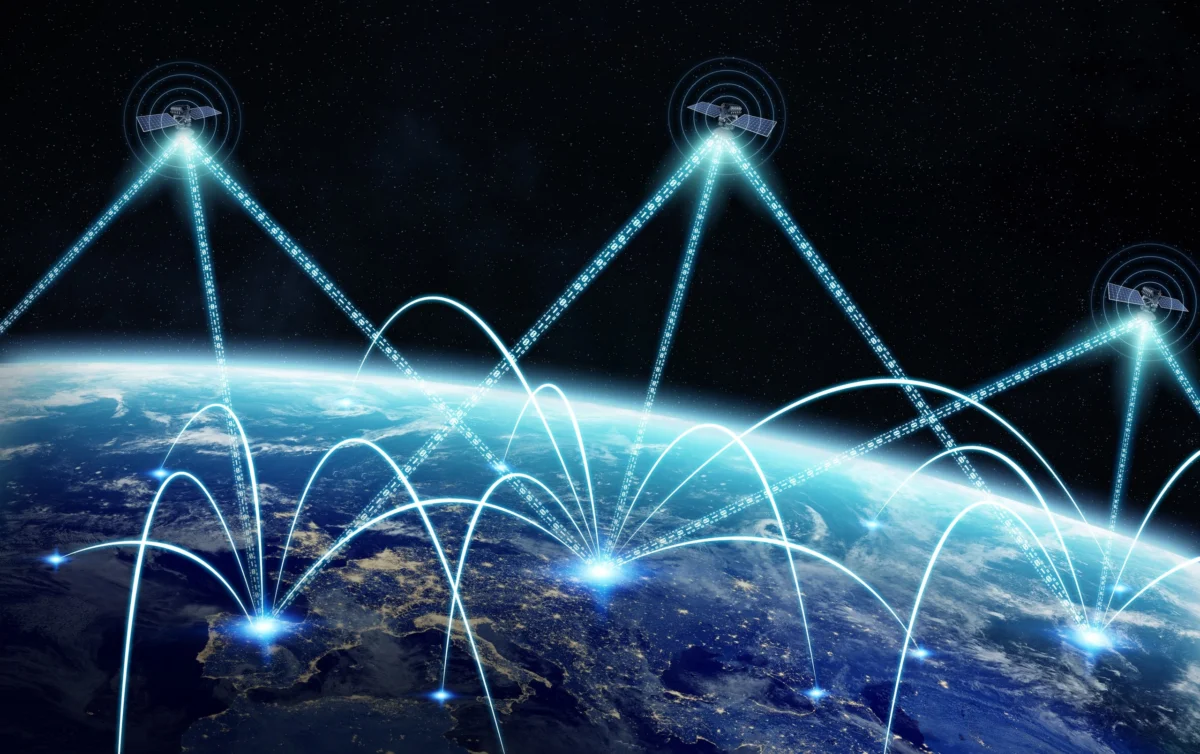
The Hellas Sat and Sparkle initiative utilizes QSI to secure the "uplink" from Cyprus to a GEO satellite and the subsequent "downlink" to the Metamorfosis data center in Athens. This ensures that the data traversing the space segment remains encrypted in a way that is computationally infeasible for even the most advanced quantum systems to intercept or decode.
The successful implementation confirms that quantum-resistant protocols are not merely laboratory experiments but are mature enough for deployment across diverse transport layers, including the challenging environment of space-to-ground relay.
Chronology: A Roadmap to Quantum Resilience
The path to this week’s announcement was marked by a strategic, phased approach to technical validation and infrastructure integration.
Phase 1: Terrestrial Foundation (Early 2026)
Before attempting a space-based link, the teams focused on terrestrial validation. Sparkle and Hellas Sat implemented a quantum-safe IPsec connection between two high-capacity data centers within Greece. This phase was critical for testing the software-defined security layer’s stability, latency tolerance, and key exchange efficiency under real-world network traffic conditions.
Phase 2: Infrastructure Harmonization (Mid-2026)
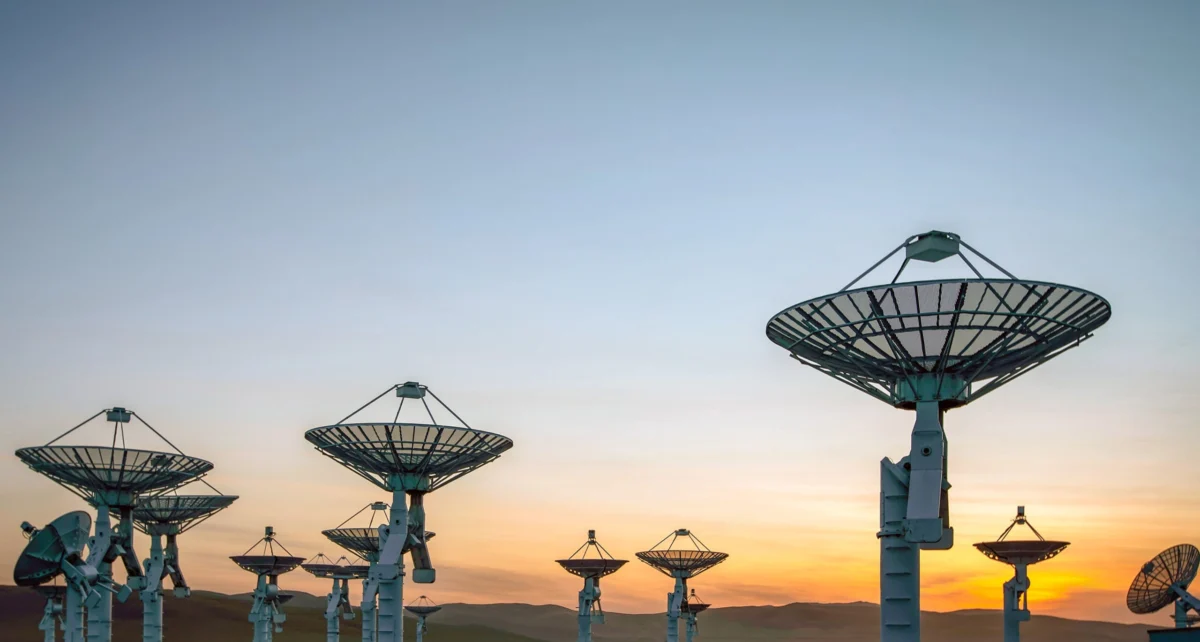
Following the success of the terrestrial trial, the focus shifted to the space segment. Hellas Sat—which operates a robust fleet of three GEO satellites—aligned its teleport facilities in Greece and Cyprus with Sparkle’s network architecture. This involved upgrading the satellite modems and cryptographic gateways to support QSI protocols, ensuring the satellite acted as a transparent but secure "bent-pipe" relay for the quantum-encrypted signals.
Phase 3: The Cross-Border Link (September 2026)
The culmination occurred this week, with the successful transmission of live data over the 72,000-kilometer round-trip satellite path. By connecting the Metamorfosis data center in Athens with the Hellas Sat facility in Cyprus, the team validated that QSI protocols could maintain integrity despite the inherent signal propagation delays associated with GEO satellite orbits.
Supporting Data: The Technical Challenge of Space-Based Security
To understand the magnitude of this achievement, one must consider the physics of the connection. A GEO satellite orbits approximately 35,786 kilometers above the Earth’s equator. A single round-trip signal between two ground stations via a GEO satellite spans roughly 72,000 kilometers.
Latency and Throughput
Unlike terrestrial fiber-optic networks, which provide near-instantaneous connectivity, satellite links introduce a minimum latency of approximately 500 to 600 milliseconds. Implementing complex cryptographic handshakes—which are often sensitive to timing—across this delay requires highly optimized protocols. The Hellas Sat-Sparkle solution demonstrates that the overhead added by QSI is negligible, allowing for high-throughput data transfer without compromising the security posture of the link.
Infrastructure Synergy
- Hellas Sat Capabilities: With a fleet of three GEO satellites, Hellas Sat provides the necessary coverage for the Mediterranean basin. Their teleport facilities in Greece and Cyprus act as the terrestrial "anchors," providing the physical layer connectivity.
- Sparkle’s Role: As a global Tier-1 operator, Sparkle provides the backbone networking, cloud integration, and identity management services required to wrap the satellite link into a wider, enterprise-grade secure network.
Official Responses: A Strategic Vision
The success of the project has drawn praise from stakeholders who view this as a necessary evolution of the digital landscape.
Antonella Sanguineti, head of Networking, Cloud, Security & Identity Solutions at Sparkle, underscored the broader implications of the project in a recent statement:
"The extension of QSI to satellite connectivity with Hellas Sat represents a concrete step in the evolution of our quantum-safe portfolio. It demonstrates that QSI can be deployed consistently across different network layers, connectivity domains, and operational environments, opening new opportunities to protect communications for customers requiring secure, resilient connectivity across geographically distributed environments."
Industry analysts suggest that by proving the consistency of QSI across both terrestrial and space-based segments, Sparkle is positioning itself as a leader in "Quantum-as-a-Service," a market expected to grow exponentially as businesses and governments transition to post-quantum cryptography (PQC) standards.
Implications: The Future of Sovereign and Corporate Data
The collaboration between Hellas Sat and Sparkle carries profound implications for several key sectors:
1. National Security and Defense
Governments in the Eastern Mediterranean are increasingly focused on the security of diplomatic and military communications. The ability to route sensitive data through a quantum-resistant satellite link provides an essential alternative to terrestrial cables, which are potentially vulnerable to physical tampering or localized outages.
2. The "Harvest Now, Decrypt Later" Defense
Many malicious actors are currently recording encrypted data traffic with the intention of decrypting it years from now when quantum computing matures. By deploying QSI today, organizations are essentially "future-proofing" their data. This announcement provides a clear path for enterprise clients to protect long-term intellectual property, financial records, and private communications.
3. Cross-Domain Standardization
Perhaps the most important implication is the demonstration of "consistent deployment." For quantum-safe security to be effective, it must be ubiquitous. If a chain is only as strong as its weakest link, the ability to secure a satellite segment ensures that the security chain remains unbroken from a data center in Athens to a facility in Cyprus. This standardization will likely serve as a blueprint for other satellite operators and service providers worldwide.
4. Expanding the Quantum-Safe Ecosystem
This project paves the way for the integration of QSI into wider SD-WAN (Software-Defined Wide Area Network) architectures. As satellite constellations—including Low Earth Orbit (LEO) networks—continue to expand, the methodology pioneered by Sparkle and Hellas Sat will be vital in ensuring that the next generation of global connectivity is fundamentally secure by design.
Conclusion: A New Era for Satellite Security
As the world prepares for the arrival of cryptographically relevant quantum computers, the collaboration between Hellas Sat and Sparkle stands as a proactive defense measure. By successfully marrying satellite technology with quantum-safe protocols, they have demonstrated that distance and orbital mechanics are no longer barriers to high-level digital security.
This achievement marks the beginning of a transition period where quantum-safe connectivity will likely become a standard requirement for mission-critical infrastructure. For the telecommunications industry, the message is clear: the future of secure data is not just in the hardware, but in the intelligent, multi-layer encryption protocols that protect it, whether on the ground or in the stars.