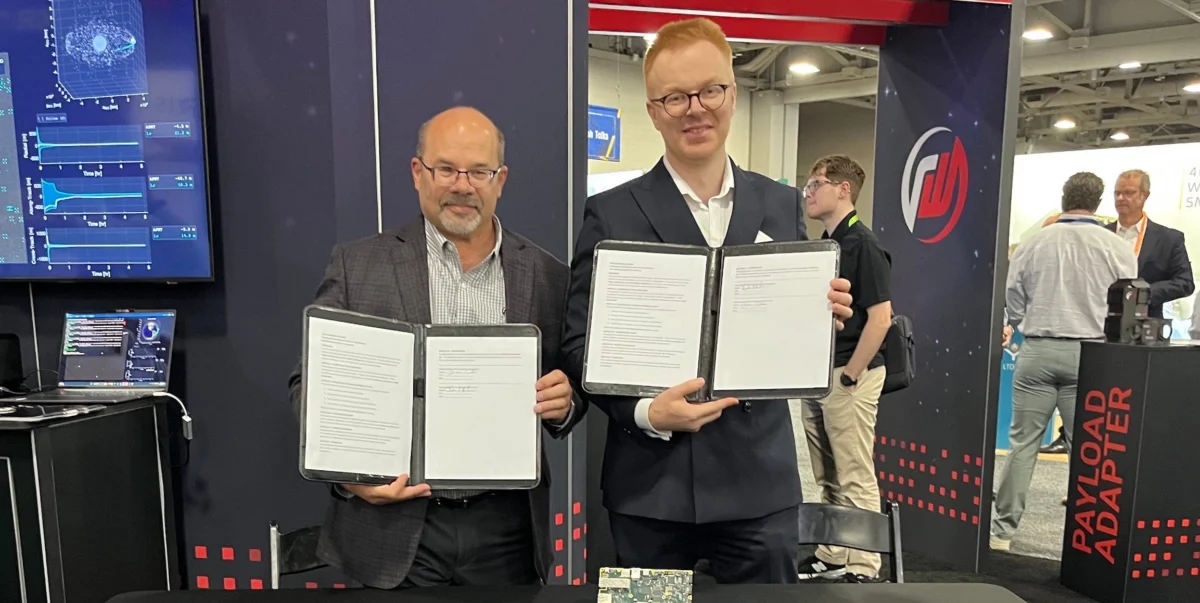

In a move that promises to reshape the landscape of military satellite communications (satcom), York Space Systems has officially finalized its acquisition of All.Space, the innovative terminal developer known for its sophisticated multi-orbit, multi-beam technology. The transaction, which closed following months of regulatory and operational restructuring, marks a pivotal shift toward an integrated, end-to-end tactical ecosystem designed to support the next generation of warfighter requirements.
While the deal was originally valued at $355 million when it was first unveiled in late April 2026, the final purchase price settled at $300 million. This capital allocation consists of approximately $155 million in cash and 5.9 million shares of York common stock, reflecting a strategic alignment between the two entities as they pivot toward a unified mission: providing resilient, ubiquitous connectivity in contested environments.
The Strategic Rationale: Closing the Tactical Loop
The acquisition is not merely a horizontal expansion; it is a vertical integration play. York Space Systems has established itself as a premier provider of spacecraft capable of delivering tactical intelligence and communications to the warfighter. However, a spacecraft is only as effective as the ground-based infrastructure it serves. By bringing All.Space into the fold, York effectively controls both ends of the communications link.
"All.Space is the undisputed leader in providing tactical communications and other critical capabilities in denied environments," said Dirk Wallinger, CEO of York Space Systems, in an interview with Via Satellite. "Their Electrically Steered Antenna (ESA) design is particularly resilient. We wanted to complete that ecosystem so that All.Space and York together could combine robust, resilient communications capabilities in theater to the warfighter."
The integration addresses a long-standing "stovepipe" problem within the defense industry. Historically, satellite operators, terminal manufacturers, and spacecraft builders have operated in silos, leading to interoperability challenges. By merging these capabilities, York and All.Space aim to provide a "plug-and-play" architecture that allows military commanders to maintain connectivity regardless of the atmospheric or electronic warfare conditions they may face.
Chronology of a Strategic Merger
The path to this acquisition was marked by careful planning and significant organizational shifts designed to satisfy both market demands and national security requirements.
- April 30, 2026: York Space Systems formally announces its intent to acquire All.Space, with an initial valuation of $355 million. The market reacts positively, noting the synergy between York’s satellite constellations and All.Space’s terminal prowess.
- June 16, 2026: In a major strategic move, All.Space—formerly a U.K.-based entity—formally relocates its headquarters to the United States. The company selects the Florence-Muscle Shoals region of Alabama for its new technical and manufacturing hub, a decision intended to align the firm with U.S. defense industrial base requirements.
- July 2026: The transaction reaches its conclusion. The final valuation is adjusted to $300 million, reflecting final due diligence and share price fluctuations. The acquisition is finalized, and All.Space begins operations as a wholly owned subsidiary of York Space Systems.
Technological Synergy: The Power of Multi-Beam Connectivity
At the heart of this acquisition is All.Space’s proprietary optical beam-forming technology. Unlike legacy terminals that are often locked into a single frequency or a single satellite constellation, All.Space’s terminals are engineered for agility. They enable simultaneous connectivity across multiple satellites in multiple orbits (LEO, MEO, and GEO).
This capability is a "paradigm shift," according to All.Space CEO Paul McCarter. "If you have the ability to connect to more than one satellite in more than one orbit, to more than one provider simultaneously, you have a distinct, unique selling point that is completely different," McCarter stated.
The technology is currently evolving to support simultaneous cross-band operations. All.Space has already completed successful proof-of-concept demonstrations involving simultaneous Ku- and Ka-band network access. For the modern military, this means that if a primary communications channel is jammed or degraded by an adversary, the terminal can seamlessly fail over—or load-balance—across other available networks without interrupting the data flow. This level of resilience is paramount for Command and Control (C2) in high-intensity, contested theater operations.
Implications for Future Warfare: Command and Control
As the U.S. Department of Defense (DoD) shifts its focus toward large-scale, autonomous, and unmanned systems, the demand for robust, high-bandwidth communication increases exponentially. Wallinger sees the combined York-All.Space entity as the backbone for these future fleets.
"York looks at the capabilities that the military is going to need in theater in the future," Wallinger explained. "All of these unmanned systems are going to need to be coordinated in large-scale fleets. We think that All.Space’s capabilities, with their robust tactical communication capabilities, [and] our constellations can be that command and control ecosystem that will enable these fleets to operate in the future."
The vision is a decentralized, mesh-like network where drones, vehicles, and command centers communicate via a shared, resilient fabric. By owning the terminal technology, York can optimize the communication protocols between their satellites and the ground units, effectively creating a private, highly secure intranet for the warfighter that operates independently of commercial public-sector bottlenecks.
Industry Position: A Merchant Supplier with an Anchor Customer
Despite the acquisition, All.Space will maintain a degree of operational independence. It will continue to serve as a merchant supplier to the broader industry, ensuring that its terminals remain available to other satellite operators and defense contractors. This is a strategic necessity; the Pentagon has made it clear that it wants a diverse, competitive industrial base.
"Congress has been very clear that they don’t want a single-source, stovepipe solution—it’s not good for the military, not good for the industry, and not good for investors," Wallinger noted. "We hear the Pentagon, and that’s what we’re trying to do together here. We know that we need to have a strong industrial base with a broad group of suppliers and multiple sources for the military."
While All.Space continues to seek third-party contracts, York Space Systems will act as an "anchor customer." This arrangement provides All.Space with the financial security to invest in long-term production scaling and research, while providing York with priority access to the cutting-edge hardware it needs to support its own satellite constellation expansion.
Addressing the Industrial Base: A New Alabama Hub
The relocation of All.Space to Alabama is perhaps the most tangible evidence of the company’s commitment to the U.S. defense market. By establishing a manufacturing hub in Florence-Muscle Shoals, the company is tapping into a region with a growing aerospace presence. This proximity to the U.S. supply chain is expected to reduce logistics costs, improve security compliance, and shorten lead times for the production of sophisticated ESA terminals.
This move also signals a broader trend: the "re-shoring" of critical aerospace and defense technologies. As geopolitical tensions rise, the ability to manufacture sensitive communications hardware on U.S. soil is becoming as important as the technology itself. The acquisition positions York/All.Space as a key player in this new era of domestic defense manufacturing.
Conclusion: A New Era of Resilient Communications
The $300 million acquisition of All.Space by York Space Systems represents a calculated gamble on the future of tactical connectivity. By merging York’s satellite-as-a-service model with All.Space’s multi-orbit, multi-band terminal expertise, the new entity is uniquely positioned to address the most pressing challenges of the modern battlefield: resilience, interoperability, and scalability.
As the industry watches, the success of this partnership will likely be measured by how quickly they can deploy these integrated systems into the hands of military personnel. If they can deliver on the promise of a truly "complete tactical ecosystem," they will not only change the way the military communicates—they will define the standard for all future satellite-enabled tactical operations.