FARNBOROUGH — The sprawling exhibition halls and flight lines of the Farnborough International Airshow served as the ultimate backdrop for a shifting geopolitical reality in the aerospace sector. Throughout the week, the Global Combat Air Programme (GCAP)—the trilateral initiative between the United Kingdom, Italy, and Japan—monopolized the conversation.
Following the definitive collapse of the rival European Future Combat Air System (FCAS) project last month, GCAP has emerged as the premier international sixth-generation fighter program. With the notable exception of the United States’ unilateral F-47 project, GCAP is now the singular nexus of collaborative, next-generation aerial warfare development. As the industry looks toward a 2035 service entry date, the intensity of interest, industrial posturing, and technological ambition surrounding the program has reached a fever pitch.
The Strategic Landscape: A New Center of Gravity
The demise of the Franco-German-Spanish FCAS project has sent shockwaves through the European defense industrial base. The failure to reconcile deep-seated disagreements between aerospace giants Airbus and Dassault—centered on intellectual property (IP) rights, workshare distribution, and divergent design requirements—has created a vacuum.
For many, GCAP is no longer just an alternative; it is the inevitable destination for nations seeking a seat at the table of future air dominance. While the program remains focused on its three founding nations, the inclusion of Canada as an "observer" marks a significant evolution in its global footprint.
Canada’s Entry: The Observer Model
The long-anticipated announcement of Canada’s involvement as an observer provides a blueprint for potential future expansion. While Ottawa has committed no capital to the program at this stage, the status grants Canadian officials a granular understanding of the project’s development. This "wait-and-see" approach offers a low-risk entry point, with the door left firmly ajar for a transition into a full-fledged industrial partner.
Masami Oka, chief executive of the GCAP Agency, emphasized that the trilateral partners have maintained an "openness" to such partnerships from the program’s inception. "The decision is always based on mutual benefit and the strategic needs of the program," Oka noted on the eve of the announcement.
Chronology of Progress: From Concept to Cockpit
The trajectory of GCAP has accelerated significantly over the past six months, moving from abstract requirements to concrete industrial milestones.
- April 2026: The program secured a critical £686 million contract focused on core design and engineering, signaling the transition from speculative research to tangible product development.
- June 2026: The UK government solidified its commitment with a £8.6 billion ($11.5 billion) investment spanning four years. This was followed by a collective £4.6 billion investment from the UK, Italy, and Japan to fund the concept and assessment phase.
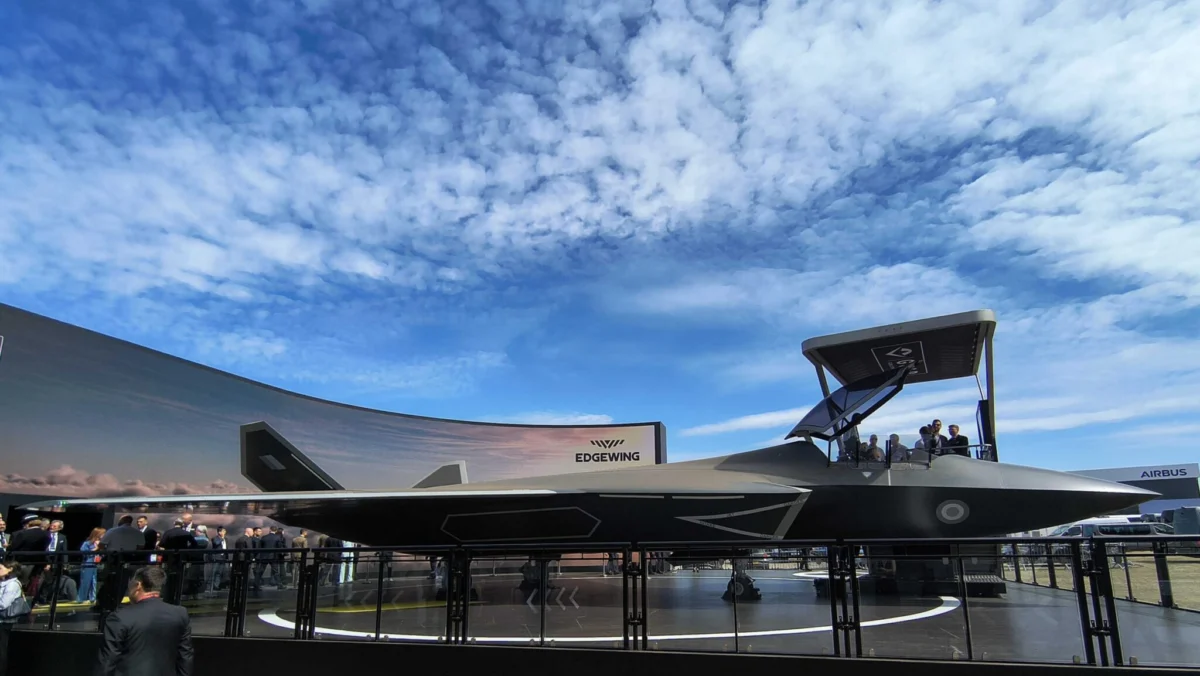
- July 2026 (Farnborough): The unveiling of the BAE Systems "Brontanax" Combat Collaborative Aircraft (CCA) and the progress report on the joint propulsion demonstrator highlighted the shift toward hardware testing.
- 2027 (Scheduled): First flight of the Brontanax CCA.
- 2028 (Scheduled): First flight of the UK Combat Air Flying Demonstrator.
- 2035 (Target): Initial Operating Capability (IOC) and service entry.
Industrial Perspectives and the Challenge of Integration
Despite the momentum, the program faces the daunting task of integrating new partners without compromising the strict 2035 timeline. Leonardo CEO Lorenzo Mariani, a key architect of the industrial consortium, offered a candid assessment of the risks associated with expanding the partner pool.
"Germany would undoubtedly be a strong industrial partner," Mariani stated. "However, the introduction of a new nation and a new group of industries risks causing significant disruption. At this moment, we are fully committed to the 2035 deadline, and stability is our greatest asset."
Mariani was equally clear regarding France, suggesting that the "rupture" that destroyed the FCAS project—rooted in intractable disputes over IP and leadership—makes their participation in GCAP unlikely.
Meanwhile, Airbus—the primary casualty of the FCAS collapse—is actively exploring a role in GCAP. Michael Schoellhorn, CEO of Airbus Defence and Space, noted that the company is "ready to join or build," provided the arrangement offers a significant leadership role. "It depends on whether we have a significant portion of the work," Schoellhorn explained. "That is currently being explored."
The "One-Third" Balance
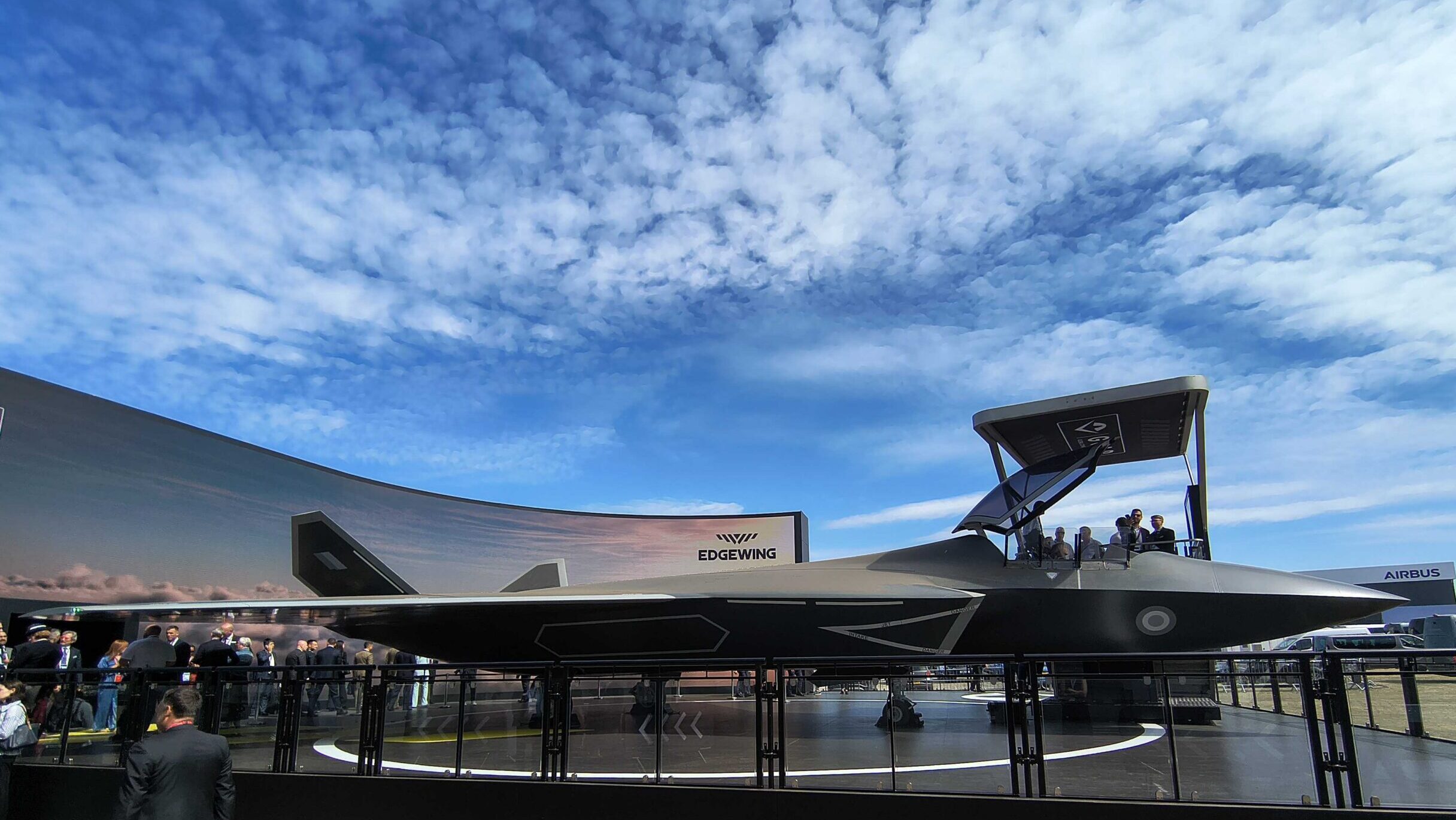
Marco Zoff, CEO of Edgewing—the industrial consortium comprising BAE Systems, Leonardo, and Japan’s JAIEC—emphasized that the program’s architecture is predicated on a balanced, "one-third, one-third, one-third" workshare split. Achieving this balance while maintaining the flexibility to leverage specific national strengths remains the consortium’s primary management challenge. Final decisions on assembly locations are expected within the next few months, adding a layer of industrial urgency to the coming quarter.
Supporting Data: The Technology Pipeline
GCAP is not merely a fighter jet; it is an ecosystem. The program’s technical foundation rests on several pillars currently in development.
The Power and Propulsion Consortium
The consortium of Avio Aero (Italy), IHI Corporation (Japan), and Rolls-Royce (UK) has reached a milestone in its "center line" engine demonstrator design. With component manufacturing well underway, the consortium is shifting focus toward ground testing, which will validate the high-performance thermal management required for sixth-generation platforms.
The "Bridge" Demonstrator
To de-risk the complex technologies required for GCAP, BAE Systems is preparing its own "bridge" demonstrator. Designed to transition from Eurofighter Typhoon fourth-generation capabilities to the sixth-generation standard, this crewed, supersonic jet is in advanced stages of production. According to Tony Godbold, FCAS delivery director at BAE, approximately 90% of the 11,500 required components are currently in the manufacturing pipeline.
"The major units—front, center, and rear fuselage, wings, and fins—have been in production for over 18 months," Godbold stated. The upcoming assembly process will culminate in a flight test program focused on validating stealth, handling characteristics, and the complex internal airflow ducting necessary for low-observable signatures.
Implications: The Rise of the "Loyal Wingman"
Perhaps the most significant strategic implication of GCAP is the integration of autonomous Combat Collaborative Aircraft (CCA). The debut of the Brontanax at Farnborough is a testament to the RAF’s ambition to become Europe’s first true sixth-generation air force.
Air Chief Marshall Harv Smyth described the Brontanax as a "historic moment," noting that while it will initially integrate with existing Eurofighter Typhoon fleets, its long-term purpose is to serve as a force multiplier for the GCAP platform. This "loyal wingman" strategy allows the crewed fighter to remain at a safer distance, projecting power and intelligence while its autonomous drones conduct high-risk maneuvers.
A Data-Sharing Paradigm
A crucial development for the program is the data-sharing protocol. Although the UK-led demonstrator is a national project, the knowledge gained—particularly regarding handling and stealth—is being funneled through Edgewing to Italian and Japanese partners. This controlled release of data ensures that while each nation focuses on its domestic industrial readiness, the collective knowledge base for the final GCAP platform grows in unison.
Conclusion: A High-Stakes Future
As the Farnborough air show concluded, the consensus was clear: GCAP has transitioned from a promising concept to an industrial juggernaut. While the program maintains a prudent silence on total cost projections—arguing that the concept assessment phase is too early for precise figures—the political and financial backing from Tokyo, Rome, and London remains ironclad.
The road to 2035 is fraught with technical hurdles, from achieving supersonic stealth to perfecting the interface between human pilots and AI-driven wingmen. Yet, by avoiding the pitfalls of the ill-fated FCAS project and maintaining a strict focus on industrial balance, the GCAP partners have positioned themselves at the vanguard of global aerospace. As nations like Canada move into the periphery of this orbit, the question is no longer whether GCAP will succeed, but rather how much of the global fighter market it will capture once the first demonstrator takes to the skies.