In a move that signals a renewed aggressive expansion strategy, Microchip Technology has officially entered into a definitive agreement to acquire Tel Aviv-based edge AI chip pioneer, Hailo. This transaction marks a significant turning point for Microchip, representing the first major acquisition since the return of long-time CEO Steve Sanghi to the helm last year. While the financial terms of the deal remain undisclosed, the move serves as a clear declaration of intent: Microchip is aggressively positioning itself to dominate the burgeoning market for intelligence at the extreme edge.
For industry observers, this acquisition is a classic Microchip maneuver. Known for a growth strategy built on a robust "acquisition-driven playbook," the company has historically favored the integration of established, specialized technologies to bolster its cross-selling capabilities rather than attempting to verticalize its operations. By folding Hailo into its expansive portfolio, Microchip is effectively filling a glaring hole in its product map—the high-performance, power-efficient Neural Processing Unit (NPU).
A History of Strategic Acquisitions
Microchip’s corporate history is defined by a consistent, methodical absorption of industry players. Over the last two decades, the company has successfully integrated approximately a dozen entities. Notable milestones include the 2015 acquisition of analog powerhouse Micrel, the 2016 purchase of microcontroller giant Atmel, and the 2018 acquisition of Microsemi.

More recently, the company has signaled a shift toward artificial intelligence. In 2019, Microchip acquired VectorBlox, bringing in an AI software stack specifically designed for FPGAs. This was followed in April 2024 by the acquisition of Neuronix, a startup specializing in AI model optimization. While some critics have previously questioned the synergy of these diverse acquisitions, Microchip’s leadership views them through a lens of long-term utility. The company provides essential embedded components for "high-reliability" markets—military, aerospace, automotive, and industrial—where customers demand product lifecycles spanning 10 to 20 years. In this context, adding Hailo’s mature AI hardware to the stable is not merely about novelty; it is about providing long-term, reliable AI solutions to customers who have been loyal to Microchip for decades.
Hailo: From Startup to Edge AI Powerhouse
Founded in 2017, Hailo has rapidly matured into one of the most credible players in the edge AI chip sector. Having raised $344 million in funding, the startup has cultivated a customer base of approximately 100 companies, with a heavy concentration in the automotive and industrial sectors.
Hailo’s technical differentiation lies in its unique architectural approach. Its NPUs combine compute resources with SRAM on-chip, governed by a sophisticated compiler that analyzes AI models to optimize data movement and minimize power consumption. This architecture has been the foundation of a successful product rollout:

- Hailo-8 (2019): The company’s flagship, offering 26 TOPS (Tera-Operations Per Second) with exceptional power efficiency.
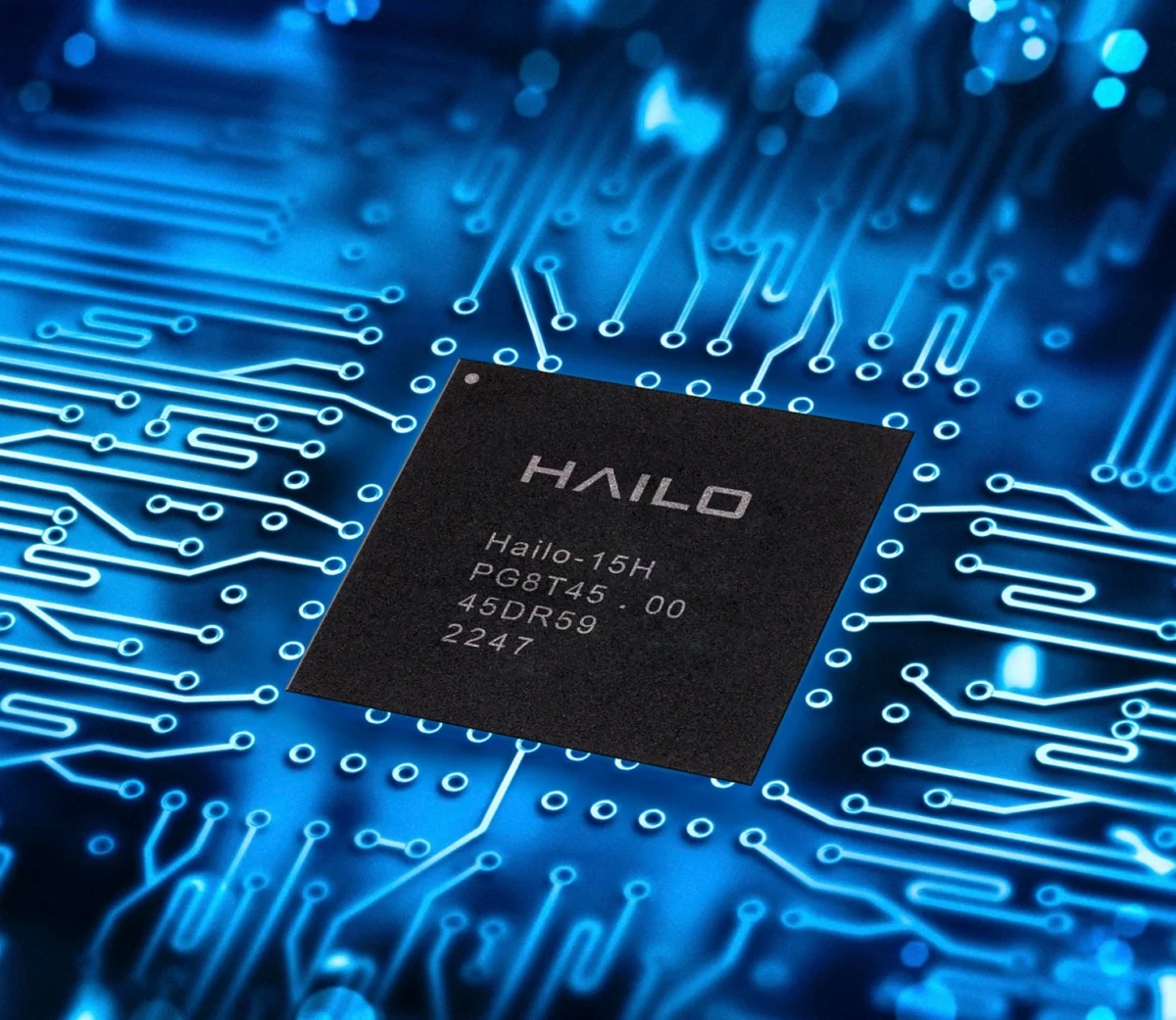
- Hailo-15 (2023): An integrated SoC (System on Chip) combining an NPU, CPU, and DSP, specifically engineered for the rigors of IP camera systems.
- Hailo-10 (2025): The company’s latest iteration, designed specifically to bring Generative AI capabilities directly to edge devices, operating within a tight power envelope.
Furthermore, Hailo has successfully democratized its technology through a strategic partnership with Raspberry Pi. By making its M.2 accelerator cards available to the hobbyist and maker communities, Hailo has built a vibrant developer ecosystem. CEO Orr Danon recently noted that the company’s developer community has reached 10,000 members, with 80% utilizing Raspberry Pi hardware—a testament to the accessibility and versatility of the Hailo stack.
The Synergy Puzzle: Software and Hardware
The integration of Hailo into the broader Microchip ecosystem presents an intriguing case study in technical alignment. The acquisition of Neuronix in 2024 provides a critical piece of the puzzle. Neuronix specializes in shrinking AI models, a process that is inherently hardware-agnostic. By deploying the Neuronix team to optimize models for the former Microsemi PolarFire FPGA line, Microchip has already demonstrated its ability to leverage software to enhance hardware longevity.
It is highly probable that the Neuronix team will now turn their attention to Hailo’s hardware stack. While there is little immediate overlap between VectorBlox (which focuses on FPGA-based AI) and Hailo’s NPU architecture, the broader goal is clear: Microchip aims to provide a comprehensive AI toolchain that works across its diverse hardware offerings.

Unlike some competitors who are rushing to verticalize—building full system-level solutions—Microchip remains committed to its core identity as a component provider. The company’s primary value proposition is "stickiness." When an automotive manufacturer or an industrial factory chooses a Microchip component, they expect it to be available and supported for decades. By acquiring Hailo, Microchip is betting that its industrial customers are ready to move from traditional microcontrollers to AI-enhanced processing, and it intends to be the vendor of record for that transition.
Industry Implications: The Consolidation Wave
The acquisition of Hailo arrives at a moment of intense consolidation within the semiconductor industry. With NXP having acquired Kinara 18 months ago, the market is witnessing a "musical chairs" scenario for edge AI startups. Independent players like Axelera, Sima, and MemryX are increasingly viewed as prime targets for larger incumbents such as Infineon, Renesas, STMicroelectronics, and Texas Instruments.
The question remains: can the market support independent edge AI chip companies, or is the era of the pure-play startup drawing to a close? As AI moves from a buzzword to a fundamental requirement in embedded systems, the sheer cost of developing and maintaining the software stacks required to keep these chips relevant is becoming prohibitive for smaller firms.

Microchip’s ability to sustain this investment will be the ultimate test of the merger. Edge AI is a fast-moving field, characterized by rapid iteration cycles that stand in stark contrast to the glacial, decade-long product lifecycles of the high-rel sectors Microchip typically serves. Successfully navigating this duality—maintaining the reliability of traditional embedded systems while keeping pace with the frenetic speed of AI innovation—will require a delicate balance of R&D investment and cultural integration.
Looking Ahead: Closing the Deal
The transaction is currently pending regulatory approval, with expectations that the deal will close by the end of Q3. Once integrated, the path forward for Hailo under the Microchip umbrella seems likely to involve maintaining the hardware product lines as distinct, high-performance offerings. While there is potential for Microchip to eventually develop proprietary SoCs that incorporate Hailo’s IP, the immediate priority will likely be ensuring that Hailo’s existing customer base feels the stability and backing of a major semiconductor incumbent.
For now, the industry is watching closely. By bringing Hailo into the fold, Microchip has secured a seat at the table of the AI-driven future. Whether it can leverage this position to dominate the edge remains to be seen, but one thing is certain: the era of "dumb" embedded systems is coming to a rapid close, and Microchip is clearly preparing for a world where every factory floor and automotive sensor is powered by local, high-performance intelligence.
Quick Summary of Key Facts
- Acquirer: Microchip Technology.
- Target: Hailo (Tel Aviv-based edge AI startup).
- Strategic Rationale: Filling the NPU/AI accelerator gap in Microchip’s portfolio; cross-selling to existing industrial and automotive customers.
- Key Tech: Hailo-8, Hailo-15, and Hailo-10 (GenAI-capable) NPUs.
- Ecosystem: 10,000+ developers, strong presence in the Raspberry Pi community.
- Status: Subject to regulatory approval; expected to close by the end of Q3.