By Industry Correspondent
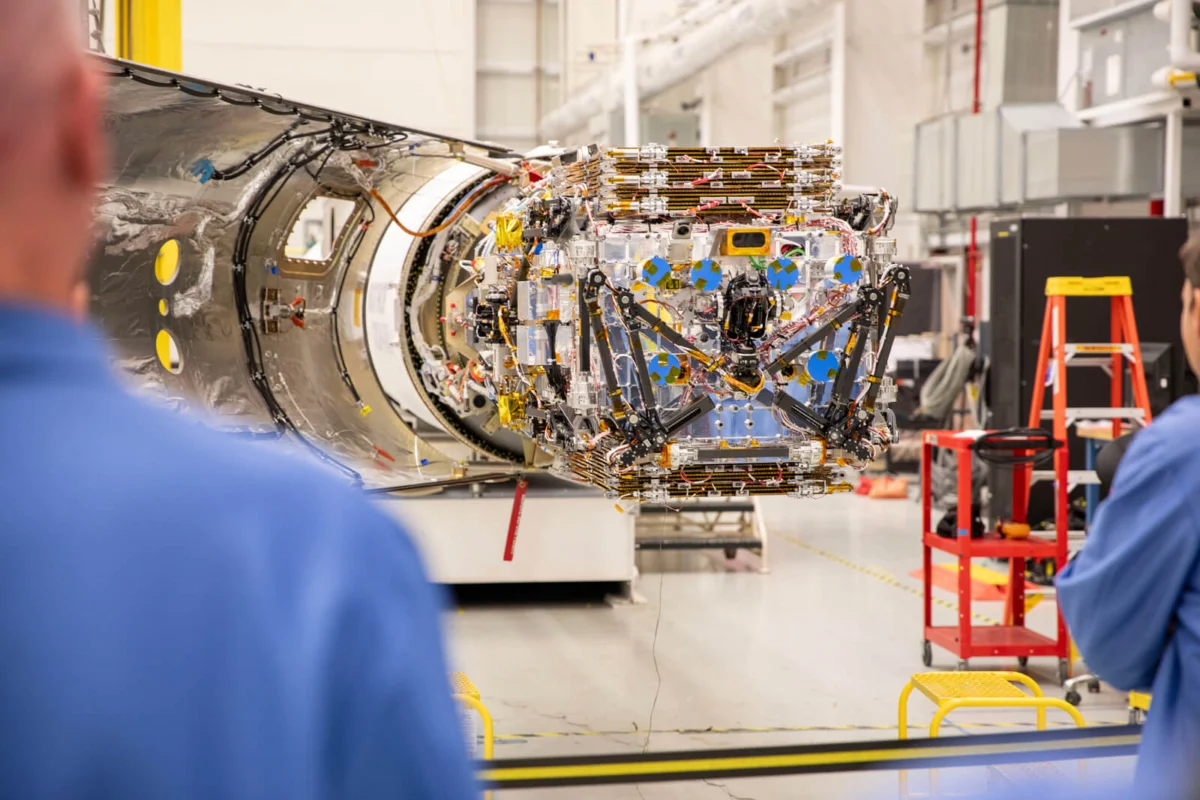
In the unforgiving vacuum of low-Earth orbit (LEO), the mission to save one of NASA’s most prolific space telescopes has entered a precarious, high-stakes phase. Katalyst Space, the aerospace startup entrusted with the daring $30 million mission to reboost the Swift Observatory, announced this week that its LINK robotic spacecraft is currently contending with significant attitude control malfunctions. Despite these setbacks, the mission control team remains steadfast in their commitment to stabilize the craft and proceed with the complex task of orbital rendezvous and capture.
The Core Crisis: A Fight for Attitude Control
The LINK spacecraft, designed and deployed on an accelerated timeline, has encountered a series of critical technical hurdles that have forced engineers to pivot their operational strategy. According to an official update released by Katalyst Space on Tuesday, the primary challenge involves the spacecraft’s attitude determination and control system (ADCS).
Specifically, two of the spacecraft’s three reaction wheels—the internal spinning devices used to manipulate the orientation of a satellite without the use of propellant—have been rendered non-functional. To compound the difficulty, the spacecraft is also experiencing only partial functionality of its Reaction Control System (RCS), which utilizes thrusters to manage orientation and position.
These combined failures resulted in the LINK spacecraft entering a multi-axis spin. This uncontrolled rotation led to a temporary, yet alarming, loss of communications with ground stations and triggered an automatic bus reset. While the spacecraft’s core subsystems, including power, telemetry, and payload avionics, remain stable and operational, the inability to effectively orient the vehicle threatens the fundamental mechanics of the upcoming rendezvous maneuver.
Chronology of an Accelerated Mission
To understand the severity of the current situation, one must look at the unprecedented pace at which this mission was conceptualized and executed.
- Late 2025: NASA, recognizing that the Swift Observatory’s orbit was decaying faster than anticipated, issued an urgent call for private sector solutions. The goal was to perform an orbital "reboost" to extend the lifespan of the telescope, which has been instrumental in studying gamma-ray bursts.
- August 2025: Katalyst Space is awarded a $30 million contract by NASA. The mandate: design, build, test, and integrate a robotic spacecraft capable of autonomous proximity operations in less than twelve months.
- July 2, 2026: In a feat of logistical precision, the LINK spacecraft is integrated with a Northrop Grumman Pegasus XL rocket. The Pegasus, launched from beneath the wing of an aircraft, successfully delivers the LINK spacecraft into its intended orbit.
- July 2026 (Present): Post-launch checkout reveals the ADCS anomalies. The mission transitions from a standard operational phase to an emergency recovery and stabilization phase.
The "race against the clock" mentioned by NASA officials was not merely marketing hyperbole. Swift’s orbit has been deteriorating due to atmospheric drag, and the window for a successful docking is narrow. By compressing the typical three-to-five-year development cycle into under a year, the Katalyst team accepted immense technical risk—a gamble that is now playing out in real-time.
The Engineering Pivot: Stabilization Through Propulsion
Faced with a spinning spacecraft and limited reaction wheel authority, the Katalyst engineering team has initiated a complex recovery maneuver. They are currently leveraging the spacecraft’s electric propulsion system to counteract the spin.
This is a delicate process. Electric propulsion, typically used for long-term station keeping due to its high efficiency but low thrust, is being repurposed to perform dynamic attitude adjustment. Simultaneously, ground teams are rewriting the guidance, navigation, and control (GNC) algorithms to compensate for the hardware failures.
"We are updating our GNC schemes to account for the loss of two reaction wheels," an internal source noted. "Every single line of code, every logic gate in the flight software, is being subjected to rigorous end-to-end simulation and ground testing before we upload the patches to the vehicle."
This process is a testament to the versatility of modern software-defined satellites. While the hardware has failed to perform as intended, the ability to "re-patch" the mission’s physics on the fly is a critical safety net that did not exist for missions a decade ago.
Official Responses and Stakeholder Outlook
The silence from the spacecraft following the bus reset was a moment of profound tension for both Katalyst and their partners at NASA. However, the subsequent re-establishment of a stable link has provided a cautious sense of optimism.
In an official statement, Katalyst Space emphasized that the mission is not only active but remains viable. "While these technical issues require a revised approach, our team is working around the clock alongside our NASA partners," the company stated. "The mission remains active and we continue to believe that with these changes, LINK has a viable path to rendezvous with Swift."
NASA, for its part, has maintained a supportive posture. The space agency’s decision to outsource this rescue mission to a startup was a calculated risk intended to foster the emerging "in-orbit servicing" industry. A failure here would be a setback, but the lessons learned in attempting such a maneuver are seen as invaluable for the future of orbital logistics.
Implications: The High Cost of Rapid Innovation
The challenges faced by the LINK spacecraft serve as a case study for the "NewSpace" philosophy of rapid development. There is a palpable tension in the industry between the traditional "test-until-perfect" methodology and the modern "build-launch-iterate" approach.
1. The Risk of Accelerated Timelines
By compressing the development of the LINK spacecraft into less than a year, the margin for error was reduced significantly. While this allowed for a rapid response to the Swift Observatory’s decay, it also left less time for deep-cycle environmental testing that might have identified the reaction wheel vulnerabilities earlier.
2. The Future of In-Orbit Servicing
If Katalyst succeeds in stabilizing the craft and completing the rendezvous despite these hardware failures, it will represent a watershed moment for robotics in space. It would prove that sophisticated autonomous systems can overcome significant hardware degradation, effectively "self-repairing" through software and creative use of secondary propulsion systems.
3. The Economic Impact
The $30 million contract is a fraction of the cost of building a new space telescope. If the LINK mission succeeds, it validates the business model of extending the life of existing assets rather than replacing them. This could trigger a massive influx of investment into orbital maintenance and logistics, creating a new service-based economy in LEO.
Conclusion: A Delicate Path Forward
As the LINK spacecraft continues its dance in orbit, the world of aerospace engineering is watching with bated breath. The mission is no longer just about saving a telescope; it is a live-fire demonstration of resilience in the face of deep-space technical failure.
The team at Katalyst faces a gauntlet of challenges in the coming weeks. They must prove that the updated GNC software can handle the precise, millimeter-accuracy maneuvers required for docking with a non-cooperative, spinning target like the Swift Observatory. If they succeed, it will be hailed as a triumph of modern engineering and crisis management. If they fail, the mission will provide a sobering lesson on the limits of rapid development in the harsh, unforgiving environment of space.
For now, the focus remains on stabilization. The telemetry streaming back to Earth suggests that the electric propulsion burns are having the desired effect. The spin is slowing, the system is responding, and the path to the Swift Observatory remains open, albeit significantly more difficult than originally planned. The race against the clock continues, and for the Katalyst team, the clock is now ticking in the shadow of their own ingenuity.