While High-Bandwidth Memory (HBM) has become the undisputed "poster child" of the artificial intelligence boom, the reality of data center architecture is far more nuanced. As AI models scale toward trillions of parameters and inference workloads proliferate, the industry is moving away from a one-size-fits-all memory strategy. We are witnessing a fundamental "reshuffling" of the memory stack, where power efficiency, capacity, and total cost of ownership (TCO) are driving a migration toward tiered, heterogeneous memory systems.
Main Facts: The End of the HBM Monopoly
The current AI gold rush has created an insatiable demand for HBM, leading to tight supplies and skyrocketing costs. However, engineers are discovering that HBM is not the optimal solution for every layer of an AI system. The "memory wall"—the bottleneck where data movement speed cannot keep up with compute capability—is now being addressed through a diverse array of memory technologies.

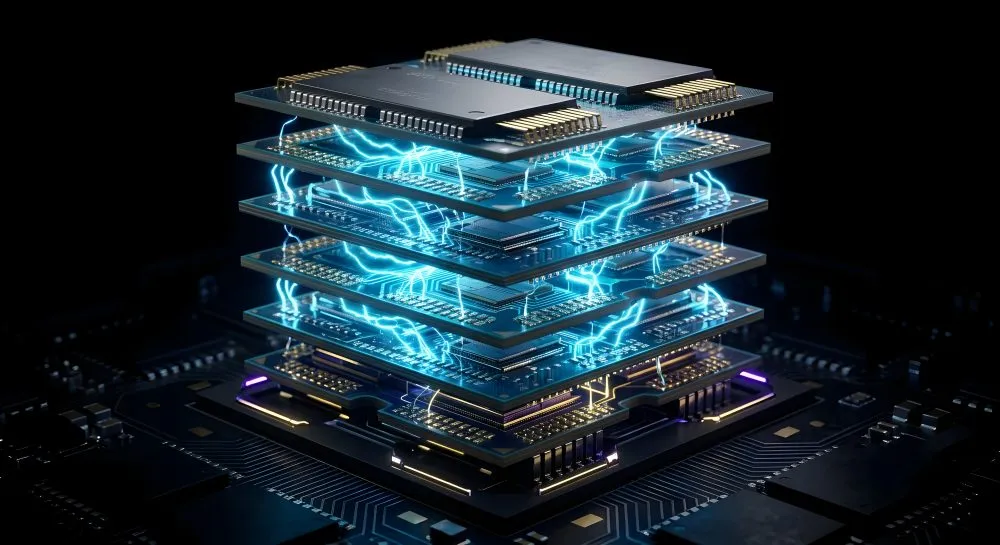
Industry leaders are increasingly adopting a tiered approach. In this new hierarchy, HBM handles the most "hot" and latency-sensitive data (such as active KV caches), while Low-Power DRAM (LPDDR) and emerging form factors like the Small Outline Compression Attached Memory Module (SOCAMM) occupy the "warm" tier. Cold data, meanwhile, is being offloaded to high-speed storage and CXL-pooled memory. This shift is not merely about substitution; it is about architectural optimization for the specific demands of inference versus training.
Chronology: The Evolution of AI Memory Standards
The integration of mobile-grade memory into the high-performance data center is a relatively recent phenomenon, accelerated by the rise of large language models (LLMs).

- Pre-2023: The data center memory hierarchy was relatively static, dominated by standard DDR5 RDIMMs for general-purpose computing and HBM for specialized AI accelerators.
- Late 2023 – Early 2024: As inference workloads surged, hyperscalers began searching for ways to lower the power-per-token cost. The industry began experimenting with LPDDR5 and LPDDR5X, technologies previously confined to the smartphone ecosystem, for server-side AI applications.
- Mid-2024: Micron Technology unveiled its 256GB SOCAMM, marking a turning point in the adoption of compact, serviceable modules for AI-dense server builds.
- 2025–2026 (Forward-Looking): JEDEC’s upcoming LPDDR6 standard is poised to formalize the migration of mobile memory into the data center, offering enhanced features tailored for high-capacity, power-efficient AI inference. Concurrent with this, companies like Rambus are launching chipsets specifically designed to bridge the gap between LPDDR and server-class memory demands.
Supporting Data: Why Performance-per-Watt is King
The primary driver for this architectural shift is simple arithmetic: the cost of electricity and thermal management. In a modern AI data center, moving data accounts for a staggering majority of power consumption.
- Efficiency Gains: SOCAMM modules have demonstrated a power consumption profile roughly one-third that of standard DDR5 RDIMMs. For hyperscale operators managing thousands of GPUs, this translates into massive operational expenditure (OpEx) savings.
- Capacity Density: By utilizing dense 32Gb DRAM dies and the SOCAMM form factor, engineers can fit significantly more memory capacity per CPU socket. This allows for larger Key-Value (KV) caches—a critical requirement for maintaining long context windows in models like GPT-4 or Claude—without the massive price tag associated with HBM.
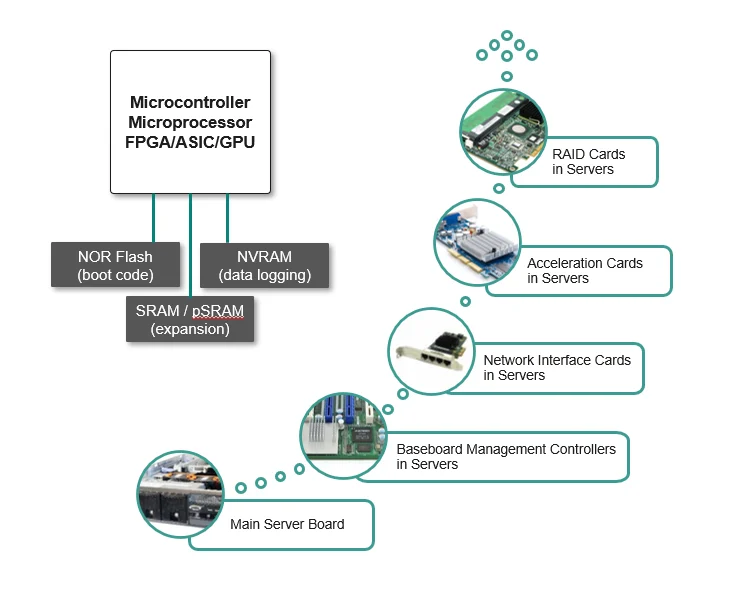
- The Persistence Factor: The role of non-volatile memory is also expanding. NOR flash remains the bedrock for boot code and system security, while Magnetoresistive RAM (MRAM) is emerging as a challenger for persistent, high-endurance storage. Companies like Everspin Technologies are positioning MRAM as the "missing link" for edge AI, where rapid recovery from power loss is a prerequisite for mission-critical deployments.
Official Responses and Industry Insights
Industry experts emphasize that the future of memory is about "fit," not just speed.

Praveen Vaidyanathan, VP and general manager of Cloud Memory Products at Micron, notes that the shift toward inference is fundamentally changing design constraints. "The opportunity for low-power DRAM in the data center is very high," Vaidyanathan stated. "We have to continuously be focused on efficiency, whether it’s performance, capacity, or power." He emphasizes that a balanced hierarchy—where hot data stays in HBM and warm data moves to LPDDR—is the only sustainable path forward.
Steve Woo, a fellow and distinguished inventor at Rambus, echoes this sentiment, highlighting the economic realities. "There’s different levels and capabilities of AI, and different solutions will make more sense depending on what you’re willing to spend," Woo explained. He points to the Compute Express Link (CXL) as the "connective tissue" that will allow for memory pooling, ultimately reducing "stranded" capacity that currently plagues many data center architectures.

From the perspective of Infineon Technologies, Sandeep Krishnegowda highlights that the bottleneck isn’t just about adding more of one component. "Multiple tiers of memory are needed to ensure cost, power, and persistence across the AI stack," Krishnegowda said. He identifies NOR flash as an overlooked hero, serving as a critical "hardware anchor" for security, keys, and certificates in the latest server racks.
Implications: A New Era of System Design
The movement of memory down the stack has profound implications for hardware designers and software architects.

The Rise of Heterogeneous Memory Tiers
We are entering an era where software must become "memory-aware." Developers will increasingly need to manage data placement explicitly, ensuring that latency-sensitive state resides in local DRAM, while broader datasets are shifted to pooled memory or CXL-attached modules. This adds complexity to the software layer but unlocks massive gains in system throughput and cost reduction.
The Edge AI Opportunity
The maturation of persistent memory technologies like MRAM signals a shift toward more capable "Edge AI." As inference moves closer to the point of data capture, the ability of a device to maintain its state through power cycles becomes paramount. By bridging the gap between configuration memory and high-density storage, new architectures are allowing edge devices to function with the reliability of a server, albeit at a fraction of the power footprint.

Addressing the Interconnect Bottleneck
The focus on memory is naturally drawing attention to interconnects. As GPUs struggle with the energy costs of moving data, protocols like CXL are becoming the standard for disaggregating compute and memory. This allows data centers to build flexible, modular systems where memory can be upgraded or expanded independently of the primary processing units, further optimizing the total cost of ownership.
Conclusion: A Pragmatic Future
The "memory wall" is not a single obstacle, but a series of challenges that must be solved through a combination of chemistry, packaging, and protocol innovation. While HBM will remain the gold standard for top-tier training tasks, the broader AI ecosystem is settling into a more pragmatic, tiered hierarchy. By embracing mobile-derived technologies like LPDDR and optimizing for power-efficiency through SOCAMM and CXL, the industry is ensuring that the AI revolution remains both economically viable and technologically scalable. As the industry moves into the latter half of the decade, the winners will be those who master the art of the memory stack—not just the fastest chip, but the most efficient architecture.