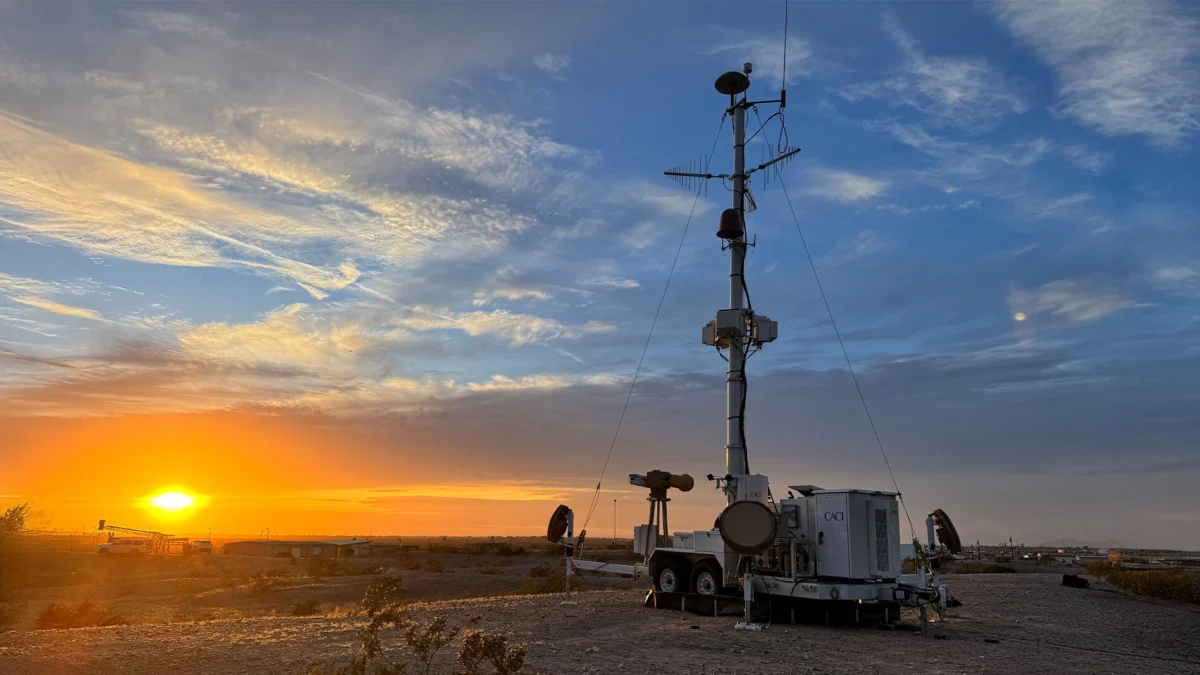
WASHINGTON — In a move signaling a major escalation in the Pentagon’s efforts to secure the American homeland, CACI International has been awarded a three-year, $500 million contract to supply its cutting-edge "SkyValor" non-kinetic counter-unmanned aerial system (cUAS). The deal, confirmed by both the company and the Joint Interagency Task Force (JIATF) 401, marks a significant milestone in the rapid modernization of domestic defensive infrastructure.
As the proliferation of low-cost, high-lethality drones continues to challenge traditional air defense paradigms, the SkyValor system—which utilizes sophisticated radio frequency sensing and artificial intelligence-driven electronic warfare—is set to become a cornerstone of the Department of Defense’s (DoD) "Domestic Shield" program.
Main Facts: The SkyValor Capability
The contract awarded to CACI is for full-rate production, a designation indicating that the technology has moved beyond the experimental phase and is now ready for widespread operational deployment. While the specific geographic deployment sites remain classified for security reasons, a CACI spokesperson confirmed that the primary mission objective is to shield U.S. military installations and critical infrastructure from the growing threat posed by sUAS (small unmanned aerial systems).
SkyValor is distinguished by its "non-kinetic" approach. Unlike traditional air defense, which relies on physical interceptors or projectiles, SkyValor uses electronic warfare (EW) to neutralize threats. By leveraging AI-enabled sensors, the system detects, tracks, and disrupts the communication links of enemy drones, forcing them to land or return to their origin without causing the "collateral impact" associated with kinetic munitions.
Chronology of Development and Deployment
The path to this multi-million dollar contract has been marked by rigorous testing and strategic validation over the past year.
- Early 2026: The need for a cohesive domestic drone defense strategy intensifies as incidents of illicit drone activity near sensitive infrastructure rise across the United States.
- Spring 2026: JIATF-401 begins vetting potential solutions through commercial solutions offerings (CSO).
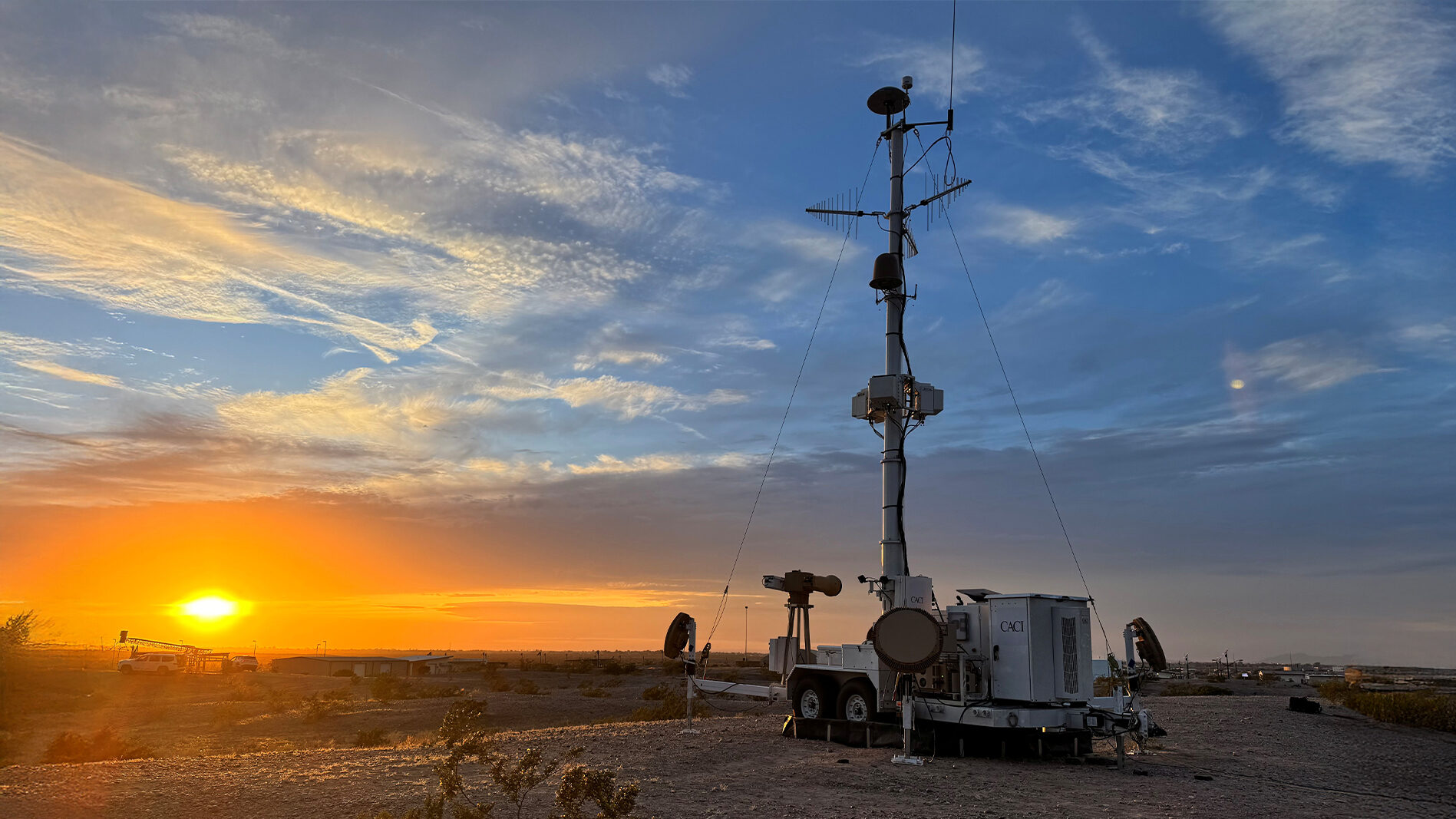
- April 2026: CACI receives an initial, smaller-scale contract to deliver four mobile SkyValor units integrated onto heavy-duty trucks. These units are designed for high-mobility, allowing forces to move counter-drone capabilities wherever they are needed most.
- June 2026: Extensive validation testing occurs at the Marine Corps Air Station in Yuma, Arizona. These tests, conducted in coordination with Joint Task Force-Southern Border and Customs and Border Protection, prove that SkyValor is capable of operating in diverse, challenging environments.
- July 2026: The Department of Defense formalizes the $500 million contract with CACI for full-rate production, concurrent with similar efforts to equip the force with competitive technologies.
Supporting Data: A Layered Defense Strategy
The acquisition of SkyValor is not occurring in a vacuum. It is part of a broader, multi-billion-dollar effort to harden the United States against emerging asymmetric threats.
The Rise of "Domestic Shield"
The "Domestic Shield" program is the Pentagon’s comprehensive response to the "sandbox" environment created by the U.S. southern border, where rapid advancements in drone technology are frequently tested by both state and non-state actors. By utilizing lessons learned in these regions, the DoD is moving to standardize its counter-drone architecture.
Competition and Synergy
It is worth noting that CACI is not the sole provider for these initiatives. In a move that highlights the scale of the threat, JIATF-401 simultaneously awarded AeroVironment (AV) a separate $500 million, three-year contract. AeroVironment’s contribution involves its "Titan" multi-sensor system, an AI-powered solution that focuses on the fusion of data to detect and identify threats.
Industry analysts suggest that the parallel awarding of these contracts to both CACI and AeroVironment reflects a "layered defense" philosophy. Rather than relying on a single "silver bullet" technology, the Pentagon is building a diverse ecosystem of sensors and effectors that can communicate across common operational networks to ensure that no drone—regardless of its signature—can penetrate protected airspace.
Official Responses: The Strategic Mandate
The stakes of this deployment were clearly articulated by CACI’s leadership, who view the contract as a proactive measure against a rapidly evolving threat landscape.
"Warfighters need a decisive advantage against drone threats that are faster, more accessible, and harder to detect," said John Mengucci, CACI’s president and CEO, in an official statement. "SkyValor delivers that advantage through long-range detection, precision defeat, and the ability to adapt as drone threats evolve, giving defenders the time and intelligence to stop threats before they put our forces, borders, and critical infrastructure at risk."
From the perspective of JIATF-401, the validation process in Yuma was the deciding factor. Official reports from the task force highlighted the system’s "advanced non-kinetic defeat tools" and its ability to mitigate threats with minimal disruption to the surrounding environment—a crucial requirement for systems operating in domestic airspace, where accidental interference with civilian communications or aviation must be avoided.
Implications: The Future of Homeland Security
The awarding of this contract carries significant implications for the future of military procurement and domestic security operations.
1. Shift to Non-Kinetic Dominance
The reliance on non-kinetic, AI-driven EW systems signifies a shift away from traditional, cost-prohibitive interceptors. As drones become cheaper and more expendable, the "cost-exchange ratio"—the cost to shoot down a drone versus the cost of the drone itself—has become a major concern for military planners. SkyValor’s ability to "neutralize" a threat without expending a multi-million dollar missile is a tactical necessity in an era of mass-drone swarms.
2. Integration of AI into Defensive Loops
The use of artificial intelligence for real-time threat identification is no longer a R&D experiment; it is now a standard requirement for all operational cUAS systems. By automating the identification process, these systems reduce the cognitive load on human operators, allowing them to focus on decision-making rather than signal monitoring.
3. Institutionalizing Counter-Drone Infrastructure
The involvement of JIATF-401 in these massive, multi-year contracts indicates that counter-drone capability is now treated with the same urgency as traditional air defense (such as Patriot or THAAD batteries). The infrastructure being built under the Domestic Shield program is likely to become a permanent, evolving architecture, updated continuously through software-defined upgrades.
4. Challenges Ahead
Despite the optimism surrounding the technology, challenges remain. The integration of these systems into domestic civilian airspace, where the Federal Aviation Administration (FAA) maintains strict regulations, poses a complex regulatory and technical hurdle. Furthermore, as defensive systems like SkyValor and Titan proliferate, adversaries are likely to respond with more sophisticated, autonomous, and hardened drone designs, setting the stage for a perpetual technological "cat-and-mouse" game.
Conclusion
As the United States accelerates the deployment of the SkyValor and Titan systems, the message to global and domestic adversaries is clear: the era of the "uncontested" drone is coming to an end. By investing in scalable, AI-driven, and non-kinetic defense systems, the Department of Defense is establishing a resilient shield designed to safeguard not only military assets but the very fabric of national security. The $500 million contract with CACI is not merely a purchase of hardware; it is a strategic investment in the ability to command the low-altitude airspace of the future.