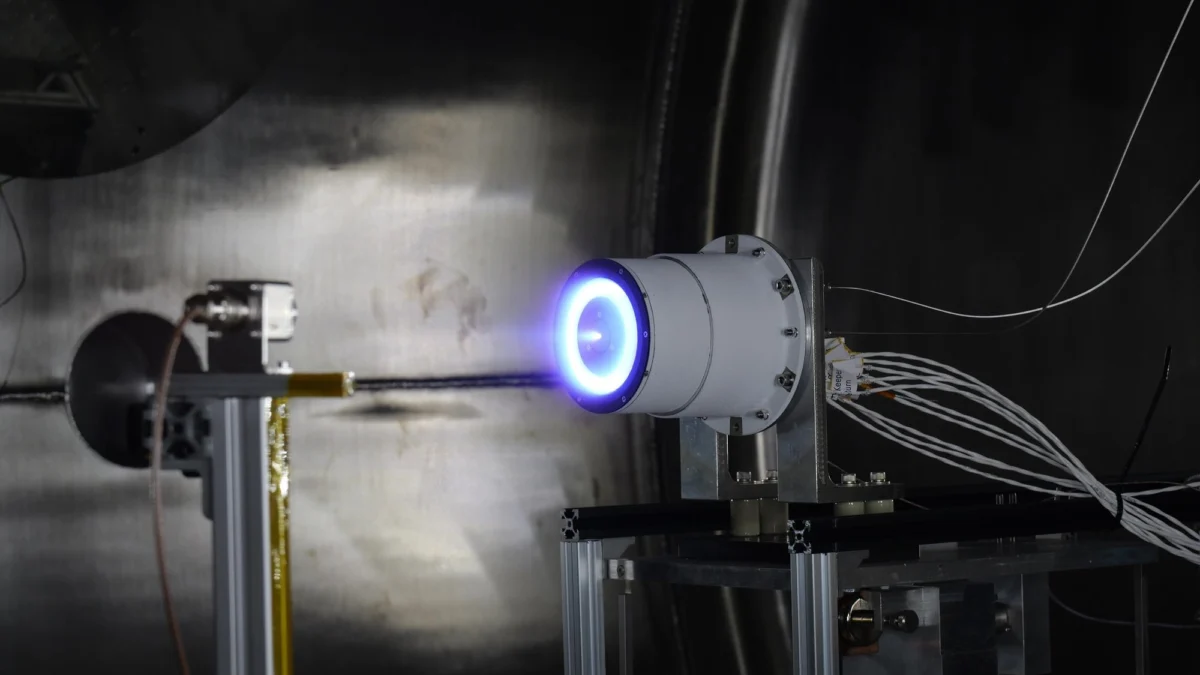
In a significant leap forward for orbital logistics and satellite maneuverability, Impulse Space has officially unveiled its first-ever electric propulsion system, dubbed "Electra." Designed specifically to facilitate long-duration space operations, the system represents a strategic pivot for the company, which has historically cemented its reputation through high-performance chemical propulsion technologies. By integrating Electra into its service portfolio, Impulse Space is positioning itself to address the growing demand for precision, efficiency, and extended mission lifespans in the increasingly crowded orbits around Earth.
The Main Facts: Defining the Electra System
The Electra propulsion system is not merely an incremental upgrade; it is a fundamental shift in how Impulse Space approaches in-space mobility. Built to be highly versatile, the system is designed to handle the "marathon" tasks of spaceflight—such as station-keeping, altitude maintenance, and orbit raising—while leaving the "sprint" tasks of high-thrust maneuvers to the company’s established chemical thrusters.
A critical highlight of the Electra announcement is the level of vertical integration achieved by the Impulse Space engineering team. Unlike many competitors that rely on a patchwork of third-party suppliers for thruster components or avionics, Impulse Space has developed Electra almost entirely in-house. This includes the core thruster architecture, the power processing units, and the supporting avionics. By controlling the entire supply chain and design process, the company claims it can offer faster production cycles and more robust quality assurance for its clients.
Currently, the system has moved beyond the conceptual stage. Having successfully fired the propulsion system just six months after initiating development, Impulse is now in the final phases of qualifying Electra flight engines for integration with its flagship Mira spacecraft.
A Chronological Progression: From Concept to Flight Readiness
The journey of Electra is a testament to the rapid iteration cycles currently defining the NewSpace sector. The timeline of its development provides a blueprint for how agile aerospace firms are disrupting traditional procurement timelines:
- Initial Exploration (July 2025): Approximately one year ago, Impulse Space leadership publicly acknowledged that it was evaluating the feasibility of electric propulsion. While the company was already a leader in chemical thrusters, the move was seen as a necessary evolution to stay competitive in the evolving GEO (Geosynchronous Equatorial Orbit) market.
- Rapid Prototyping (Late 2025 – Early 2026): Leveraging the internal expertise of its engineering team, the company pivoted from research to hardware development. By focusing on vertical integration, the team bypassed many of the supply chain bottlenecks that typically plague the aerospace industry.
- Successful Hot-Fire Tests (Spring 2026): Within just six months of the official decision to build the system, Impulse Space successfully fired the Electra engine. This milestone confirmed the efficacy of the design and validated the physics behind their electric thruster concept.
- The Current Phase (Summer 2026): Impulse is currently focused on the qualification of flight-ready engines. These units are being prepared for integration with the Mira spacecraft, which serves as the primary testbed for the company’s orbital delivery services.
- The Roadmap (2027 and Beyond): The system is slated for its inaugural in-space demonstration on the GEO Express 1 mission, a high-profile flight that serves as the cornerstone of the company’s new GEO rideshare program. Following this, the technology is scheduled to fly on the Caravan 1 mission next year, marking the beginning of full operational deployment.
Supporting Data and Technical Architecture
To understand the necessity of Electra, one must contrast it with traditional chemical propulsion. In the context of orbital mechanics, chemical propulsion systems—such as those utilizing liquid fuels—provide high thrust-to-weight ratios. They are ideal for rapid orbital changes, collision avoidance, and urgent maneuvers. However, they are fuel-intensive. Once the fuel is expended, the spacecraft is essentially a "dead" asset, limited to whatever trajectory it was left on.
Electric propulsion (EP), by contrast, operates on the principle of ionizing propellant—typically xenon or krypton—and accelerating the ions via electric fields. This produces very high exhaust velocities, meaning the system is far more fuel-efficient than chemical engines. While EP provides very low thrust (a slow, steady push), it can operate for thousands of hours, making it the ideal choice for long-term station-keeping in GEO.
By pairing these two technologies on the Mira spacecraft, Impulse Space is creating a hybrid architecture. The chemical engines provide the "sprint" capability to reach the target orbit quickly, while the Electra system provides the "marathon" capability to maintain that position with minimal fuel consumption for years. This dual-mode approach significantly extends the functional life of satellites, potentially increasing the return on investment (ROI) for commercial satellite operators by years.
Official Responses and Strategic Vision
The development of Electra is deeply tied to the vision of Impulse Space founder and CEO Tom Mueller. As a former SpaceX executive who was instrumental in the development of the Merlin engine, Mueller brings a philosophy of rapid, low-cost, and high-reliability engineering to the venture.
"As launch becomes more accessible, the next frontier is enabling spacecraft to do more once they arrive in orbit," Mueller stated during the official unveiling. "Our strategy has always been to develop the mobility technologies needed to support all missions after launch, and electric propulsion is an essential component of that strategy."
This sentiment reflects a broader industry shift. For decades, the focus of the space industry was on the launch vehicle—the rocket that gets the payload to space. Today, the focus is shifting to "last-mile delivery" and orbital logistics. Mueller’s vision is to make Impulse Space the "trucking company of space," providing the mobility infrastructure that allows satellites to move between orbits, inspect other assets, or de-orbit responsibly at the end of their lives.
The Broader Implications: Reshaping the Space Economy
The introduction of the Electra system has several profound implications for the space economy:
1. The Rise of the GEO Rideshare
Impulse Space’s GEO rideshare program is arguably the most significant beneficiary of the Electra system. By reducing the cost of delivering satellites to high-value orbits, Impulse is democratizing access to GEO. The ability to manage these satellites once they arrive, thanks to Electra’s efficiency, ensures that customers are not just paying for a ride, but for a service that guarantees long-term orbital utility.
2. Space Sustainability and Debris Mitigation
Electric propulsion is an essential tool for orbital sustainability. Because Electra allows for precise maneuvering over long durations, it can be used to perform active debris removal or to safely de-orbit satellites at the end of their mission life. As regulatory bodies around the world tighten requirements for post-mission disposal, having a high-efficiency propulsion system becomes not just a commercial advantage, but a regulatory necessity.
3. Increased Competitiveness of In-Space Logistics
The market for "Space Tugs" and orbital transfer vehicles (OTVs) is heating up. Competitors like D-Orbit, Northrop Grumman (with its MEV vehicles), and various startups are all vying for a slice of the orbital logistics market. By building its own electric propulsion in-house, Impulse Space has insulated itself from market volatility, reduced its bill of materials, and secured a technological moat that will be difficult for competitors to replicate.
4. Enabling Future Missions
Beyond simple station-keeping, the combination of Electra and chemical propulsion opens the door to more complex mission profiles. This includes satellite servicing, refueling, and modular construction in orbit. If a spacecraft can move efficiently between various locations in GEO, it can perform multiple functions throughout its lifespan, effectively turning a static sensor into a dynamic, multi-purpose robotic agent.
Conclusion
The unveiling of the Electra electric propulsion system is a milestone for Impulse Space and a signal of the maturity of the commercial space industry. By successfully bridging the gap between chemical "sprint" capabilities and electric "marathon" efficiency, the company is positioning itself as a vital architect of the future orbital ecosystem. As the industry moves toward a future defined by high-frequency launches and complex orbital operations, technologies like Electra will provide the mobility necessary to turn space from a destination into a functional, dynamic environment. With flight demonstrations scheduled for the coming year, the industry will be watching closely to see how Electra performs in the harsh reality of the vacuum, but the initial signs suggest that Impulse Space has once again raised the bar for orbital innovation.