By Industry Correspondent
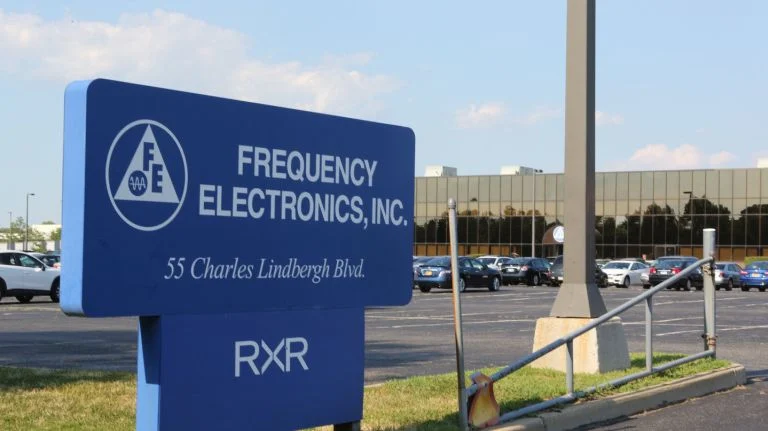
Frequency Electronics, Inc. (FEI), a long-standing leader in precision timing and frequency generation technology, has announced a major surge in its commercial and government order book. The company reported $18 million in new contract wins, a development that underscores the growing demand for high-reliability components within the rapidly evolving proliferated satellite architecture sector.
The announcement, which marks a significant milestone in the company’s current fiscal strategy, includes a pivotal $11 million agreement with an undisclosed aerospace prime contractor. This deal is set to provide critical on-board frequency generation systems for a proliferated low-Earth orbit (LEO) satellite constellation. Coupled with an additional $7 million in follow-on production contracts, the news has drawn attention to the company’s robust backlog and its strategic positioning in the high-stakes space defense market.
Main Facts: A Strategic Win in Satellite Infrastructure
The $11 million contract represents more than just a capital infusion; it serves as a vote of confidence from a Tier-1 aerospace prime contractor. Frequency Electronics has historically supplied high-precision oscillators and timing devices for both space and terrestrial defense applications, but this specific engagement is noteworthy for its focus on the "proliferated" satellite segment.
Proliferated satellite programs—often characterized by large constellations of small-to-medium satellites—require mass-producible, high-reliability timing systems that can operate seamlessly in the harsh environment of space. By securing this contract, FEI has demonstrated that its technology can meet the rigorous specifications required for large-scale constellation deployment.
The secondary $7 million in follow-on production orders involves a mix of space-qualified oscillators and specialized non-space timing systems for the U.S. government. These contracts are particularly attractive to investors and stakeholders alike, as they typically carry higher-than-average gross margins. Because the engineering and development costs for these products were absorbed in previous fiscal periods, the company is now moving into a high-efficiency production phase that directly enhances its bottom-line profitability.
Chronology of Recent Growth
The path to this $18 million windfall was not accidental. Over the last eighteen months, Frequency Electronics has undergone a deliberate internal transformation to prepare for a surge in demand from the defense sector.
Phase 1: Strategic Reinvestment (FY 2025)
Recognizing that the demand for satellite-based precision timing would outpace current manufacturing capacities, FEI leadership initiated a major investment phase. Throughout the last fiscal year, the company focused on expanding its engineering bench. By hiring high-level talent in advance of actual contract fulfillment, the company insulated itself from the labor market shortages that have plagued other aerospace manufacturers.
Phase 2: Building the Backlog (Q1–Q2 2026)
As the global geopolitical landscape necessitated a pivot toward resilient satellite communications, Frequency Electronics saw its backlog begin to swell. The company’s ability to deliver consistent, mission-critical timing solutions allowed it to compete for larger-scale contracts.
Phase 3: The $18 Million Breakthrough (July 2026)
With the latest announcement, the company solidified its current trajectory. The $11 million prime contract serves as a cornerstone for the second half of 2026, validating the company’s previous investments in workforce and infrastructure.
Supporting Data: The Backlog and Revenue Outlook
The financial health of Frequency Electronics is perhaps best reflected in its record-funded backlog, which currently stands at $111 million. This figure represents a staggering 60% year-over-year increase, signaling that the company is effectively capturing a larger share of the defense-aerospace budget.
| Metric | Current Status | YoY Growth |
|---|---|---|
| Total Funded Backlog | $111 Million | +60% |
| New Contract Wins | $18 Million | Significant |
| Production Focus | Precision Frequency Gen. | High |
| Gross Margin Trend | Improving | High-Efficiency |
The 60% increase in backlog is a critical metric for investors. It implies that the company has a clear, predictable revenue stream for the coming quarters. Furthermore, the shift toward "follow-on" contracts—which require less R&D investment—means that as the company fulfills these orders, the percentage of revenue converting to operating income is expected to rise.
Official Responses and Strategic Vision
In a statement following the contract announcement, Tom McClelland, President and CEO of Frequency Electronics, emphasized the significance of the new prime contractor relationship.
"This is our first contract with this particular prime contractor, and it serves as the second ‘significant’ contract we have landed this year to support proliferated satellite programs," McClelland noted. "We view this as a clear signal that the industry recognizes our expertise in the timing domain. We expect significantly more wins in this area going forward as the market for proliferated constellations continues to expand."
McClelland also addressed the profitability of the company’s current production pipeline: "The follow-on awards we won are also very attractive for FEI. They tend to come at higher than average corporate gross margins, as we leverage previous engineering and development costs. By scaling production on proven technology, we are able to drive value for our shareholders while ensuring our government partners receive the high-reliability components they need."
The company’s leadership has made it clear that they are not merely satisfied with current wins but are actively positioning the firm as the premier provider for the next generation of space-based assets.
Implications: The Future of Precision Timing in Space
The success of Frequency Electronics carries broader implications for the aerospace and defense industry at large.
1. The Proliferation Trend
The transition from large, exquisite, multi-billion-dollar satellites to smaller, proliferated constellations is the defining trend of the 2020s. These systems require hundreds or even thousands of satellites, each needing an ultra-precise frequency source. FEI’s ability to move from "bespoke" engineering to "series production" is a key indicator that the supply chain for these constellations is maturing.
2. Resilience and Defense
Precision timing is the bedrock of modern navigation, communications, and electronic warfare. Whether it is synchronizing secure data packets across a satellite mesh network or ensuring accurate GPS-denied navigation for ground forces, the components supplied by FEI are essential to national security. The U.S. government’s reliance on these systems means that FEI is effectively integrated into the backbone of future defense infrastructure.
3. The Margin Pivot
For years, companies in the frequency sector struggled with high R&D costs that hampered profitability. By securing follow-on production contracts, Frequency Electronics is successfully pivoting to a model where high-volume production outweighs the need for constant design innovation. This "scale-up" strategy is expected to be the primary driver of shareholder value over the next 24 to 36 months.
4. Competitive Landscape
As FEI continues to secure contracts from major primes, the company is effectively cementing its position against emerging competitors. By establishing long-term relationships with Tier-1 contractors, FEI creates a "moat" around its business, making it difficult for newer, less-proven entrants to displace them from critical supply chains.
Conclusion: A High-Frequency Future
Frequency Electronics is currently in a "sweet spot." By marrying high-level engineering talent with a clear vision for the proliferated satellite market, the company has managed to grow its backlog to unprecedented levels.
The $18 million in new contracts acts as a catalyst for a period of anticipated growth. As the company continues to fulfill these orders, the market will be watching closely to see if they can maintain their current gross margins while continuing to win additional business from both the commercial aerospace sector and the U.S. government.
For an industry that relies on the split-second accuracy of its technology, Frequency Electronics appears to be hitting its mark. With $111 million in backlog and a clear strategic roadmap, the firm is well-prepared to navigate the complexities of the modern space economy, ensuring that as constellations grow in size and complexity, the timing systems that power them remain rock-solid.