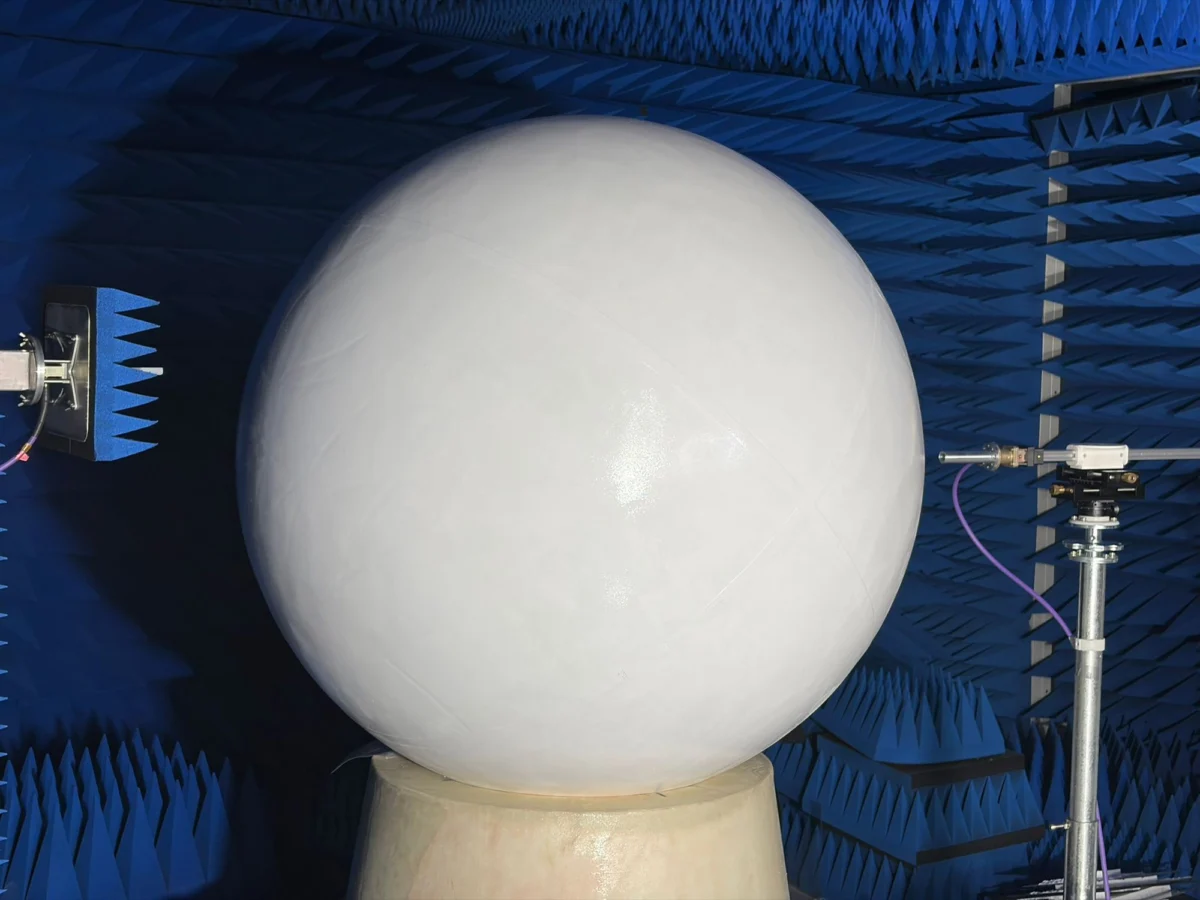
In a landmark development for the global satellite and radio frequency (RF) communications industry, MatSing, a pioneer in advanced antenna technology, has announced a breakthrough in the manufacturing of large-format Luneburg Lenses. By overcoming long-standing material science hurdles, the company has effectively transformed what was once a theoretical laboratory curiosity into a scalable, high-performance engineering platform. This innovation promises to reshape how satellite gateways, LEO/MEO/GEO constellations, and deep-space communication arrays are architected for the next generation of connectivity.
The Core Innovation: Bridging Theory and Scalability
At the heart of the announcement is a proprietary manufacturing process that allows for the creation of large-aperture Luneburg Lenses that exceed 50 wavelengths in size. While the Luneburg Lens—a spherically symmetric gradient-index lens—has been understood in electromagnetic theory for decades, its practical application at scale has historically been hampered by the inability to maintain precise material homogeneity across large volumes.
In traditional antenna design, the Luneburg Lens offers an elegant solution to multibeam requirements: because it is spherically symmetric, it can focus incoming electromagnetic waves from any direction to a point on its surface. However, when scaled up to apertures between 0.5 and 2.4 meters, even microscopic variations in the dielectric constant of the lens material result in significant phase errors. These errors inevitably degrade gain, distort beam quality, and limit the frequency range.
MatSing’s new manufacturing methodology stabilizes these material properties, ensuring that the refractive index follows the precise theoretical gradient required for optimal performance. This allows for multibeam, wideband antennas capable of transmitting and receiving signals simultaneously across diverse frequencies and directions—a critical requirement for modern, high-density satellite networks.
A Chronology of Lens Development
The journey to this announcement reflects the broader evolution of RF engineering over the last century.
- 1944: Rudolf Luneburg published the mathematical description of the lens, proving that a sphere with a radially varying refractive index could focus parallel rays to a point on the opposite side of the sphere.
- Late 20th Century: The Luneburg Lens remained largely in the realm of radar research. Manufacturers struggled to produce the necessary materials with the required gradient-index precision, limiting the lenses to small, specialized test cases.
- The MatSing Era: MatSing began focusing on lightweight, high-performance RF solutions, identifying that the next bottleneck in satellite communications would be the physical footprint and complexity of ground station antennas.
- 2026 Breakthrough: After years of research into material science and additive manufacturing, MatSing achieved the ability to produce large-format lenses that maintain consistent RF performance across L-band through Ka-band frequencies. This milestone represents a transition from "bespoke laboratory manufacturing" to "scalable production."
Supporting Data: Technical Specifications and Performance
The technical capabilities of the new platform are designed to meet the rigorous demands of the modern space economy. By offering a range of apertures from 0.5m to 2.4m, the technology covers a vast spectrum of deployment scenarios.
Key Performance Metrics:
- Frequency Range: From L-band (1–2 GHz) up to Ka-band (26.5–40 GHz), providing versatility for legacy systems and high-throughput modern constellations.
- Aperture Flexibility: The 0.5m to 2.4m range allows for a tiered deployment strategy, from compact land-mobile units to massive, high-capacity teleport gateway antennas.
- Multibeam Efficiency: The lens design supports high-gain, simultaneous beamforming. This means a single antenna can effectively act as multiple traditional dish antennas, drastically reducing the physical infrastructure required at a teleport or ground station.
- Material Integrity: By maintaining tight control over dielectric constants, MatSing has mitigated the "phase error" phenomenon, ensuring that gain remains consistent even at the edges of the aperture.
Industry Implications: Why This Matters
The implications of this development are widespread, touching every sector of the satellite and wireless ecosystem.
Satellite Gateways and Teleports
As the number of LEO (Low Earth Orbit) and MEO (Medium Earth Orbit) satellites increases, the demand for gateways—the ground stations that bridge space-based traffic to terrestrial fiber—is skyrocketing. Traditional parabolic dishes are cumbersome, require complex tracking motors, and can only follow a limited number of satellites. A Luneburg Lens, however, is a stationary, passive, and wide-angle solution. It can "track" multiple satellites simultaneously by simply placing multiple feeds at the appropriate points on the lens surface.
Deep-Space and Radio Astronomy
In deep-space communications, where signal strength is incredibly weak, the high gain and low noise-temperature characteristics of a large-format Luneburg lens provide a distinct advantage. Radio astronomers stand to benefit from the lens’s ability to conduct wide-field surveys without the mechanical limitations of traditional telescope mounts.
Airborne and Maritime Satcom
For vessels and aircraft, the ability to maintain connectivity while moving is paramount. The Luneburg Lens’s hemispherical or spherical coverage provides a "look angle" that is superior to flat-panel arrays, which often struggle at low elevation angles.
Official Perspective: Engineering a Paradigm Shift
Leo Matytsine, Executive Vice President of MatSing, emphasized that the breakthrough is as much about reliability as it is about performance.
"Even small material variations can introduce phase errors as aperture size increases, significantly reducing gain and beam quality," Matytsine stated during the announcement. "This MatSing manufacturing breakthrough overcomes these challenges, transforming the large-format Luneburg Lens from a laboratory concept into a practical engineering platform delivering superior performance and efficiency."
By moving the Luneburg Lens from a "conceptual" product to a "practical engineering platform," MatSing is essentially inviting antenna designers to rethink the physical architecture of ground-based RF systems. The shift from mechanical, motor-driven dishes to stationary, high-gain lens systems represents a reduction in maintenance, energy consumption, and physical complexity.
Future Outlook: The Next Decade of Connectivity
The successful industrialization of this technology comes at a pivotal time. With thousands of satellites being launched annually, the ground segment—often cited as the "Achilles’ heel" of the space industry—must evolve. The ability to manufacture these lenses at scale could significantly lower the barrier to entry for ground station operators.
Furthermore, as the industry moves toward 6G and beyond, the need for ultra-wideband wireless communication will require antennas that can handle multiple frequency bands without losing signal integrity. MatSing’s platform is uniquely positioned to address this need, potentially serving as the backbone for the next generation of hybrid terrestrial-satellite networks.
Potential Research and Development Trajectories:
- Mass Production Optimization: Refining the supply chain to ensure that these large lenses can be deployed in the thousands for global gateway networks.
- Integration with AI-Driven Beamforming: Pairing the passive focusing power of the Luneburg lens with advanced AI algorithms to dynamically switch between satellite signals in milliseconds.
- Space-Based Applications: While currently focused on terrestrial and maritime ground stations, the lightweight, high-performance nature of these lenses could eventually be adapted for orbital platforms, allowing for more efficient space-to-space relay links.
Conclusion
MatSing’s announcement marks a transition from the era of "bespoke engineering" to "scalable RF infrastructure." By solving the manufacturing complexities associated with the Luneburg Lens, the company has provided the satellite industry with a tool that is as robust as it is efficient. As the space economy continues its rapid expansion, the ability to simplify ground segment architecture while increasing capacity will be the differentiator for service providers. With its new, high-performance lens platform, MatSing has effectively placed itself at the focal point of that evolution, ensuring that the signals of tomorrow are captured with greater clarity and efficiency than ever before.