Xi’an, the capital of Shaanxi province, stands as a monumental pillar of human civilization. As one of the Four Great Ancient Capitals of China, its history spans over a millennium, witnessing the rise and fall of 13 dynasties. Today, it is globally synonymous with the Terracotta Army, drawing a staggering 330 million tourists annually. However, as the digital age matures, the expectations of these visitors have shifted. They no longer settle for static plaques and traditional audio guides; they demand immersive, conversational, and highly personalized digital interactions.
In response to this evolution, a technological landmark has emerged. Huawei and the Shaanxi Culture Industry Investment Group (SCG) have co-developed "BoGuan," the world’s first commercial multimodal Large Language Model (LLM) specifically engineered for the cultural tourism sector. This platform represents a paradigm shift in how historical data is preserved, interpreted, and monetized.
The Core Concept: Why Generic AI Fails History
The rapid proliferation of generative AI has reshaped consumer expectations across every industry. However, standard, general-purpose LLMs suffer from a critical limitation: they are "hallucination-prone" when it comes to niche, specialized subjects. They lack the granular, verified data required to provide accurate information on archaeological findings, museology, and dynastic history.
To overcome this, the developers of BoGuan spent two years constructing a massive, high-fidelity knowledge base. This dataset, totaling 1.2 Petabytes, includes 31 million images, 4.4 million minutes of video, and 960 million pieces of structured, verified text. By aggregating 10 distinct open- and closed-source models—including Huawei’s own PanGu—BoGuan acts as a unified gateway. It does not merely predict the next word; it cross-references historical records to ensure that the "experience" provided to a tourist is not only engaging but historically authentic.
A Chronology of Innovation
The development of BoGuan did not happen overnight; it was a systematic, multi-phase project that highlights the intersection of cultural heritage and advanced engineering.
- 2022–2023 (Foundational Phase): Huawei and SCG initiated the curation of the 1.2 Petabyte dataset. This involved rigorous data engineering, where raw cultural assets were processed, labeled, and categorized using Huawei Cloud technology. The primary focus was on establishing verifiable ownership and creating high-quality, standardized cultural datasets.
- September 2023 (Pilot Launch): The platform was introduced to the public. It began powering digital assistants and AR-integrated camera features, marking the first time a specialized LLM was deployed at scale in a major tourism hub.
- Late 2023–Mid 2024 (Scale and Integration): The platform began to integrate with the GO-SHAANXI app and other consumer-facing services. Simultaneously, B2B applications, such as the AI "Video Factory," were refined to automate the production of marketing materials and short-form content.
- Mid-2024 (Expansion): Following proven success, SCG initiated partnerships with authorities in the Guizhou and Xinjiang provinces to pilot the BoGuan framework in different regional contexts, signaling the beginning of a national rollout strategy.
Supporting Data: The Impact of Intelligent Infrastructure
The technical requirements to support BoGuan are immense. Thousands of concurrent users in high-density areas like the Grand Tang Mall require more than just a powerful model; they require a robust physical infrastructure capable of low-latency processing.
Computing Architecture
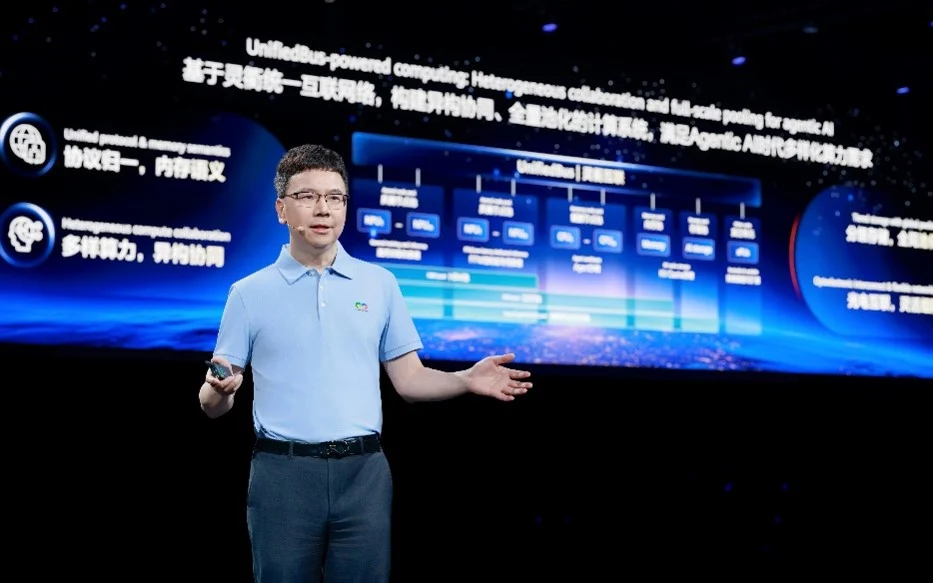
The system runs on an on-premise 48P computing platform utilizing Huawei’s SuperPoD architecture. A key component is the "UnifiedBus" technology, which allows multiple physical servers to operate as a single logical entity. This "thinking as one" capability allows the system to process complex, multi-modal queries—such as generating a historical overlay for a photo—in milliseconds.
Connectivity and Network Density
China Telecom Shaanxi and Huawei collaborated to blanket the Grand Tang Mall with a 5G-Advanced network. This deployment is a technical feat in itself, featuring 46 base stations in a compact area—a density far exceeding standard urban environments. The network supports:
- Downlink Speeds: 3.5 Gbps
- Uplink Speeds: 600 Mbps
- Concurrent Capacity: Up to 23,000 users during peak holiday traffic.
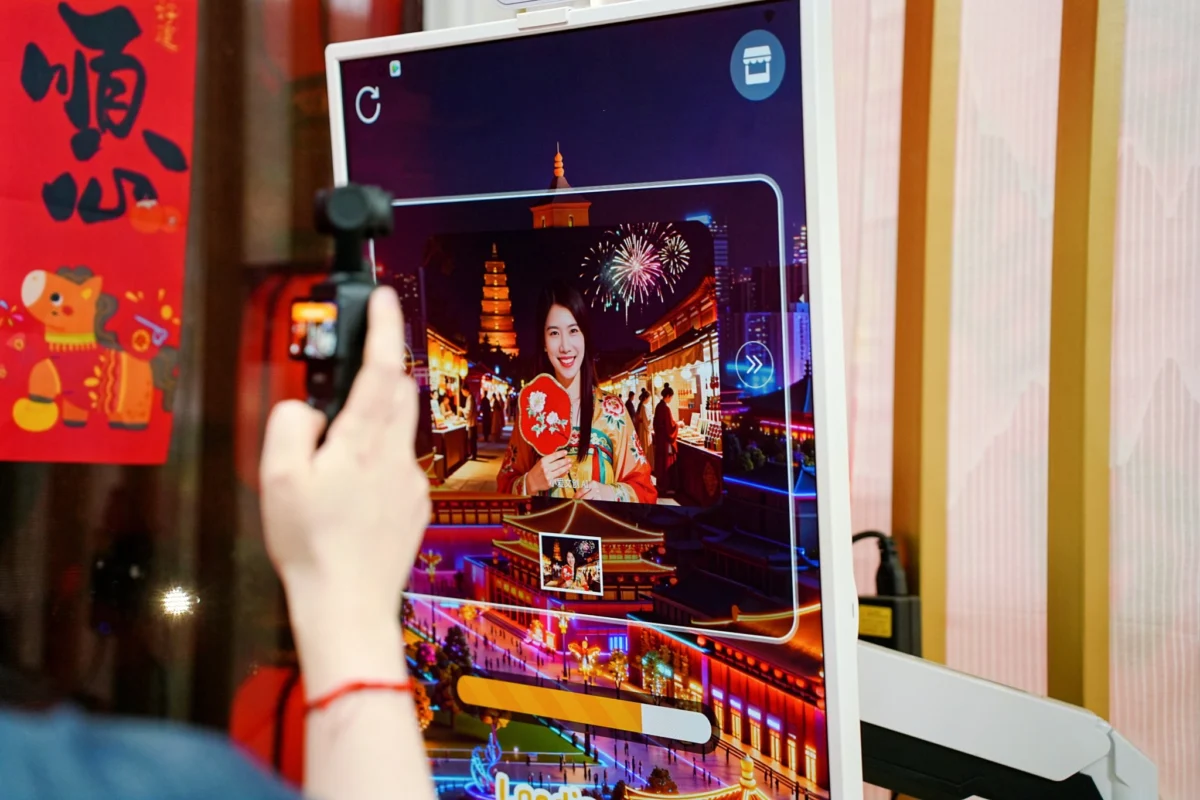
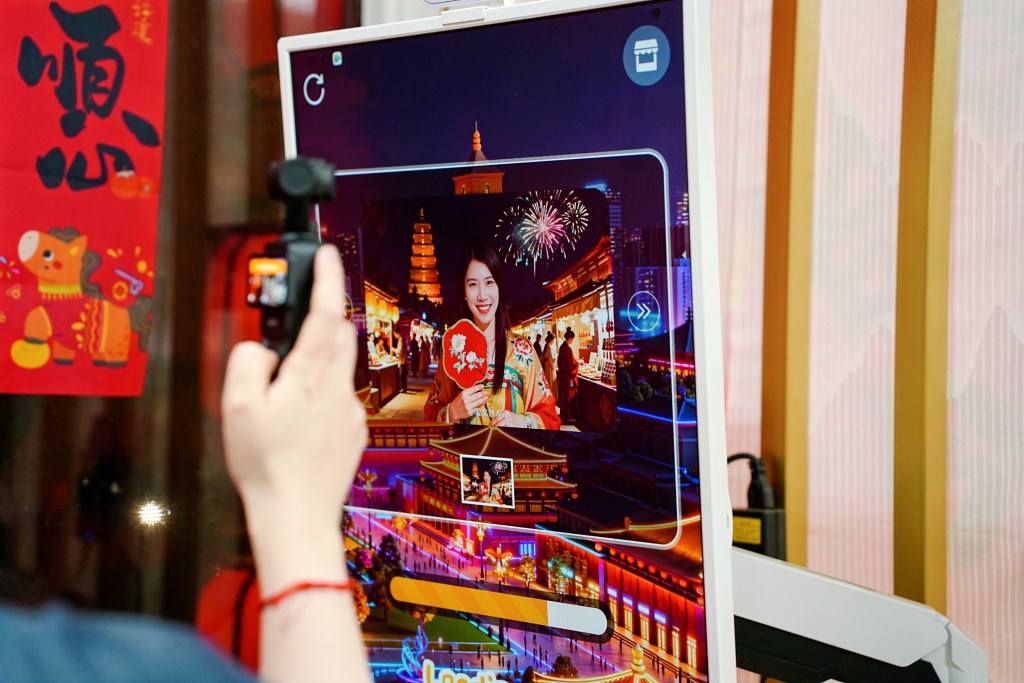
These base stations are equipped with AI-powered intelligent control boards. These boards dynamically allocate network resources based on the type of activity, ensuring that when a tourist uses the "Zhiying Camera" to generate an AI image, the network prioritizes the throughput necessary for that specific task.
Official Perspectives: The Human-AI Bridge
Edric Chu, General Manager of Huawei’s Shaanxi Representative Office, emphasizes that BoGuan is about depth, not just volume. "General large models lack specialized knowledge in museology, archaeology, and history," Chu noted. "We have transformed raw data resources into data assets with verifiable ownership. This is not just technology; it is a way to activate thousands of years of cultural heritage."
The economic results have been equally impressive, according to Jin Yan, Chairman of the Digital and Intelligent Culture Technology Group at SCG. "With the same team size, our revenue has increased by roughly 30–40% between last year and June," Jin stated. "The sales of related digital collectibles and creative products have exceeded 2 million Chinese yuan ($300,000)."
Implications: Bridging the Talent and Industry Gap
Despite the technological success, the project has highlighted a pressing structural issue: the "AI-Culture Talent Gap." As the industry pivots toward vertical-specific AI, there is a shortage of professionals who understand both the complexities of cultural heritage and the mechanics of LLM prompt engineering and management.
The Training Pipeline
To mitigate this, SCG and Huawei have established a talent training base, collaborating with over 10 institutions. The goal is to align vocational certificates with Huawei’s AI certifications and university micro-majors. The target is ambitious: 1,000 trainees in the first year and over 3,000 in the second, effectively building a workforce capable of managing the next generation of digital-cultural assets.
A Blueprint for Telecom Operators
The BoGuan model serves as a strategic roadmap for the global telecommunications industry. As traditional revenue streams from connectivity reach a plateau, operators are searching for ways to monetize their infrastructure. BoGuan demonstrates that success lies in moving up the value chain:
- Unified AI Infrastructure: Combining compute, storage, and connectivity into a single, cohesive ecosystem.
- Vertical-Industry Data: Focusing on specialized, high-value data rather than broad, generic web-scraped content.
- Managed Services: Offering industry-specific applications (like the Video Factory) that solve operational pain points, such as content production costs and digital preservation.
The Future of Cultural Tourism
As SCG looks to replicate this model in other regions, the implications for the global travel industry are profound. If a city can successfully digitize its heritage and make it "conversational" for millions of visitors, it transforms from a static destination into a dynamic, interactive experience.
The success of the BoGuan project suggests that the future of AI is not in creating one "super-model" that knows everything, but in creating specialized, highly accurate models that know the right things. By treating AI as a fundamental layer of the tourism infrastructure—supported by 5G-Advanced networks and expert-curated data—Xi’an has set a new global standard.
In the words of Edric Chu, "Artificial intelligence is not simply a stack of technologies. In Shaanxi, it has become a key enabler that can activate history, reshape experiences, and inject new momentum into the global economy." As other regions look to follow suit, the marriage of archaeology and AI will likely define the next decade of cultural engagement.