The era of "spaghetti AI"—the frantic, tangled web of bloated dependencies that defined generative AI development in 2024—is officially over. Just two years ago, a typical GenAI application stack was an architectural nightmare: massive vector databases, complex multi-stage chunking algorithms, heavy abstraction frameworks, and a reliance on expensive, opaque frontier models for even the most trivial logic. It was a stack built for the fragile thrill of a prototype, not the rigorous demands of production.
Today, the role of the AI Engineer has undergone a profound maturation. We have moved from simply "wiring APIs together" to engineering deterministic systems that wrap non-deterministic engines. As foundation models have integrated native reasoning and state management, the tooling required to build around them has dramatically shrunk. The bloated "kitchen sink" approach has been replaced by a lean, standardized set of primitives.
For the modern developer, the focus has shifted from managing complexity to enforcing reliability. This is the 2026 standard for building, evaluating, and deploying autonomous systems.
The Chronology of Maturation: From Prototype to Product
To understand the current landscape, one must look at the rapid evolution of the AI stack.
- 2023: The Wild West. Developers were obsessed with "prompt engineering" as a primary skill. The focus was on raw model capability, and the ecosystem was defined by massive, monolithic frameworks that tried to do everything, often at the cost of visibility and control.
- 2024: The Integration Crisis. As applications became more complex, the "dependency hell" emerged. Developers spent 80% of their time building custom wrappers, managing authentication for dozens of disparate APIs, and struggling to get LLMs to return consistent, usable data.
- 2025: The Rise of Determinism. Industry leaders began treating agents as software engineering problems rather than research experiments. This year saw the rise of constrained decoding and the maturation of "LLM-as-a-Judge" evaluation patterns.
- 2026: The Minimalist Standard. Today, the industry has converged on a "less is more" philosophy. We are seeing the death of opaque abstraction and the rise of modular, transparent, and portable toolkits.
Orchestration: The Return to Control
The foundation of any autonomous system is its orchestration layer. Without reliable control over how an agent reasons and routes, the entire system is effectively a black box.
Code-First Graph Frameworks
For stateful, high-stakes applications, the industry has abandoned brittle while loops in favor of cyclical graphs. Tools like LangGraph and Burr allow engineers to define nodes (agents or tools) and edges (conditional routing logic) with precision. By treating state as a first-class citizen, these frameworks allow developers to pause execution, inject human-in-the-loop approval, and resume computation without losing the thread of reasoning.
Visual Event-Driven Orchestration
Conversely, for asynchronous data pipelines, visual builders have emerged as the superior choice. Platforms like n8n allow engineers to treat AI models as modular components, mapping webhooks to classifiers and database writes with built-in retry logic.
The 2026 Rule of Thumb: If your task requires multi-turn planning and deep conversational memory, write it as a code-based graph. If your task is an asynchronous, event-triggered workflow, leverage visual orchestration to minimize boilerplate.
The Universal Connector: Model Context Protocol (MCP)
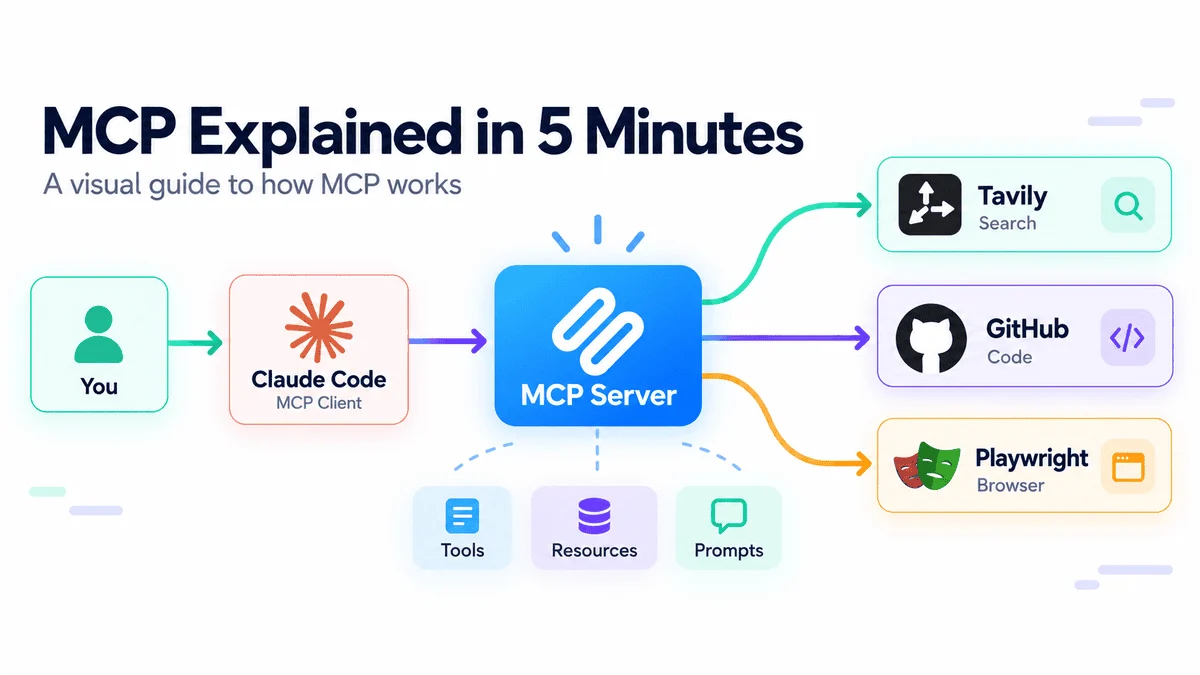
Perhaps the most significant architectural shift in the last twelve months is the widespread adoption of the Model Context Protocol (MCP). Previously, integrating a new tool—be it a SQL database, a Slack channel, or a GitHub repo—required building a custom Python wrapper and hoping the LLM could parse the resulting JSON.
MCP acts as the "USB-C" of the AI world. By providing a standardized interface, it allows any AI agent to connect to any data source without bespoke integration code. This moves the engineering burden from "integration logic" to "governance." By managing credentials and context at the server level, developers can now build agents that interact with complex enterprise data securely and consistently, without embedding sensitive API keys into prompts.
Local Inference: The Shift to SLMs
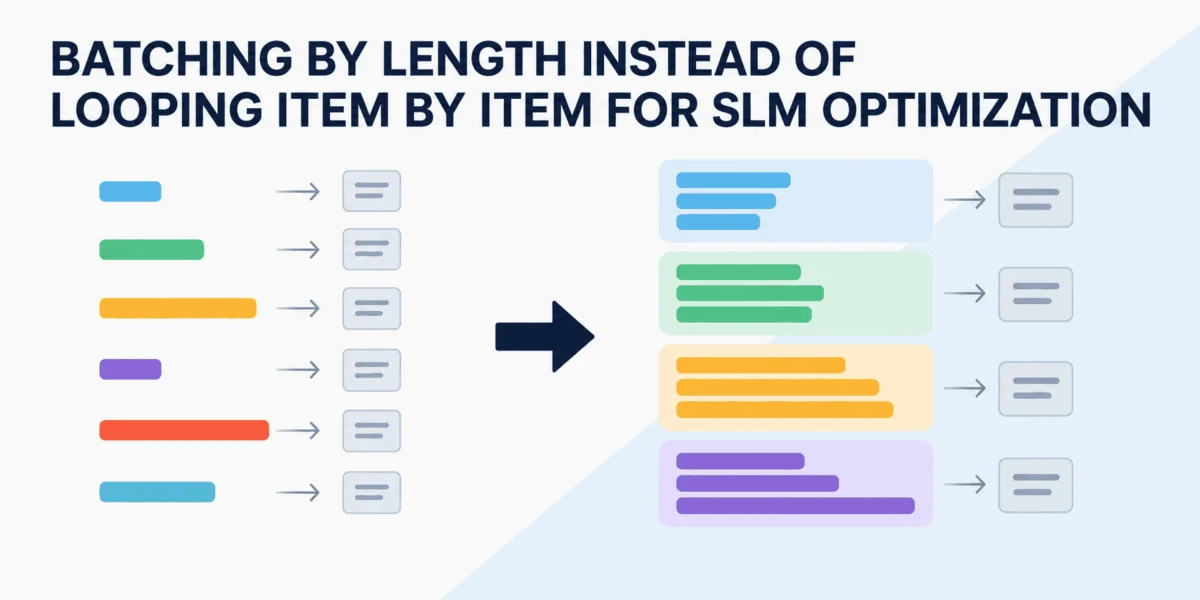
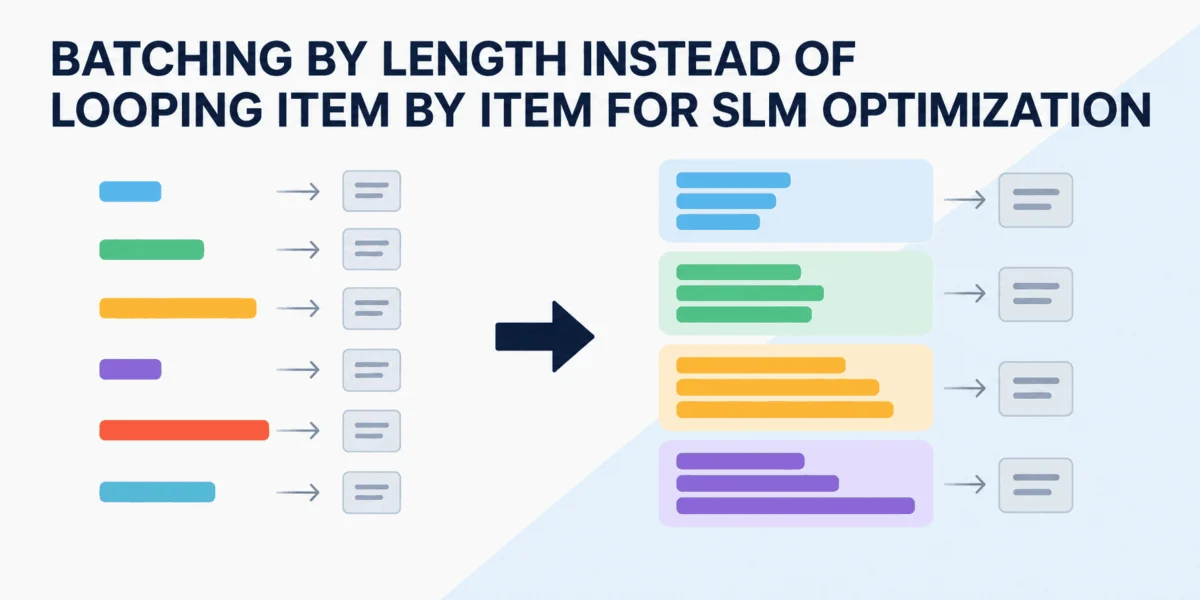
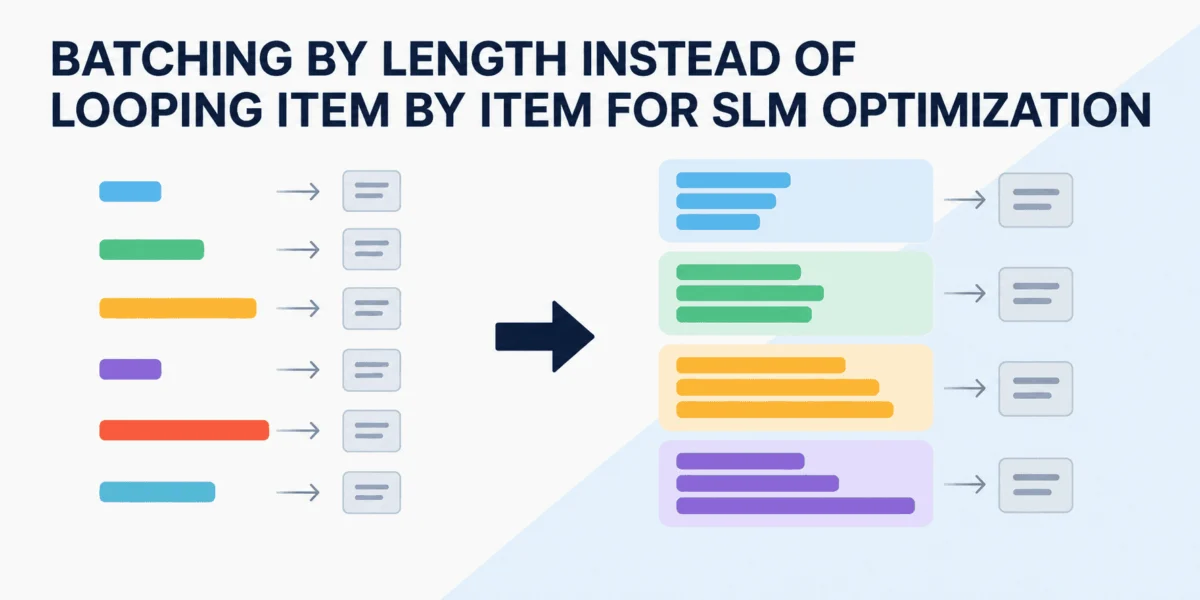
The days of paying cloud providers for every unit test are gone. The modern workflow begins entirely offline, driven by the emergence of high-performance Small Language Models (SLMs).
Recent advancements in model distillation and optimization have pushed SLMs (models under 10B parameters) to a quality threshold where they routinely outperform the "frontier" models of 2024 for specific, targeted tasks. By running models locally, engineers gain two critical advantages:
- Cost Efficiency: You can run thousands of unit tests without racking up a massive cloud bill.
- Portability: You can iterate locally with an SLM and swap to a high-capacity frontier model for production without changing your orchestration code.
This local-first development approach significantly accelerates the feedback loop, allowing engineers to experiment with prompt variations and tool definitions in seconds rather than minutes.
The Evaluation Engine: CI/CD for Prompts
Perhaps the most glaring failure of early AI development was the lack of rigorous testing. If you cannot measure the performance of your agent, you are not shipping software; you are playing a guessing game.
In 2026, evaluation frameworks—Promptfoo, LangSmith, and Braintrust—are mandatory. They allow for a "CI/CD for Prompts" methodology. When a prompt is updated, the system automatically triggers a suite of hundreds of edge cases, utilizing "LLM-as-a-Judge" grading to score the agent’s performance against a strict rubric.
Key Implications:
- Statistical Reliability: Probabilistic outputs must be subject to statistical testing.
- Build Gates: Setting a minimum pass rate (e.g., 95%) is now standard practice before any code is deployed to production.
- Engineering Discipline: Prompt engineering has officially moved from a "creative art" to a version-controlled, measurable engineering discipline.
Structured Output: Solving the Parsing Crisis
Downstream parsing errors were the primary cause of pipeline crashes in the early years of GenAI. Fortunately, this has been largely solved by two techniques:
- Constrained Decoding: Libraries like Outlines and vLLM Guided Decoding intervene at the token level, restricting the model to only output tokens that match a specific Pydantic schema. It is mathematically impossible for the model to "hallucinate" an incorrectly formatted response.
- Validation-and-Retry: Tools like Instructor wrap the model’s function-calling interface, validating the output after generation. If the response fails, the system automatically re-prompts the model with the error context.
Choosing between them is a matter of control: use constrained decoding for full-stack ownership and validation-and-retry for compatibility with hosted APIs.
Advanced Workflow: The Git Worktree Advantage
The complexity of AI development—simultaneously testing prompt techniques, debugging tool calls, and maintaining model states—has necessitated better version control. Git Worktrees have become an essential tool for the senior AI engineer. By checking out multiple branches into separate directories, developers can maintain an experimental branch and a stable production branch simultaneously. This eliminates the "context switching" tax and ensures that local environment variables and model states remain isolated during testing.
The Bottom Line: Stripping Away the Noise
If we distill the 2026 AI engineering toolkit, a clear theme emerges: The senior AI talent is defined not by how many tools they know, but by how many layers of abstraction they can remove.
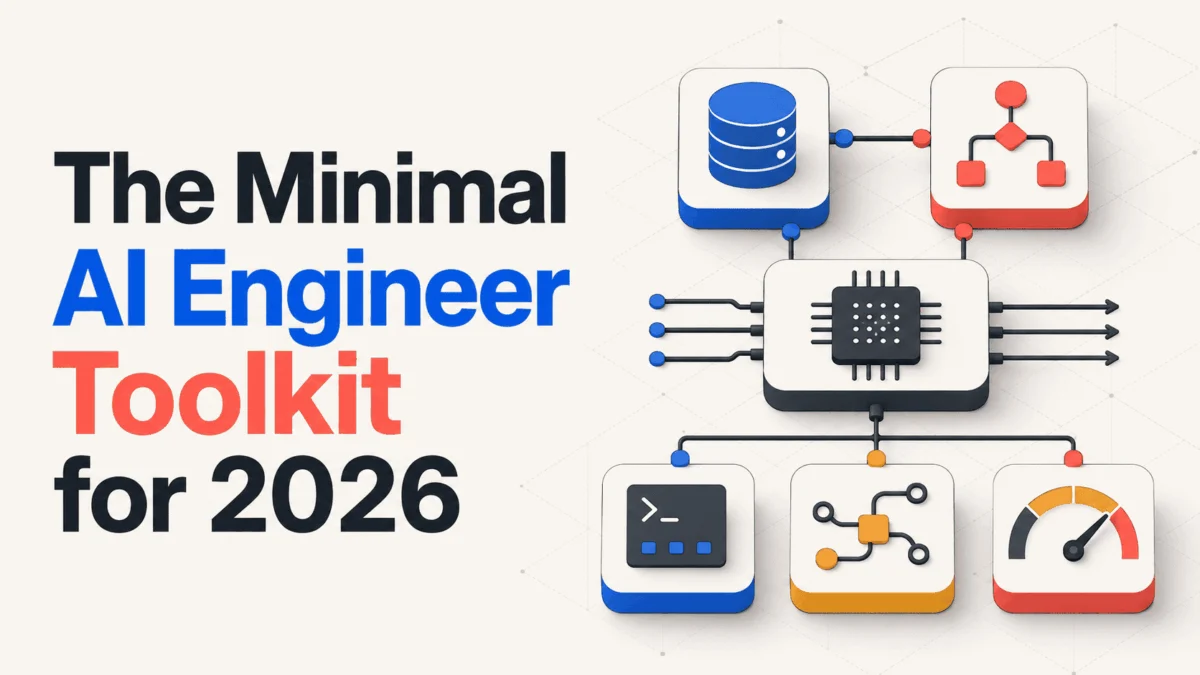
The minimal, production-grade stack—a graph-based orchestrator, MCP for integration, local SLMs for development, structured output enforcement, and an automated evaluation engine—covers 95% of real-world use cases. Everything else is noise.
For engineers looking to build robust systems, the advice is simple: identify your current bottleneck and start there. If your development cycle is slow, invest in local SLMs. If your deployments are unpredictable, build your evaluation suite. The industry has reached a point of maturity where the tools are no longer the barrier; the barrier is now our willingness to adopt the discipline required to treat AI as a rigorous engineering project.