Executive Summary: A Symbiotic Solution to a National Crisis
In a landmark development for utility management, Southern Water has announced a strategic partnership with the acoustic sensing firm Lightsonic. The initiative aims to combat one of the most persistent infrastructure challenges in the United Kingdom: the colossal wastage of drinking water through a decaying, subterranean pipe network.
By leveraging the existing, vast infrastructure of Openreach’s fibre optic network, Lightsonic has developed a non-intrusive, highly scalable method to detect leaks in real-time. This collaboration is not merely a technical upgrade; it is a fundamental shift in how the UK approaches water conservation. With the technology already credited with saving over 4 million litres of water per day across a 650km pilot stretch, the rollout signals a turning point in the battle against water scarcity, climate-induced stress, and aging utility networks.
The Scale of the Challenge: Why Every Drop Counts
The UK’s water infrastructure is a relic of a bygone era. Much of the national network was laid decades, or even centuries, ago, and it is failing under the pressure of modern population growth and a rapidly changing climate.
Current industry estimates suggest that the UK loses roughly 2.6 billion litres of water every day through leaks. This staggering volume is not just an operational failure; it is an environmental and economic crisis. As the UK grapples with its hottest summers on record, the fragility of the water supply has become a front-page issue. Recent government plans for new reservoirs to mitigate water stress have faced significant setbacks, with major projects delayed by up to five years.
With record-breaking global temperatures becoming the new normal, the traditional methods of "find-and-fix"—which rely on manual inspections, acoustic loggers, and guesswork—are no longer sufficient. The need for a proactive, digital, and continuous monitoring system has never been more urgent.
A Chronology of Innovation: From Pilots to Nationwide Potential
The journey toward this partnership began not in a water treatment plant, but in the telecommunications laboratory.
- Early 2024: Lightsonic and Openreach began exploring the potential of Distributed Acoustic Sensing (DAS). They theorized that because fibre optic cables and water pipes often run parallel beneath the same streets, the vibrations caused by a high-pressure leak could be detected by the fibre itself.
- March 2024: The first major field trials were conducted alongside Affinity Water. The results were immediate and conclusive: the system could pinpoint leaks with remarkable accuracy, turning a passive communication cable into a hyper-sensitive, subterranean "ear."
- September 2026: Following the success of these trials, Southern Water formally entered into a partnership with Lightsonic. This announcement marked the move from experimental pilot programs to an integrated, operational asset management strategy.
- Present Day: The technology is currently monitoring 650km of the network, with plans for rapid expansion. The partnership effectively transforms the UK’s digital backbone into a utility-monitoring powerhouse.
How It Works: The Physics of Leak Detection
The brilliance of the Lightsonic solution lies in its simplicity and its utilization of existing assets.
The Acoustic Signature
Water leaking from a pressurized pipe creates a distinct acoustic signature—a vibration that travels through the surrounding soil. While the human ear cannot detect these subtle disturbances, a fibre optic cable is exceptionally sensitive to physical movement.
The Optical Impact
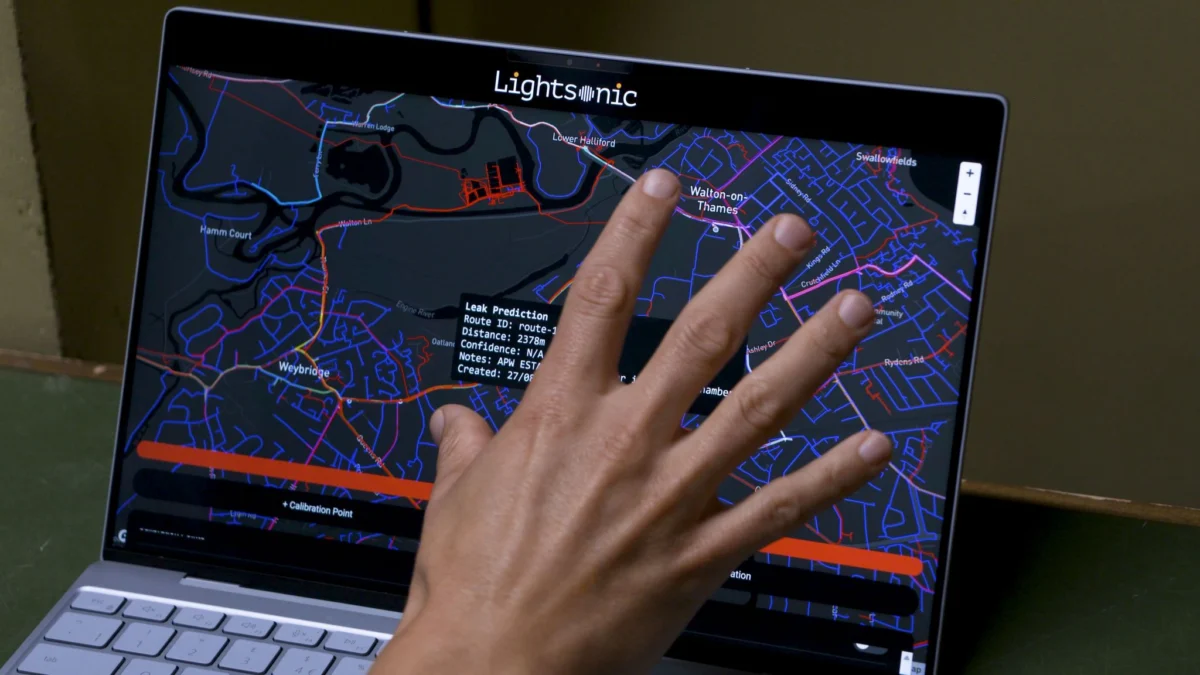
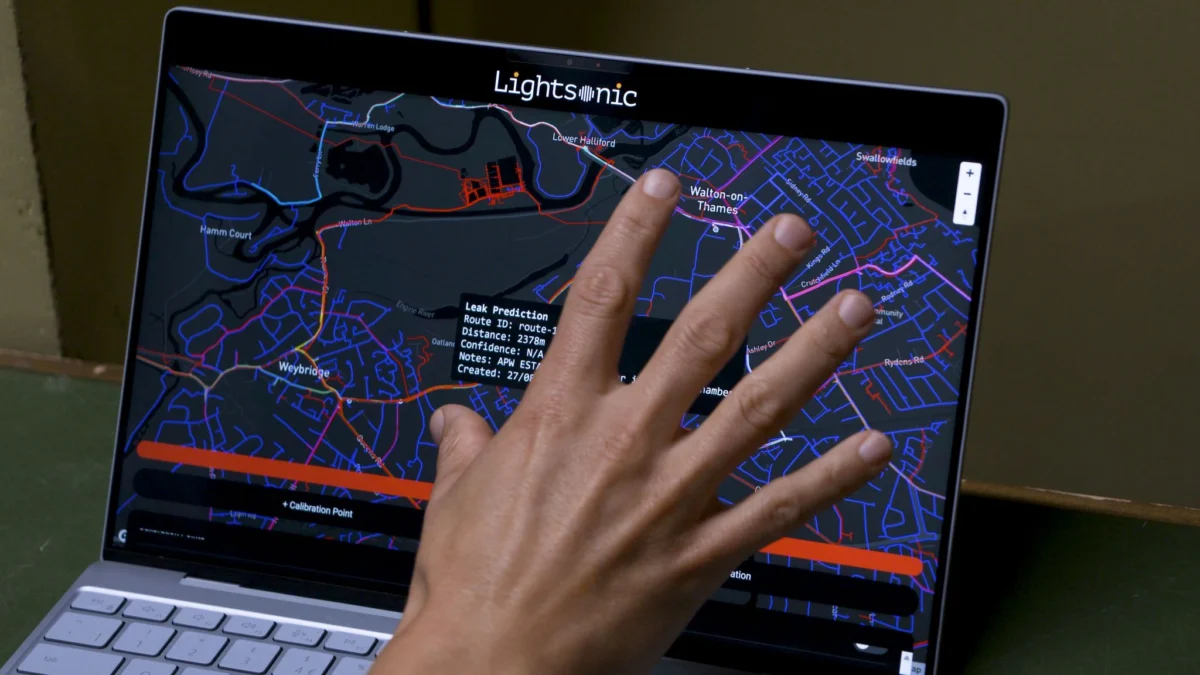
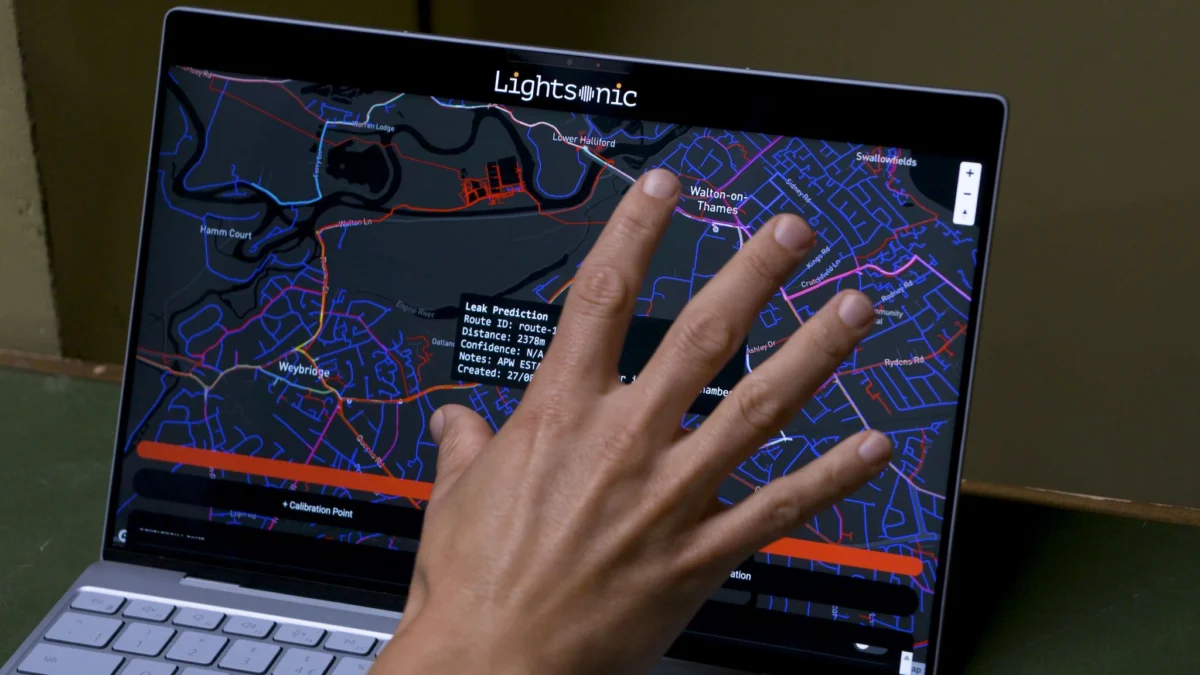
Lightsonic installs specialized acoustic sensing units at points along Openreach’s fibre network. When a leak creates vibrations in the soil, those vibrations transmit to the fibre cable, causing microscopic impacts on the optical signal traveling through the glass strands.
Data Processing
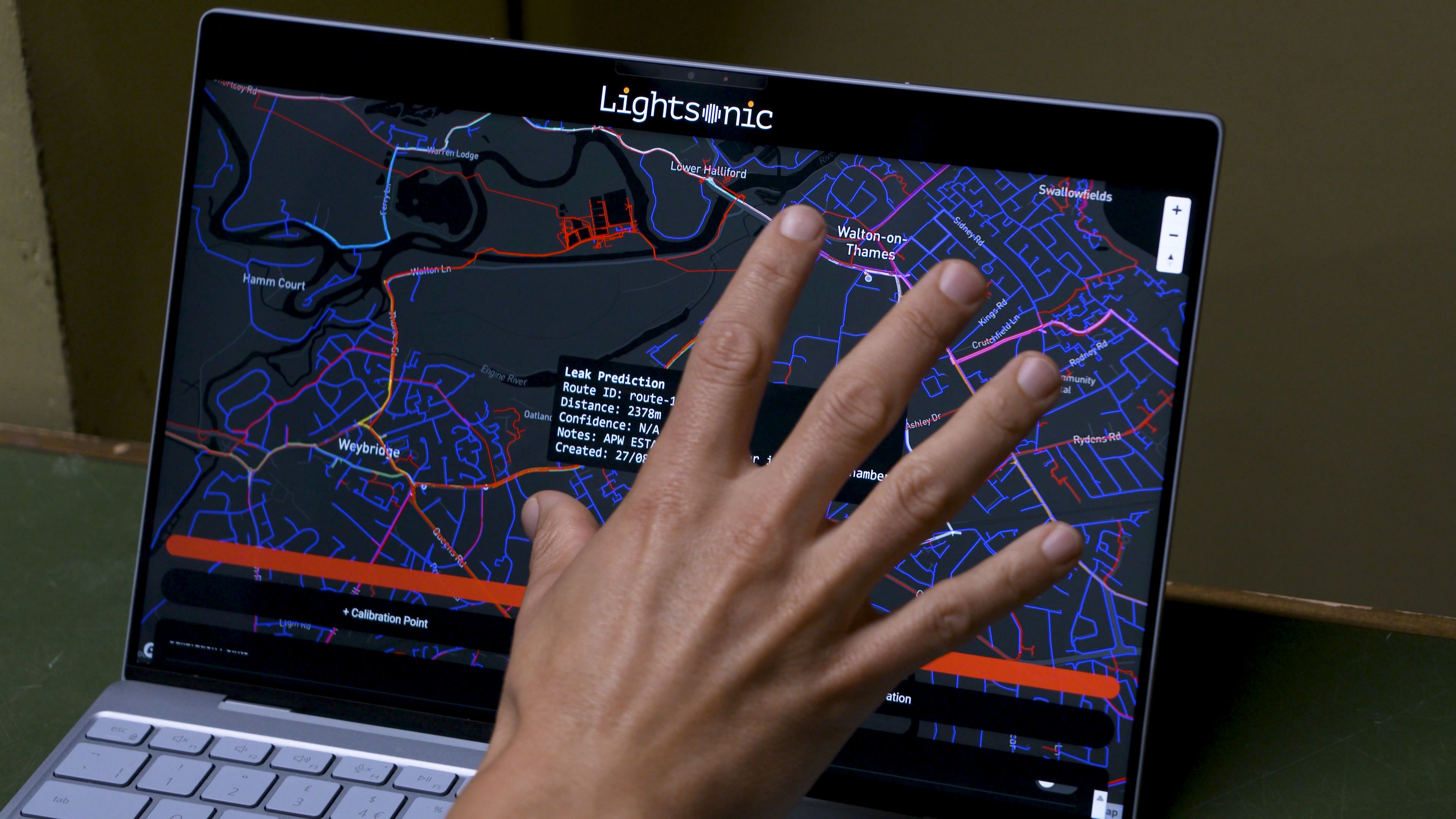
The system uses advanced algorithms to translate these minute optical fluctuations into a precise map. By continuously monitoring these signals, the software can differentiate between the background noise of traffic or construction and the persistent, high-frequency "hiss" of a leaking pipe. This allows water companies to prioritize repairs based on the severity of the leak, effectively optimizing maintenance crews’ time and minimizing disruption to the public.
Supporting Data and Performance Metrics
The efficacy of the Lightsonic system is backed by hard, empirical data. According to performance reports:
- Water Recovery: The technology is currently saving over 4 million litres of water daily.
- Detection Efficiency: The system reports a detection rate of approximately 1.2 million litres of water saved per day for every 100km of network covered annually.
- Cost-Effectiveness: Because the system utilizes the already-buried fibre optic network, the cost of deployment is a fraction of what would be required to install a dedicated, standalone sensor network.
- Operational Longevity: Unlike battery-operated sensors that require frequent maintenance and replacement, the fibre-based sensing units provide a permanent, low-maintenance monitoring solution.
Official Perspectives: Bridging the Digital and Utility Divide
The Vision of Lightsonic
Tommy Langnes, CEO of Lightsonic, emphasizes the necessity of this technology in the context of the climate crisis. "Ageing infrastructure, leaking networks, and mounting climate pressure are converging, causing major water stress," Langnes stated. "By utilising existing fibre optic infrastructure, we have a solution that can be quickly and effectively scaled across the UK. The industry needs a quick and comprehensive response, and that is what we offer."
The Strategic Shift for Openreach
For Openreach, the partnership represents a diversification of their value proposition. Trevor Linney, Director of Network Technology at Openreach, highlighted the broader utility of their network.
"The results of our existing pilots with Lightsonic show that our new full fibre infrastructure can deliver value far beyond broadband," Linney noted. "It could prove to be a real game-changer in solving real-world challenges like water conservation. Combining Lightsonic’s technology with the reach of Openreach’s Full Fibre network makes continuous utility monitoring genuinely scalable, without the cost and disruption of building a separate sensor network."
Implications for the Future of UK Infrastructure
The implications of this partnership extend far beyond the water sector. It signals a new era of "Multi-Utility Infrastructure," where the physical assets of one industry—in this case, telecommunications—are used to solve the systemic failures of another.
1. Environmental Stewardship
Reducing water loss is a cornerstone of meeting environmental targets. Every litre saved is a litre that does not need to be pumped, treated, or transported, significantly reducing the carbon footprint of water utilities.
2. Economic Efficiency
Water companies are under immense pressure to keep consumer bills affordable while upgrading infrastructure. By using the fibre network, companies avoid the massive capital expenditure of "dig-and-detect" methods. The savings generated by this technology can be directly reinvested into replacing old pipes, creating a virtuous cycle of infrastructure renewal.
3. Resilience in a Warming World
With climate change threatening to make water a more precious and contested resource, the ability to monitor the network in real-time is not a luxury; it is a security necessity. This system provides the UK with a "digital twin" of its water network, allowing for predictive maintenance that stops small leaks from becoming major, catastrophic bursts.
4. A Blueprint for Global Adoption
The challenges faced by the UK—aging urban infrastructure and climate-driven water scarcity—are global problems. If the Lightsonic/Openreach model proves successful at scale, it could be exported to cities worldwide, from the crumbling infrastructure of the American Rust Belt to the rapidly growing, water-stressed megacities of Asia and the Middle East.
Conclusion: A New Standard for Utility Management
The partnership between Southern Water, Lightsonic, and Openreach is a testament to the power of cross-industry innovation. By reimagining the role of fibre optic cables, the UK is taking a giant leap toward a more efficient, sustainable, and resilient future.
As the nation faces the dual challenges of a changing climate and aging infrastructure, this technological synergy provides a much-needed ray of hope. It demonstrates that the solutions to our most complex problems often lie right beneath our feet—in the infrastructure we have already built, waiting to be utilized in smarter, more creative ways.
The success of this initiative will be measured not just in litres saved, but in the long-term viability of the UK’s water security. For now, the "hiss" of a leaking pipe is being silenced by the silent, rapid pulses of light traveling through our fibre network—a fitting technological answer to an ancient challenge.