The New Frontier of Conflict
The year 2040 is no longer a distant abstraction for the Pentagon; it is a hard, looming deadline. As adversaries accelerate their capabilities and the commercial space sector evolves at an unprecedented pace, the United States military is bracing for a future where space is not merely a supportive domain for terrestrial operations, but a primary theater of high-intensity conflict.
In a landmark move, U.S. Space Command (SPACECOM) has released its inaugural foundational assessment, Space Warfighting Environment 2040. This 37-page document serves as the first installment in a strategic "trilogy" designed to redefine how the Joint Force envisions, prepares for, and executes operations beyond the Kármán line. According to SPACECOM officials, the document is not a predictive forecast but a necessary framework—a "reality check" intended to synchronize the efforts of the military, intelligence agencies, and industry partners in the face of a rapidly deteriorating security environment.
Chronology of a Shifting Doctrine
The push for this assessment began as the realities of modern warfare—characterized by rapid innovation cycles and the rise of proliferated Low Earth Orbit (pLEO) satellite constellations—began to outpace existing U.S. military doctrine.
- July 27, 2026: Outgoing SPACECOM Commander Gen. Stephen Whiting officially signs the Space Warfighting Environment 2040 document, setting the stage for a new era of strategic planning.
- August 11, 2026: A SPACECOM official from the Joint Forces Development and Training team reveals the document’s existence to the defense press, framing it as the "warfighter’s" perspective on the future.
- August 12, 2026: Gen. Whiting provides further context at the Army Space and Missile Defense Symposium in Huntsville, Alabama, emphasizing the acute vulnerability of ground infrastructure.
- Late August 2026: The White House issues a presidential memorandum (NSPM-17) mandating a 180-day plan to secure critical federal launch infrastructure, aligning with SPACECOM’s warnings about static ground node vulnerabilities.
The roadmap ahead includes two subsequent documents: The Space Futures Series, which will provide issue-driven analysis on specific problem sets, and The Space Warfighting Concept, which will dictate the operational "how-to" for achieving victory in the cosmos.
The Strategic Framework: Four Key Challenges
The assessment identifies four emerging challenges that will dictate the nature of future conflict. While the document remains broad to allow for flexibility, it makes clear that the status quo is insufficient.
First, the crowded nature of orbit is no longer a technical nuisance; it is a tactical constraint. As thousands of commercial and state-owned satellites populate the sky, the ability to maneuver, identify threats, and sustain "trusted effects" becomes exponentially harder.
Second, the contested nature of the domain is accelerating. The document warns that innovation cycles that once spanned decades now unfold in months. Adversaries are actively developing kinetic and non-kinetic capabilities designed to negate U.S. advantages, including "gray-zone" operations that exist just below the threshold of declared war.
Third, the centrality of space to military operations means that any degradation in space capabilities will have immediate, catastrophic impacts on terrestrial battlefield efficacy.
Finally, the requirement for speed—fueled by artificial intelligence—means the action-reaction cycle of combat will be measured in seconds, necessitating decentralized command and control structures.
Supporting Data: The Case for Resilience
The document posits that advantage in 2040 will belong to the side that can best manage "kill-webs"—mesh networks of AI-enabled sensors and shooters—rather than relying on a few massive, exquisite platforms.
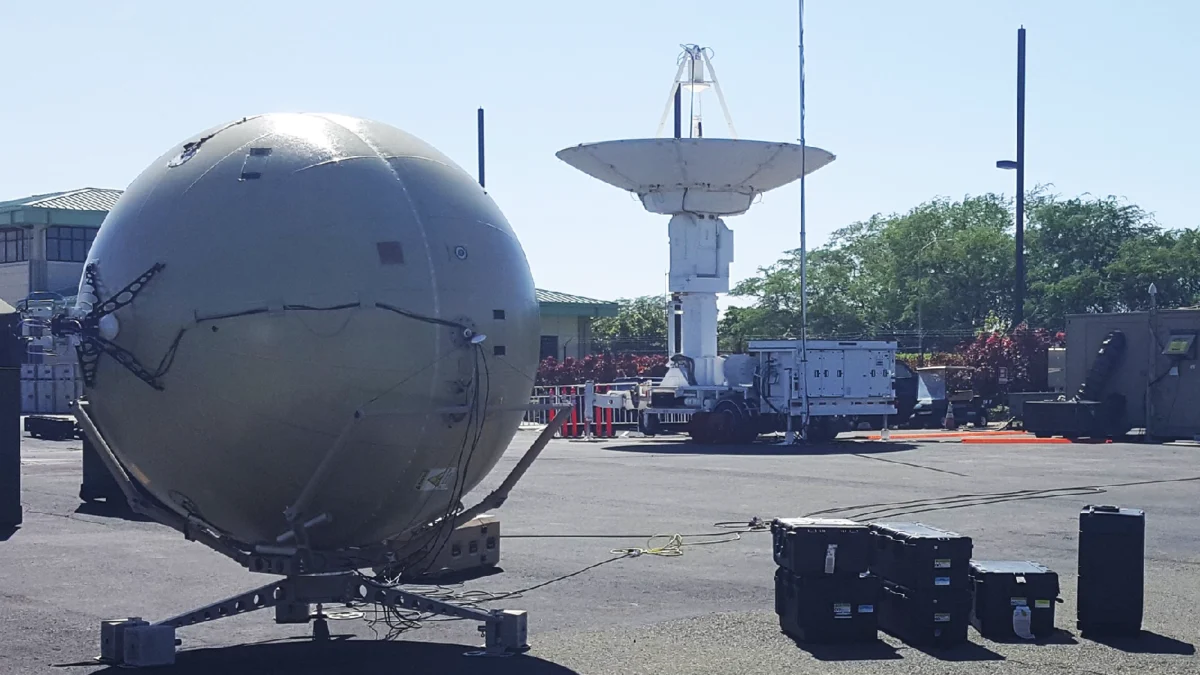
A critical highlight of the assessment is the focus on ground segment vulnerability. Gen. Whiting and his team argue that the U.S. has been overly reliant on large, fixed-site receivers and processing centers. These static nodes are "single points of failure" that are increasingly targeted by cyber intrusions, directed energy, and precision strikes. The document explicitly states: "Static ground nodes, once the norm, will become liabilities."
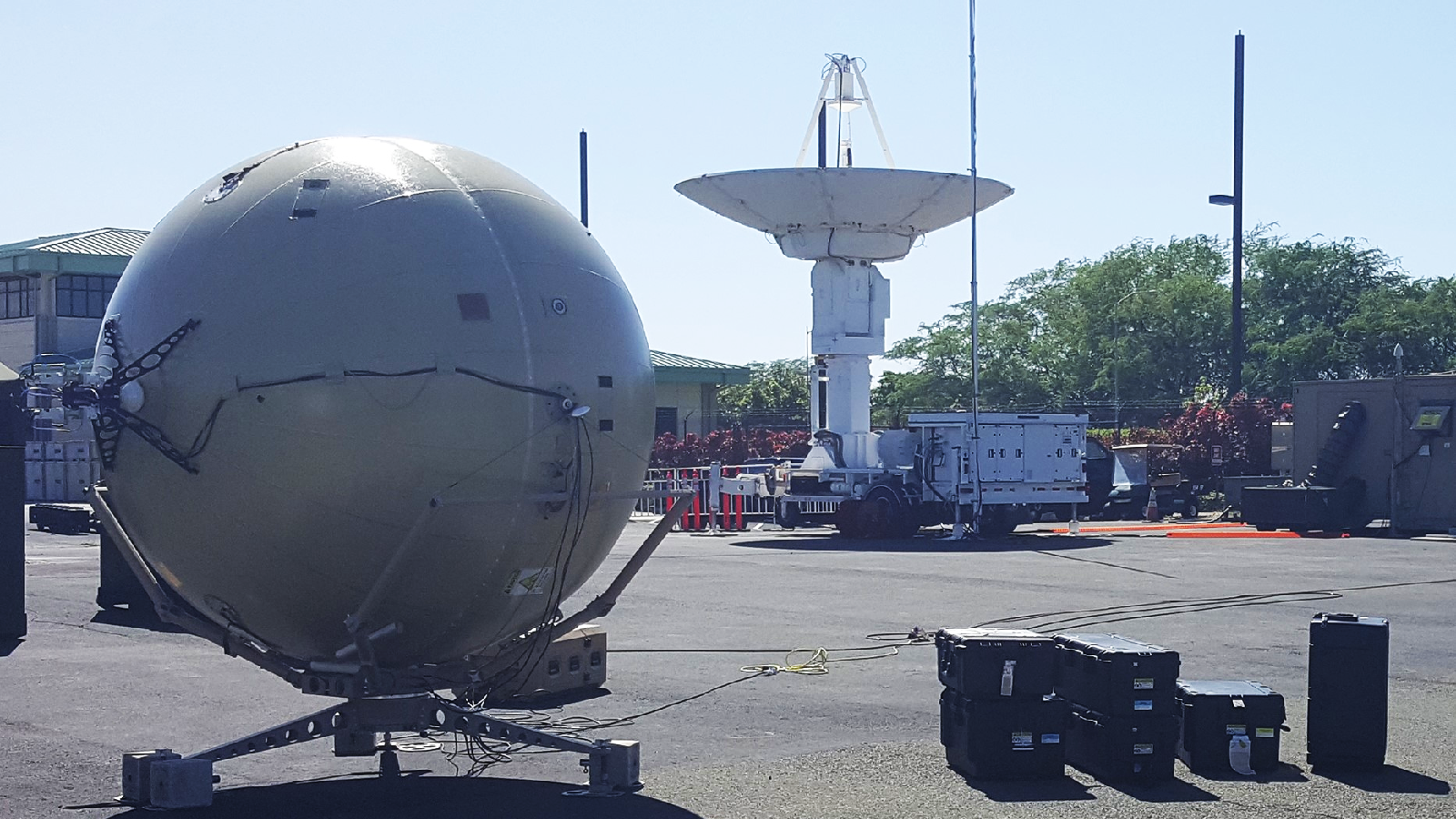
This shift in thinking is supported by recent geopolitical events. Reports of strikes in the Middle East near air bases housing joint forces have underscored that ground infrastructure is not "behind the lines" in the traditional sense; in the space age, the ground segment is an active, vulnerable part of the front line.
Official Responses and Expert Analysis
The reception to the document within the defense and policy community has been a mixture of praise for its clarity and concern over its narrow, combat-centric focus.
The Warfighter Perspective:
SPACECOM officials emphasize that this document is "warfighter-first, not technology-first." By focusing on the how of warfare rather than the what of acquisition, the command is attempting to force senior military leaders—many of whom are not space experts—to integrate space-thinking into every branch of the Joint Force.
The Policy Critique:
Jessica West, a veteran space policy analyst at Project Ploughshares, offers a more critical perspective. She characterizes the document as a "warfighting concept dressed as a futures document." West argues that while the assessment is masterfully written to address the operational realities of a contested environment, it lacks a broader vision for the "purpose" of U.S. power.
"It is a vision of power with remarkably little account of the purpose that power is meant to serve," West noted. She expressed concern that by focusing so heavily on kinetic and tactical victory, the U.S. might be neglecting the diplomatic and normative work required to ensure space remains a sustainable environment for all of humanity.
The "Complementary" View:
Victoria Samson of the Secure World Foundation highlighted the document’s focus on maneuverability not just in orbit, but across the electromagnetic spectrum and on the ground. She noted that the alignment between SPACECOM and the Space Force, while nuanced, shows a maturing of the U.S. military’s space culture. While the Space Force focuses on the "service" requirements (organizing, training, and equipping), SPACECOM is focused on the "combatant" requirements (the actual fight).
Implications: The Cislunar Expansion
Perhaps the most forward-looking aspect of the report is its inclusion of cislunar space—the vast region between the Earth and the Moon—as a legitimate domain of military competition.
The document stops short of predicting a war on the lunar surface, instead framing the interest in cislunar space as a matter of "positional advantage." The gravity wells, Lagrange points, and orbital corridors of this region represent "high ground" in a way that traditional LEO orbits cannot. The assessment suggests that the first nation to effectively map and navigate these regions will gain a "first-mover advantage" that could prove insurmountable in a long-term conflict.
This acknowledgment reflects the U.S. Department of Defense’s mounting anxiety regarding China’s rapid lunar exploration program. By stating that the U.S. must begin thinking about these implications "now rather than waiting until the problem is fully upon us," SPACECOM is essentially signaling a pivot in resource allocation toward deep-space domain awareness.
Conclusion: Preparing for an Uncertain Future
The Space Warfighting Environment 2040 is more than a policy paper; it is a call to action for a military bureaucracy that has historically been slow to adapt to the pace of technological change. By acknowledging that ground infrastructure is vulnerable, that AI will redefine the speed of war, and that the "battlefield" now extends to the moon, SPACECOM has laid out a demanding roadmap.
The challenge for the next decade will be balancing this warfighting readiness with the need for international stability. As the Joint Force begins to implement these new concepts, the world will be watching to see if this "framework for victory" leads to a more secure space environment, or to a new, more dangerous phase of the great power competition. For now, the command is clear: in the high-stakes theater of 2040, the only way to ensure success is to assume that the threat is already here.