By Andrian Visnevschi, CEO and CTO of ITcare
At 03:00 next Sunday, somewhere in the United Kingdom, a lone shift worker will be responsible for the integrity of a complex fibre network. It is worth pausing to ask: who exactly is that individual? Are they a seasoned engineer capable of navigating a BGP table, or are they merely a dispatcher trained to acknowledge alarms and wait for someone else to wake up? For a growing number of UK fibre operators, the honest answer is the latter. In many cases, for 128 of the 168 hours in a week, there may be no substantive response at all.
For years, this operational fragility was survivable. The market rewarded rapid deployment, capital expenditure (CapEx) efficiency, and the sheer volume of "premises passed." However, that era is drawing to a definitive close. As the UK broadband landscape shifts from a growth-at-all-costs phase to a period of intense consolidation and fiscal discipline, the criteria for survival have fundamentally changed.
The Market Shift: From Expansion to Consolidation
The statistics surrounding the UK fibre market are telling. According to recent Ofcom reporting, full-fibre coverage has reached more than three-quarters of UK premises. The gold rush of building infrastructure is meeting the hard reality of market saturation. Simultaneously, data from AlixPartners suggests that nearly half of all UK fibre operators—the so-called "altnets"—must refinance their debt by the end of 2026.
Crucially, they will be doing so at interest rates significantly higher than those secured during the low-interest-rate environment of the previous decade. The lending community has evolved: they are no longer interested in funding abstract "premises passed" targets. Today, they fund take-up, recurring revenue, and, most importantly, operational cost discipline. The sorting criterion for the next generation of successful operators is no longer how much network you built, but how effectively and reliably you can run it.
The Operational Gap: Why "DIY" NOCs are Failing
Most operations leaders at altnets are acutely aware of their internal gaps. They know that overnight coverage is perilously thin, that their network inventory has drifted into inaccuracy, and that their core change-management processes rely on a single individual being awake and available. What these leaders often lack is not the awareness of the problem, but the "headcount economics" required to solve it.
The Arithmetic of a 24/7 NOC
The math behind a standard 24/7 Network Operations Center (NOC) is often misunderstood. Covering a single seat 24/7 requires more than just three or four people. If you take the 168 hours in a week and divide them by a standard 40-hour work week, you get the illusion that four engineers suffice.
However, any experienced manager knows that people require rest, leave, training, and sick days. A truly sustainable, resilient team requires at least six engineers—or five engineers plus a senior lead. Furthermore, these cannot be six junior-level staff members. A NOC seat that can actually resolve incidents at 03:00, rather than just logging them, requires a high level of technical competency.
In the UK market, the cost of staffing such a team—including base salaries (ranging from £33,000 to £50,000 and beyond), employer costs, shift premiums, recruitment, and specialized tooling—can easily exceed £350,000 per year. For an operator facing the pressures of consolidation, building this capability in-house is an expensive, resource-intensive endeavor that forces them to compete for a dwindling pool of scarce engineering talent.
What We Find Inside Real-World Networks
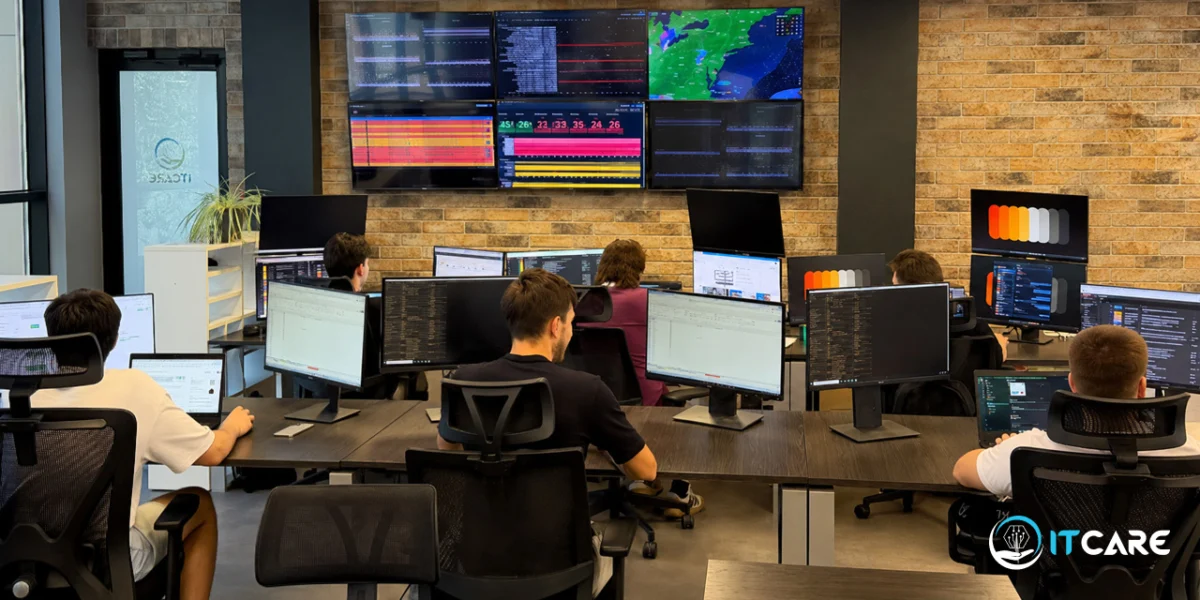
At ITcare, we specialize in managed NOC services and network architecture for ISPs, data centre operators, and hosting providers across North America and Europe. When we are brought in to audit or extend an operator’s network operations, the patterns are strikingly consistent:
- Inventory Decay: The network inventory is inaccurate in ways that management has yet to quantify.
- Alarm Fatigue: Monitoring systems are either blind to critical issues or produce a deluge of noise that hasn’t been triaged in months.
- Knowledge Silos: The actual topology of the network exists solely in the mind of one senior engineer.
None of this reflects poorly on the teams involved. It is simply a symptom of an operational function built during the "build era," now buckling under the weight of an "operate era" load it was never designed to handle.
The Role of the Specialist Model
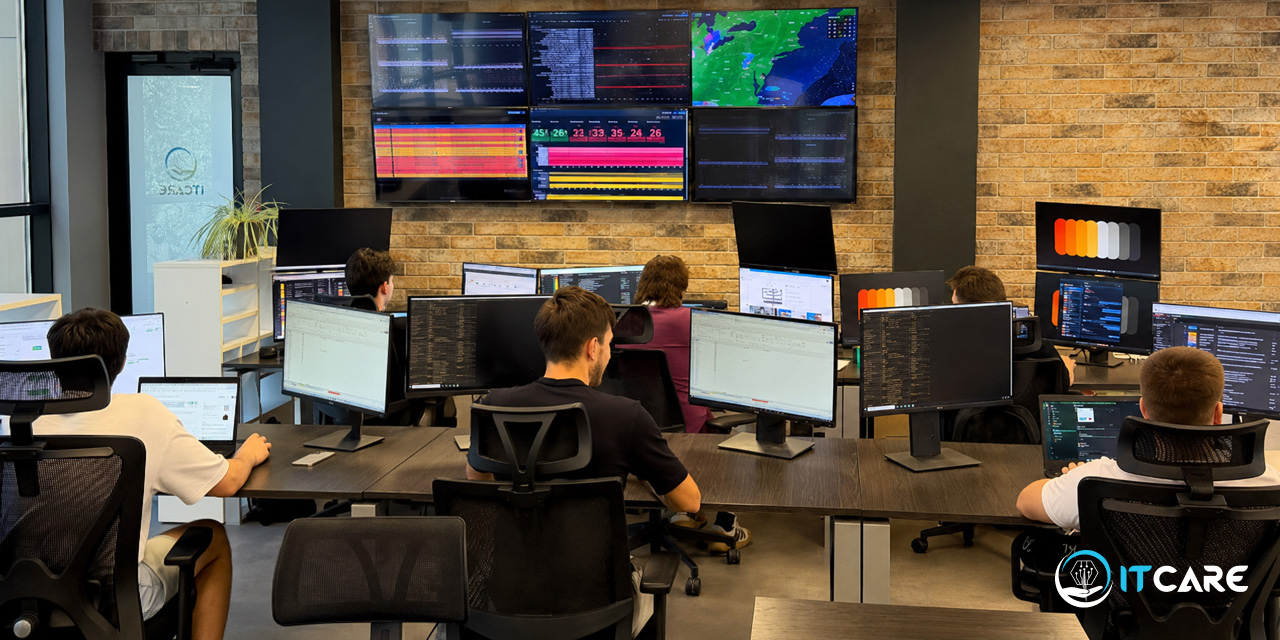
The managed service model exists to bridge this gap. By leveraging a dedicated team of service provider engineers, operators can hand off the 24/7 burden, the change discipline, and the complex escalations. This team can function as a standalone unit or as a seamless extension of the operator’s existing staff.
The primary advantage is cost-efficiency and technical depth. By outsourcing the firefighting, in-house engineers are freed from the cycle of reactive maintenance and can refocus their efforts on the strategic work that actually grows the business.
The AI Reality: HORA and the "Read/Write" Distinction
At every major industry event, such as the upcoming Connected Britain, AI is the dominant theme. It is important, however, to separate the marketing hype from the functional reality. We developed HORA, an AI network operations platform, but we did so with a conservative, engineering-first philosophy.
AI on the "Read" Side
AI earns its keep in network operations primarily on the "read" side. HORA excels at bringing metrics, logs, flows, BGP state, and discovered topology into a unified pane of glass. An AI "engineer" can correlate across these diverse data points to guide a human to a root cause in minutes rather than hours. This is the secret to enabling a lean team to operate a significantly larger network. It is also the key to M&A integration: when two networks with two half-accurate inventories are merged, automated discovery turns a theoretical integration plan into a functional reality.
The "Write" Side: Deterministic Automation
The "write" side—where actual changes are pushed to devices—is fundamentally different. We keep AI off the write side by architectural design. The AI proposes, but a human must approve. Any change that touches a device must be the result of deterministic automation that a human has written and audited. Any AI vendor claiming that their system can autonomously manage and change network configurations without human oversight is likely selling you a demo, not an operational solution.
The Strategic Imperative: The Operate Era
The strategic question for every network operator as we move into the next fiscal cycle is not "how much network do we have?" but rather, "would the way our network is currently operated survive a rigorous due diligence process?"
If the answer is no, operators should take heart: this is a fixable problem, and it is far less expensive to solve than most realize. The transition from the "build era" to the "operate era" requires a shift in mindset. It requires acknowledging that operational excellence is a competitive advantage that can no longer be ignored or deferred.
Looking Ahead: Connecting at Connected Britain
As the industry gathers at Connected Britain on 9 and 10 September, the conversation must pivot toward these operational realities. We invite operators to visit us at Stand 140. Bring us your hardest operational problem—the inventory nobody trusts, the alarm queue nobody reads, or the, "we’ll fix that later" bottleneck that keeps you up at night. We are prepared to show you exactly how an optimized approach to NOC management and AI-driven diagnostics can transform your network operations.
For those who wish to prepare for the event, I encourage you to reach out to me directly at [email protected] to set up a consultation. The "operate era" is here; the question is whether your network is ready to meet it.
Andrian Visnevschi is the CEO and CTO of ITcare and holds the JNCIE-SP #2975 certification. ITcare provides managed NOC and network engineering services to global ISPs, data centre operators, and hosting providers, and is the developer of HORA, an AI-driven network operations platform.