The landscape of software development is undergoing a seismic shift. For years, the integration of Large Language Models (LLMs) into the coding workflow was tethered to cloud-based APIs, requiring developers to sacrifice data privacy and incur recurring costs for the sake of intelligent code assistance. Today, the democratization of powerful, open-weights models has reached a turning point. With the arrival of Qwen3.8-27B, developers can now harness a high-reasoning, code-centric AI agent entirely on their local machines.
Thanks to the synergy between Ollama and OpenCode, the arduous process of configuring complex inference servers and managing API endpoints has been replaced by a streamlined, three-command workflow. This article explores how this technical breakthrough is empowering developers to build, test, and deploy applications without ever leaving their local hardware.
Main Facts: The Power of Localized AI Agents
The Qwen3.8-27B model represents a significant milestone in the open-source AI ecosystem. Designed specifically to excel at complex reasoning, multi-step tool use, and long-horizon agentic tasks, it has quickly become a favorite for those working with expansive local codebases.
The primary advantage of this setup is sovereignty. By running the model locally:
- Privacy is Paramount: Sensitive proprietary codebases never leave the developer’s machine, eliminating the risk of cloud-based data leakage.
- Latency Reduction: By utilizing local GPU resources, the feedback loop between prompting the agent and receiving actionable code is drastically shortened.
- Cost Efficiency: Once the hardware is acquired, the "cost per inference" is effectively zero, circumventing the usage-based pricing models of major AI providers.
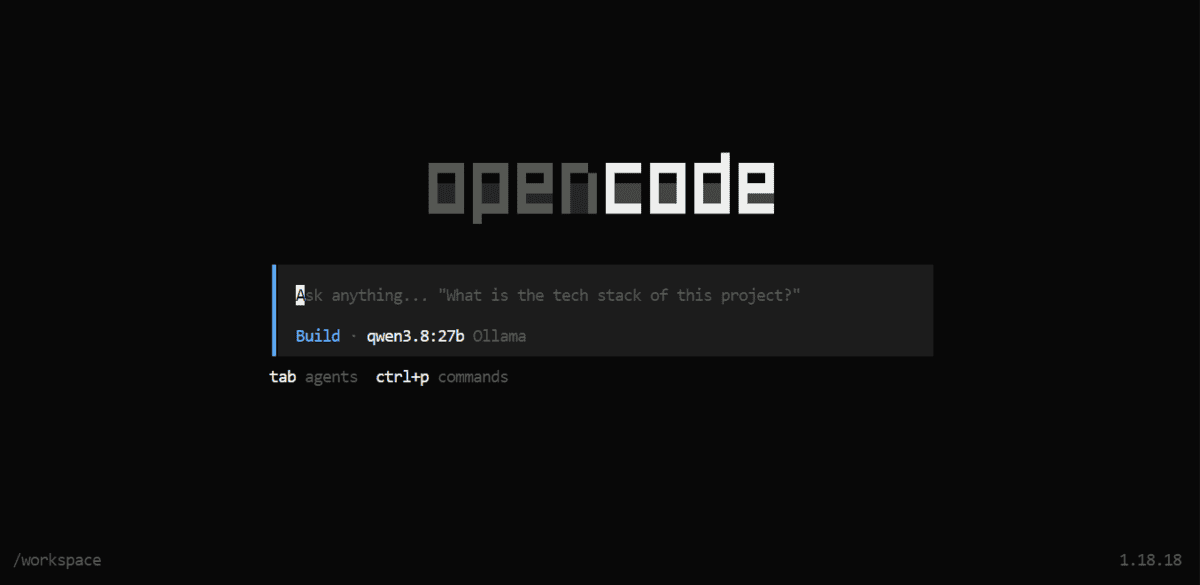
The integration of OpenCode—a terminal-based interface (TUI)—provides a seamless environment for the model to interact with the file system, execute tests, and iterate on logic. This combination transforms a static LLM into a dynamic agent capable of autonomous development tasks.
Chronology: The Three-Command Deployment
The simplicity of the modern local AI stack is best illustrated by the brevity of its installation. Below is the chronological progression of setting up a fully functional, GPU-accelerated coding environment.
Step 1: Installing the Ollama Infrastructure
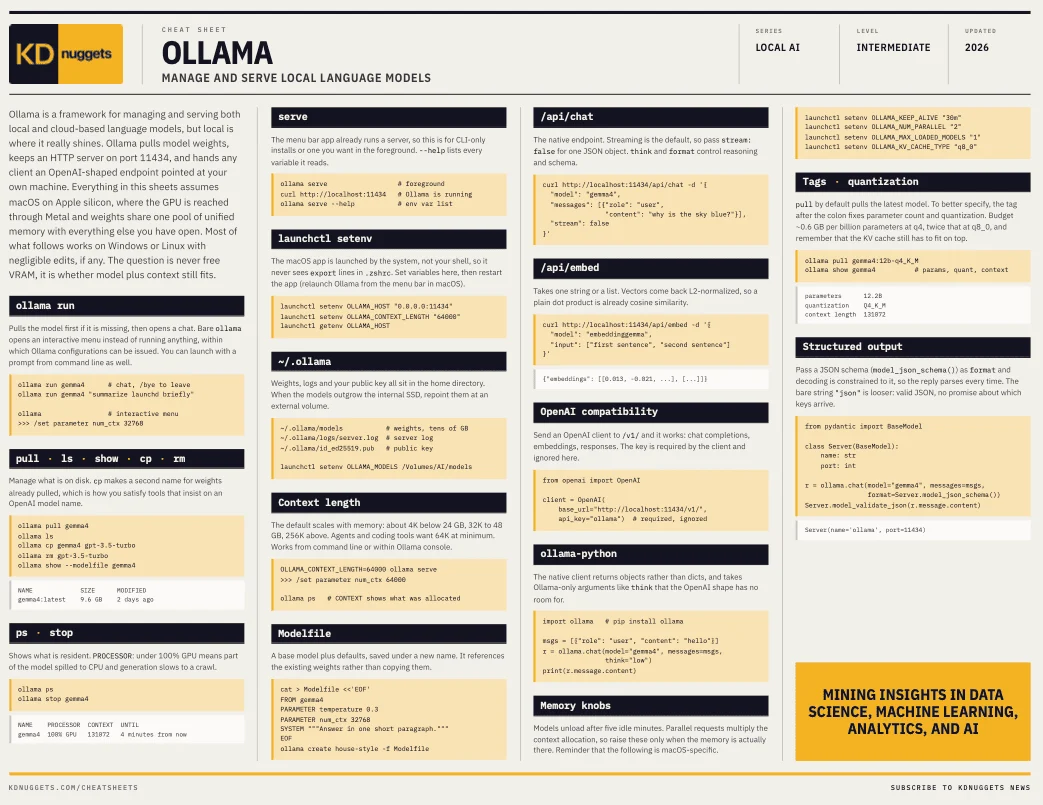
Ollama has emerged as the industry standard for managing local model runtimes. It abstracts the complexity of model weight management and memory allocation.
- Command:
curl -fsSL https://ollama.com/install.sh | sh - Action: This script fetches the necessary binaries and configures the system environment to handle LLM requests, creating a bridge between the operating system and the GPU drivers.
Step 2: The Server Initialization and Model Retrieval
With the infrastructure in place, the second command acts as both a gatekeeper and a downloader.
- Command:
ollama serve & ollama pull qwen3.8:27b - Action: This command launches the Ollama background daemon and initiates the download of the Qwen3.8-27B model files. By running these in tandem, the developer prepares the "engine" (the server) and "loads the fuel" (the model) simultaneously. Keeping this terminal active allows the user to monitor real-time server logs, providing transparency into how the model consumes system resources during the loading phase.
Step 3: Launching the OpenCode Agent
The final piece of the puzzle is the interface.

- Command:
ollama launch opencode --model qwen3.8:27b - Action: This command invokes the OpenCode TUI, pre-configured to utilize the Qwen3.8-27B model. If OpenCode is absent, the system automatically triggers an installation prompt. Once active, the developer is presented with an interactive terminal environment where they can assign coding tasks, debugging objectives, or refactoring challenges.
Supporting Data: Hardware Requirements and Performance
Deploying a 27B parameter model is not a trivial task for entry-level hardware. The model’s efficacy is directly correlated to the available VRAM on the host machine.
The Hardware Benchmark
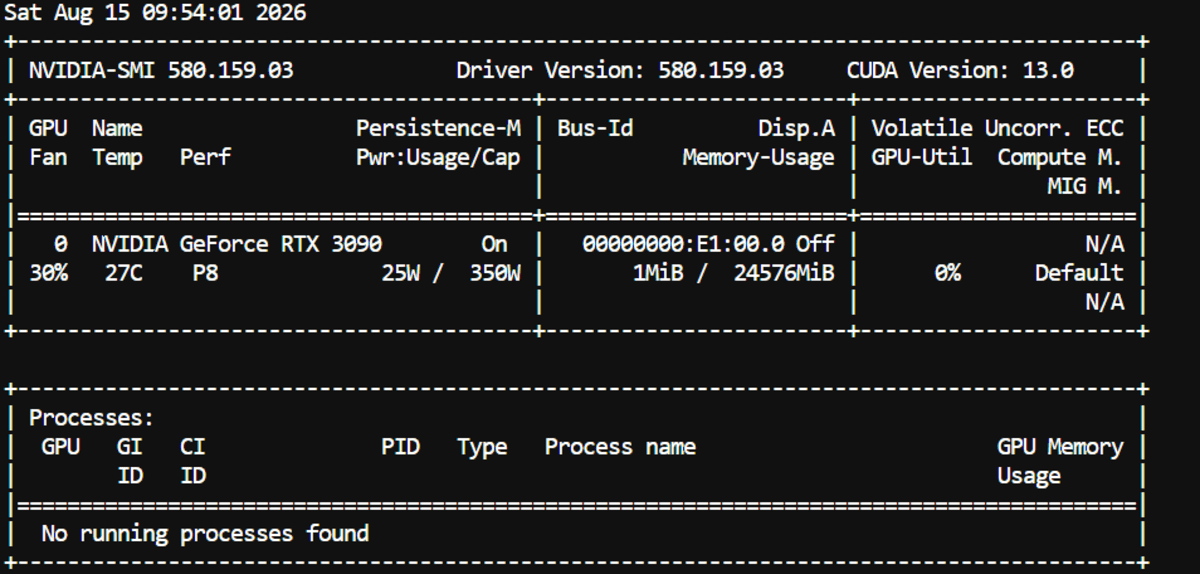
For this deployment, an RTX 3090 with 24 GB of VRAM serves as the ideal benchmark. Since the Qwen3.8-27B model (in a standard quantized state) occupies approximately 18 GB, this hardware configuration allows the model to reside entirely within the GPU memory. This is critical; when the model fits within the VRAM, inference speeds are near-instantaneous.
Offloading Strategies
For developers with less powerful GPUs, Ollama utilizes an intelligent offloading strategy. If the model size exceeds available VRAM, the system splits the computation between the GPU and the system’s RAM. While this ensures the model will run, it results in a performance penalty, as the bottleneck shifts from the GPU’s high-speed memory to the system’s RAM bus. Consequently, 32 GB of system RAM is recommended as a baseline for users who cannot dedicate 24 GB of VRAM exclusively to the model.

Execution Speed
During real-world testing, the model demonstrated remarkable efficiency. Once the initial "cold start" (loading the weights into memory) was complete, the agent was capable of scaffolding a complete Python application, writing unit tests, and providing a comprehensive project summary in under two minutes.
Implications: The Democratization of AI Engineering
The shift toward local AI coding agents carries profound implications for the software industry, particularly for independent developers, startups, and enterprises with stringent security requirements.
Breaking the "Expertise Barrier"
Historically, running high-performance models required a deep understanding of llama.cpp, GGUF quantization, and complex container orchestration. By simplifying this to a three-command process, the barrier to entry has been lowered to include "non-technical" users or those who simply wish to use AI without becoming infrastructure engineers.

Privacy as a Product Feature
As enterprise concerns regarding the use of proprietary code in cloud-based LLMs continue to mount, the ability to maintain a 100% air-gapped coding environment is no longer just a luxury—it is a competitive necessity. Tools like Qwen3.8-27B allow companies to leverage the reasoning capabilities of state-of-the-art models while keeping their intellectual property within their own perimeter.
The Future of "Agentic" Workflow
We are witnessing a transition from "AI as a chatbot" to "AI as a teammate." An AI agent that can browse the file system, execute code, and reflect on its own output is fundamentally different from a tool that just completes a line of code. This local agentic paradigm encourages a loop of continuous improvement, where the developer acts as a project manager, and the model acts as the lead engineer.
Conclusion: A New Era for Local Development
The ease with which one can now deploy a sophisticated 27B model is a testament to the rapid maturation of the open-source AI ecosystem. By leveraging the combined power of Ollama and OpenCode, the developer community is no longer forced to choose between the convenience of cloud-based AI and the security of local development.
While advanced users may still prefer the granular control offered by raw llama.cpp configurations—such as custom quantization levels or specific inference optimization flags—the vast majority of developers now have access to a toolset that is "plug-and-play."
In just a few minutes, any developer with a capable GPU can transform their workstation into a high-reasoning coding powerhouse. This is not merely an improvement in convenience; it is a fundamental shift in how software will be built, maintained, and secured in the coming decade. The future of coding is local, private, and increasingly autonomous.
About the Author: Abid Ali Awan is a certified data scientist and machine learning enthusiast. His work focuses on bridging the gap between complex AI research and practical, developer-focused applications. His ongoing research includes the development of graph neural networks to assist in mental health diagnostics.