AUGUSTA, Ga. — Facing a fiscal landscape devoid of “new starts” for Electromagnetic Spectrum Operations (EMSO) in the 2027 federal budget, the U.S. Army is pivoting toward an agile, prototype-heavy acquisition strategy. By moving away from rigid, hyper-specific requirements and embracing a flexible “Characteristics of Need” (CoN) framework, military officials are working to ensure that frontline soldiers receive cutting-edge electronic warfare (EW) capabilities despite a lack of traditional program funding.
The shift represents a fundamental evolution in how the service approaches the invisible battlefield. After years of over-engineering systems and struggling to keep pace with rapid technological advancements, the Army is now leveraging existing program funding, commercial innovation, and rigorous field experimentation to maintain dominance in the electromagnetic spectrum.
The Strategic Shift: Navigating the "No New Starts" Environment
In the defense acquisition world, a "new start" is the lifeblood of innovation—it signifies the creation of a new program of record and the subsequent infusion of fresh budget lines. With no new starts for EMSO budgeted for fiscal year 2027, the Army’s EW directorate found itself at a crossroads: wait for the next budget cycle and risk obsolescence, or fundamentally rethink how capabilities are procured.
Mark Saxon, deputy project manager for Electromagnetic Warfare & Collection, described the situation with pragmatic optimism. "There’s two ways to skin that cat," Saxon told Breaking Defense in a recent interview. By utilizing research and development (R&D) funds and exploiting the broad requirements of other programs, the Army is effectively bypassing the limitations of the traditional budget cycle.
The service’s strategy hinges on two primary documents issued earlier this year:
- Characteristics of Need (CoN): A guiding document that outlines broad operational requirements rather than hyper-specific technical benchmarks.
- Rapid Electromagnetic Warfare & Signals Intelligence Commercial Solutions Offering (REWSI): A Commercial Solutions Opening (CSO) that serves as a living library of vetted capabilities, allowing the Army to "shop" for the best technology as it becomes available.
Chronology of a Transformation: From Cold War Divestment to Modern Agility
The current push for agility is the culmination of a decade-long recovery effort. Following the end of the Cold War, the U.S. Army divested heavily from its electronic warfare infrastructure, operating under the assumption that the electromagnetic spectrum was a domain it would always dominate without challenge.
When the threat landscape shifted—marked by the rise of near-peer adversaries capable of sophisticated electronic attack (EA) and electronic support (ES)—the Army found itself playing catch-up.
- 2010s–Early 2020s: The Army attempted to rebuild its EW capacity through traditional, slow-moving programs of record. However, these efforts were often plagued by over-prescriptive requirements. Engineers would build to precise specifications that were outdated by the time the equipment reached the field.
- 2024–2025: The Army began to formalize its "Transformation in Contact" initiative, testing EW capabilities within experimental units. These exercises highlighted that a "one-size-fits-all" approach to equipment was failing to address the unique needs of different echelons and theaters.
- Early 2026: The issuance of the CoN and the REWSI CSO marked a decisive break from the past. By focusing on capabilities—such as the ability to jam a specific signal or detect a particular frequency—rather than dictating the exact hardware, the Army created a pathway for continuous innovation.
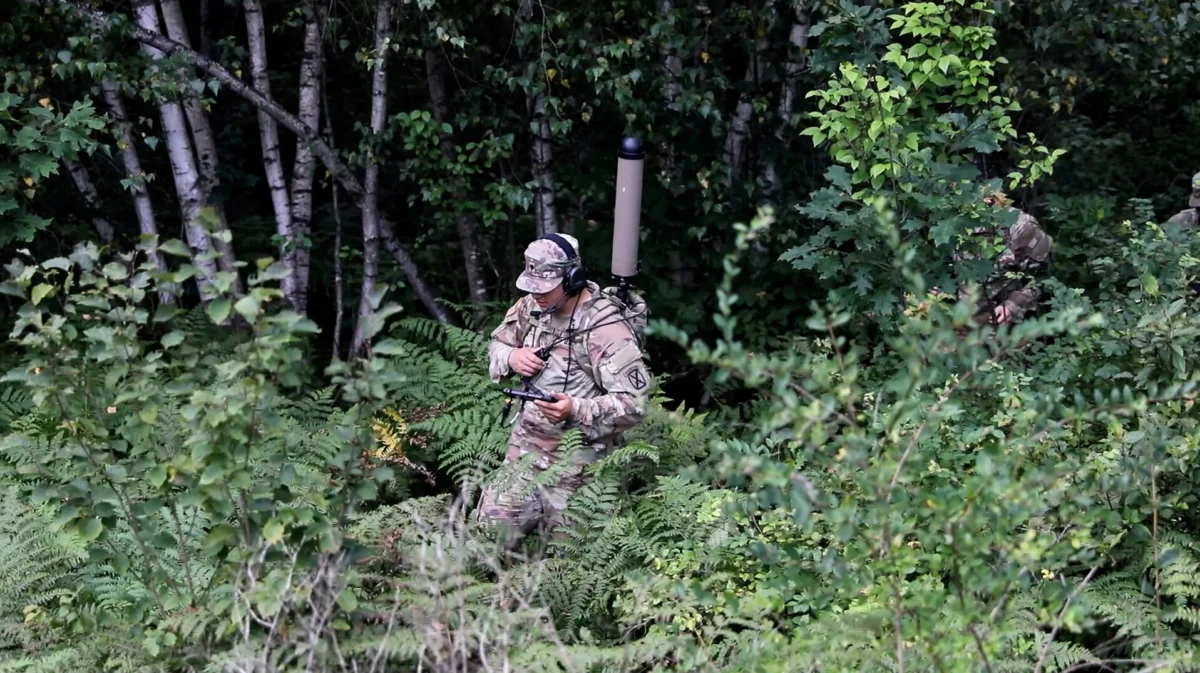
- Current State: The Army is now using V Corps as a pilot for the REWSI library, experimenting with small-batch procurements that allow for rapid iteration based on real-world feedback from eastern Europe.
Supporting Data: Leveraging Cross-Functional Funding
A cornerstone of the Army’s new strategy is the exploitation of "piggyback" funding. Col. John Harrell, director of the EW directorate in Army Futures and Concepts Command, notes that electronic warfare is no longer an isolated discipline; it is an enabler for almost every other domain.
"Fires, Aviation, Maneuver—they do have some requirement documents as well and money towards key capabilities that need EW to enable," Harrell explained. "It’s their money to spend, but why isn’t it also our capability to use as well?"
This cross-pollination of funding allows the EW team to integrate their requirements into existing aviation or maneuver programs. For instance, if an aviation platform requires an upgraded sensor suite, the EW directorate can advocate for that sensor to include electronic support capabilities. This ensures that EW becomes a distributed, organic feature of the force rather than a specialized "add-on" that requires its own separate line item.
The Flexibility Framework: Tailoring the Kit
Under the previous acquisition model, the Army sought a specific system to target a specific frequency range. If the threat changed, the system became useless. The CoN approach reverses this, focusing on unit-level flexibility.
"What the CoN has allowed us to do is be even more flexible within that framework," Saxon noted. "As Intelligence and Electronic Warfare (IEW) battalions stand up, we are defining exactly what they need based on their mission profile. If you’re an EA-focused unit, you get more EA kit via the Terrestrial Layer System Electronic Warfare (TLS-EW). If you’re a SIGINT-focused unit, you get more processing power."
This tailored distribution ensures that limited budgets are not wasted on uniform baseline kits that may exceed the needs of some units while failing to support the mission-critical requirements of others. By maintaining a "library" of commercial systems, the Army can ensure constant competition among vendors, keeping prices lower and performance higher.
Implications: The Role of Experimentation and NGC2
The success of this new acquisition model is intrinsically linked to the Army’s "Next Generation Command and Control" (NGC2) experimentation. Through initiatives like the "Ivy Sting" series, the Army has moved beyond theoretical requirements to empirical evidence.
The experiments have provided a venue to iterate on where EW capabilities should reside within the organizational structure. The data from the 4th Infantry Division and the 25th Infantry Division—who approached the integration of EW into their targeting and intelligence cells differently—has provided invaluable lessons.
"Each commander decided to do that differently," Harrell said. "25th is doing it one way, and then 4th ID did it a completely different way. They’re both effective. I think that was something that was key for us to learn."
The Strategic Outlook
The implications of this shift are profound. By decoupling equipment acquisition from the rigid, multi-year budget cycles of the past, the Army is creating a "force-in-motion."
- Industry Agility: Vendors now have a clearer path to propose commercial solutions that meet broad needs, rather than chasing impossible-to-meet, hyper-specific requirements.
- Operational Responsiveness: Commanders can receive equipment tailored to the specific electromagnetic threats they face in their specific theater, rather than waiting for a centralized, service-wide fielding.
- Fiscal Efficiency: By leveraging existing program requirements and avoiding the administrative burden of new program starts, the Army is maximizing the utility of every dollar spent on modernization.
Conclusion
As the Army moves toward 2027, the success of the EW directorate’s approach will be measured by its ability to maintain this momentum. The transition from a "product-centric" acquisition model to a "capability-centric" one is a necessary evolution in an era of persistent, global, and highly technical competition.
While the absence of new starts for 2027 might seem like a setback to traditionalists, it has acted as a catalyst for a more nimble, collaborative, and effective way of doing business. By treating the electromagnetic spectrum not as a specialized field of study, but as a fundamental dimension of maneuver, the Army is ensuring that when the next conflict arises, its soldiers will be equipped with the tools they need—not just the ones that were budgeted for years in advance.