In the rapidly evolving landscape of AI-assisted software engineering, the barrier between a conceptual idea and a production-ready application has never been thinner. xAI, the artificial intelligence company founded by Elon Musk, has just introduced Grok 4.6—a frontier-level model specifically engineered for coding, agentic reasoning, and complex knowledge work. When paired with Grok Build, the company’s interactive terminal-based coding environment, it represents a significant shift in how developers interact with large language models.
This article explores how these tools converge to streamline the entire data science lifecycle, from initial dataset generation to live API deployment, using a practical case study: predicting customer coffee wait times.
Main Facts: The Power of the Grok Ecosystem
Grok 4.6 is designed to excel where many previous models faltered: long-running, multi-step tasks. According to xAI’s internal benchmarks, the model achieves frontier-level performance, matching the capabilities of the GPT-5.6 Sol on the Artificial Analysis Intelligence Index.
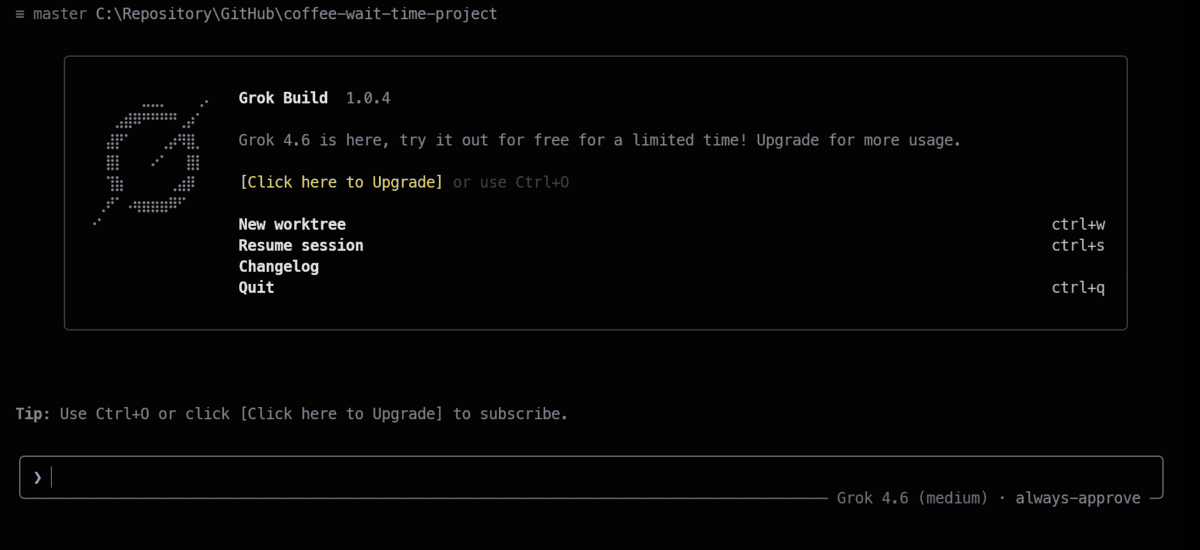
However, the model’s raw power is only half the story. The true innovation lies in Grok Build, a full-screen, mouse-enabled Terminal User Interface (TUI). Unlike standard web-based chat interfaces that often suffer from context loss or disconnects, Grok Build lives directly inside the developer’s workspace. It possesses the autonomy to create files, execute shell commands, perform web searches, and iterate through debugging cycles without constant human intervention.
Key Capabilities of Grok Build:
- Context Awareness: It scans your entire project directory to understand dependencies.
- File Manipulation: It can autonomously read, edit, and create files across the codebase.
- Agentic Execution: It doesn’t just suggest code; it executes it, evaluates the output, and iterates if an error occurs.
- Deployment Integration: It features native support for cloud environments, bridging the gap between local development and live production.
Chronology of an End-to-End Project
To demonstrate the efficacy of this stack, we undertook a four-step project aimed at building a machine learning model to estimate coffee shop wait times. The entire process was governed by just four prompts, executed through the Grok Build interface.
Step 1: Data Synthesis and Exploratory Analysis
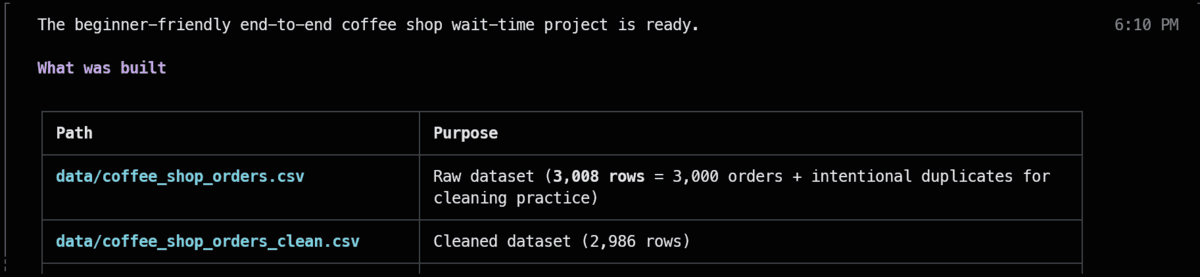
The first challenge in any data science project is the acquisition and cleaning of data. We tasked Grok Build with generating 3,000 realistic coffee shop order records. The agent proceeded to:
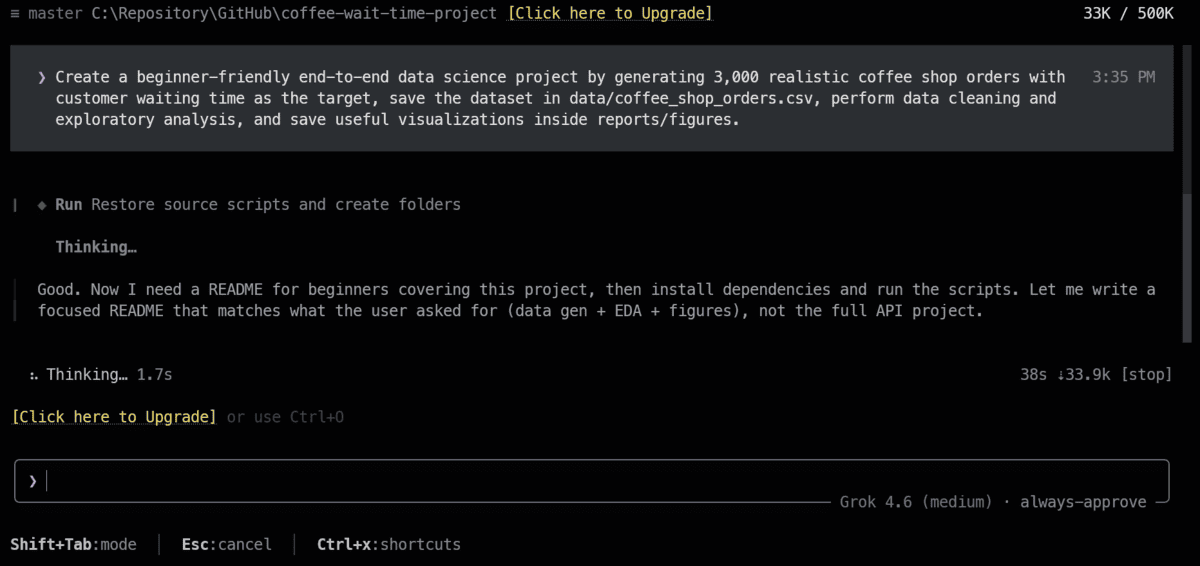
- Generate: Create a synthetic dataset including variables like order channel, barista load, weather, and time of day.
- Clean: Identify and handle missing values, effectively scrubbing the data of 14 extreme wait-time outliers.
- Analyze: Perform exploratory data analysis (EDA), uncovering a 0.68 correlation between staff load and customer wait times.
Step 2: Modeling and Pipeline Optimization
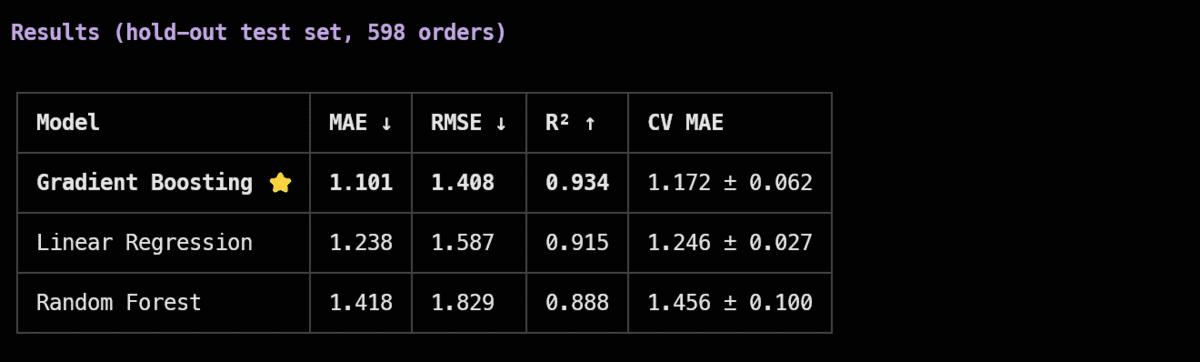
With a cleaned dataset of 2,986 rows, the next step was training. We requested a comparison between Linear Regression, Random Forest, and Gradient Boosting models. Grok Build handled the creation of a scikit-learn preprocessing pipeline, ensuring that the model could be serialized and reused. The Gradient Boosting model emerged as the clear winner, boasting an impressive R² of 0.934.
Step 3: FastAPI Application Development
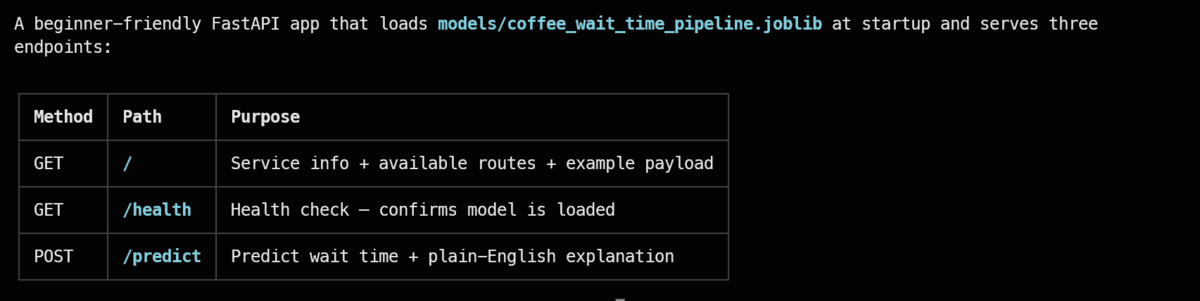
Turning a model into a service requires an API. We directed Grok Build to wrap our winning joblib model in a FastAPI framework. The agent implemented:
- Input Validation: Using Pydantic to ensure that incoming JSON data is properly formatted.
- Documentation: Automatically generating Swagger UI documentation for the API.
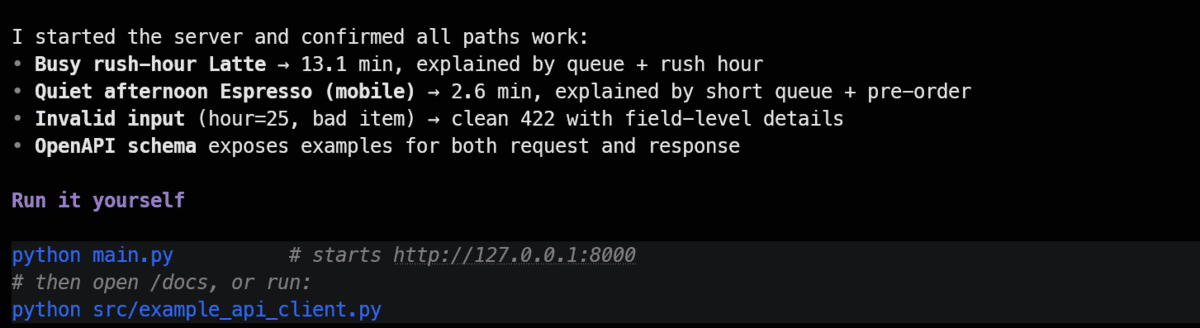
- Self-Testing: The agent executed a series of test requests against the local server to confirm that endpoints were functioning as expected before proceeding to deployment.
Step 4: Production Deployment
The final step involved pushing the project to FastAPI Cloud. After a brief browser-based authentication, Grok Build took control, managing the deployment process, resolving environmental configuration issues, and providing a live, public-facing URL for the API.
Supporting Data: Performance Metrics
The efficiency gains provided by the Grok Build workflow are quantified by the speed of execution and the precision of the model.
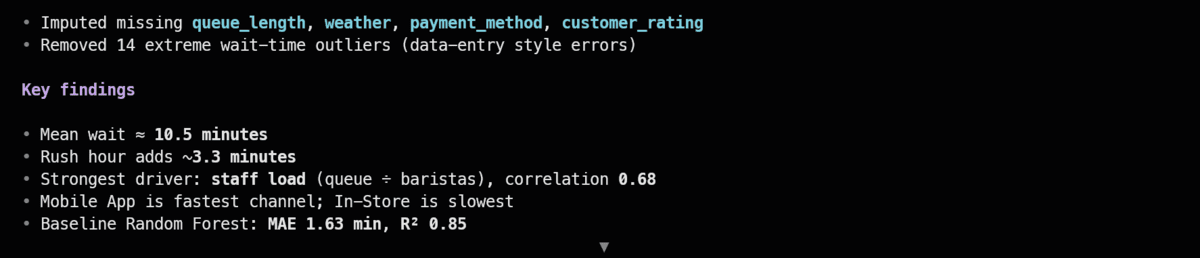
| Metric | Result |
|---|---|
| Model | Gradient Boosting |
| Mean Absolute Error (MAE) | 1.101 minutes |
| Root Mean Square Error (RMSE) | 1.408 minutes |
| Coefficient of Determination (R²) | 0.934 |
| Test Set Size | 598 orders |
These metrics confirm that the agentic workflow does not sacrifice quality for speed. By utilizing the same model (Grok 4.6) for both reasoning and execution, the "drift" between human instruction and machine implementation is virtually eliminated.
Official Responses and Strategic Positioning
xAI’s strategy with Grok 4.6 is clear: they are targeting the professional developer market by emphasizing "agentic" capabilities. In recent briefings, xAI engineers highlighted that the goal of Grok Build is to reduce the "context switching" tax. Developers typically spend 30-40% of their time navigating files, checking logs, and switching between IDEs and browsers. Grok Build effectively turns the terminal into an "AI-native IDE," where the agent has the authority to act as a junior developer working under a senior architect.

Market analysts note that this puts xAI in direct competition with tools like Cursor, Windsurf, and Claude Code. However, by building their own TUI, xAI gains full control over the latency and environmental state, offering a level of stability that browser-based wrappers often struggle to maintain.
Implications for the Future of Data Science
The integration of Grok 4.6 and Grok Build signals a fundamental shift in the data science profession:
1. From "Coder" to "Orchestrator"
As coding agents become more autonomous, the role of the data scientist will transition from writing boilerplate code (e.g., setting up data loaders, defining basic pipelines) to defining high-level system architecture and validating business logic. The ability to articulate complex requirements in natural language will become a more valuable skill than syntax mastery.
2. The Democratization of Production
Historically, moving a model from a Jupyter Notebook to a live, scalable API required significant DevOps expertise. Grok Build abstracts this complexity, enabling domain experts—such as business analysts or researchers—to deploy production-grade machine learning solutions without needing to master the intricacies of Docker, cloud infrastructure, or API routing.
3. Accelerated Prototyping Cycles
The ability to go from a blank folder to a deployed, tested, and documented API in under an hour fundamentally changes the pace of innovation. Rapid prototyping allows teams to fail faster, iterate more often, and ultimately land on better product-market fits with less capital expenditure.
4. A Shift in Technical Debt
While these tools reduce the time to build, they also shift the burden of "technical debt" to the prompt engineering and evaluation phase. If an agent builds a faulty pipeline, the developer must be skilled enough to audit the generated code. This suggests that the next generation of data scientists must prioritize debugging and verification skills over rote coding proficiency.
Conclusion: A New Standard?
The experience of using Grok Build with Grok 4.6 is a glimpse into the future of software development. It feels less like a chatbot and more like a collaboration with a highly capable, tireless assistant. By collapsing the distance between data exploration and deployment, xAI has provided a compelling argument for why terminal-based agentic workflows are the next logical step in the AI revolution.
As these tools continue to mature, the primary limitation will no longer be the technical complexity of the code, but the vision and creativity of the person providing the instructions. For those in data science, the message is clear: the tools of production are changing, and those who learn to orchestrate these agents will be the ones to define the next era of technological progress.