The corporate landscape is currently undergoing a tectonic shift. For the past two years, the conversation surrounding Artificial Intelligence was dominated by "the art of the possible"—a period characterized by fascination, rapid prototyping, and the democratization of generative tools. However, as we approach the final quarter of 2026, the era of unbridled experimentation is drawing to a close.
The boardroom narrative has pivoted from "What can AI do?" to "How do we make it sustainable, governable, and profitable?" As organizations across every sector struggle to reconcile high-level AI ambitions with the granular realities of legacy infrastructure, the need for a unified leadership strategy has never been more urgent.
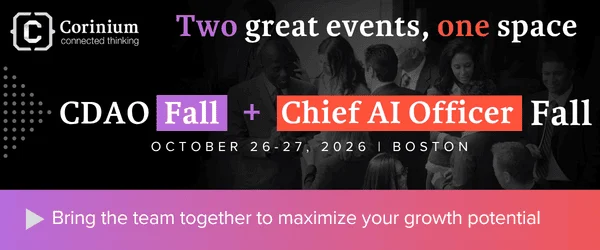
To address these complex challenges, industry titans from Honeywell Aerospace, the U.S. Air Force, Johnson & Johnson, and Walmart are convening for CDAO Fall and CAIO Fall, co-located events taking place October 26–27, 2026, at the Renaissance Boston Seaport District. This gathering represents a critical juncture for the industry, serving as a crucible for the strategies that will define the next decade of digital transformation.
The New Mandate: From AI Pilots to Production
For many, the initial phase of the AI gold rush led to a "pilot graveyard"—a collection of disparate, expensive, and unscalable proof-of-concepts that failed to move the needle on revenue. The current priority is operational maturity.
Ash Dhupar, Chief AI & Data Officer at Honeywell Aerospace Technologies, is slated to lead discussions on bridging the "execution gap." The core challenge, according to industry analysts, is not the technology itself, but the lack of an operational framework that allows AI to function reliably at scale.
The Reality Check
The agenda for the Boston summit emphasizes a transition toward "hard reality." Sessions such as “From Strategy Deck to Business Reality” and “AI: What’s Next? Hype Cycle to Hard Reality” underscore a growing industry consensus: cost discipline and prioritization are the new markers of success. Leaders are being forced to ask the uncomfortable question: Which initiatives deserve continued investment, and which should be terminated to preserve the integrity of the enterprise?
The Foundation: Why Data Still Dictates Destiny
Despite the hype surrounding Large Language Models (LLMs) and autonomous agents, the fundamental laws of computing remain unchanged: garbage in, garbage out. The "unglamorous" work of data engineering, quality control, and architecture is now being recognized as the primary bottleneck to AI adoption.
The Architecture of the Future
Manajit Barman, Chief Data Officer at the United States Air Force, will lead a critical session titled “The Architecture Decision That Will Define Your Next Five Years.” The focus here is on long-term sustainability. As organizations move toward an "AI-first" world, the traditional methods of data integration are being rendered obsolete.
The conference will explore the shift from static "data movement" to "data momentum." In this new paradigm, AI systems require a continuous stream of fresh, contextual, and clean data to remain accurate. If the data architecture is not designed to support real-time ingestion and governance, the AI systems built on top of it will inevitably lead to systemic risk.
The Rise of Agentic AI: A New Governance Frontier
Perhaps the most significant advancement on the horizon is the shift from passive AI—which simply generates text or insights—to agentic AI, which is designed to execute tasks and make autonomous decisions. This evolution fundamentally changes the governance equation.
Oversight in the Age of Autonomy
When AI begins to act on behalf of the organization, the stakes shift from "reputational risk" to "operational liability." The session “The Agentic Leap: From AI That Advises to AI That Acts” will bring together leaders from The Hartford, Walmart Global Tech, and MassMutual to discuss the necessity of new guardrails.
Crucially, the industry is moving away from the "human-in-the-loop" platitude. As systems begin to process thousands of transactions per second, manual oversight is no longer a viable strategy. The upcoming discussions will explore automated observability, real-time intervention triggers, and the legal frameworks required when an agent makes a decision that mimics human agency but operates at machine speed.
Governance Without Suffocation
The tension between regulatory compliance and the need for rapid innovation is a recurring theme for Chief Data and AI Officers. The consensus emerging among industry leaders is that governance must be proactive, not reactive.
Colleen Tartow (Capital One) and Chandrakanth Thadkapally (Walmart) are set to headline a session titled “Regulation Is Coming Whether You’re Ready or Not.” The goal is to design operating models that allow for speed while ensuring that risk is contained within acceptable parameters. In this context, governance is no longer a "department of no"; it is the structural framework that allows the enterprise to move fast without the risk of catastrophic failure.
The Power Couple: The Convergence of Data and AI Leadership
Perhaps the most pivotal trend in modern enterprise structure is the narrowing gap between the Chief Data Officer (CDO) and the Chief AI Officer (CAIO). Initially conceived as distinct silos, these roles are now converging into a single, unified mission.
A Unified Front
The co-location of the CDAO and CAIO summits is not coincidental. It reflects the realization that data strategy and AI strategy are two sides of the same coin. Adem Albayrak (Alzheon), Sanjay Sidhwani (Valley Bank), and Jillian Landi (Needham Bank) will lead sessions dedicated to this "new power couple" dynamic.
The central thesis of these discussions is simple: a CAIO cannot be successful without a robust data strategy, and a CDAO’s data is useless without an AI strategy to operationalize it. The conference will provide a roadmap for how these two functions should collaborate, defining which decisions require both leaders in the room and how to resolve the inevitable conflicts that arise during the integration of legacy data and cutting-edge intelligence.
Implications for the Future: Beyond the Technical
While the technical hurdles are immense, the CDAO/CAIO Fall event recognizes that the most enduring challenges are human-centric. The shift to an AI-augmented enterprise requires massive organizational change, upskilling, and a complete re-evaluation of corporate culture.
The Human Element
The event will delve into the "trust deficit" that exists between employees and AI systems. Whether it is healthcare professionals at Mass General Brigham or retail leaders at Walmart, the challenge remains the same: how to build systems that people trust enough to use, and how to manage the cultural resistance that inevitably accompanies the automation of critical business functions.
Join the Conversation in Boston
The CDAO Fall + CAIO Fall event is more than just a conference; it is a collaborative workspace for the people responsible for the next generation of enterprise architecture. By bringing together the most forward-thinking minds from financial services, healthcare, manufacturing, and government, the event aims to move the needle from theoretical potential to measurable, real-world impact.
Attendance Information
The event will be held on October 26–27, 2026, at the Renaissance Boston Seaport District.
In an effort to ensure the quality of discourse, the organizers have established a rigorous vetting process. A limited number of complimentary VIP passes are available for senior data, analytics, and AI executives from end-user organizations. Please note that to maintain the integrity of the networking and collaborative environment, service providers, consultants, and vendors are not eligible for this specific program.
If your role involves the strategic application of data and AI to drive enterprise value, this event offers an unparalleled opportunity to pressure-test your strategy against the best in the industry.
[APPLY FOR YOUR COMPLIMENTARY VIP PASS HERE]
As the industry enters this new, more serious phase of development, the leaders who prioritize integration, governance, and architectural integrity will be the ones who define the future. The conversation in Boston this October will be the definitive guide for navigating the challenges of the AI-first enterprise.