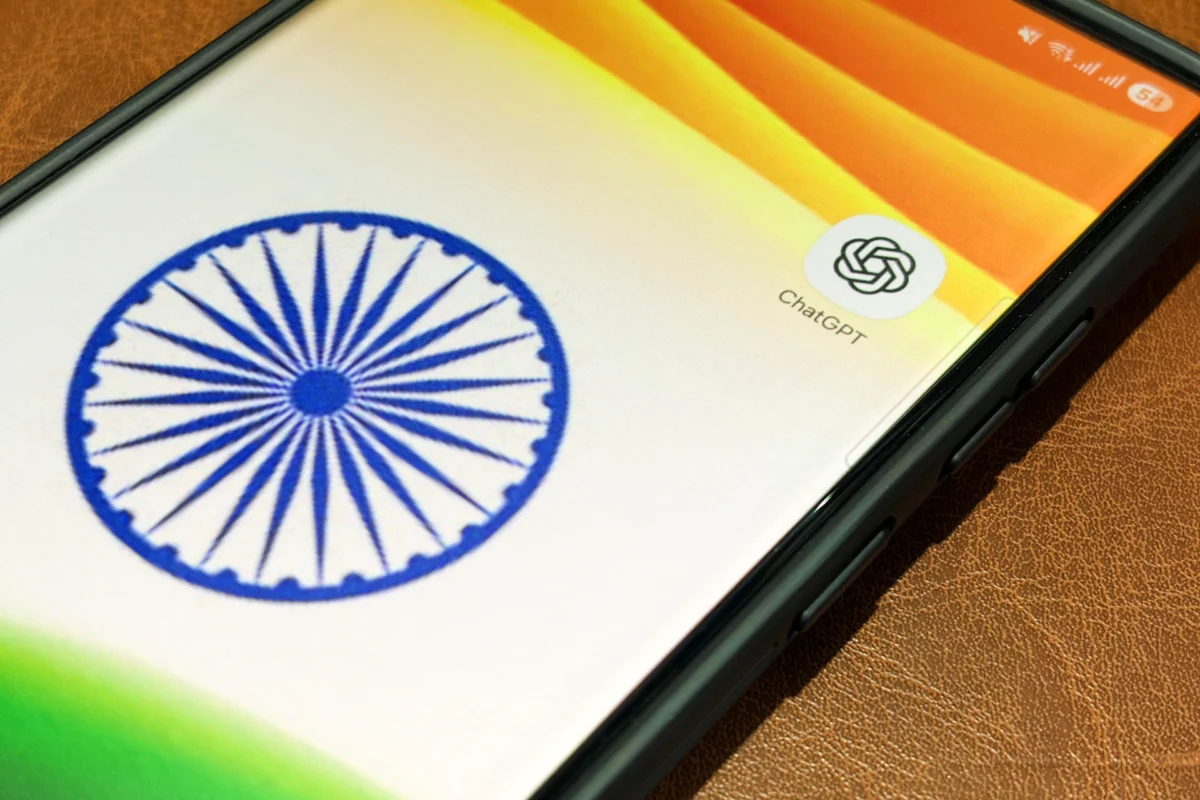
It seems there is no escaping the ad industry—not even for the world’s most advanced artificial intelligence. In a move that signals a profound shift in its business model, OpenAI announced on Thursday that it is officially integrating advertising into its ChatGPT Free and "Go" subscription tiers across India. This strategic expansion marks the latest step in the company’s aggressive push to diversify its revenue streams as it pivots from a research-heavy non-profit offshoot to a global, profit-seeking tech juggernaut.
The change, which follows a recent update to the company’s terms of service, positions India as a critical testing ground for the AI lab’s advertising ambitions. By embedding ads into the conversational flow of its AI assistant, OpenAI is betting that the high-context, intent-driven nature of AI interactions will prove irresistible to marketers looking to capture users at the exact moment they are beginning to shape their decisions.
The Scope of the Rollout: A Strategic Expansion
OpenAI’s decision to target the Indian market is underpinned by sheer scale. As of February 2026, the company reported an astonishing 100 million weekly active users in India. This demographic is largely composed of free-tier users and subscribers to the lower-priced "ChatGPT Go" plan, representing a massive, untapped audience for potential advertisers.
The initial rollout will feature advertisements from 50 high-profile brands. To facilitate this, OpenAI has secured strategic partnerships with global advertising giants WPP and Omnicom. These agencies will act as the intermediaries, helping brands navigate the novel landscape of AI-based advertising. Furthermore, OpenAI is slated to launch a self-service "Ad Manager" next month. This platform will democratize access, allowing businesses of all sizes to design and deploy campaigns, provided they commit to a modest daily minimum budget of ₹725 (approximately $7.60).
A Chronology of Growth and Monetization
To understand why OpenAI is turning to ads, one must look at the timeline of its deliberate, methodical expansion into the Indian market.
- August 2025: OpenAI launches "ChatGPT Go," a sub-$5 subscription tier specifically tailored for the Indian market, aiming to increase accessibility and user penetration.
- October 2025: In a bid to cement market dominance, the company launches a limited-time promotion offering ChatGPT Go for free for an entire year to Indian users.
- February 2026: The company hits a major milestone, confirming 100 million weekly active users in India. Concurrently, the AI lab begins its first major experiment with ads in the United States.
- June 2026: OpenAI poaches the head of Uber India to spearhead its operations in the region, signaling that the company is moving past the "growth at all costs" phase toward a more structured revenue-generation model.
- August 2026 (Early): OpenAI expands its ad program to European markets.
- August 2026 (Late): The advertising model officially lands in India, covering both free and Go tiers.
This roadmap illustrates a clear trajectory: OpenAI first prioritized user acquisition through deep discounting and high-visibility marketing—including heavy sponsorships during major sporting events like the Indian Premier League (IPL) and the Women’s Premier League (WPL)—before flipping the switch to monetization.
Supporting Data: Why the Shift Matters
The urgency behind this move is tied to the company’s financial health and its trajectory toward a potential Initial Public Offering (IPO). According to data reported by The Wall Street Journal, OpenAI recorded revenue of $6.7 billion in the second quarter of 2026, an increase from $5.7 billion in the previous quarter. While these numbers are significant, they reflect a "tepid growth" compared to competitors like Anthropic, putting immense pressure on OpenAI leadership to prove that their platform can generate sustained, non-subscription revenue.
The goal is ambitious. A report from The Information published last November noted that OpenAI aims to reach 220 million paying subscribers by 2030. At the time of that report, the company had roughly 35 million users on its Plus and Pro tiers. The gap between 35 million and 220 million is significant, and the company is clearly hedging its bets: if it cannot convert every user into a paid subscriber, it will capture value through the advertising market instead.
Official Perspectives: The "High-Context" Opportunity
OpenAI is framing this transition not as an intrusion, but as a utility for businesses. Dave Dugan, the head of global ads solutions at OpenAI, emphasized the unique nature of the platform in a recent statement:
"With ChatGPT Ads, businesses of every size can introduce themselves at relevant, high-context moments when decisions are beginning to shape."
This "high-context" argument is the core of OpenAI’s sales pitch to advertisers. Unlike social media platforms, where ads are often passive, ChatGPT interactions involve a user actively searching for information, planning travel, or seeking product recommendations. By placing ads within these exchanges, OpenAI believes it can deliver a level of relevance that traditional search engines or social feeds cannot match. The partnership with WPP and Omnicom is designed to ensure that these ads remain relevant without disrupting the "conversational intelligence" that users have come to expect from the platform.
Implications: Privacy, User Experience, and the Future of AI
The introduction of ads into ChatGPT brings a host of implications for the future of the AI industry.
1. The Impact on User Experience
The biggest challenge for OpenAI will be maintaining the utility and "cleanliness" of its interface. ChatGPT has gained popularity in part because of its minimalist, distraction-free environment. Introducing ads risks cluttering this interface and could lead to "ad fatigue" among a user base that has grown accustomed to a premium, utilitarian experience. The company will need to balance revenue density with the conversational flow; if ads become too intrusive, the very utility of the AI may be compromised.
2. Data Privacy and Targeted Advertising
As an AI model, ChatGPT is inherently data-rich. The integration of advertising raises significant questions about how user queries—many of which are highly personal or professional—will be used for ad targeting. While OpenAI has historically maintained strict policies regarding the use of user data for model training, the introduction of an advertising layer suggests that user intent data may now be leveraged for brand profiling. The company will likely face increased scrutiny from regulators regarding how it anonymizes this data for its new ad-manager platform.
3. The IPO Path
Perhaps the most significant implication is what this says about the company’s path to an IPO. By expanding its ad footprint from the U.S. to Europe and now India, OpenAI is essentially proving that its business model can scale globally. Investors look for diversified revenue streams, and a hybrid model—combining recurring subscription revenue with high-margin programmatic advertising—is the "gold standard" for tech companies looking to go public with strong valuation multiples.
4. A New Paradigm for Global Markets
India is currently the largest market for OpenAI outside of the United States. By rolling out its advertising infrastructure there, the company is signaling that its future growth will not come from Western markets alone. The ability to tailor ad budgets to local currency (as seen with the ₹725 minimum) demonstrates a sophisticated understanding of the "long tail" of the Indian business market, from small local shops to large national corporations.
Conclusion: The New Normal
The arrival of ads on ChatGPT is a watershed moment for the AI industry. For years, the promise of AI was that it would be a neutral, helpful tool. As the economics of running large-scale language models continue to demand massive capital investment, that neutrality is being traded for financial sustainability.
For users in India, the trade-off is clear: the AI remains accessible and affordable, but it is no longer just an assistant—it is now a marketplace. As OpenAI continues to refine its Ad Manager and expand its partnerships, the success of this initiative will likely serve as a blueprint for the entire generative AI sector. Whether this evolution will enhance the user experience through relevant discovery or degrade it through constant solicitation remains to be seen. One thing is certain, however: the era of "free" AI without commercial influence has officially come to an end.