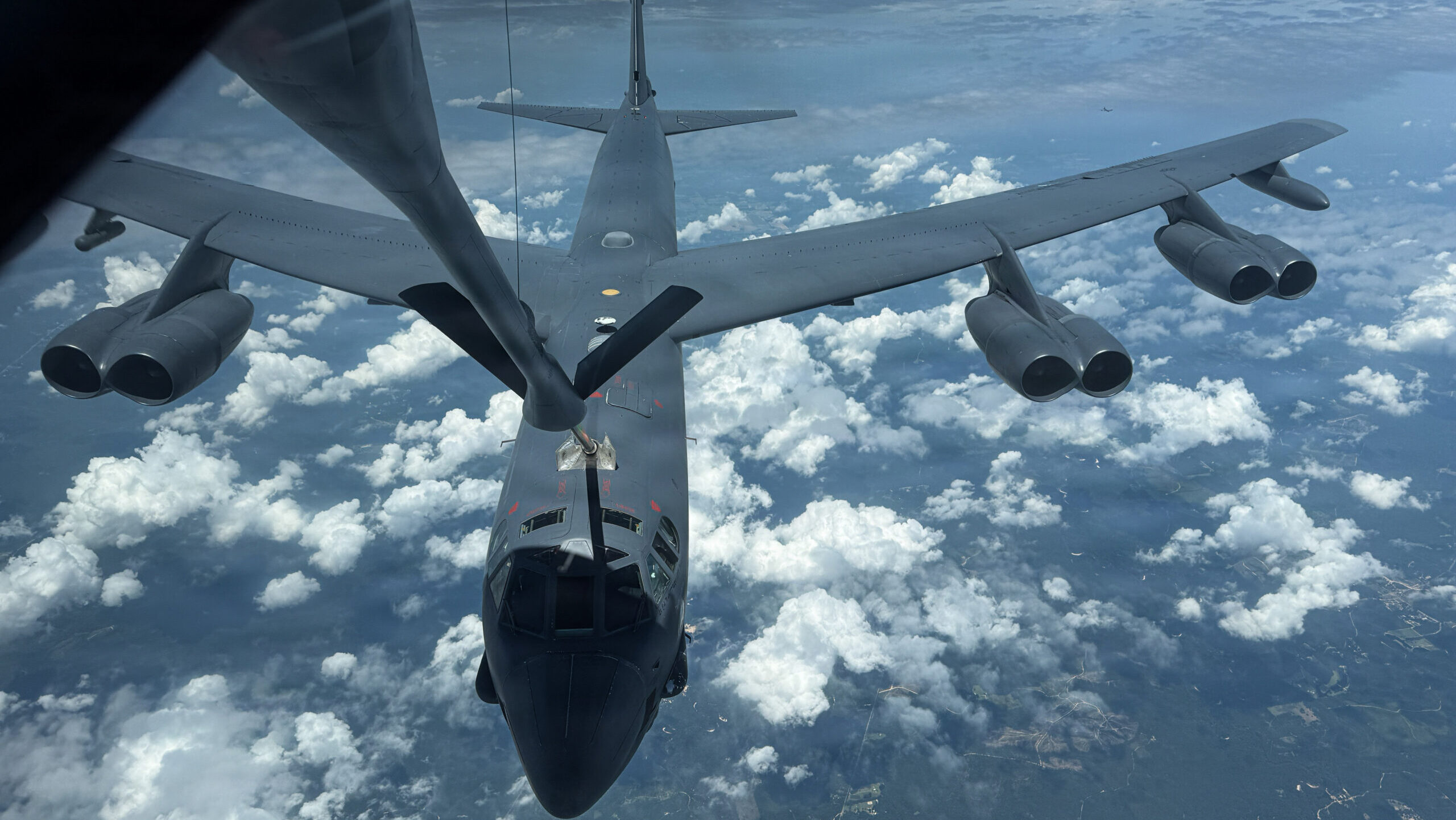
WASHINGTON — In a move to extend the operational life of the legendary B-52 Stratofortress well into the middle of the 21st century, the United States Air Force has finalized a dual-contract award totaling $766 million. This injection of funding, announced by the Department of Defense on August 25, 2026, marks a critical pivot point in the service’s massive $21 billion effort to modernize the Eisenhower-era bomber fleet.
Despite the strategic necessity of maintaining a nuclear-capable long-range strike platform, the B-52 Radar Modernization Program (RMP) remains a flashpoint for scrutiny. With budget overruns, schedule delays, and the weight of a recent, tragic flight test accident, the Air Force finds itself navigating a complex path to ensure the "Big Ugly Fat Fellow" remains a relevant instrument of American airpower.
The Financials: Breaking Down the New Awards
The $766 million in new contracts targets the specific technological bottleneck of the B-52’s situational awareness: its radar.
The larger of the two awards is a $603 million indefinite-delivery/indefinite-quantity (IDIQ) contract granted to Raytheon, a subsidiary of RTX. This contract covers the production and sustainment of the new AN/APQ-188 Active Electronically Scanned Array (AESA) radar. The AN/APQ-188 is intended to replace the aging AN/APQ-166, a mechanical-scan sensor that has reached the end of its technological viability in a modern, contested electronic warfare environment.
The second contract, valued at nearly $163 million, was awarded to Boeing, the original manufacturer and prime contractor for the B-52 fleet. These funds are earmarked for the production of bomb rack modernization kits. These kits are essential to integrating the new sensor suite with the aircraft’s weapons payload, ensuring that the enhanced radar can accurately guide advanced munitions.
Chronology of the Modernization Effort
The B-52’s journey toward the 2050s is not a singular event but a mosaic of 13 separate, high-priority upgrades. The timeline of this modernization has been fraught with structural challenges:
- Initial Conception: Following the decision to retire the B-1 and B-2 fleets in favor of the B-21 Raider, the Air Force committed to keeping the B-52 as the backbone of its conventional and nuclear bomber force.
- The Nunn-McCurdy Breach (2025): The Radar Modernization Program’s budget ballooned by 30 percent, crossing the $2.9 billion threshold. This triggered a Nunn-McCurdy breach, a legislative requirement that forces the Department of Defense to report significant cost overruns to Congress and justify the program’s continued existence.
- The Crash at Edwards (June 2026): A severe setback occurred when one of the two dedicated flight-test B-52s assigned to the RMP crashed shortly after takeoff from Edwards Air Force Base. The tragedy claimed the lives of all eight crew members on board, shaking the program to its core.
- Contract Finalization (August 2026): Despite the investigation into the crash, the Air Force pushed forward with the production contracts for Raytheon and Boeing, signaling a commitment to proceed with the RMP despite ongoing uncertainty.
Supporting Data: Capability vs. Cost
The Government Accountability Office (GAO) has remained a consistent, critical observer of the B-52 upgrade cycle. In their most recent assessment, the GAO highlighted a troubling trend: the Air Force is effectively paying more for a platform that, due to necessity-driven trade-offs, will offer less capability than originally envisioned.
To bring the program under control following the Nunn-McCurdy breach, the Air Force implemented a strategy of "requirement descoping." In plain terms, the service removed specific, unspecified performance requirements from the radar contract. By lowering the threshold of what the radar must achieve, the Air Force hopes to accelerate production and curb costs. However, the GAO report warns that this approach creates a "capability gap" that may leave the aircraft less effective in high-intensity conflicts than initially planned.
Furthermore, the integration of new engines—a parallel, multi-billion-dollar effort—is also facing significant schedule friction. When combined with the radar delays, the RMP is currently tracking toward an operational capability date in the third quarter of fiscal year 2030—a delay of three-and-a-half years from the initial program baseline.
Official Responses and Strategic Outlook
Both RTX and Boeing have maintained a distance from public commentary, deferring all inquiries regarding the program’s technical status and supply chain challenges to the Department of the Air Force.
Within the Pentagon, the tone remains one of pragmatic urgency. Col. Spencer Turner, the B-52 system program manager, addressed the media in late July, just weeks before the latest contract announcement. He emphasized that the service’s primary focus remains the ongoing mishap investigation at Edwards Air Force Base.
"We are looking at our schedule and adjusting as necessary," Col. Turner stated. "Safety and forensic integrity regarding the mishap are our top priorities. Once we have a clearer picture of the root cause, we will ensure that the modifications to our second test aircraft incorporate any findings that might affect the fleet."
The Air Force is currently planning to modify a second aircraft to serve as the new primary testbed for the radar suite. This transition is critical; without a functional test platform, the RMP will remain effectively stalled.
Implications for the Future of Strategic Deterrence
The reliance on the B-52 into the 2050s represents a unique phenomenon in military aviation: a platform that will have been in service for nearly a century. The implications of this are twofold:
1. The Maintenance Burden
Maintaining a fleet of this age requires a unique industrial base. As the Air Force moves to buy radars directly from RTX to "smooth out depot work," it highlights the reality that the B-52 is no longer just an aircraft; it is a long-term infrastructure project. The $21 billion total investment reflects the reality that "modernization" at this scale is akin to rebuilding an engine while the car is driving down the highway at 100 miles per hour.
2. Strategic Flexibility vs. Technological Obsolescence
The B-52’s strength has always been its modularity—its ability to carry a vast, changing array of cruise missiles, gravity bombs, and precision-guided munitions. The RMP is essential to this capability, as modern digital threats require modern digital sensors. However, the GAO’s findings regarding the "less capability" trade-off suggest that the Air Force is walking a fine line. If the B-52 cannot see and target in a contested environment, its payload capacity becomes secondary to its survivability.
3. The Human Element
The loss of the eight-person crew in June serves as a somber reminder of the risks associated with testing legacy hardware with new, complex integrations. The morale impact on the bomber community and the technical team at Edwards cannot be overstated, and the Air Force’s ability to recover from this tragedy will likely define the culture of the RMP for the next several years.
Conclusion
As the U.S. military pivots toward a future dominated by the B-21 Raider and unmanned platforms, the B-52 Stratofortress occupies a complicated space. It is a workhorse that the Air Force cannot afford to lose, yet it is a platform that becomes more expensive and more difficult to modernize with every passing year.
The $766 million in contracts awarded to Raytheon and Boeing is a down payment on a future that is increasingly uncertain. While the Air Force remains committed to the RMP, the combination of a $2.9 billion radar budget, the shadow of the Nunn-McCurdy breach, and the unresolved investigation into the recent fatal crash creates a volatile environment. Whether the "Big Ugly Fat Fellow" can maintain its dominance through the 2050s will depend not just on the performance of its new radar, but on the Air Force’s ability to manage the delicate balance of cost, safety, and operational capability in an era of tightening defense budgets and evolving global threats.