The modern smart home is no longer a futuristic concept; it is a complex, data-hungry ecosystem that serves as the backbone of daily life. From 4K streaming and high-fidelity gaming to remote work video conferences and the burgeoning array of IoT devices, the demands placed on residential Wi-Fi networks have reached an unprecedented scale. Yet, for all the sophistication of today’s broadband infrastructure, a glaring disconnect remains: the gap between how service providers test their equipment and how customers actually experience it.
Recognizing that "subscribers don’t live in labs," Linksys has launched its "Signal Studio" in Reading, a state-of-the-art testing facility designed to replicate the chaotic, unpredictable reality of the modern home. By shifting the focus from sterile, theoretical environments to lived-in residential spaces, Linksys is challenging the telecommunications industry to rethink how it validates, deploys, and optimizes the Wi-Fi experience.
The Laboratory Fallacy: Why Theoretical Testing is No Longer Enough
For decades, the industry standard for testing wireless performance has been the controlled laboratory environment. These facilities are designed to eliminate variables: they feature uniform flooring, minimal external interference, and precise device positioning. While this approach is essential for benchmarking the absolute, raw theoretical limits of hardware—such as peak throughput or signal strength under ideal conditions—it offers little insight into the "real-world" performance that drives customer satisfaction.
In a typical home, the environment is defined by its variables. Walls constructed of brick, lath-and-plaster, or reinforced concrete act as physical barriers to radio frequencies. Furniture, appliances, and even the layout of the rooms create "dead zones" that lab tests fail to predict. Furthermore, the modern home is a battleground of competing signals: neighbors’ Wi-Fi networks, Bluetooth devices, microwave ovens, and smart home appliances all contribute to a noisy, congested spectrum.
When service providers rely solely on laboratory data, they often encounter a phenomenon known as the "expectation gap." A router might perform flawlessly on a lab bench, only to falter when placed behind a television cabinet or in a far-flung bedroom of a Victorian-era house. This disconnect is a primary driver of customer churn, as subscribers equate poor in-home coverage with a failure of the ISP’s broadband service, regardless of the actual source of the bottleneck.
Inside the Signal Studio: A Chronology of Innovation
The inception of the Signal Studio was born from years of observing these deployment hurdles. Linksys identified that the missing link in the development pipeline was a space where the unpredictability of the home could be quantified and managed.
The Development Phase
The planning for the Signal Studio began with a focus on geographic accessibility and authentic simulation. The choice of Reading was strategic; situated within the UK’s primary tech corridor and offering easy access to London and Heathrow, it serves as a central hub for ISPs across the UK and Europe. Construction and calibration of the site took place throughout 2024, with a rigorous focus on ensuring the studio could replicate both modern construction standards and the more challenging, legacy building materials prevalent in the European housing market.
Official Opening and Early Milestones
The facility officially opened its doors in December 2025. Since its inception, the studio has functioned as a collaborative incubator rather than a static showroom. Within its first few months of operation, the facility hosted several major ISP partners, each bringing unique challenges to the table.
One notable milestone occurred in early 2026, when a London-based ISP utilized the studio in conjunction with an independent industry regulator. This collaborative session was a landmark event, proving that the Signal Studio could serve as a neutral ground where stakeholders—including providers, manufacturers, and regulators—could align on best practices for network performance and consumer transparency.
Recreating the Lived Experience: Technical Architecture
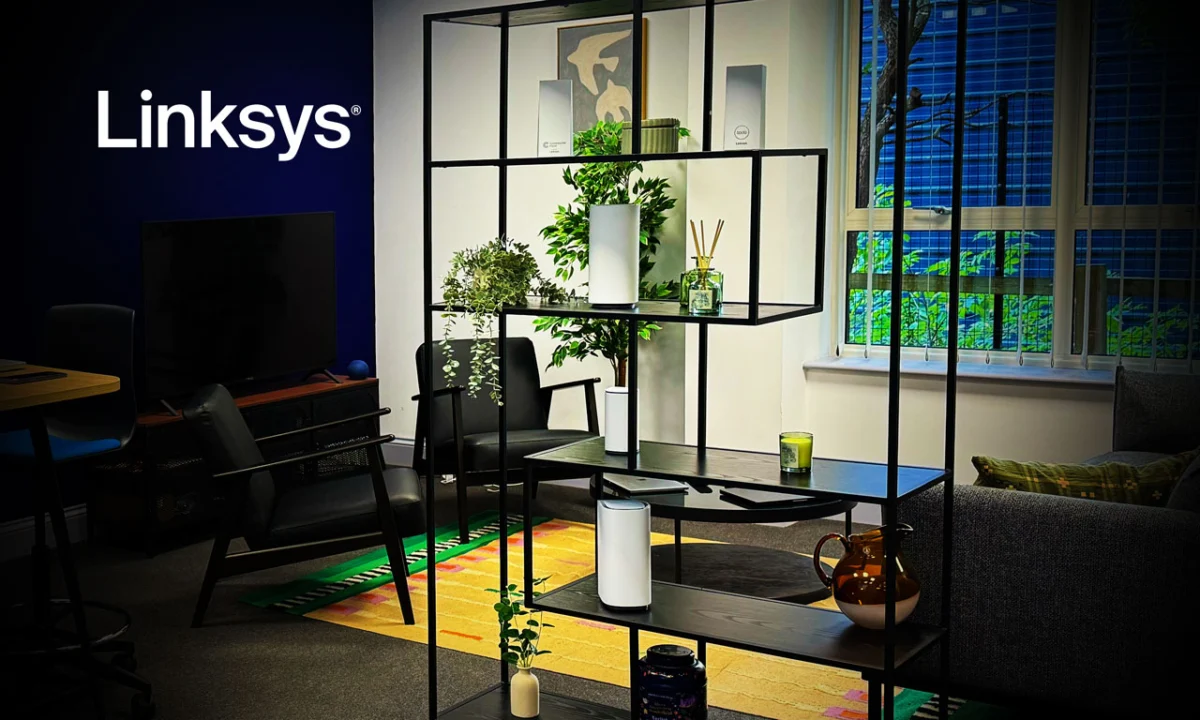
The architecture of the Signal Studio is its most compelling feature. Rather than an open, warehouse-style floor plan, the space is segmented into functional rooms that mimic residential reality.
Customizable Infrastructure
The studio is equipped with modular, configurable wall structures. These are not merely decorative partitions; they are engineered to mimic the signal attenuation properties of various building materials. Whether simulating the thick, signal-blocking stone walls of an older property or the metallic interference common in modern, energy-efficient building materials, the studio allows engineers to adjust the environment to match the specific demographics of an ISP’s subscriber base.
The Ecosystem of Devices
To further enhance the realism of the testing, the studio is populated with a wide array of consumer electronics. This includes smart fridges, security cameras, gaming consoles, and streaming devices. By populating the test environments with this "device noise," Linksys can observe how its mesh systems and routers handle packet priority and traffic management when a home is under heavy, multi-device load.
Official Perspectives: The Collaborative Mission
The mission of the Signal Studio is defined by a shift toward partnership. According to Canus Augustus, ISP Sales Director for Linksys, the facility is the manifestation of the company’s evolution from a hardware vendor to an innovation partner.
"The Linksys Signal Studio represents the next step in our evolution," Augustus explains. "It is much more than a demonstration facility—it is a collaborative environment where we work alongside our ISP partners to validate new technologies, optimize deployments, and truly understand how networks perform in real homes. We are moving away from the ‘plug and pray’ approach and toward a model of assurance."
Jessica Peck, Product Marketing Director at Linksys, emphasizes the human element of the studio. "Subscribers don’t live in labs," she notes. "They live in busy homes filled with connected devices, competing demands on the network, and constantly changing environments. We’ve created an environment that feels much closer to the homes their subscribers actually live in, whether that involves validating a deployment, exploring a new technology, or simply meeting to discuss the challenges of the current connectivity landscape."
Implications for the ISP Industry: Reducing Churn through Assurance
The implications of the Signal Studio for the broader broadband industry are significant, particularly as the market shifts from a focus on "raw speed" to "quality of experience" (QoE).
Driving Take-up and Retention
In a saturated market, ISPs are under immense pressure to reduce churn. When a customer signs up for a premium fiber package but experiences buffering in their home office, the perceived value of the connection plummets. By utilizing the Signal Studio to "pre-validate" deployments—identifying the optimal placement for mesh nodes before they are even shipped to the customer—ISPs can significantly improve the first-time success rate of installations.
Supporting Self-Installation
Self-installation is becoming the industry standard, but it carries a high risk of user error. The studio provides a perfect sandbox for ISPs to test their customer-facing apps and installation guides. By observing how "real people" interact with setup instructions in a simulated living room, ISPs can refine their onboarding processes to ensure that hardware is positioned for maximum coverage, thereby reducing the number of support calls and expensive technician truck rolls.
Preparing for the Future of Wi-Fi 7
As the industry transitions to Wi-Fi 7 and advanced mesh technologies, the complexity of network management is increasing. These technologies offer incredible potential, but they also require precise environmental management. The Signal Studio provides the necessary environment to test these high-frequency bands, ensuring that the benefits of Wi-Fi 7—such as increased capacity and lower latency—are actually realized by the end user, rather than lost to interference or poor placement.
Conclusion: A New Standard for Connectivity
The launch of the Linksys Signal Studio marks a pivotal moment in the relationship between network equipment manufacturers and service providers. It signals a move away from the isolation of the laboratory and toward a holistic, customer-centric approach to connectivity.
By grounding innovation in the reality of the home—with all its furniture, walls, and busy, noisy device ecosystems—Linksys is providing the industry with a roadmap for the future. In an era where connectivity is as essential as electricity, the goal of the ISP must be to provide not just a connection, but an assurance of performance. As the industry continues to push the boundaries of what is possible with fiber and wireless technology, the Signal Studio stands as a testament to the fact that the most important part of the network is the last ten feet, and the best way to understand those ten feet is to step inside the home.
To learn more about the methodology behind real-world testing and to engage with the team, visit Linksys at the upcoming Connected Britain event, Stand F20. The Linksys team will be on hand to discuss the evolving challenges of in-home connectivity and provide insights into how collaborative, environment-specific testing can help ISPs deliver a superior, reliable experience to every subscriber.